In my previous post, I mentioned that we would take a closer look at a small sample of 34 letters that Adam Smith signed in his official capacity as Commissioner of Scotland’s Board of Customs. The first piece of official correspondence in my sample is Letter #109, which is dated 16 September 1784 and is signed by three members of the Board of Customs: Basil Cochrane, Adam Smith, and James Edgar. In this letter, the Board instructs the Collector to account for a sum of money from a recent seizure and sale of contraband wine.
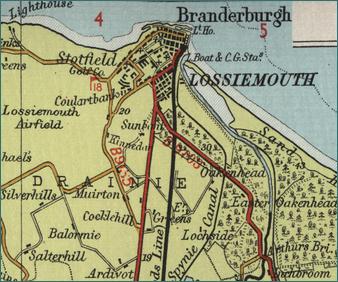
More specifically, the letter refers to “Ten Guineas of Freight paid by the Collector for bringing twenty eight Hogsheads of Wine from Lossiemouth [see map pictured below], and securing it in the King’s warehouse ….” (Letter #109; punctuation in the original) The “Collector” in this letter most likely refers to a local customs officer called the Collector of Customs, who was responsible for collecting duties, managing local officers, seizing smuggled or illegal goods, handling local operational expenses, and recording these expenses in an “Incident Account.” (A complete record from 1742 to 1830 of these local Incident Accounts are stored by the National Records of Scotland or NRS; see Item E510 here. Also, a “hogshead” is a large cask.)
In this particular case, it appears that a local customs collector had originally paid a sum of money — i.e. 10 guineas or about 10 pounds and 10 shillings — to transport and secure some contraband wine in a government warehouse. After the wine was sold off at auction [*], the local collector must have deducted and retained those 10 guineas (a considerable sum; see here) from the proceeds of the sale to reimburse himself. This accounting matter must have then come to the attention of the Board of Customs, for the members of the board (including Adam Smith) order the collector to update his ledger books: “We direct you to bring the Ten Guineas to Account this current Quarter by a special Entry ….” (Letter #109)
Why is this mere accounting matter of any interest to us today? In short, it provides a direct glimpse into the daily activities of Adam Smith once he became a Commissioner of Customs: resolving accounting anomalies, ensuring strict revenue reporting, and managing the seizure of goods like wine along the Scottish coast. To what extent Smith himself was personally bogged down in this daily administrative oversight is unclear, however.
[*] Nota bene: The buyer at the auction would still have to pay the applicable excise taxes or duties on the wine; see here, for example.