Nota bene: Here are the previous installments — parts 1, 2, 3, 4, 5, 6, 7, 8, 9, 10, 11, and 12a — in my multi-part series on Adam Smith’s day-to-day duties as a commissioner of the Board of Customs of Scotland.
Order #132 is dated __ Nov. 1784 (the day is cut off from my copy of this document) and is signed by Adam Smith (top signature), Basil Cochrane (middle), and James Buchanan (bottom). In this order, the Board of Customs formally terminates a local customs officer, a land surveyor by the name of Anderson, from the customs service and orders his superiors to confiscate (“call in”) his official Deputation, i.e. his statutory warrant of authority:
“Having received your Letter of the 23d. instant [i.e. Nov. 23], enclosing the answers of Mr. Robt. Anderson Landsurveyor at your Port, to a Charge given him by our Order, on your Letter of the 16th. of last Month [Oct. 16], — We upon considering the same, hereby dismiss the said Anderson as incorrigible and unfit to be trusted any longer in the Revenue, and direct you to call in his Deputation to be transmitted to us to be cancelled.”
This order should thus be read in conjunction with the previous order in my sample (Order #130), which noted “certain Inaccuracies” in Anderson’s records and requested his superiors to forward their final report in this matter to the commissioners in Edinburgh. The rapid progression from Order #130 to Order #132 is especially worth noting: the board is not only strict about record-keeping–it cannot tolerate discrepancies in a land surveyor’s baseline seizure books, since accurate records were indispensable for establishing probable cause in the Court of Exchequer, calculating Crown revenue splits, and ensuring legal condemnation of confiscated contraband–it is also swift.
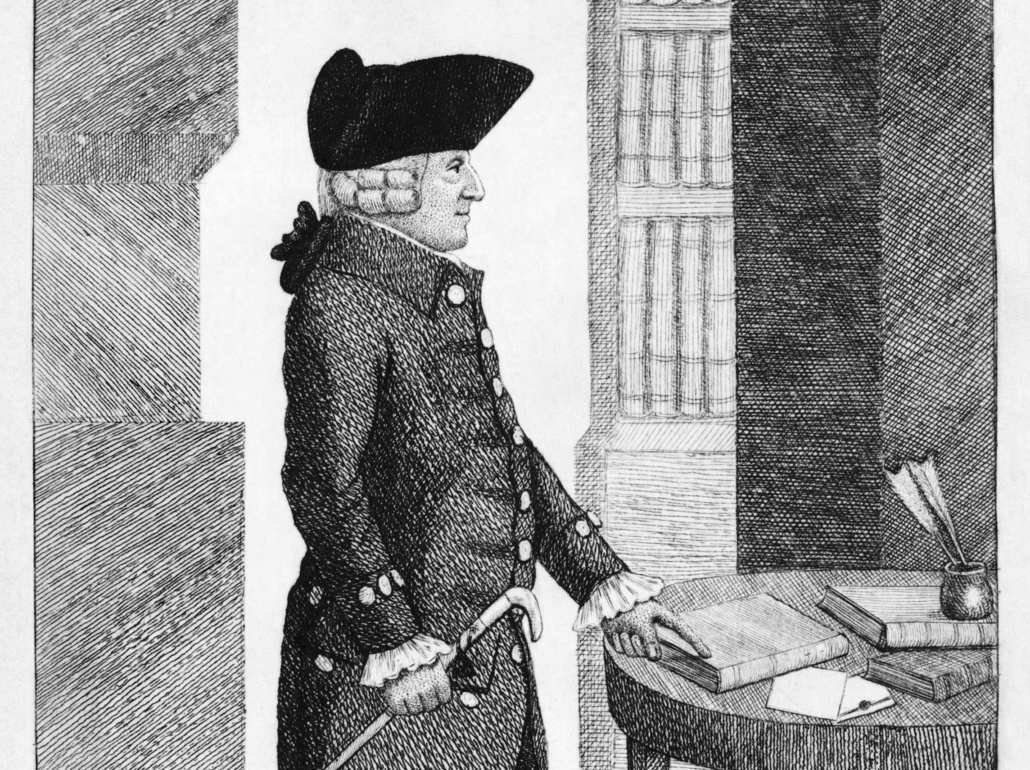
More generally, this order also tells us something about Adam Smith’s day-to-day institutional role in adjudicating disciplinary matters and in combatting corruption in the customs service. Simply put, “Adam Smith the Commissioner” is a far cry from the apocryphal picture of “Adam Smith the absent-minded Professor” that has been painted by Smith’s biographers. [*] During his tenure as a Commissioner of Customs (1778–1790), Smith was a no-nonsense civil servant who took his job seriously and who held outport officials accountable to strict legal and accounting standards.
[*] On Smith’s savviness even during his tenure as a professor in Glasgow, see Salim Rashid’s recent article “Young Adam Smith: Worldly, Worldly-Wise, and Street-Smart,” Independent Review, Vol. 29, No. 4 (2025), pp. 661-688, available here.