Adam Smith as a mystery non-fiction author

(Walter Bagehot and Adam Smith, part 8)

Picking up right where we left off, when Adam Smith finally returned home to his beloved mother in 1766, after three years overseas as a future duke’s chaperone and tutor, the Scottish philosopher spent most of the next ten years of his life in quiet seclusion in the small town of Kirkcaldy, where he wrote, revised, and proofread a book that was destined to become his magnum opus. But what kind of book is The Wealth of Nations? Alas, Walter Bagehot’s 1876 essay “Adam Smith as a Person” does not have much to say about this great work, except that its style was “plain and manly” (p. 36, para. 30); its substance, “curious” or idiosyncratic (p. 38; para. 31).

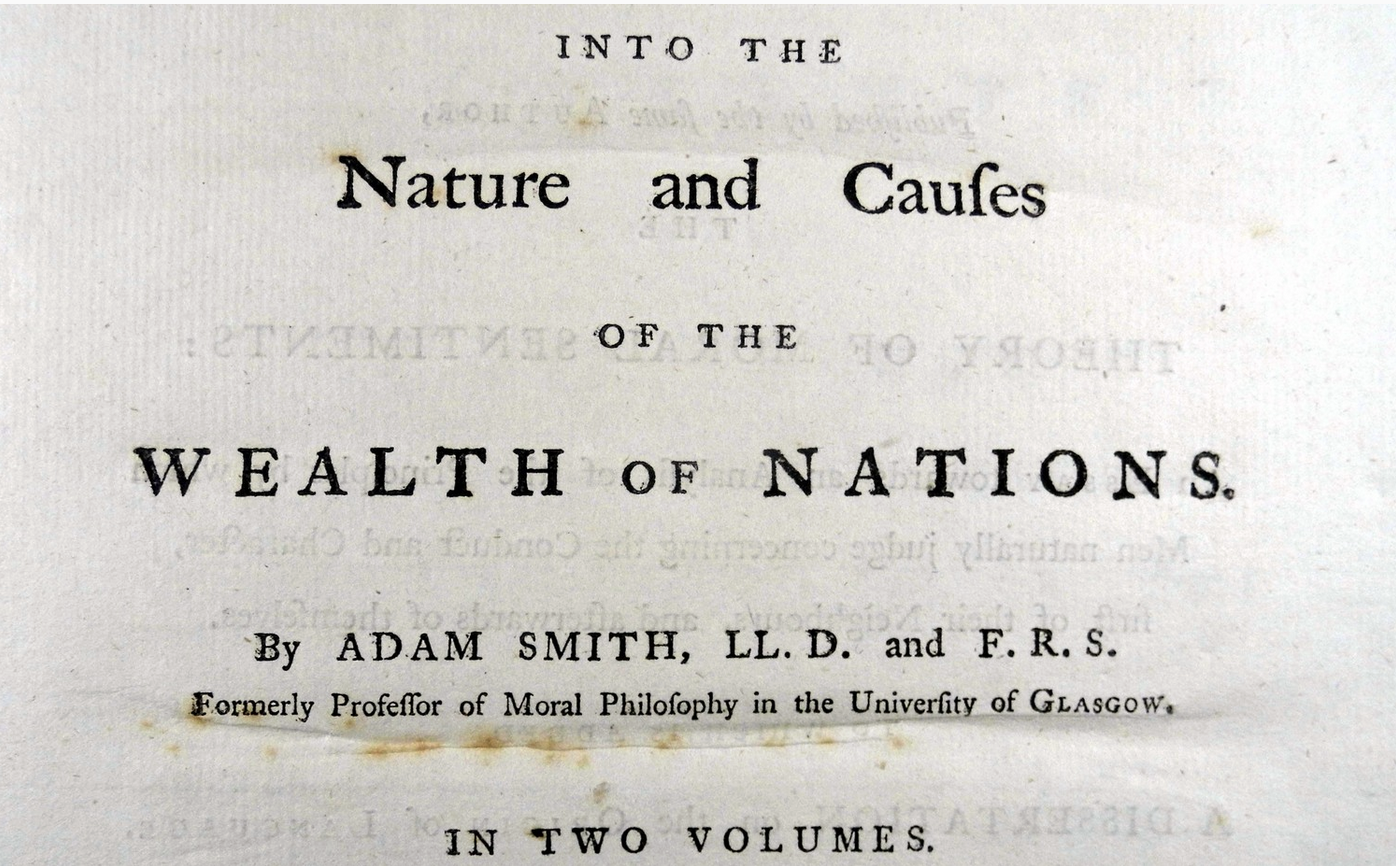
Why “curious” or idiosyncratic? For Bagehot, Smith’s Wealth of Nations consists of a miscellaneous collection of assorted facts and figures — a literary grab bag of random observations — and most of these intellectual sundries, so to speak, are archaic vignettes of a bygone pre-industrial age. Bagehot himself itemizes no less than 15 examples of such anachronisms directly from the pages of Wealth of Nations (pp. 37-38; para. 31), noting “[t]here are few books in which there may be gathered more curious particulars of the old world” (p. 37; para. 31). For my part, I would remind the Bagehots of the world of the complete title of Smith’s magnum opus: “An inquiry into the nature and causes of the wealth of nations” (see screenshot below). An “inquiry” is an investigation, so Smith’s tome should be read like a murder-mystery, not a textbook, but instead of trying to solve a murder, our narrator is trying to figure out one of the most important and difficult mysteries of all time: the real reason why some countries are free and prosperous while others are stagnant and poor.

Also, as Bagehot himself reminds us, The Wealth of Nations “was but a fragment of an immensely larger whole.” (Bagehot 1876, p. 36; para. 29.) Recall that, before he had departed for France in 1764, Smith had disclosed at the very end of his first book, his treatise on Moral Sentiments, that he was writing “an account of the general principles of law and government, and of the different revolutions which they had undergone in the different ages and periods of society; not only in what concerns justice, but in what concerns police, revenue, and arms, and whatever else is the object of law.” In fact, as late as the 6th and last edition of Moral Sentiments, published in 1790 (the year of his untimely demise at age 67), the Scottish philosopher and legal scholar is still referring to his upcoming book on law and government. This observation, in turn, poses a new question. Why did Adam Smith never complete this promised work?

I shall address this very question in my next post (the penultimate one in this series) and begin wrapping up my multi-part review of Bagehot’s 1876 essay.
Posted in Uncategorized | 1 Comment

Quesnay’s contradiction

(Walter Bagehot and Adam Smith, part 7)

When did Adam Smith decide to write a treatise on political economy, and more importantly, what motivated him to write such a book? According to Walter Bagehot, Smith’s three-year residency overseas was the decisive moment. (See Bagehot 1876, pp. 29-35, paragraphs 17-28.) For the reasons I give below, I concur with Bagehot.

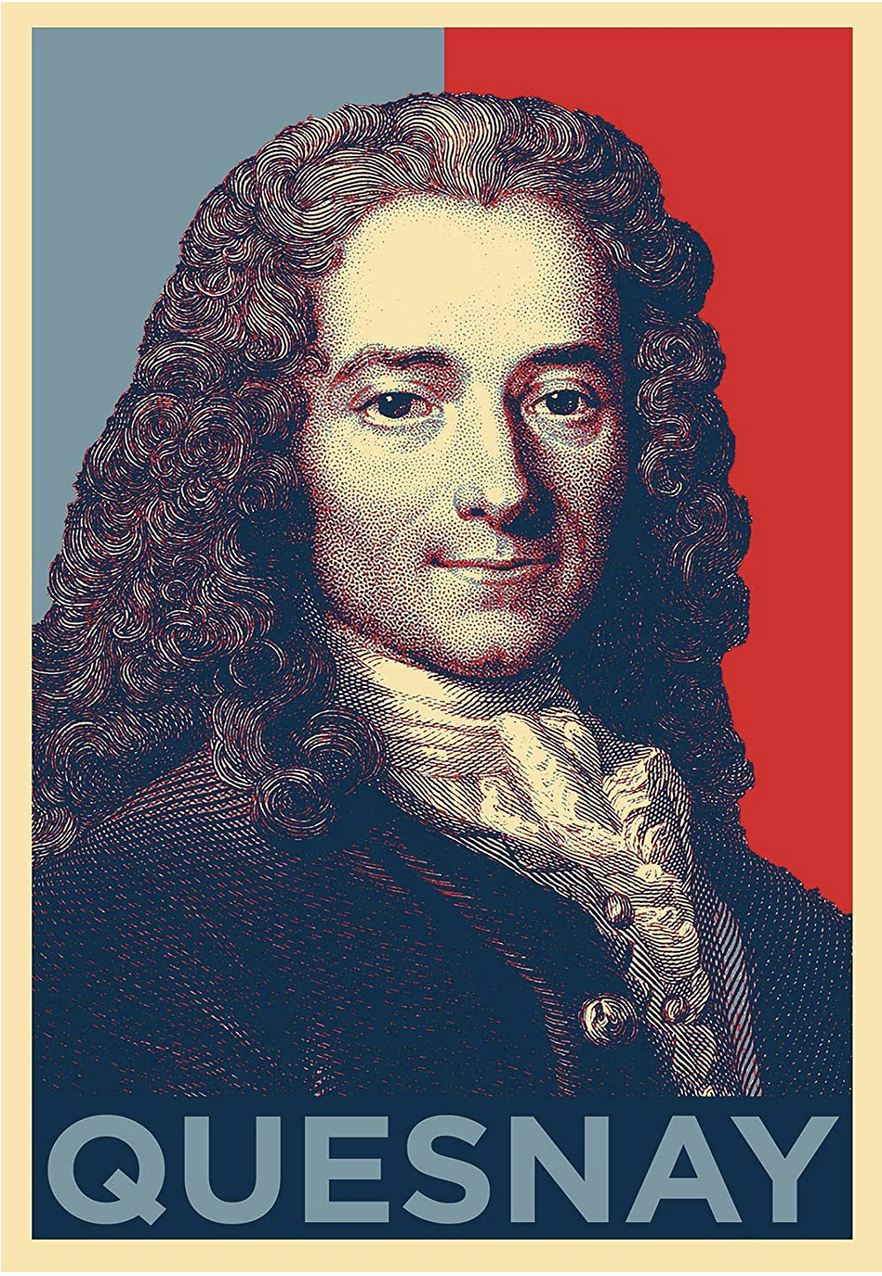
Among other things, Bagehot not only devotes the largest chunk of his Adam Smith essay — 11 out of 40 paragraphs — to Smith’s sojourn in France; he also describes in vivid detail — quoting key passages directly from The Wealth of Nations — the mishmash of outmoded trade barriers, oppressive taxes, and other “economic[] errors” that Smith found there. (See especially paragraph 18 of Bagehot’s 1876 essay, where Bagehot explains the logic of French mercantilism.) But what must have surprised or astonished Adam Smith’s imagination and intellect more than anything else during his time abroad were the counter-intuitive and radical doctrines of the French “Économistes” led by the great polymath François Quesnay (pictured below), one of the inventors a decade earlier of a new method of analysis called the Tableau économique, the first formal model of the economy. (As an aside, in his early essay on the history of astronomy Adam Smith himself had emphasized the pivotal role that the emotions of wonder, surprise, and admiration play in the development of science.)

Despite Smith’s admiration of the Économistes, Quesnay’s new school of political economy possessed an irredeemable and fatal flaw. Bagehot himself identifies this fateful paradox on page 35 of his essay (paragraph 27), a logical contradiction that would doom the future fortune of the French peoples, literally and figuratively. On the one hand, the Économistes were the champions of economic freedom, or in the immortal words of Walter Bagehot: this new school of laissez-faire economists “delighted in proving that the whole structure of the French laws upon industry was wrong; that prohibitions ought not to be imposed on the import of foreign manufactures; that [subsidies] ought not to be given to native ones; that the exportation of corn ought to be free; that the whole country ought to be a fiscal unit; that there should be no duty between any province; and so on in other cases.” (Bagehot 1876, p. 32; para. 22.)

But at the same time, the Économistes, starting with Quesnay himself, had “an eager zeal for … despotism”, for they wanted to accomplish their radical laissez faire reforms “by the fiat of the sovereign.” (Bagehot 1876, p. 35; para. 27.) In other words, a free market requires a strong central government (a political authority strong enough to, at a minimum, define, allocate, and enforce property rights as well as guarantee law and order), but a strong central government, in turn, poses a great risk to freedom. That is the logical contradiction of Quesnay and his disciples. Does this paradox have a solution? As I shall explain in my next Bagehot/Smith post, Adam Smith would devote the next ten years of his life (1766-1776) attempting to solve it.

Francois Quesnay Art Print (via Amazon)
Posted in Uncategorized | 3 Comments

Adam Smith Interlude 1 (The Grand Tour Years)

My previous post describes Adam Smith’s unexpected decision to resign his prestigious professorship at the University of Glasgow in order to become a travelling tutor to the future 3rd Duke of Buccleuch, and my next post will describe what may have sparked the philosopher’s intellectual wonder while he was abroad. In the meantime, below are four links providing some background information regarding the 18th-century British custom of sending young aristocrats overseas with a tutor as part of their education:

1. 18th Century Grand Tour of Europe, via ThoughtCo.

2. History of the Grand Tour, via the Educated Traveller.

3. How the Grand Tour transformed eighteenth-century culture in Britain, via House & Garden.

4. What was the Grand Tour?, via the Royal Museums Greenwich website.

Bonus link: When Paris’s Streets Were Paved With Filth, via Undark.

Posted in Uncategorized | Leave a comment

Another surprise twist on the road to Smith’s Damascus

(Walter Bagehot and Adam Smith, part 6)

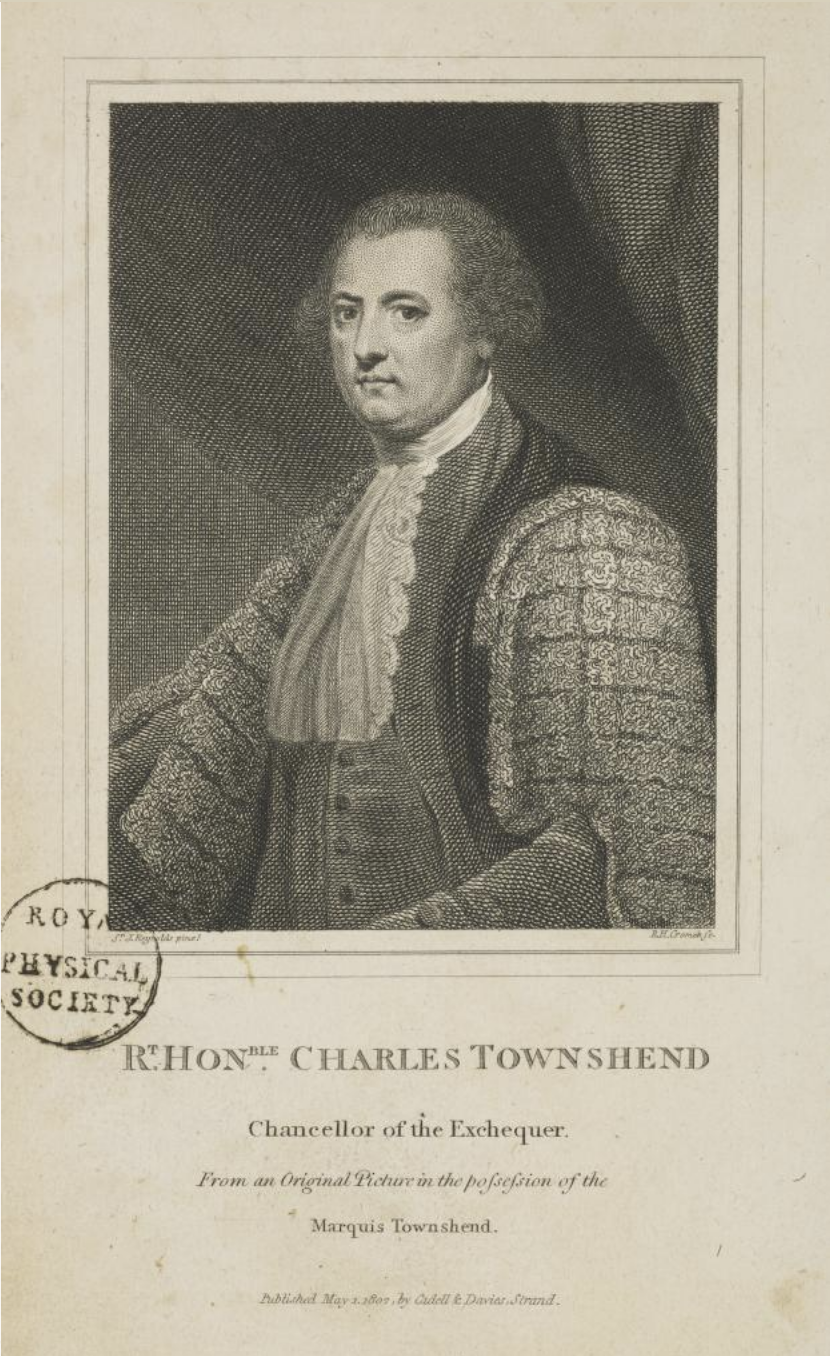
My previous post described Walter Bagehot’s scathing but on point review of Adam Smith’s first book, The Theory of Moral Sentiments. However weak and flimsy Smith’s theory of sympathy was, the publication of the first edition of Moral Sentiments in 1759 would set into a motion a chain of unlikely events, one that would soon open a new chapter in Smith’s life: his three-year grand tour of Toulouse, Geneva, and Paris from early 1764 to late 1766. As Bagehot explains on page 28 of his essay (paragraph 15), Moral Sentiments had come to the attention of a powerful government minister in London, one Charles Townshend (pictured below), who liked this work so much that he not only travelled to Glasgow to meet Smith in person; Townshend also offered the Scottish moral philosopher the position of “travelling tutor” to his stepson Henry Scott, the future 3rd Duke of Buccleuch.

Here, Bagehot identifies another Smithian enigma, one that has puzzled me for years, by the way. Why would a bookworm like Adam Smith ever agree to renounce his prestigious position at the University of Glasgow, “a life-professorship that yielded a considerable income”, in order to become a mere travelling tutor to a future duke he had never met? (See Bagehot 1876, p. 28; para. 15.) And why would a loyal son who still lived with his mother ever decide to give up the company of his dear mother as well as the time to write and think? Was it the money? Smith would earn more as a tutor than as a professor, and he would be entitled to a lifetime pension to boot! Was it the worldly political connections the position afforded? The future Duke was about to become the largest landowner in all of Scotland, while his stepfather was destined to become the next British Prime Minister. Or was it just the opportunity to travel abroad, meet new people, and see distant lands? In those days, the grand tours of wealthy young aristocrats could consume many years of travel and the itinerary would encompass France, Italy, and perhaps the German states of the old Holy Roman Empire.

Perhaps it was the opportunity cost of turning down such a once-in-a-lifetime opportunity that won out, for if it had not been for Charles Townshend, Adam Smith might have never written The Wealth of Nations, or in the immortal words of Walter Bagehot: the future economist “might have passed all his life in Scotland, delivering [the same old] lectures and clothing [his] very questionable [moral] theories in rather pompous words.” (Bagehot 1876, p. 29, para. 16.) Whatever the reason–and most likely, it was a combination of all three: financial considerations, worldly prestige, and possible adventure–Smith threw caution to the wind, accepted Townshend’s offer, and ended up spending “[t]he greater part of three years abroad” in “the greatest country on the continent”, France. (Ibid., pp. 28-29, para. 17.)

As it happens, one of the most remarkable events in the annals of political economy was occurring on French soil at this very moment in history. France had recently deregulated the sale of grain–the kingdom’s most essential agricultural staple–but in Paris the old police regulations and price controls still applied. The people of the Kingdom of France were thus literal guinea pigs in a massive real-time natural experiment in laissez-faire economics, with Parisians serving as the control group, or in the words of Bagehot: “The caprice of Charles Townshend [his decision to offer Adam Smith the position of travelling tutor] had a singular further felicity. It not only brought [Adam Smith] into contact with facts and the world; but with the most suitable sort of facts, and for his [Smith’s] purpose the best part of the world.” (Bagehot 1876, p. 29, para. 16.)

Stay tuned; I shall turn to Smith’s “grand-tour years” in my next post.

Robert Hartley Cromek, The Right Honourable Charles Townshend, 1725-1767. Chancellor of the Exchequer. Source: The National Galleries of Scotland (see here).
Posted in Uncategorized | Tagged , | 2 Comments

Dissing Smith’s “Theory of Moral Sentiments”

(Walter Bagehot and Adam Smith, part 5)

Happy Monday! Thus far, we have reviewed the first few pages of Bagehot’s 1876 essay “Adam Smith as a Person” (pp. 18-26 or paragraphs 1-12, to be more precise); today, we will turn to the next three pages of his excellent essay (pp. 26-29 or paragraphs 13-15).

After joining the faculty of the University of Glasgow in the fall of 1751, Adam Smith began lecturing on a wide variety of topics, including rhetoric, ethics, and law, and it was during this time–his professor years (1751 to 1763) in Glasgow–that the now middle-aged Adam Smith would begin to play a small part on the intellectual stage of Enlightenment Europe. Smith’s lectures not only attracted students from all over the United Kingdom as well as the Continent; Smith also made his first major contribution to the world of letters: The Theory of Moral Sentiments. (The first edition of this great tome was first published in 1759, the year Smith celebrated his 36th birthday.)

Adam Smith’s philosophical treatise not only catapulted its author on the world stage in a literal sense, for as I shall further explain in my next post, it was the publication of “this celebrated book” that would lead to Adam Smith’s three-year “Grand Tour” of Paris, Geneva, and the South of France with the Duke of Buccleugh starting in January of 1764; Moral Sentiments was also the main source of Adam Smith’s scholarly and literary reputation while he was still alive. (As Bagehot correctly notes, except for a little essay on the origins of language, which Smith added to the third edition of The Theory of Moral Sentiments in 1767, Smith did not publish any other new work until the first edition of The Wealth of Nations was published in April of 1776.)

Although Smith’s Moral Sentiments was by all accounts “much praised and much read” (p. 26, paragraph 13) at the time of its initial publication in 1759, Bagehot, writing a century later, wastes no time in showing what a weak and flimsy a work of moral philosophy it really was. To the point, Bagehot launches a devastating two-pronged pincer movement, so to speak, against Smith’s work, simultaneously attacking both intellectual flanks of Smith’s ethical theory: the sentiment of sympathy and the device of the impartial spectator.

First off, Adam Smith tried to build a comprehensive and sophisticated theory of ethics on the foundation of human sympathy. In brief, according to Smith the moral philosopher, man is not just a selfish creature but an other-regarding one too, or in Smith’s own “pompous” words: “How selfish soever man may be supposed, there are evidently some principles in his nature, which interest him in the fortune of others, and render their happiness necessary to him, though he derives nothing from it except the pleasure of seeing it“. (This famous passage appears in the very first sentence of Smith’s Theory of Moral Sentiments.)

Bagehot, however, spots an “obvious objection” to Smith’s pro-sympathy premise: “We often sympathize where we cannot approve, and approve where we cannot sympathize.” (p. 27, para. 14). In other words, unlike the Pope, Smith’s lofty sentiment of sympathy is not infallible! Moreover, even if Smith’s theory is really based on what we now call “empathy” (I always get the two confused!), Bagehot’s “obvious objection” still stands. Either way, people often sympathize (i.e. feel pity for) or empathize (i.e. understand how others feel) with the wrong people, an observation that is especially true in a real-world domain like politics, where “[e]ven the wisest party men more or less sympathize with the errors of their own side ….” (ibid.).

To his credit, Bagehot acknowledges that Adam Smith anticipated this “obvious objection” to his theory and that Smith tried to remedy it by introducing the imaginary device of the impartial spectator, perhaps the most original aspect of all of Smith’s moral philosophy. Alas, Bagehot’s take-down of the impartial spectator is so deadly and devastating that it is worth quoting in full:

Adam Smith could not help being aware of this obvious objection …. But the way in which he tries to meet the objection only shows that the objection is invincible. He [Smith] sets up a supplementary theory–a little epicycle–that the sympathy which is to test good morals [i.e. properly distinguish right from wrong] must be the sympathy of an “impartial spectator.” But, then, who is to watch the watchman? Who is to say when the spectator is impartial, and when it is not?

As it happens, Bagehot is not the only public intellectual to “diss” Smith’s great work of moral philosophy. My colleague and friend Daniel Klein, for example, has identified no less than 26 different authors who have found one fault or another in Smith’s Theory of Moral Sentiments. (See here: Dan Klien, “Dissing The Theory of Moral Sentiments: Twenty-Six Critics, from 1765 to 1949,” in Volume 15 of Econ Journal Watch.) But Bagehot’s critique, to my mind, is the most fatal one. (If Bagehot were a modern-day hip hop artist, his two-track Adam Smith diss songs might be called “Too Much Sympathy, Yo'” and “Who’s Watchin’ My Watcher?”)

Aside from the question of its intellectual merit, The Theory of Moral Sentiments led to Adam Smith’s tour of Europe, a voyage of discovery that most likely shaped Adam Smith’s intellectual destiny more than other episode in Smith’s life. I shall turn to Smith’s appointment as a travelling tutor to the Duke of Buccleugh and their short-lived “Grand Tour” in my next post.

Posted in Uncategorized | 3 Comments

Recap of Walter Bagehot’s View of Adam Smith

Below is a recap of my first five posts in this series:

  1. Adam Smith as a Person (March 25, 2023), where I introduce an essay with the same title by English essayist Walter Bagehot.
  2. Walter Bagehot and Adam Smith, part 1 (March 27), where I identify several themes in Bagehot’s Adam Smith essay.
  3. Adam Smith’s dream (March 28), where I describe the ambitious nature of Smith’s massive scholarly project: to identify the universal and law-like rules of behavior that men, merchants, and law-makers should live by.
  4. Balliol College and the road to Adam Smith’s Damascus (morning of March 30), where I survey the last stage Smith’s formal education–his seven years of study at Oxford–and take notice of his momentous decision in 1746 to abandon his religious vocation.
  5. Adam Smith’s patrons and possible father figures (afternoon of March 30), where I identify two prominent men who took Smith under their protective wings: the jurist Lord Kames and the mechant/slave trader Provost Cochrane.

Stay tuned; I will pick up where I left off (with the publication of Adam Smith’s Theory of Moral Sentiments in 1759) and resume my Bagehot/Smith series on Monday, April 3 …

Posted in Uncategorized | Leave a comment

Sunday Salsa: El Pío Pío

Posted in Uncategorized | Leave a comment

UCF to become a car-free zone!!!

Following the lead of many U.S. cities and such world-class capitals as Berlin, Ghent, and Paris, the University of Central Florida (UCF) will soon become the largest car-free campus in the world!!!! In a press release, UCF President Alexander N. Cartwright pledged to fight climate change by making the main campus a “car-free zone” starting in 2025! More details are posted below the fold:

Continue reading
Posted in Uncategorized | Leave a comment

Truth Market update

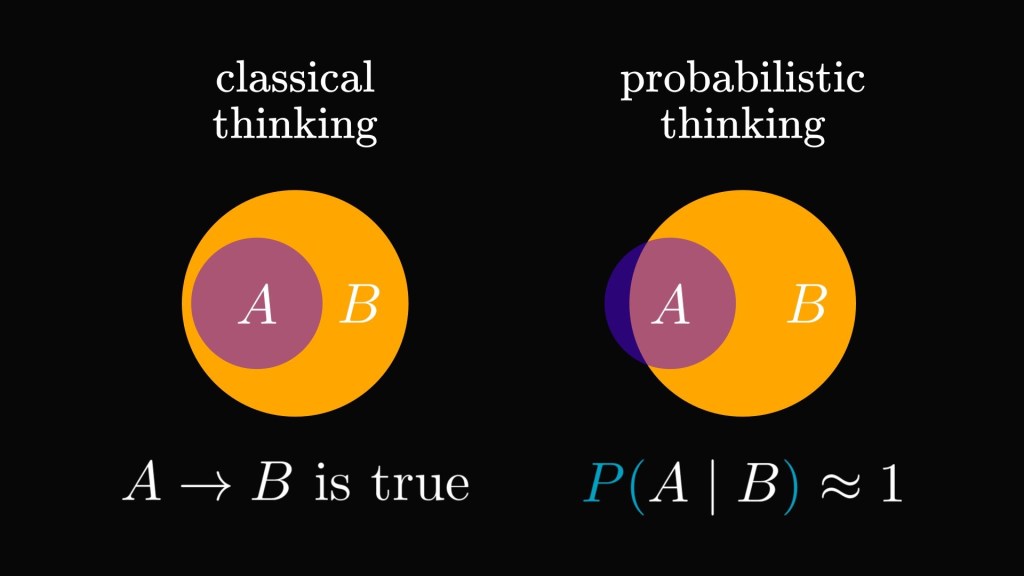
I have just posted a revised version of my Truth Markets paper on SSRN. The premise of my revised paper is still the same (the idea that truth is probabilistic, not absolute), but I address the concerns raised by the reviewers of my original first draft, such as the need for an arbiter and the possibility of market manipulation. Enjoy!

Posted in Uncategorized | Leave a comment

Selena forever

We will never forget you!

Posted in Uncategorized | 1 Comment