Hayek, knowledge, and truth markets (part 2 of 3)

“The problem is … how to dispense with the need of conscious control and how to provide inducements which will make the individuals do the desirable things without anyone having to tell them what to do.”  

“…this problem [the problem of coördinating the actions of millions of people without central planning] can be solved, and in fact is being solved, by the price system.”
F. A. Hayek (1945, p. 527, p. 525)

My previous post surveyed the first half Hayek’s classic paper “The use of knowledge in society”, where Hayek explores the economics of knowledge and economic organization more generally. To summarize: Hayek identifies three methods of knowledge-production and distribution–central planning, markets, and monopoly–and asks, which method is the best one? The answer to this question finally comes into focus in Part 5 of Hayek’s knowledge-in-society paper. To the point, Hayek’s answer is prices via decentralized markets, i.e. “the price system“. For Hayek, prices reflect hidden information–information that is widely dispersed among many actors and that is too costly for any one individual or firm to assemble in a timely fashion. To illustrate this key point, Hayek gives the following “simple and commonplace” example involving the price of tin. I will quote Hayek’s example in full below:

“Assume that somewhere in the world a new opportunity for the use of some raw material, say tin, has arisen, or that one of the sources of supply of tin has been eliminated. It does not matter for our purpose–and it is very significant that it does not matter–which of these two causes has made tin more scarce. All that the users of tin need to know is that some of the tin they used to consume is now more profitably employed elsewhere, and that in consequence they must economize tin. There is no need for the great majority of them even to know where the more urgent need has arisen, or in favor of what other needs they ought to husband the supply. If only some of them know directly of the new demand, and switch resources over to it, and if the people who are aware of the new gap thus created in turn fill it from still other sources, the effect will rapidly spread throughout the whole economic system and influence not only all the uses of tin, but also those of its substitutes and the substitutes of these substitutes, the supply of all the things made of tin, and their substitutes, and so on; and all this without the great majority of those instrumental in bringing about these substitutions knowing anything at all about the original cause of these changes. The whole acts as one market, not because any of its members survey the whole field, but because their limited individual fields of vision sufficiently overlap so that through many intermediaries the relevant information is communicated to all.” (Hayek 1945, p. 526.)

In brief, Hayek’s most original insight is that prices are signals, or in Hayek’s own words: “Fundamentally, in a system where the knowledge of the relevant facts is dispersed among many people, prices can act to coördinate the separate actions of different people in the same way as subjective values help the individual to coördinate the parts of his plan.” (Ibid., p. 526, emphasis added.) In other words, the price mechanism aggregates disperse information and thus allows people–regardless of how much or how little they know about the overall economy–to quickly and cheaply decide which goods and services to trade and in what quantities.

Next, in Part 6 of his paper, Hayek identifies two additional advantages the price system has over other methods of knowledge production and knowledge distribution: prices not only aggregate dispersed information into a single metric; the price mechanism doesn’t require a panel of experts and prices are user-friendly:

1. The price system is user-friendly. People don’t have to be super-smart or spend a lot of time and money to acquire sufficient information to make good decisions. Here is how Hayek makes this key point:

“The most significant fact about this system [the price system] is the economy of knowledge with which it operates, or how little the individual participants need to know in order to be able to take the right action. In abbreviated form, by a kind of symbol, only the most essential information is passed on, and passed on only to those concerned. It is more than a metaphor to describe the price system as a kind of machinery for registering change, or a system of telecommunications which enables individual producers to watch merely the movement of a few pointers, as an engineer might watch the hands of a few dials, in order to adjust their activities to changes of which they may never know more than is reflected in the price movement.” (Hayek 1945, pp. 526-527, emphasis added.)

2. The price system doesn’t need experts to work well. When market prices are determined by supply and demand, there is no need for a philosopher-king or a central committee of so-called “experts” to give orders, or in Hayek’s own words: “The marvel is that in a case like that of a scarcity of one raw material [such as tin, to borrow Hayek’s own example], without an order being issued, without more than perhaps a handful of people knowing the cause, tens of thousands of people whose identity could not be ascertained by months of investigation, are made to use the material or its products more sparingly; i.e., they move in the right direction.” (Hayek 1945, p. 527, emphasis added. Hayek adds: “I have deliberately used the word ‘marvel’ to shock the reader out of the complacency with which we often take the working of this mechanism for granted.” Ibid.)

Hayek concludes his 1945 knowledge paper by responding to a point made by his intellectual nemesis Joseph Schumpeter in his influential book Capitalism, Socialism, and Democracy, the third most cited work in the social sciences published before 1950, behind Karl Marx’s Capital and Adam Smith’s Wealth of Nations. I will discuss Hayek and Schumpeter’s competing theories of markets–and their relevance to my “truth market” proposal–in my next post.

SNL Image
Posted in Uncategorized | 3 Comments

Hayek, knowledge, and truth markets (part 1 of 3)

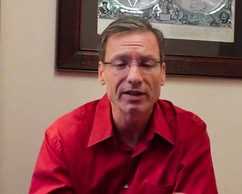
Hello, fellow nerds! I posed the following key question in my previous blog post: How likely is it that the price of any given belief contract on my truth market will eventually converge on the truth value of the conspiracy theory or fake news story being bet on? I will respond to this query by reviewing an influential paper titled “The use of knowledge in society” by F. A. Hayek (pictured below), the classic work that inspired me to propose “truth markets” to begin with.

Hayek’s paper, which was published in the September 1945 issue of the American Economic Review (AER), has seven parts. In Part 1, Hayek poses the following research question: “What is the problem we wish to solve when we try to construct a rational economic order?” (Hayek 1945, p. 519.) But why is constructing a “rational economic order” a problem in the first place? Because our knowledge about supply and demand is often fragmentary and dispersed among many different economic actors, or in the immortal works of Hayek:

“The peculiar character of the problem of a rational economic order is determined precisely by the fact that the knowledge of the circumstances of which we must make use never exists in concentrated or integrated form, but solely as the dispersed bits of incomplete and frequently contradictory knowledge which all the separate individuals possess. The economic problem of society is thus **** a problem of how to secure the best use of resources known to any of the members of society, for ends whose relative importance only these individuals know. Or, to put it briefly, it is a problem of the utilization of knowledge not given to anyone in its totality.” (Ibid., pp. 519-520.)

Hayek then identifies three major methods of knowledge organization in Part 2 of his paper: 1. central planning, e.g. a board consisting of experts; 2. markets or decentralized decision-making, and 3. monopoly, e.g. planning by a mega-firm like Google or Facebook. (Ibid., p. 521.) Which of these methods is the best? According to Hayek, the answer “depends on whether we are more likely to succeed in putting at the disposal of a single central authority all the knowledge which ought to be used but which is initially dispersed among many different individuals, or in conveying to the individuals such additional knowledge as they need in order to enable them to fit their plans in with those of others.” (Ibid.)

In Part III his paper, Hayek identifies two different kinds of knowledge: local knowledge (i.e. information that is “more likely to be at the disposal of particular individuals”) and scientific or technical knowledge (i.e. information “which we should with greater confidence expect to find in the possession of an authority made up of suitably chosen experts”). (Both quotes are in Hayek 1945, p. 521.) After making this distinction, Hayek emphasizes the importance of local knowledge:

“… a little reflection will show that there is beyond question a body of very important but unorganized knowledge which cannot possibly be called scientific in the sense of knowledge of general rules: the knowledge of the particular circumstances of time and place. It is with respect to this that practically every individual has some advantage over all others in that he possesses unique information of which beneficial use might be made, but of which use can be made only if the decisions depending on it are left to him or are made with his active coöperation.” (Ibid., pp. 521-522)

Hayek makes two further points about local knowledge in Parts 4 and 5 of his paper. First off, he emphasizes the temporal problem of change–how conditions can change rapidly or slowly over time, or in Hayek’s own words: “… the economic problem of society is mainly one of rapid adaptation to changes in the particular circumstances of time and place …” (Ibid., p. 524.) Next (in Part 5), Hayek identifies a second-order problem about local knowledge: how is this knowledge transferred among the members of society. As Hayek notes, “… the ‘man on the spot’ cannot decide solely on the basis of his limited but intimate knowledge of the facts of his immediate surroundings. There still remains the problem of communicating to him such further information as he needs to fit his decisions into the whole pattern of changes of the larger economic system.” (Ibid., pp. 524-525, emphasis added. In addition, Hayek identifies a third-order problem: “How much knowledge does he [the ‘man on the spot’] need to [make decisions] successfully?” Ibid., p. 525, emphasis added.)

Hayek then devotes the last half of his paper answering these key questions. According to Hayek, the movement of prices determined via decentralized markets–what Hayek calls “the price system”–conveys the optimal amount of knowledge to the right people at the right time. Because Hayek’s explanation of the price mechanism is so crucial–not just to our understanding of economics but to other domains of life as well–I will review the second half of Hayek’s 1945 paper in my next post.

Posted in Uncategorized | 1 Comment

Liquid truth markets

I recently proposed the creation of a “truth market” to allow people to buy and sell “belief contracts“; i.e. to place bets on conspiracy theories and fake news. One practical problem a new market must overcome, however, is “transaction costs” or liquidity, i.e. how easy or difficult is it to make trades on that market? (See here or the chart below.) At a minimum, a market must have a sufficient number of willing buyers and sellers in order to work properly. Why? Because without enough traders, the prices of the assets being traded on the market won’t reflect the underlying value of those assets.

So, how could we increase the liquidity of my proposed truth market That is, how could we attract a sufficient number of people to participate in the market? Here, I will offer two possible methods for generating truth market liquidity. One is to simply extend the purview of an existing prediction market like Kalshi or PredictIt. Although my proposed truth market would involve “retrodiction” as opposed to prediction, there is no reason in principle why we couldn’t extend the scope of an existing prediction market to include conspiracy theories and fake news.

The other possible solution is pay-to-play: just pay people to participate on the truth market. Specifically, a pro-market charitable organization, such as the Charles Koch Foundation or a think tank like the Mercatus Center, might consider putting skin in the game by creating and subsidizing its own truth market. To attract bettors, instead of funding yet another ad hoc study or wasteful conference on fake news, democracy, and social media, etc., the sponsor organization could allocate a fixed number of fully-transferable cash-value tokens to people in exchange for participating in the market. Market participants could include students, academics, pundits, and members of the public–people from all walks of life. The more the merrier!

Whichever method is tested (why not try both?), another serious problem that my proposed truth market would have to overcome is what I call the “Keynesian beauty contest” objection. To the point: What guarantee do we have that the price of any given belief contract on my truth market will eventually converge on the truth value of the conspiracy theory or fake news story being bet on? I will address this objection in my next post.

Posted in Uncategorized | Leave a comment

Thanksgiving Day Pop Quiz

Happy Thanksgiving! Instead of rehashing the same old things we are thankful for, let’s change it up by asking, What are you LEAST thankful for these days? I will go first: Ticketmaster, the TSA, mask mandates, and red light cameras.

Posted in Uncategorized | 10 Comments

A modest proposal (JFK truth market edition)

Fifty-nine years ago (22 November 1963), President John F. Kennedy was assassinated in Dallas, Texas. Ten months later (September 1964), the Warren Commission concluded that President Kennedy was shot by Lee Harvey Oswald and that the assassin had acted entirely alone.

Do you believe the official lone gunman theory, or was there a conspiracy? What if there were a truth market in which people could place bets on this question? (For what it’s worth, I propose just such a solution here and here, and I will address some possible problems with my proposed truth market during the Thanksgiving break.)

Posted in Uncategorized | Leave a comment

Memo to FIFA and Qatar: legalize freedom

According to this report in The Guardian (U.K.), the morality police in Qatar are confiscating rainbow-coloured hats worn by fans attending FIFA World Cup matches.

Posted in Uncategorized | Leave a comment

Airport Nanny State

Pictured above are just a small sample of the many PSA messages I was bombarded with at the Fort Lauderdale International Airport while I was waiting to board my return flight home. Not pictured are the incessant and even more annoying airport-wide intercom announcements on human trafficking and other evils. Welcome to the Soviet Socialist Republic of Fort Lauderdale! Paternalism is alive and well at the FLL airport.

Posted in Uncategorized | 3 Comments

Some thoughts on the SEA conference

(SEA stands for the Southern Economics Association.) This was the most insane conference I have ever attended. To the point, the conference program was printed in a tiny 10-point font (see, for example, page 137 of the program pictured below) and ran to 200-plus pages, and the morning panels began at 7:45 in the morning, with over 30 concurrent panels to choose from in each session! My main complaint, however, is that the economists of SEA refuse to apply market principles to their own conference. They charge a flat fee to attend the massive three-day conference (like a socialist version of Disneyland) instead of offering a la carte pricing, where one pays for the number of panels one actually attends (like a capitalist state fair, where one must pay for each ride). Memo to the SEA: do better!

Posted in Uncategorized | Leave a comment

Monday Latin music: Todo de ti

Posted in Uncategorized | Leave a comment

Shout out to Henry Thompson

I will be leading a panel on “New Perspectives on Adam Smith” at the annual meeting of the Southern Economic Association later today. Thus far, my favorite talk has been Henry Thompson’s on “The Organization of Extortion”, which explores the law and economics of criminal protection rackets. Alas, Professor Thompson’s extortion paper is not yet posted to SSRN, so in the meantime, here is his previous work on “Cosa Nostra Courts“.

Posted in Uncategorized | Leave a comment