According to this recent report (hat tip: Drudge), Birds Aren’t Real is a “parody movement” that claims all birds in the US have been replaced by lookalike drones, which are used by the government to spy on citizens. Most (some?) members of this group, however, admit they do not truly believe in this far-fetched conspiracy. Either way, check out this website (https://birdsarentreal.com), which sells “Birds Aren’t Real” merchandise.
On this day (16 October) in 1793, Marie Antoinette was sentenced to death by a French revolutionary tribunal after a one-day sham trial. She was beheaded at 12:15 PM, and her last words were: “Pardonnez-moi, monsieur. Je ne l’ai pas fait exprès” (“Pardon me, sir, I did not do it on purpose”), after accidentally stepping on her executioner’s shoe. More details about this gross miscarriage of justice are available here, via Wikipedia.
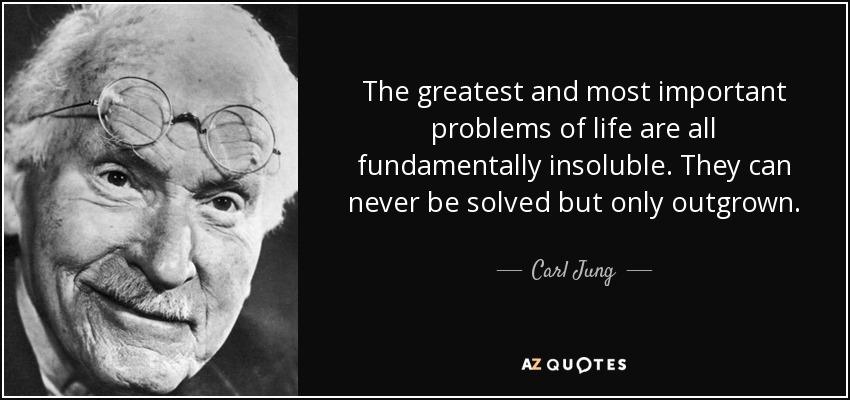
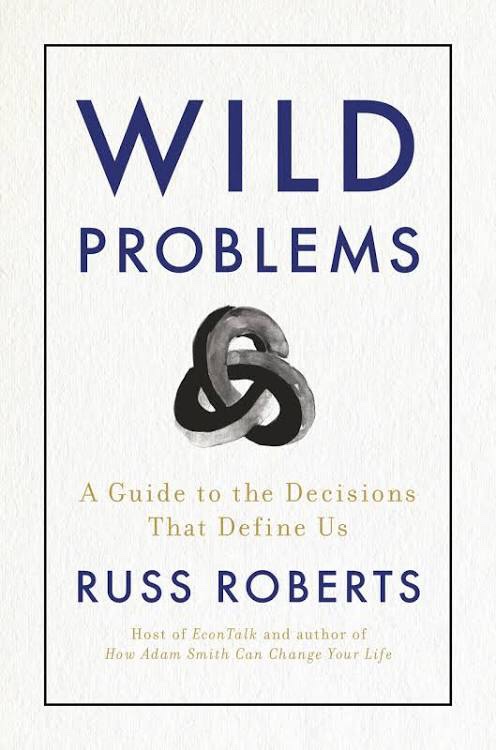
I mentioned in my previous post that I finished reading “Wild Problems” by Russ Roberts. What I did not mention is how Stephen Stigler’s new book “Casanova’s Lottery,” which I also recently read, influenced my reading of Wild Problems. In brief, Roberts’s beautiful book focuses on problems that are not amenable to economic analysis or rational choice models. (Alas, this is not a new insight; by way of example, see the Carl Jung quote pictured below.) Take, for instance, such transformative decisions like where to go to college, who to marry, or what career to pursue. According to Roberts, these types of life-changing decisions are “wild” or insoluble. But are they? By way of comparison, consider the decision whether to buy a lottery ticket. Although the expected value of a lottery ticket is always going to be negative because, as they say in Las Vegas, “the house always wins,” the expected utility of that same ticket might actually be positive–i.e., the pleasure I get at the thought that I might win a big payday is greater than the cost of a ticket. Likewise, there is no reason in principle why can’t we apply this same expected utility framework to Russ Roberts’s laundry list of “wild” or insoluble problems: college, marriage, career, etc. Worse yet, even if Roberts is right that such life-changing decisions fall outside the rational choice paradigm of game theory and economics, his book does not provide any real guidance for how to make such decisions. Nevertheless, I still recommend “Wild Problems” because Russ Roberts is a great writer. His discussion of the vampire problem and the annotated bibliography, where Roberts traces his own intellectual development, are especially worth reading.
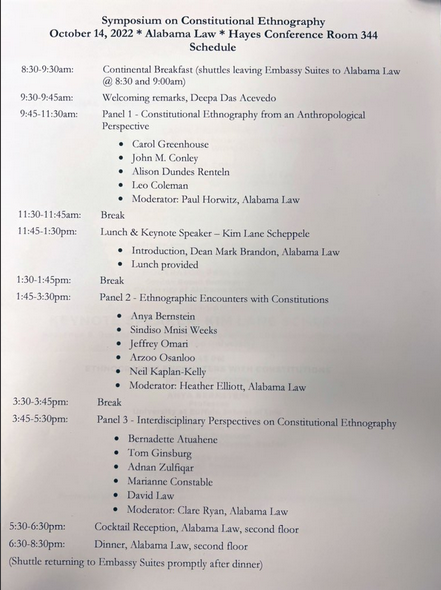
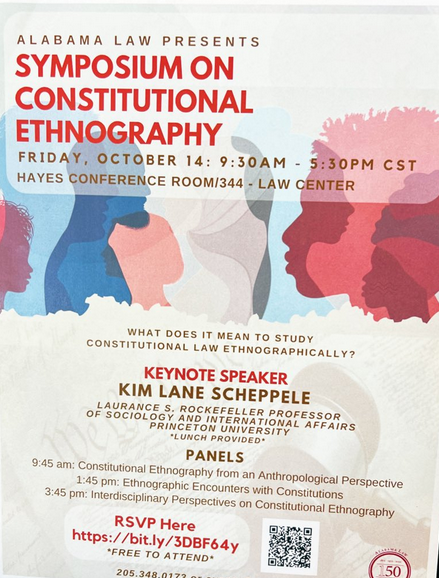
I finished reading “Wild Problems” by Russ Roberts yesterday and will post a review in the next day or two. In the meantime, I will be attending a symposium on Constitutional Ethnography at the University of Alabama today: Friday, 14 October. (P.S.: There is also a Zoom option; details here. P.P.S.: Here is a good introduction to “constitutional ethnography” authored by Kim Lane Scheppele, who teaches at Princeton.)
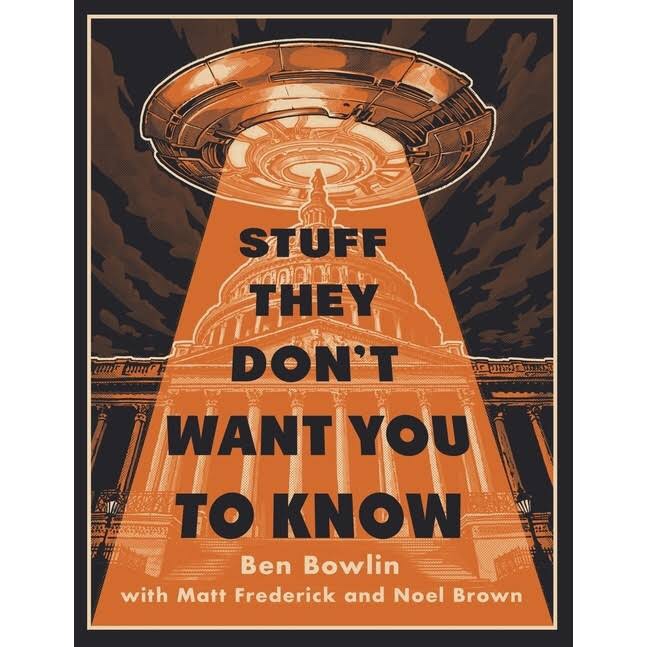
Among other things, I am a huge fan of my fellow classical liberal scholar Russ Roberts, and I am also fascinated by conspiracy theories, especially when they are true (see, for example, my paper on “The Leibniz Conspiracy“), so when I stumbled upon the new books pictured above at my local bookstore earlier today (shout out to Writer’s Block in Winter Park, Florida), I knew what I had to do: buy the books and start reading! I will report back soon …
That is the question posed in this case: Andy Warhol Foundation for the Visual Arts, Inc. v. Goldsmith, which is before the U.S. Supreme Court. The “oral argument” is scheduled for 12 October at 10:00 AM Eastern (see here); in addition, the Federalist Society is sponsoring a national “teleforum” about this case during the afternoon of 12 October at 3:00 PM Eastern (register here). For more background, check out this recent report via Reuters. Also, check out my 2019 NYU paper (“Of Coase and Copyrights”). Although the focus of my paper is on the law and economics of literary fan art, I explain why disputes about the fair use doctrine in copyright law–i.e. disputes between “creators” and “copiers”–are really a reciprocal problem and when copiers should be given the benefit of the doubt.
To the point, I recommend Stephen Stigler’s new book Casanova’s Lottery to anyone interested in the history, economics, ethics, and politics of modern-day lotteries. Among other things, Stigler not only traces the history of the French Loterie, the first large-scale commercial lottery in history, he also examines the mathematics of risk, including the epic back-and-forth debate over the “maturity of chances” or so-called gambler’s fallacy, and the politics of legalized gambling generally. For me, however, the most fascinating part of Stigler’s book is, Why do people even bother to buy lottery tickets? Unless you can somehow rig the drawing in your favor (see here, for example), the expected value of a lottery ticket will always be less than the cost of that ticket. For his part, Stigler revisits two possible answers. One is that people are just plain stupid: “the lottery is a tax on stupidity” (p. 202). Another explanation resides in the subtle difference between expected value (a mathematical concept) and expected utility (a psychological one): the psychological value of even a small chance of winning an enormous jackpot is worth more than the cost of a ticket (see especially pp. 203-207). Either way, aren’t lotteries just another form of legalized theft? Less than 50% of all ticket sales of the Illinois Lotto, to mention just one egregious example, goes to actual prizes (see pp. 189-190)!
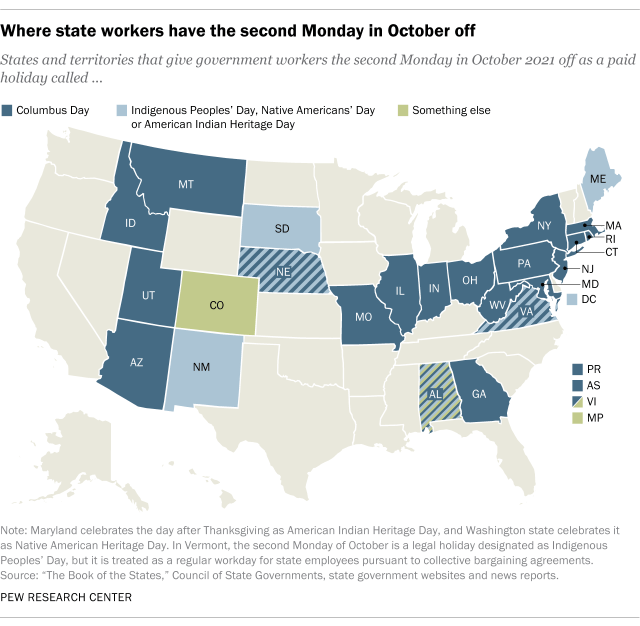
According to this 2021 Pew Research Center report, “Columbus Day” is a public holiday in only 20 States, as well as American Samoa and Puerto Rico. (See infographic below.) Although Christopher Columbus has become a polemical figure in some quarters, his 1492 voyage changed the history of the world. For a fair and balanced portrait of the great Genoese explorer, here is his Wikipedia page.














 prior probability