
Perfect timing: my copy of Stephen Stigler’s new book on “Casanova’s Lottery: The History of a Revolutionary Game of Chance” arrived a few days ago. I will read it over the weekend and report back soon …

Perfect timing: my copy of Stephen Stigler’s new book on “Casanova’s Lottery: The History of a Revolutionary Game of Chance” arrived a few days ago. I will read it over the weekend and report back soon …
On this day (8 October) in 1939, Nazi Germany annexed western Poland and the Free City of Danzig–92,500 square kilometers in all. Most of the remainder of Poland (over 200,000 square kilometers) was annexed by the Soviet Union. Sound familiar? More details, via Wikipedia, are available here.
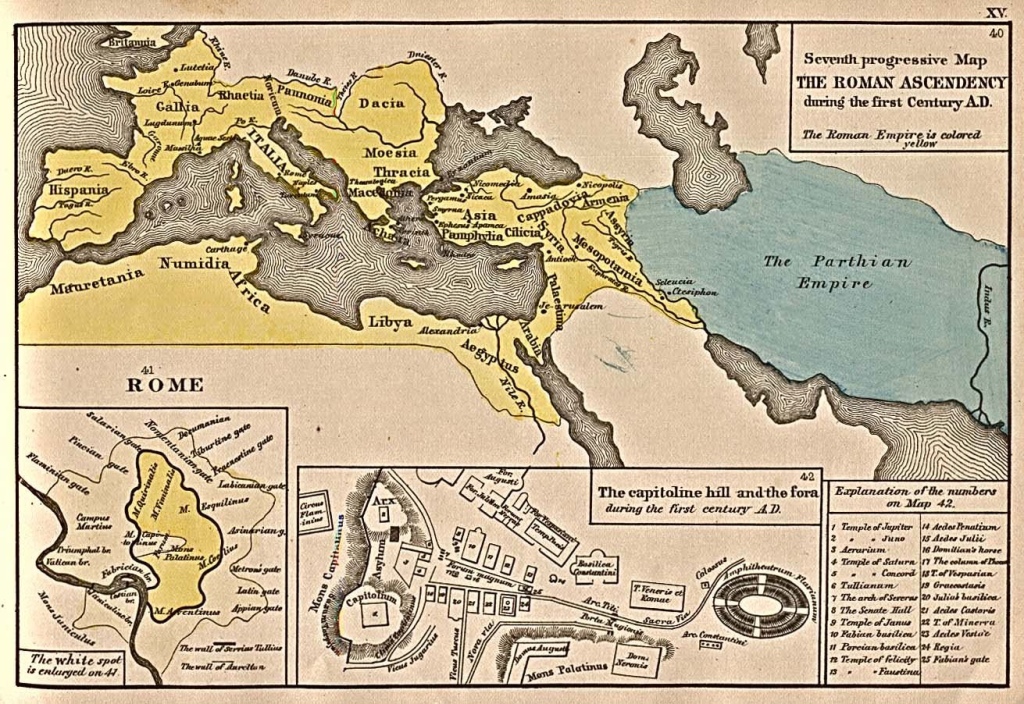
On this day (11 September) in the year 9 A.D. the Romans suffer their greatest defeat at the Battle of the Teutoburg Forest; thereafter the Rhine is established as the de facto border between the Roman Empire and the so-called barbarians for the next four hundred years.
Below are three observations that caught my attention during the Cato Institute’s 6 October conference on “New Challenges to the Free Economy“:
SpaceX launched their fourth manned spacecraft on 5 October (yesterday); meanwhile, the costly and obsolete Artemis rocket is still grounded …
The editors of the Mercer Law Review have invited me to present my work on Ronald Coase, cattle trespass, and nuisance law at their Annual Symposium, which is scheduled to take place this Friday, October 7, 2022. (See the full schedule below.) The symposium is open to all and will be “live-streamed” for free, but you must register here. P.S.: My panel will take place in the early afternoon, starting at 12:45 PM Eastern, and my co-panelists include my colleague and friend Cathren Page (Mercer), who will speak on the problem of “post-truthism,” as well as Matt Saleh (Cornell), who will address the following fascinating question: How do law’s narratives construct one of its central objects: the human body? For my part, my talk will be devoted to one of the most famous legal narratives of all time: Ronald Coase’s cattle-trespass parable in his landmark paper “The Problem of Social Cost.” (The tentative title of my talk is “Coase’s Parable“.)

The latest issue of Econ Journal Watch is available here. Among the many items in this new volume that caught my attention was this Erroneous Erratum section, which begins as follows: “Previously, Stephen Walker criticized an article in Journal of Accounting Research (here and here). Now the authors [of that JAR article], Yang Bao, Bin Ke, Bin Li, Y. Julia Yu, and Jie Zhang, have issued an Erratum in JAR, citing Walker’s critiques. Walker takes a hard look and calls on JAR to do an investigation into research misconduct.” For my part, instead of calling for another toothless investigation, what if we imposed legal liability for research fraud, an idea I proposed back in 2015?!

That is the duration of this catchy but lesser-known Rolling Stones track from their 1981 album “Tattoo You“:
Below is the “remastered” version (same length):
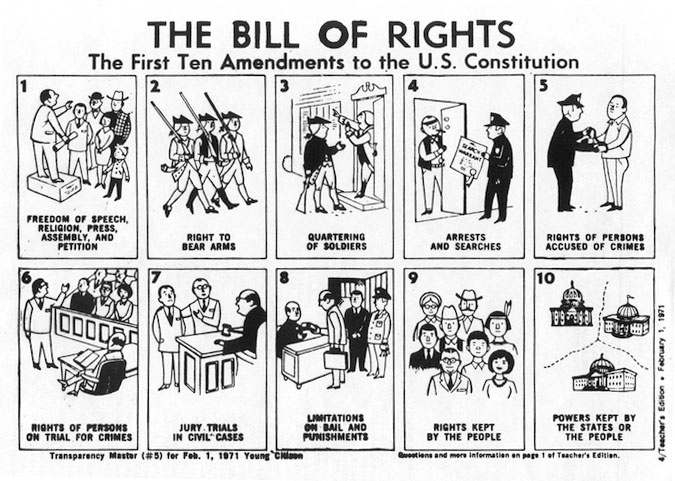
On this day (October 2) in 1789, President George Washington sent copies of 12 newly-proposed constitutional amendments to the legislatures of the States for their ratification. (The Congress had approved these first 12 amendments on September 28, 1789.) Only the last ten of these amendments, however, which are now known as the “Bill of Rights”, were ratified by the requisite number of States. One of the two unratified amendments is reprinted below:
“After the first enumeration required by the first article of the Constitution, there shall be one Representative for every thirty thousand, until the number shall amount to one hundred, after which the proportion shall be so regulated by Congress, that there shall be not less than one hundred Representatives, nor less than one Representative for every forty thousand persons, until the number of Representatives shall amount to two hundred; after which the proportion shall be so regulated by Congress, that there shall not be less than two hundred Representatives, nor more than one Representative for every fifty thousand persons.“
Had this amendment been ratified, we could have had more than 6,000 representatives today, compared to the 435 we currently have! (More details about this unratified amendment are available here.)
In conjunction with the Eighteenth-Century Scottish Studies Society, the Institute for the Study of Scottish Philosophy, and the International Adam …
Call for Papers: Smith, Ferguson, and Witherspoon @ 300, St Andrews, 18-21 July, 2023

The full tongue-in-cheek story is available here. Alternative title, with apologies to Tyler Cowen: “Small steps toward a much better world“?!










Welcome to the online home of the IASS
Hopefully It’s Interesting.
In Conversation with Legal and Moral Philosophers
Relitigating Our Favorite Disputes
PhD, Jagiellonian University
Inquiry and opinion
Life is all about being curious, asking questions, and discovering your passion. And it can be fun!
Books, papers, and other jurisprudential things
Ramblings of a retiree in France
BY GRACE THROUGH FAITH
Natalia's space
hoping we know we're living the dream
Lover of math. Bad at drawing.
We hike, bike, and discover Central Florida and beyond
Making it big in business after age 40
Reasoning about reasoning, mathematically.
I don't mean to sound critical, but I am; so that's how it comes across
remember the good old days...
"Let me live, love and say it well in good sentences." - Sylvia Plath
a personal view of the theory of computation
Submitted For Your Perusal is a weblog wherein Matt Thomas shares and writes about things he thinks are interesting.
Logic at Columbia University
Just like the Thesis Whisperer - but with more money
the sky is no longer the limit
Technology, Culture, and Ethics
Just like the horse whisperer - but with more pages
Poetry, Other Words, and Cats



 prior probability