The “Bluebook” is a scam

See here. (Hat tip: Brian Leiter.) Update (6/16): If you are unfamiliar with this ugly and time-wasting legal monster, check out Judge Richard Posner’s review of The Bluebook. (Also, appendix 2 on pp. 854-857 of this scathing review contains Posner’s own simple and common-sense citation rules.)

Postscripts: I have developed my own set of simple citation rules for law and legal studies, which I call “Antiblue“; in addition, here are my previous posts about the hideous Bluebook.

Posted in Uncategorized | 3 Comments

File under “near misses”

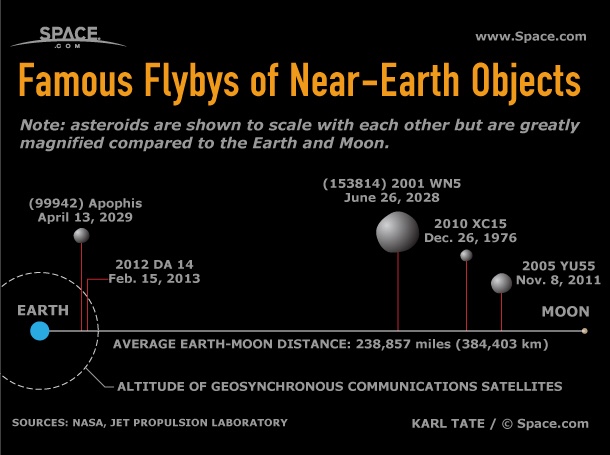
Did you know that on this day (June 14) in 2002 the planet Earth almost collided with a near-Earth asteroid known as “2002 MN“. The asteriod missed us by a mere 75,000 miles (121,000 km), only about one-third of the distance between the Earth and the Moon.

Posted in Uncategorized | Leave a comment

Let’s rename Flag Day …

Any takers?

F. E. Guerra-Pujol's avatarprior probability

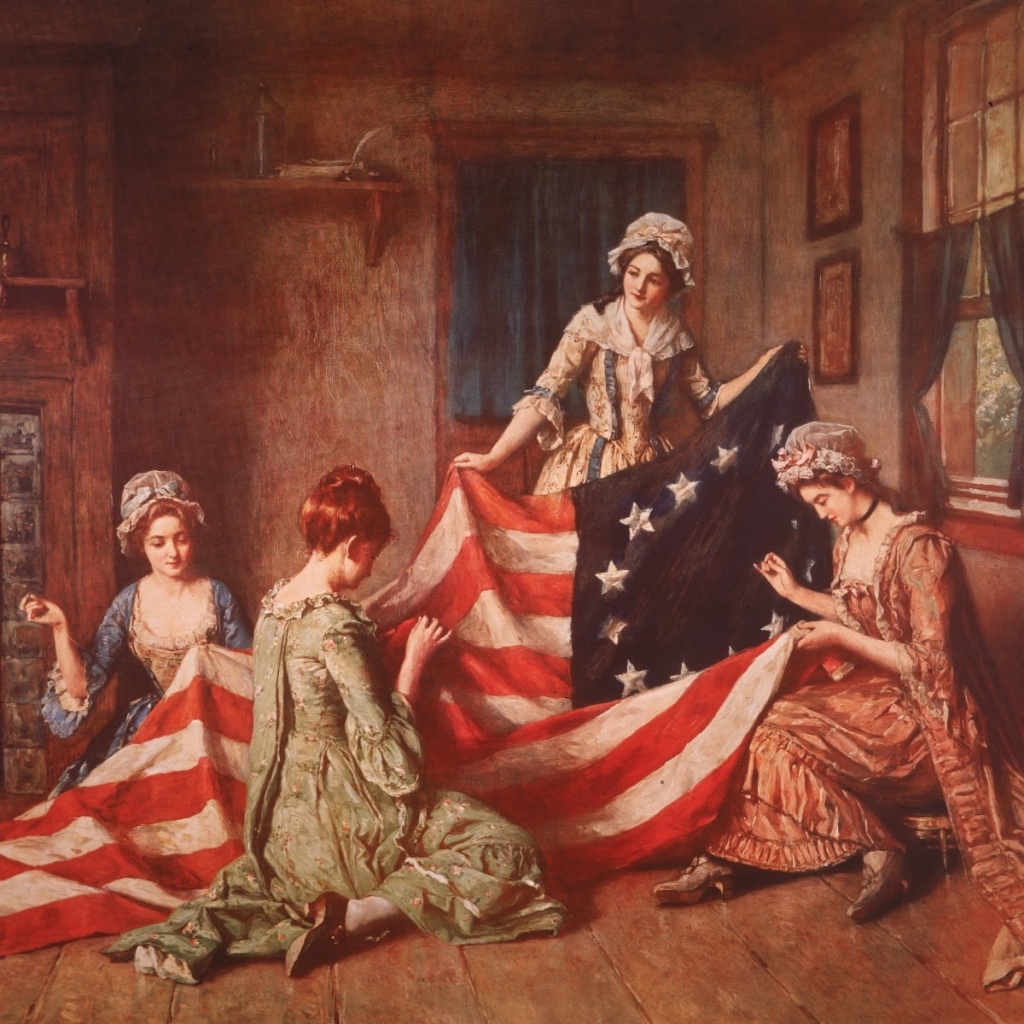
… “Betsy Ross Day” in honor of a humble woman who helped changed the course of history. Here is her Wikipedia page.

View original post

Posted in Uncategorized | Leave a comment

This day in history: June 13

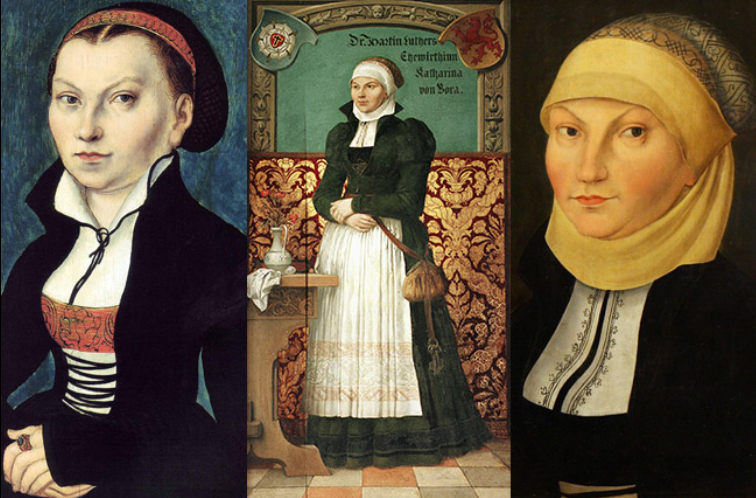
Among other things, on this day (June 13) in 1774, Rhode Island became the first of Britain’s North American colonies to ban the importation of slaves, and on this day in 1525, Martin Luther, the rebel priest who ignited the Protestant Reformation when he nailed his Ninety-five Theses on the door of the All Saints’ Church in Wittenberg, Germany, married Katharina von Bora. (Pictured below are three portraits of von Bora.)

Posted in Uncategorized | 1 Comment

Monday Music: Bad Bunny

Posted in Uncategorized | Leave a comment

Censorship in Florida (FBI/Orlando police edition)

Today (June 12) is the six-year anniversary of Pulse nightclub massacre. In the interim, the City of Orlando has created this website containing all the available public records of that terrible event. (A judge had ordered the release of the 911 transcripts, which the FBI and the police were trying to hide, back in November 2016. See here.) Looking back now, what strikes me the most about the Pulse tragedy is just how slow the police were to respond. Sound familiar?

F. E. Guerra-Pujol's avatarprior probability

Hey, what are the FBI and the Orlando police trying to hide from the public in connection with the massacre at Pulse nightclub last month? The police’s slow response to the Pulse shootings (it took the police over three hours to rescue the remaining hostages that night)? Under Florida sunshine laws, 911 phone calls are public records and must be released to the public, yet Orlando police–apparently at the request of the FBI (see letter below the fold)–is still refusing to release all but one of the transcripts of the 911 phone calls made during the Pulse shootings last month, and even the one phone record that was released was originally censored, with all references to Allah and the Islamic State redacted. Isn’t this sorry episode yet another textbook example of the police acting above the law?

View original post

Posted in Uncategorized | 1 Comment

This time for Africa

On this day (June 11) in 2010 the first African FIFA World Cup kicks off in South Africa.

Posted in Uncategorized | Leave a comment

Adam Smith in Paris on SSRN

I have posted a revised and corrected version of “Adam Smith in the City of Lights (Part 1 of 2)” on the Social Science Research Network (SSRN), though I will be making further revisions next week.

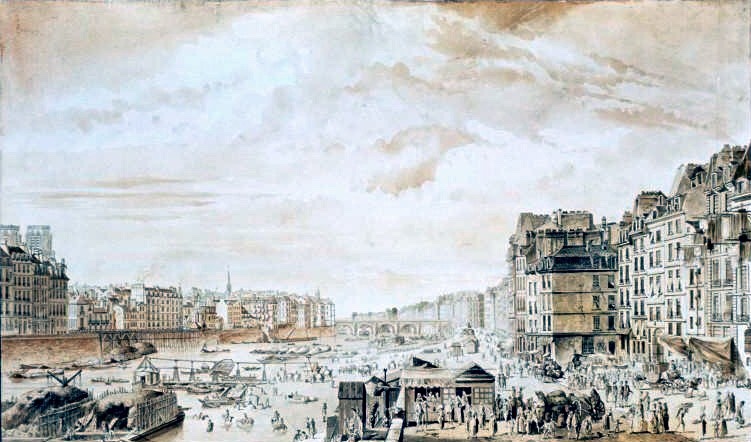
Port de l’Hotel-de-Ville in 18th-Century Paris
Posted in Uncategorized | Leave a comment

Conclusion of part 1 of “Adam Smith in Paris” and a preview of part 2

Now that we have reviewed all the entries in which Adam Smith is mentioned in Horace Walpole’s 1765-66 Paris travel journal, it’s time to wrap up my multi-part “Smith in the City” series. Specifically, were Adam Smith’s travels in France and his stay in Paris a mere intellectual detour? After all, “Smith was already working on ideas that would form the backbone of [The Wealth of Nations] almost immediately after publishing the first edition of [The Theory of Moral Sentiments] ….”[1] Or did his travels play a pivotal role in his intellectual transformation from a virtue-centric moral philosopher into a modern political economist? Five years before embarking on his Grand Tour of Europe, Smith had announced his next great work in the last paragraph of the first edition of The Theory of Moral Sentiments (1759):

"I shall in another discourse endeavour to give an account of the general principles of law and government, and of the different revolutions they have undergone in the different ages and periods of society, not only in what concerns justice, but in what concerns police, revenue, and arms, and whatever else is the object of law."[2]

Smith never published this promised tome on law and government; instead, he wrote about the nature and causes of the wealth of nations. Why did Smith abandon his law book and turn toward political economy? Why did he write a different book? Using Horace Walpole’s Paris journal, I have reconstructed the first eight weeks of Adam Smith’s fateful stay in Paris and identified the people he may have met during this time–from February 15, 1766, the day he arrived at the Hotel du Parc Royal, to April 17, 1766, the day Walpole left Paris.

Alas, Walpole left Paris on the afternoon of April 17, 1766, so we lose our primary witness and source of Smith’s whereabouts in Paris in early 1766. Nevertheless, despite this unfortunate development, using alternative primary sources–such as the correspondence of such contemporaries as Colbert de Castle-Hill, Madame du Deffand, David Hume, Andre Morellet, Madame Riccoboni, and others–as well as the letters of Adam Smith himself–I will next attempt to reconstruct the remainder of Smith’s Paris sojourn, from his first introduction to Madame Riccoboni in May of 1766 to his sudden departure in October of 1766. (I will present the second part of “Smith in the City of Lights” at the annual meeting of the Southern Economic Association in November 2022.)

Scottish Economist Adam Smith Portrait" Sticker by JimPlaxco | Redbubble
Continue reading
Posted in Uncategorized | 3 Comments

Adam Smith and Lord Edward Bentick

Adam Smith appears one last time in Horace Walpole’s travel journal on Wednesday, April 9, which reads: “Lord Edward Bentick and Mr Smith came.”[1]

“Lord Edward Bentick” most likely was Lord Edward Charles Cavendish-Bentinck (1744–1819), whose portrait is pictured below (right), along with the 3rd Duke of Portland (left).[2] At the time of Smith’s 1766 visit to Paris, Bentick was on the last leg of his three-year Grand Tour (1764-66) to France, Holland, and Germany.[3] Later that year, upon his return to England, he would be elected to the House of Commons (Dec. 27, 1766), and he would remain an MP for the next 36 years.[4] Despite his long parliamentary career (1766-1802), and despite his family connections–he was the only brother of Prime Minister William Cavendish-Bentinck, 3rd Duke of Portland–, he never held ministerial office.

Did Bentick and Smith’s pupil, Henry Scott, befriend each other in Paris? Both milords were close in age: Bentick was born in March of 1744; Duke Henry, in September of 1746. And both were experiencing their first grand tours of Europe. Regardless whether they became friends or not, however, the presence of such young men as Lords Bentick and Duke Henry in the French capital reminds us of the original reason why Adam Smith was in Paris in the first place. His primary responsibility at the time was the education and cultivation of his pupils, Duke Henry and the duke’s younger brother Hew Campbell Scott. On the social side of things, Smith–perhaps with the help of Walpole–, had now introduced his students to le monde, Parisian high society. But what about the intellectual side? Did Smith, for example, assign his students any articles from the monthly Journal de l’agriculture, du commerce et des finances, a scholarly journal where the leading économistes of Europe were publishing their work? Did Smith himself get to meet Mirabeau, Quesnay, or Turgot? If so, when, and what did they talk about?

As it happens, something remarkable was occurring in the kingdom of France at this very moment in history–what can only be described as one of the most massive and extraordinary “natural experiments” in history. Although the King had recently deregulated the sale of grain, France’s most important agricultural staple, in Paris the old police regulations still applied to the grain trade. The people of France thus became guinea pigs in a real-time natural experiment, with Parisians serving as the control group. I will turn to this aspect of Smith’s visit and preview my next paper, “Adam Smith in the City of Lights: Part 2” in my next post.

Lord Edward Charles Bentinck - Person - National Portrait Gallery
Source: National Portrait Gallery (U.K.)
Continue reading
Posted in Uncategorized | Leave a comment