Critique of Benkler’s magical thinking

In my previous post, I critiqued David Pozen’s misguided critique of the marketplace of ideas. It turns out, however, that Pozen’s essay is just one of three contributions in a larger series of essays on the theme of “Lies and Counterspeech” published by the Knight First Amendment Institute. The other essays are by Yochai Benkler, who calls the marketplace of ideas a “myth”, and Amy Kapczynsky, who prefers the label “magical”. Alas, the recommendations made in both of those essays are no more sensible than the call for Internet censorship in Pozen’s essay.

In his otherwise excellent essay, Yochai Benkler, a law professor at Harvard, ends up substituting one set of magical/mythical ideas (the marketplace of ideas) for another (social democracy). To the point, he proposes, and I quote, “building a multi-racial coalition aimed to construct an inclusive social democracy in which people actually have a stake and have reason to trust governing elites.” Seriously? That’s his solution? Putting aside the vagueness of this tired normative plea, this multi-racial coalition already exists — it’s called the Democrat Party! (In any case, even the Republican Party has attracted a growing number of minority voters.)

For her part, Amy Kapczynsky, a law professor at Yale, offers a more specific set of solutions in her contribution to the series (see here). I will review her solutions and respond to them on Monday.
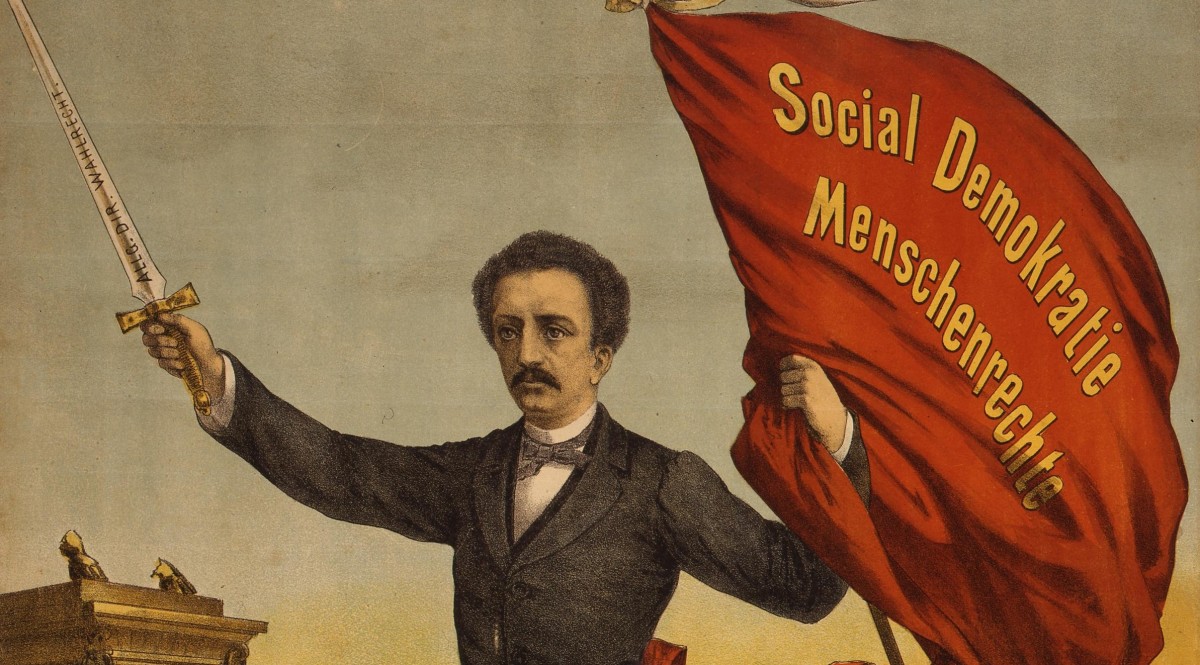
The Origins of Social Democracy - Soapboxie
Posted in Uncategorized | 3 Comments

A critique of Pozen’s critique of the marketplace of ideas

My colleague David Pozen, a law professor at Columbia University, recently wrote this essay on “the problem of lies and deception in the contemporary mass public sphere.” (Hat tip: Brian Leiter.) To the point, Professor Pozen critiques the “marketplace of ideas” metaphor, claiming that there is no empirical evidence for the proposition that a more open marketplace of ideas leads people away from falsity and toward truth. Professor Pozen writes: “We have no basis in evidence or experience to predict that increasing the quality or quantity of true speech on the Internet will reliably neutralize false speech or inculcate true beliefs in society.”

So, if the marketplace of ideas metaphor is just wishful thinking (although, for what it’s worth, Pozen is only able to muster up two obscure law review articles, a 2018 paper by Philip M. Napoli and a 2010 essay by Frederick Schauer, in support of this conclusion), what is to be done? How can we limit the salience and spread of false speech on the Internet?

For his part, Professor Pozen proposes three “solutions” — countermeasures, I might add, that are far worse than the supposed problem he is trying to cure. Among other things, Pozen wants Big Tech companies like Google and Facebook to (1) prioritize authoritative news sources, (2) downrank or remove deceptive content, or (3) impose penalties on serial purveyors of harmful lies. In other words, Pozen favors censorship and wants us to place more of our trust in Big Tech algorithms. (Don’t just take my word for it; scroll down to paragraph six of his essay for yourself.)

Sigh. The problem with Professor Pozen’s approach to misinformation is that, as Frank Ramsey taught us almost 100 years ago, the truth about any given proposition is not always a binary or all-or-nothing entity. Instead, truth is often probabilistic. That is why I reject out of hand Pozen’s misguided and draconian call for more censorship and more penalties. Instead of trusting Big Tech to be less evil, why not recreate an actual marketplace of ideas by allowing people to place bets on the truth or falsity of contested propositions? That is precisely what I propose in my forthcoming paper “The Leibniz Conspiracy“!

To conclude, Pozen himself acknowledges in the closing paragraph of his essay the need for “greater epistemic humility” and how it is “more difficult than ever to secure broad agreement as to what counts as misinformation.” Agreed! And that is why betting markets in fake news and disputed conspiracy theories would be far better than censorship.

The marketplace of ideas | Eddie Playfair
Posted in Uncategorized | 4 Comments

Mondrian World Map

Artist credit: Michael Tompsett; more details here.
Posted in Uncategorized | Leave a comment

Lodden Thinks

That is the name of this fascinating guessing game that I stumbled upon as I was reading “The Biggest Bluff” by Maria Konnikova. This game was invented in the early 2000s by two poker players, Antonio Esfandiari and Phil Laak. According to poker legend, they spontaneously decided to spice things up during the grind of a high-stakes poker tournament in Europe by asking a third party (fellow poker player Johnny Lodden, pictured below top left) a random question, such as “How old is Clint Eastwood?” Laak and Esfandiari then agreed to bet on what they thought Lodden’s answer would be. To keep the game honest, I imagine that Laak and Esfandari asked Lodden to write down his answer ahead of time. Either way, what I find so fascinating about this game is that the true answer to the original question doesn’t matter; the only thing that matters is what Laak and Esfandari think Lodden’s answer will be. In fact, it does not matter what the questions are either–the crazier the question the better! More details here.

The Check-up: Adrián Mateos Vs Johnny Lodden - News - Winamax

Posted in Uncategorized | Leave a comment

Titanic: The Parody

Posted in Uncategorized | Leave a comment

The game North America needs right now

Who cares?

Via Tumblr (circa 2014, emphasis added): “Last Man … is a game of deliberate media/knowledge avoidance, invented by … Kyle Whelliston. Its full name is ‘Last Man in America to Know Who Won the Super Bowl‘.” The official rules of this crazy game are below the fold:

Continue reading
Posted in Uncategorized | Leave a comment

Adam Smith’s Valentine?

To commemorate Saint Valentine’s Day, I am reposting my Adam Smith’s Lost Loves blog post (via AdamSmithWorks) as well as my full-length paper on Adam Smith in Love (via Econ Journal Watch). As an aside, according to this history of Valentine’s Day, it was Chaucer who was the first to record this occasion as a day of romantic celebration, writing in his 1375 poem Parliament of Foules: “For this was sent on Seynt Valentyne’s day/Whan every foul cometh ther to choose his mate.” So, perhaps it is not too far-fetched to imagine Adam Smith — who, alas, never married — asking someone, perhaps the Lady of Fife or Lady Francis or Madame Nicol, Will you be my Valentine?

24 Lovable Valentine's Day Ideas & Activities For Work In 2022
Happy Saint Valentine’s Day, Sydjia!
Posted in Uncategorized | 1 Comment

Bob Marley forever

With Saint Valentine’s Day around the corner — and Black History Month in full swing — today I want to take us back to 1978 to share this music video of “Is this love“. FYI: Bob Marley was born in Saint Ann Parish, Jamaica in the month of February — Feb. 6, 1945, to be precise!

Posted in Uncategorized | Leave a comment

Star Trek Saturday (visualization of warp speed)

Via Kottke, the video below shows how the “warp jump” special effect in the Star Trek universe has changed over the years, beginning with Star Trek: The Movie in 1979. (In case you’re wondering, there were no warp-speed special effects in the original Star Trek series.) You’re welcome!

Posted in Uncategorized | 3 Comments

Map of Italian sportswear brands

Also, via Reddit, see here for maps of British, German, Japanese, and North American sportswear brands. File under: Big, Bad Nike versus the World.

hat tip: u/Mamberoi
Posted in Uncategorized | Leave a comment