Review of Ota: “The roles of judges in Adam Smith’s jurisprudence”

As I mentioned in a previous post, Toshiaki Ota’s presentation on “The roles of judges in Adam Smith’s jurisprudence” was one of my favorite works at this year’s meeting of the International Adam Smith Society (IASS). In summary, Professor Ota makes three crucial points in his draft paper:

  1. Correspondence between Law Judges and Impartial Spectators? According to Professor Ota, some Smith scholars, such as Knud Haakonssen, see a correspondence between Smith’s “impartial spectator” in The Theory of Moral Sentiments (TMS) and Smith’s theory of law in his Lectures of Jurisprudence (LJ), especially his views on the pivotal role of judges in legal systems. (For a timeline of when Smith developed these ideas, see the slide pictured below.) What is the correspondence? On the one hand, the impartial spectator in TMS is a fictional being who judges the morality and propriety of our actions, while on the other hand, flesh-and-blood judges in legal systems are public actors who should strive toward impartiality when judging disputes and law cases.
  2. Ota’s Contribution. Professor Ota, however, invites us to reconsider this supposed correspondence between law judges and impartial spectators. Why? Because Smith himself had a negative view of law judges. Specifically, Smith identified two structural problems with the administration of justice that would make it difficult for law judges to maintain their impartiality: (i) judicial salaries — i.e. judges whose salaries depend on litigation fees will be tempted to favor the party paying those fees –, and (ii) the limited nature of the judicial power — i.e. judges must rely on the political branches (the king and parliament in Smith’s day; the president or prime Minister and legislature in ours) to enforce their decisions. Or in the immortal words of Alexander Hamilton in Federalist #78: judges lack the power of the sword and the power of the purse.
  3. Continuing Relevance of Smith’s Critique of Judges. For my part, I wish to add the following observation before concluding my review of Ota’s paper: Although the first problem (re: judicial salaries) was solved by the framers of the U.S. Constitution by granting judges lifetime tenure with a salary guarantee, the second problem (re: the limited nature of the judicial power) is built into the system government: the Congress has the power of the purse, a power over which courts have no control, and the president (executive branch) has the power of the sword: he decides which laws to enforce, and how to enforce them.
  4. Correspondence between the Jury and the Impartial Spectator. Lastly, Professor Ota concludes his draft paper by drawing a correspondence between jurors and impartial spectators. According to Ota, Smith thought jurors would be impartial for two reasons: (i) the parties in a case have the ability to remove a biased juror from the jury during voir dire or the jury-selection process, and (ii) jurors must reside “near the place where the crime was committed, that they may have an opportunity of being acquainted with it” (quoting Smith’s Lectures on Jurisprudence (B), p. 72).

Alas, Point #4 is where Professor Ota’s paper breaks down and needs to be further developed, for there are two massive problems with Smith’s view of the jury. First and foremost, there is no guarantee that the parties to a case will be able to eliminate all biased jurors during the jury-selection process. (Also, on the issue of bias, I can’t help but add that perhaps we should be asking a different question instead: “What is the optimal level of bias in a jury?”) Secondly, jurors who reside “near the place where the crime was committed” are likely to have some knowledge about the facts of the case ahead of time. In other words, as Ota himself notes in his draft (p. 10), the jurors are likely to be “well-informed spectators”, but isn’t there an inherent tension between the goal of impartiality and the state of being informed about a case?

Aside from my two criticisms of Ota, I still loved his work because I agree with him (and Smith) that judges and jurors must strive to be “impartial spectators” and that legal systems should be designed with this aim in mind.


The Wisdom of Adam Smith

Posted in Uncategorized | 2 Comments

Tuesday Twitter: @backyardracing_

Posted in Uncategorized | Leave a comment

Adam Smith Reservoir Dogs

One last postcard from this year’s International Adam Smith Society meeting at the University of Wisconsin. The two pictures in the top row show Professor Dan Klein (front left), Professor Erik Matson (front right), doctoral student Patrick Fitzsimmons (back left) and yours truly (with fedora). The two pictures on the bottom row feature the cast from the movie “Reservoir Dogs.”

Posted in Uncategorized | 1 Comment

Update on my Adam Smith conference

I presented my work on “Adam Smith in Love” at the annual meeting of the International Adam Smith Society (IASS), which took place at the University of Wisconsin in Madison. (As an aside, I am currently working on a sequel to my Adam Smith paper, which is tentatively titled “Adam Smith in Paris”, in anticipation of the next meeting of the IASS, to take place at the University of the Andes in Bogota, Colombia in July of 2022.) Suffice it to say that many excellent papers — and two books! — were presented at this year’s conference, but my three favorite presentations were the following:

  1. Toshiaki Ota: “The Roles of Judges in Adam Smith’s Jurisprudence”
  2. Maria Pia Paganelli: “Adam Smith’s Digression on Silver: The Centerpiece of The Wealth of Nations
  3. Sarah Skwire: “As If: Clueless About the Invisible Hand”

Alas, I have a flight to catch, and in any case, I am unable to provide a direct link to any of these three wonderful works as they have not yet been published, but I will summarize each paper and comment on them over the next few days after I return home to Central Florida …

Stop Using Adam Smith and F.A. Hayek to Support Your Political Ideology -  Evonomics
Posted in Uncategorized | 1 Comment

Roads Diverge

That is the title of this work of “street sign art” (pictured below from various angles) located in Madison, Wisconsin. This whimsical work of art was created by Portland, Maine-based artist Aaron Stephan and consists of a forest of street signs clustered around a small semi-circular concrete stage across the street from Madison’s Capitol Square. Each street sign bears a word or phrase from poetry, fairy tales, or children’s games, and the blue and green sign colors are meant to evoke lakes and trees. More details are available here via the Wisconsin State Journal.

Posted in Uncategorized | 3 Comments

More Memories of Madison, Wisconsin

Posted in Uncategorized | Leave a comment

Snapshots from UW Madison

Posted in Uncategorized | Leave a comment

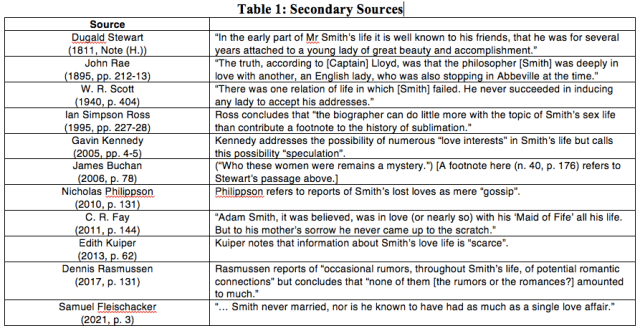
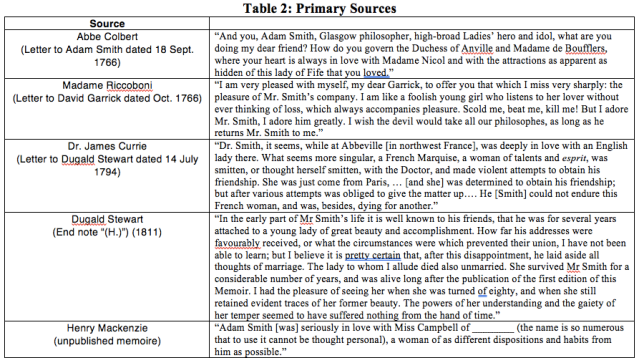
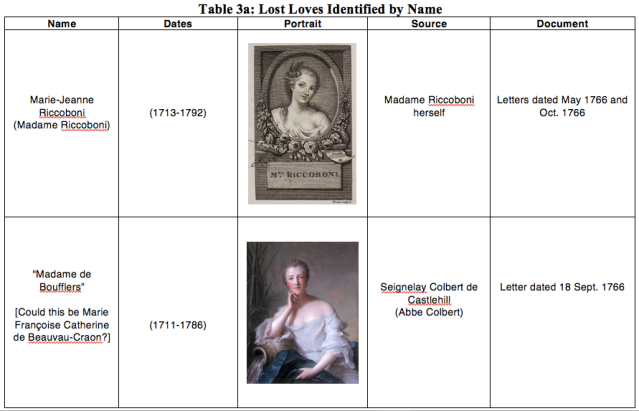
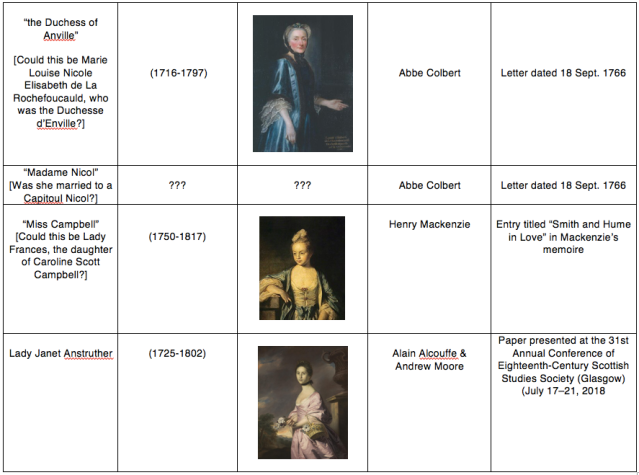
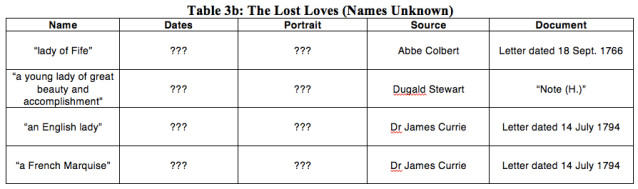
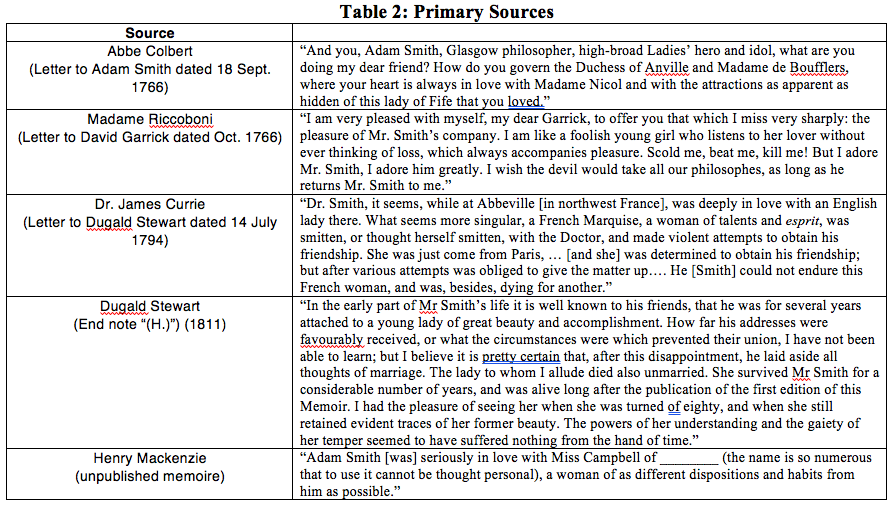
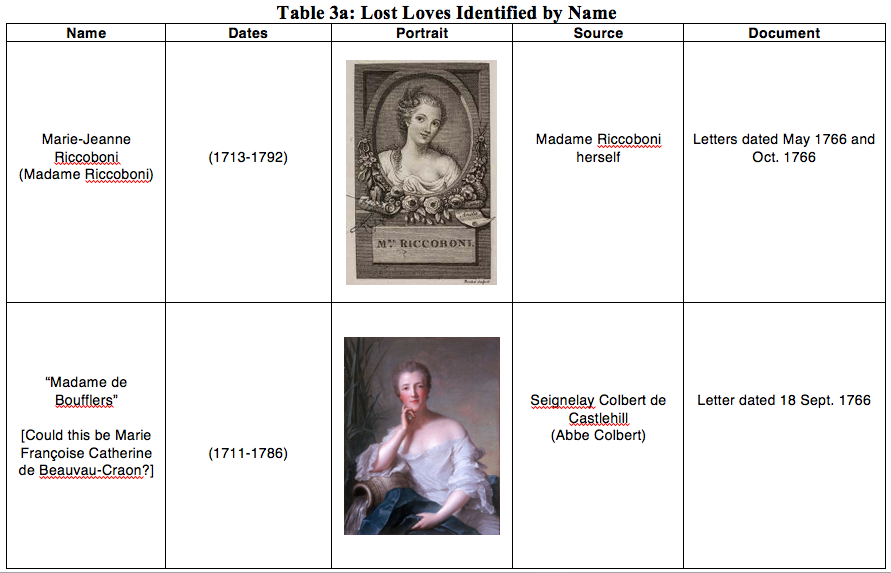
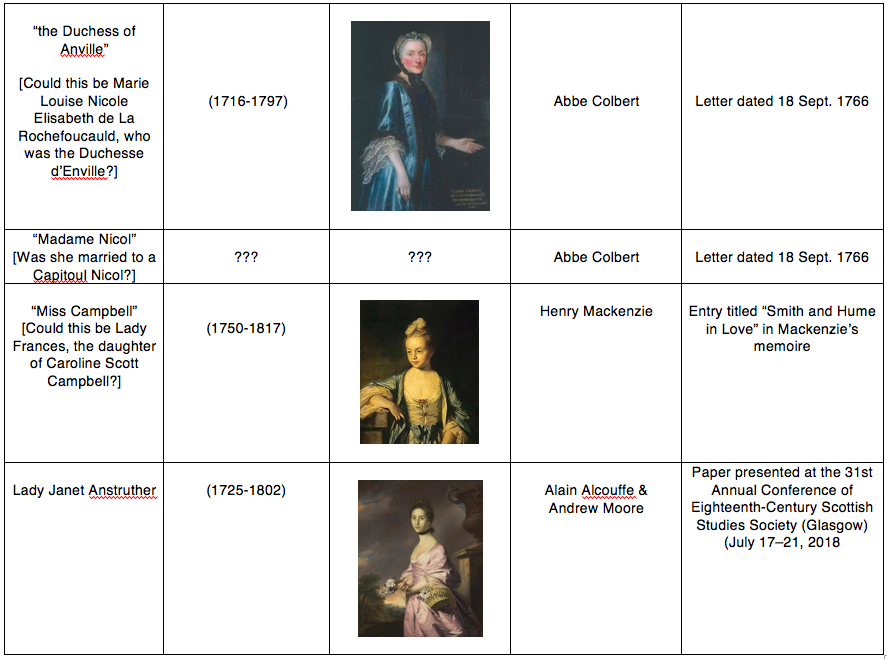
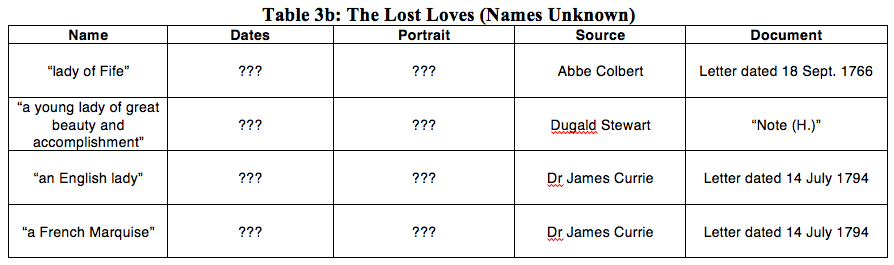
Adam Smith in Love Redux: Three Tables

I made some additions and minor revisions to my three Adam Smith tables, so I am reblogging my previous post with the new and revised table. In brief, Table 1 summarizes in chronological order the secondary literature on Adam Smith’s love life, while Table 2 assembles the available evidence (also in chronological fashion). Additionally, based on the evidence set forth in Table 2, Table 3a identifies Smith’s possible lost loves by name. Lastly, Table 3b, by contrast, refers to those possible lost loves whose names are unknown.

F. E. Guerra-Pujol's avatarprior probability

For my talk at the annual conference of the International Adam Smith Society (IASS) on Friday morning, I have decided to systematize my research on Adam Smith’s private life in the following three tables:


View original post

Posted in Uncategorized | Leave a comment

Adam Smith in Love Redux: Three Tables

For my talk at the annual conference of the International Adam Smith Society (IASS) on Friday morning, I have decided to systematize my research on Adam Smith’s private life in the following three tables:


Posted in Uncategorized | 1 Comment

Miss Campbell?

Based on a short entry in Scottish novelist Henry Mackenzie’s memoire, I identified a seventh possible Adam Smith “lost love” in my previous post, a “Miss Campbell.” Who was she; when did Smith fall in love with her; and what, if anything, became of this romance? For his part, Mackenzie himself implies that “Campbell” was a common last name — a “name so numerous that to use it cannot be thought personal” — so that he is not giving anything way by identifying “Miss Campbell” as the object of Smith’s affections. That said, could Mackenzie’s “Miss Campbell” nevertheless be the same “young lady of great beauty and accomplishment” that Dugald Stewart refers to in his end note — originally Note H; now Note K — in his biography of Smith?

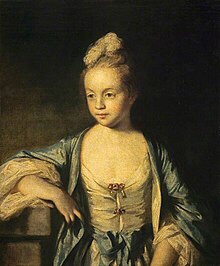
In the alternative, could Mackenzie perhaps be referring to Duke Henry’s younger sister Lady Frances (b. 1750, d. 1817), whose portrait as a little girl is pictured below? Although this is just a conjecture on my part, it is not a far-fetched one for several reasons. To begin with, Lady Frances was the daughter of Caroline Campbell Scott, so she was a “Campbell”. Secondly is Mackenzie’s observation that the woman, whoever she was, was “of as different dispositions and habits from him as possible.” Lady Frances was the daughter of a wealthy aristocratic family, while Adam Smith was an absent-minded professor. Lastly, Adam Smith corresponded with Lady Frances on multiple occasions (at least three letters from Smith addressed to Lady Frances survive), and both lived at Dalkeith House for at least two months during the fall of 1767.

Given these many coincidences (see above), I will further explore the relationship between Lady Frances and Adam Smith in my next blog post …

Frances, Lady Douglas, 1750-1817
Artist Credit: Joshua Reynolds

Posted in Uncategorized | Leave a comment