Update (8/30): See this report about the ignominious end of Bush’s war.
Talk about a hasty surrender, one that has destroyed the reputation of the USA and that cost the lives of 13 young members of our armed forces as well as the lives of scores of Afghans … To hell with the Taliban, and to hell with Joe for letting them win. #ImpeachBiden
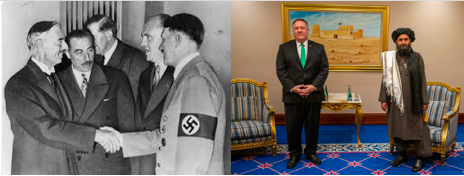
Although it was Trump people’s who negotiated the now-infamous withdrawal deal with representatives of the Taliban last year (see picture below, right), Joe Biden’s incompetent implementation of this illicit agreement, his continued prevarications (see here), and our pusillanimous surrender in Kabul are too much for me to bear. We don’t abandon our friends. #WorseThanTrump
Scientific American published its very first issue on this day (Aug. 28) in 1845. But what does it mean to think in “scientific” terms? To me, it means thinking in terms of probabilities and degrees of belief, not moral certainties, as well as open-mindedness and the willingness to revise one’s probabilities. What does “science” mean to you?
With apologies to my colleague and friend Robin Hanson, that is the tentative title of my next project, which builds on my previous work “Betting on Conspiracies,” which is forthcoming in The Journal of Law & Public Policy. By way of example, was 9/11 an “inside job”? Was the 2020 election stolen? Did Trump collude with “the Russians”? In summary, the conventional wisdom is that the spread of conspiracy theories is dangerous to democracy, and a growing chorus of voices are thus calling for direct regulation of social media platforms to counter this threat. Some have even called for the appointment of a “reality czar” (see here, for example) and big tech firms like Facebook have gone as far as to de-platform (i.e. censor) President Trump.
Pause. Isn’t it possible that these drastic measures and proposals (e.g. direct regulation of speech, reality czars, and the de-platforming of elected leaders) pose greater dangers to democracy than conspiracy theorists themselves? The classical liberal in me certainly thinks so! That is why I proposed and outlined a “Conspiracy Theory Betting Market” in my previous work. In brief, instead of censorship or reality czars, why not allow people to place actual money bets on the truth values of various conspiracy theories, however far-fetched these theories may seem? It is my contention that a betting market in conspiracy theories would aggregate all available information about the truth values of such beliefs better than a regulator or a reality czar could.
But how would such a “Conspiracy Theory Betting Market” work in practice? Unlike a prediction market, in which participants place bets on the occurrence or non-occurrence of future events, my proposal involves the “retrodiction” of past events, such as the 2020 election, 9/11, and the assassination of JFK. Accordingly, next month I will devote considerable time and effort to the design of my “retrodiction” market and share my findings here …
While we are on the subject of pedagogical papers (see my previous post), I thought I would share a link to my previous teaching note, “So Long Suckers: Bargaining and Betrayal in Breaking Bad,” which is available here via SSRN. In this formal paper, which I wrote up in 2016, I introduce the rules of a bargaining game called “So Long Sucker” to help instructors convey strategic concepts and impart good negotiation skills to their students. In addition, to further bridge the gap between negotiation theory and strategic reality, this note explores several commonalities between “So Long Sucker” and the many strategic interactions in the critically acclaimed TV series Breaking Bad.
Kudos to my past and present teaching assistants–Christiana Champnella, Benjamin Mayo, Morgan Travers, and Antonella Vitulli–and to Michael McMahon and the editors of the St Louis University Law Review. Our pedagogical paper “Teaching Tiger King“–the final draft of which is now available here–describes the changes we made to our business law survey course when it went fully online during the first year of the pandemic. It also illustrates the snail’s pace of scholarly publishing: I wrote up the first draft of our Tiger King paper during the month of June of 2020, and the paper was accepted for publication in August of that same year. One year later, after several rounds of stylistic revisions and substantive edits, our paper is now ready for publication!
Note: this is my last blog post on “the law and ethics of Chegg.”
Why hasn’t Chegg, the largest and most successful online contract-cheating platform in the world, been shut down yet? My Criminal Complaint against Chegg is now available here, via SSRN. Note that I am going after Chegg for wire fraud and conspiracy to commit wire fraud and not for copyright infringement. One could argue that Chegg facilitates IP theft by allowing students to post test questions and exam problems on its platforms because, technically speaking, many of those tests and exams are the intellectual property of the professors who wrote them up. The problem with this argument, however, is that Chegg is able to avoid liability for copyright infringement through a loophole in copyright law, a crafty loophole created by the Digital Millennium Copyright Act of 1998. To the point, Chegg is able to avoid copyright infringement through its notice and take-down policies. Although its cumbersome take-down procedures are bullshit (faculty can’t just fire off an email to Chegg demanding to have their exam questions taken down; Chegg requires a formal letter from a university administrator), Chegg exploits this loophole to stay in business. As a result, my Criminal Complaint against Chegg alleges wire fraud and conspiracy to commit wire fraud. Also, as I mentioned in my previous Chegg post, because Chegg is an online service and does business across the United States, any U.S. Attorney in any federal judicial district could bring charges against Chegg. Any takers?
Note: this blog post is the sixth in a multi-part series on “the law and ethics of Chegg.”
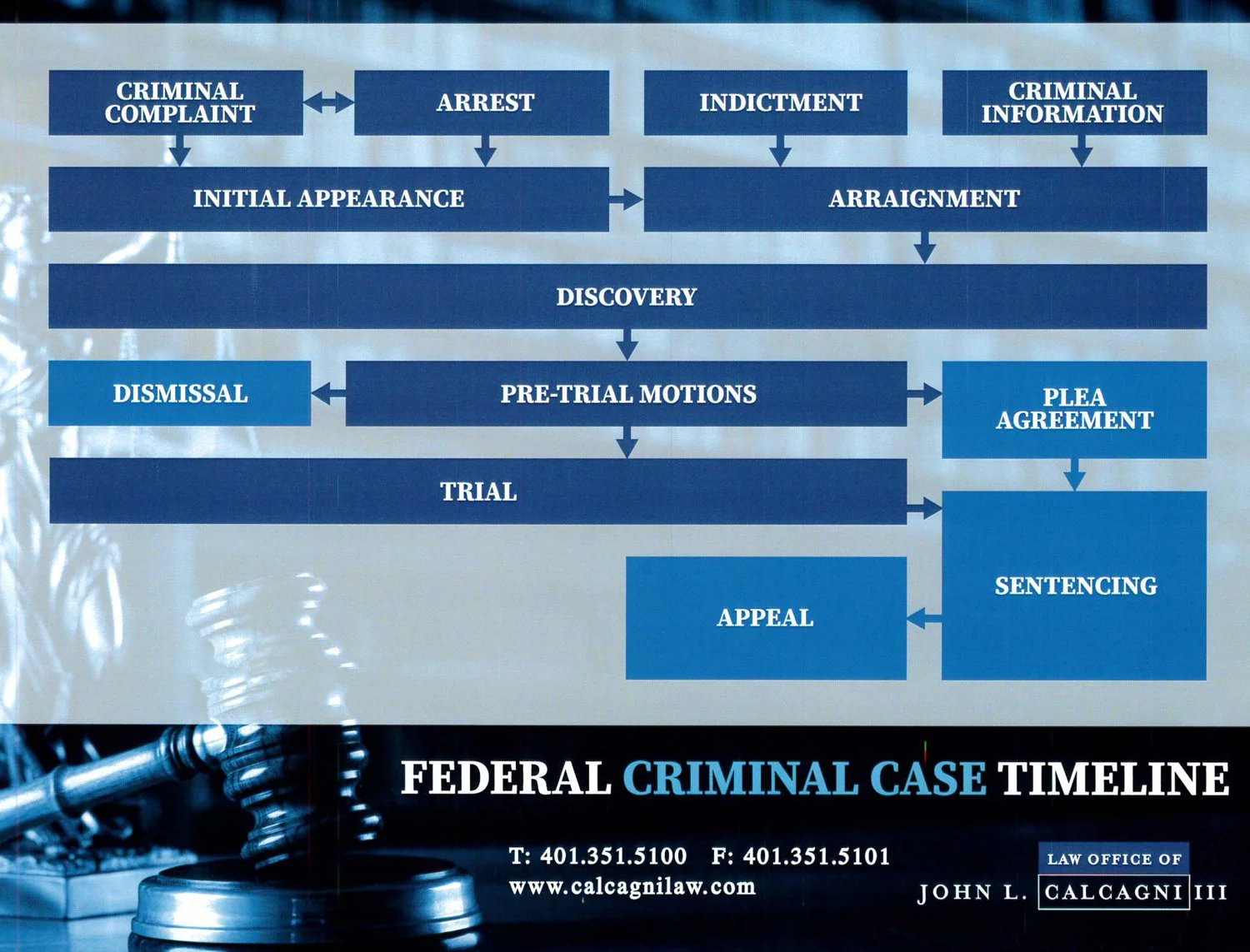
I will be posting my Criminal Complaint against Chegg, Inc. and Chegg CEO Dan Rosensweig in the next day or two, but in the meantime, I want to address two important preliminary matters. One is geographical: which court should hear this case (the forum-shopping question)? The other is procedural: whether to proceed by “indictment” or by “information” (see, for example, the flow chart pictured below).
Since my case against Chegg will be based on federal charges (wire fraud and conspiracy to commit wire fraud–hence the new title of my project: “The Chegg Conspiracy”), let’s talk about how a federal criminal case gets started. In summary, each State contains one or more federal judicial districts, and each district has its own U.S. Attorney’s Office. Chegg’s headquarters, for example, are located in Santa Clara, California, which is part of the Northern District of California (NDC), so the current U.S. Attorney for the NDC, Stephanie Hinds, could be the one to bring charges against Chegg.
But should the Chegg case proceed by indictment or by information? Both are charging documents, and according to Rule 7(c)(1) of the Federal Rules of Criminal Procedure (see here), both must contain “a plain, concise, and definite written statement of the essential facts constituting the offense charged and must be signed by an attorney for the government.”
All felony prosecutions, however, are supposed to begin with an indictment, since the Fifth Amendment to the Constitution states that “No person shall be held to answer for a capital, or otherwise infamous crime, unless on a presentment or indictment of a Grand Jury …,” except for cases under military law (e.g. a court-martial), but Rule 7(b) of the Federal Rules of Criminal Procedure allows a criminal defendant to waive this right, so for all practical purposes the main difference between indictments and informations is that an indictment must be presented to a grand jury for its approval. (Every federal judicial district has its own separate grand jury, and the proceedings of the grand jury are governed by Rule 6 of the Federal Rules of Criminal Procedure. See here.)
An information, by contrast, does not involve the grand jury. Instead, the information is presented to an Article III judge or to a magistrate judge. In either case, however, the grand jury or the judge must decide whether the charges contained in the charging document are supported by probable cause. So, for all practical purposes, it doesn’t really matter too much whether this case is initiated via indictment or information.
For my part, I will label my proposed charging document against Chegg a “Criminal Complaint” for now and let the actual U.S. Attorney for the Northern District of California decide how to proceed. The main thing is that Chegg be prosecuted forthwith. In fact, because Chegg is an online service, it does business across the United States, so any U.S. Attorney in any federal judicial district could bring charges against Chegg.
With this background in mind, I will post my model Criminal Complaint in the next day or two …














 prior probability