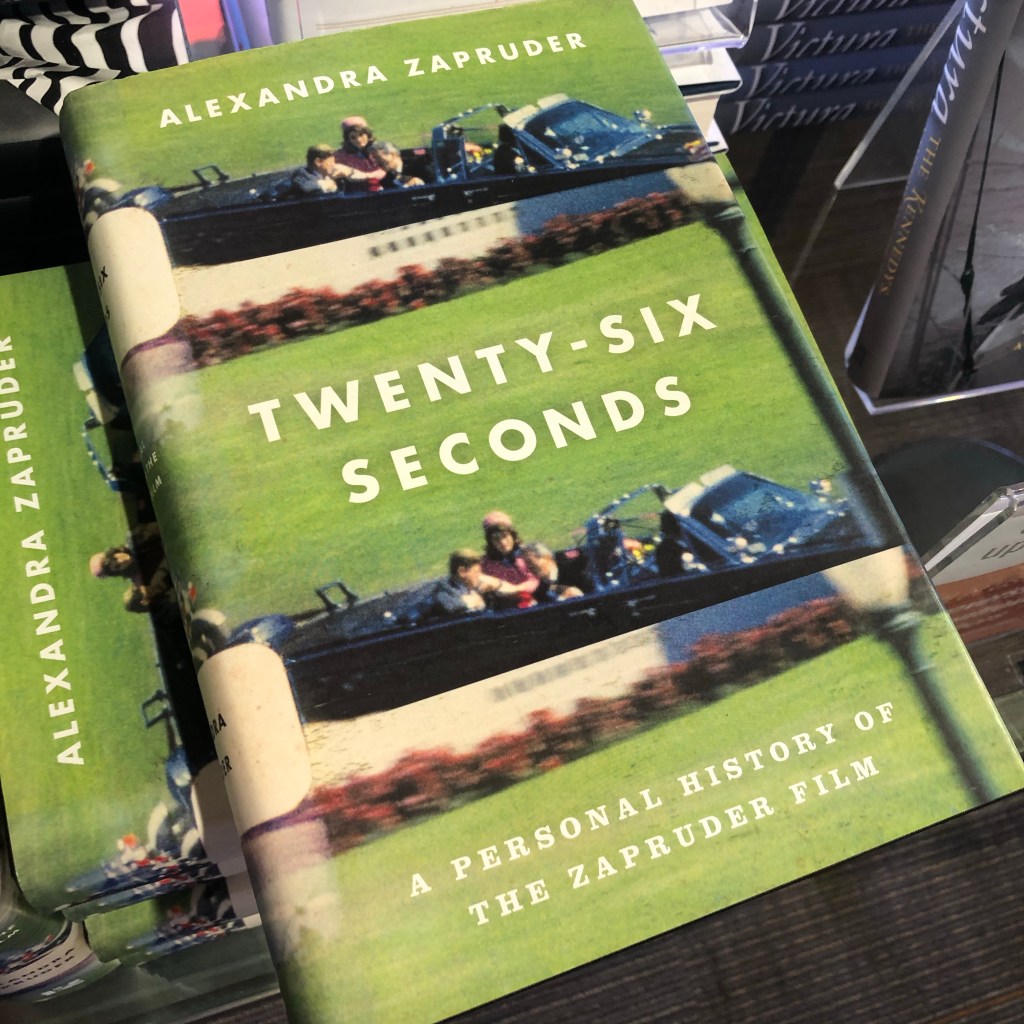
During our visit to Dallas last week, my wife and I visited the Sixth Floor Museum at Dealay Plaza, located in the same building and same floor where Lee Harvey Oswald, allegedly acting alone, shot President John F. Kennedy. (I say “allegedly” because, as many exhibits in this museum show, the conclusions of the Warren Commission are contested and full of holes.) At the museum shop, I picked up a copy of “Twenty-Six Seconds: A Personal History of the Zapruder Film” by Alexandra Zapruder, the grand-daughter of Abraham Zapruder, the man who unwittingly filmed the assassination on his home movie camera on that fateful day. Suffice it to say, I am already up page 140! It turns out that Miss Zapruder’s grand-father had sold the exclusive rights to his home movie to Life Magazine for $150,000.00 a few days after the assassination. The full legal history of the Zapruder film is even more fascinating, for in 1975 Life sold the rights to the film back to the Zapruder family for $1! (As a further aside, I also recommend Brian Frye’s excellent essay on the Zapruder film, available here via SSRN.)
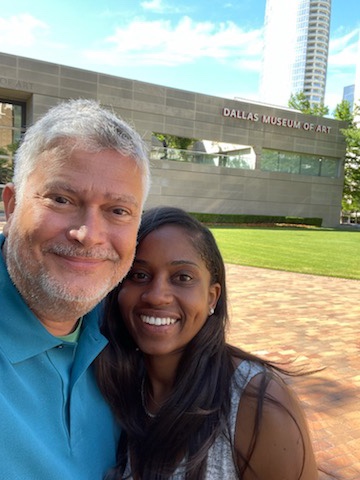
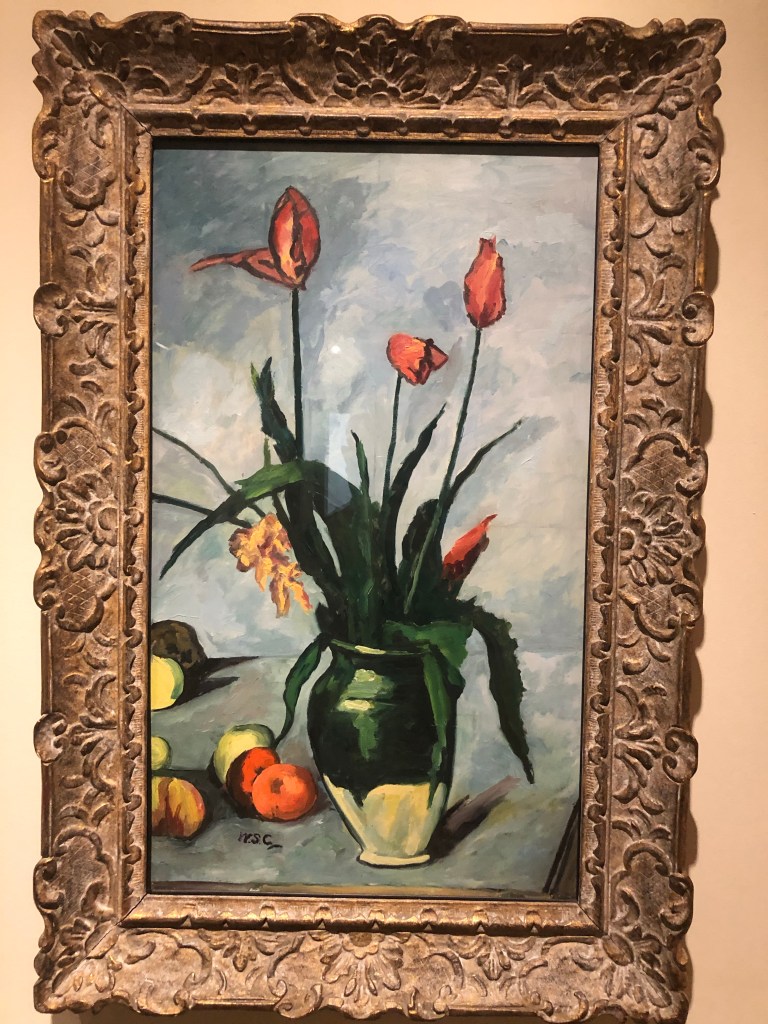
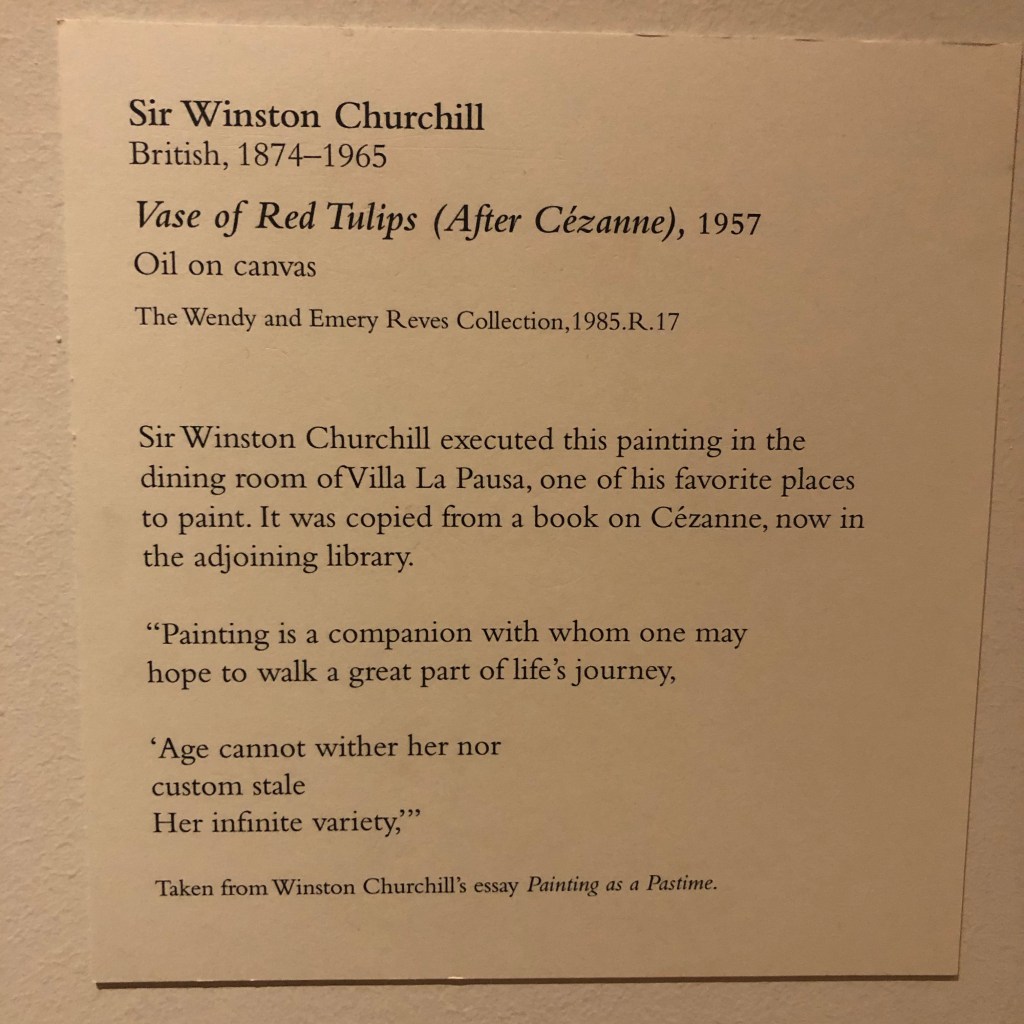
Continuing a family tradition, my wife Sydjia and I visited the Dallas Museum of Art (DMA) on our wedding anniversary this past week. (We have visited art museums in Houston, Havana, and Orlando on previous anniversaries.) One of the things I liked the best about the DMA, however, was its collection of Winston Churchill paintings, one of which is pictured below.
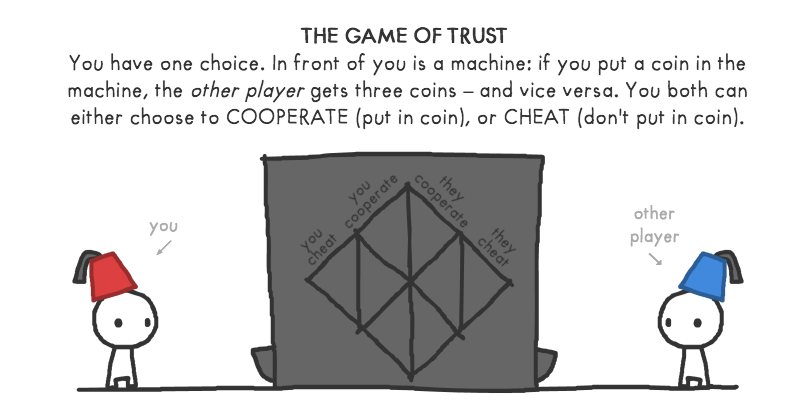
To share my love of game theory, strategic thinking, and mathematics generally, I am adding a new feature to this blog: “Game Theory Thursdays.” (The feature will run at least once or twice a month and will complement some of my other regular features, such as Twitter Tuesdays and What-Could-Go-Wrong?-Wednesdays.) For this installment, I want to highlight this interactive and entertaining website by game designer Nicky Case (@ncasenmare) devoted to “The Evolution of Trust.” I have studied game theory in depth for years and have devoted some of my best work to this field (see here and here, for example), and I cannot speak highly enough of the beautiful games on Case’s website. (See screenshot below.) It will take you around 30 minutes to play these games and complete your game theory journey, but it will the best half-hour you can spend on learning the logic of game theory and the game of trust.
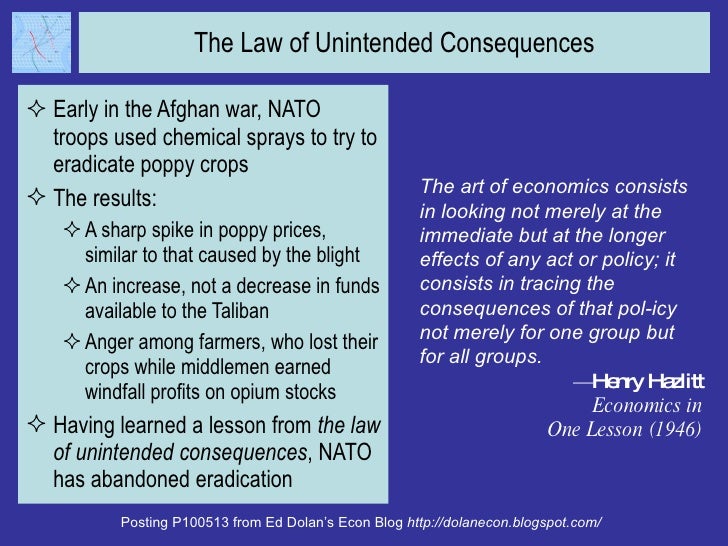
Twice a month, or every other Wednesday, I will be posting a new feature on this blog called “What could go wrong?” in order to illustrate the law of unintended consequences, an iron law that bedevils most, if not all, public policies and reform schemes, no matter how well-intentioned or carefully crafted. (See the NATO example below.) For this installment, I want to highlight President Biden’s proposed tax increases on wealthy taxpayers and on corporations. If history is any guide, however, when we tax the rich to give to the poor we will usually end up with fewer rich and more poor! Specifically, these tax-increase proposals, if enacted, are going to backfire in three possible ways: (i) new investment by the private sector will decline, (ii) fewer new business firms will be started, and (iii) more U.S. companies will just move overseas. Also, a fourth possible result is that fewer taxes will be collected–not more! Don’t say we didn’t warn you!
Happy Anniversary, Sydjia! (image credit: Ed Dolan)
Kudos to Gareth Wild (@GarethWild) and his six-year quest to park his car in every single parking spot at his local grocery store. Although this particular quest was a trivial one, Mr Wild’s methodology is solid, and his spreadsheets are beautiful!
For the last six years I’ve kept a spreadsheet listing every parking spot I’ve used at the local supermarket in a bid to park in them all. This week I completed my Magnum Opus! A thread.
Nobel-laureate (2002, economics) Daniel Kahneman (Princeton) published his popular book “Thinking Fast and Slow” in 2011 to much acclaim. His book became an instant best-seller and won many awards and prizes; see here, for example. Kahneman’s field is psychology, however, and if you know anything about the “replication crisis” in this field, you may already know where this blog post is headed. Specifically, how much of the social psychology research cited in Kahneman’s 2011 book is either bogus or suspect? This is precisely the question that Ulrich Schimmack (University of Toronto) decided to answer, and the results–available here on his influential R-Index blog–aren’t pretty! Professor Schimmack’s devastating analysis of the work cited in Kahneman’s 2011 book makes me wonder what empirical studies in other fields would fail to replicate if subjected to such scientific testing? The moral of this story? You may have heard the phrase “trust the science,” but the field of social psychology should serve as a warning to us all.
Let’s dedicate May Day (May 1st) to the worldwide victims of Communism and Socialism. (Full disclosure: I originally heard this idea from my colleague and friend Ilya Somin, but I second it wholeheartedly! More details here.)
I will be blogging lightly next week–at most, one post per day–as my wife and I will be traveling to Dallas, Texas next week to celebrate our wedding anniversary on Cinco de Mayo. After next week, I will be blogging about this excellent paper by my colleague and new friend Robert Sanger, and then after that, I will revisit the Lockean principle of self-ownership. It turns out there is a vibrant “anti-self-ownership” literature in which the principle of self-ownership is rejected outright for a wide variety of reasons. I will therefore sum up these anti-self-ownership reasons and respond to them in due course later on.
Note: This is the last of three blog posts on the case of U.S. v. Porat
It’s time to wrap up this series on wire fraud and college rankings. We have already surveyed several questions posed by U.S. v. Porat, the federal criminal case involving the disgraced former dean of the Temple University business school, who is charged with wire fraud for providing false information to U.S. News & World Reports to boost his school’s ranking in the annual survey of graduate programs published by U.S. News. (See here for more details about this novel case.) To the point, what all these questions boil down to is this: what thing of value, e.g. money or property, did Dean Porat obtain as part of his (alleged) fraudulent scheme.
For their part, Professor Kerr (see here) and former prosecutor Levy (here), who have guided our analysis thus far, both seem to suggest that the federal wire fraud case against Porat is weak because, even if he did commit fraud in the literal sense by sending doctored data to U.S. News, he did not literally receive anything of value in return. But I beg to differ for the following reasons. First off, it’s essential to point out the following key fact about this case: when Porat (allegedly) sent fake data to U.S. News to boost his school’s ranking in the U.S. News annual survey of graduate programs, his school’s ranking did not just go up one or two places. It shot up from #25 all the way up to #1! It therefore does not take a genius to figure out what the thing of value was that Porat obtained as part of his (alleged) fraudulent scheme. In short, the thing of value was this #1 ranking from U.S. News.
(As an aside, for reasons that are beyond the scope of this blog post, being #1 is a huge deal in North American culture and in the competitive worlds of sports, business, and academia generally. The song below captures this spirit perfectly!)
Seen in this light, the myriad concerns and technical difficulties identified by Kerr and Levy about this case evaporate. To begin with, it does not matter that the U.S. News survey is silly or flawed, that it’s methodology is opaque or easily-gamed, or that it makes no effort to audit or verify the data it is sent. Why not? Because at the end of the proverbial day what really matters with these admittedly dumb and easily-gamed rankings is just one thing–which school gets the #1 ranking. The #1 ranking confers on the top school a kind of unofficial seal of approval, and this seal of approval, however dubious or undeserved in fact, is the thing of value that triggers the wire fraud statute when the ranking is obtained under false pretenses.
Furthermore, Levy’s question about whether the identity of the deceived has to be the same as the identity of the defrauded is now beside the point. It was U.S. News who was deceived (when Porat allegedly sent the fake data to them) and it was thus U.S. News who was defrauded when it assigned the #1 ranking to Porat’s business school. Lastly, and perhaps most importantly, given that Temple business school’s online program would not have received the #1 ranking but for Porat’s (alleged) scheme, the students did not, in fact, “get what they paid for” (to borrow Levy’s apt phrase) when they attended Temple’s business school. They thought they were paying for an academic degree from a business school with the #1 online program in the country; what they got instead was a degree from a third-rate school run by a bunch of thieves. Case closed!









 prior probability