In defense of self-ownership (reply to Barbara Fried)

Alternative Title #1: Against Self-Ownership? Lit Review, Part 3b

Alternative Title #2: Self-Ownership and the Problem of Indeterminacy: Richard Epstein to the Rescue

I presented two powerful critiques of self-ownership in my previous post: one based on indeterminacy–i.e. what rights do self-owners really have?–the other based on the ghost of Ronald Coase–i.e. because rights are reciprocal in nature (create corresponding duties), your self-ownership rights, however defined, will impose costs on me and limit my own freedom. Both of these arguments against self-ownership are made by Barbara Fried (2004), and of the two, the first of them can easily be rebutted and refuted, so I will respond to the indeterminacy argument first.

The indeterminacy argument can be challenged in one of two ways. First, we could turn this argument on its head by responding as follows: “So what?” or “Compared to what?” In other words, we could concede that self-ownership, like all general concepts, is indeterminate to some extent but then shift the burden of persuasion to Professor Fried–and to her fellow critics of self-ownership–to propose a workable theoretical alternative. Alas, to my knowledge neither Fried nor any of the other critics of self-ownership have proposed an alternative to the concept of self-ownership. Furthermore, I suspect this omission is no accident or unintentional oversight on their part. Simply put, as Richard Epstein (1995, pp. 54-59) has conclusively shown, the reason why the critics of self-ownership haven’t bothered to offer an alternative to self-ownership is because no such alternative exists!

(I won’t rehash Professor Epstein’s slam-dunk arguments here. It simply suffices to say that any imagined alternative to self-ownership would be even more indeterminate than the concept of self-ownership is and would produce even worse social consequences than self-ownership allegedly does. But don’t take my or Epstein’s word for it. Just try imagining an alternative system of property rights in which every person has an ownership interest in every other person. What would such a counter-intuitive system look like or operate in practice?)

The other way of responding to the indeterminacy argument is to point out–with all due respect to Fried and her kind, of course–that self-ownership is not indeterminate at all. In fact, the reason why so many scholars of all stripes–both hardcore “right-libertarians” like Robert Nozick and more egalitarian “left-libertarians” like Peter Vallentyne–defend the concept of self-ownership is not because they are able to derive their preferred set of rights from this concept but because self-ownership makes intuitive sense and comports with our most basic moral intuitions. Although right-and left-libertarian theorists have good faith disagreements (even among themselves) about how self-ownership should play out in practice, they all take self-ownership as an axiom or starting point.

In any case, it turns out that the indeterminacy argument is not new. Thomas Grey (1980, p. 163, quoted in Epstein, 1985, pp. 20-21) made more or less the same argument against the concept of property as Barbara Fried makes against self-ownership:

“The conclusion of all this is that discourse about property [or self-ownership] has fragmented into a set of discontinuous usages. The more fruitful and useful of these usages are those stipulated by theorists; but these depart drastically from each other and from common speech…. It seems fair to conclude from a glance at the range of current usages that the specialists who design and manipulate the legal structures of the advanced capitalist economies could easily do without using the term ‘property’ [or ‘self-ownership’] at all.”

My response to Grey (and to Fried and to other critics of self-ownership) is the same as Epstein’s (1985, p. 21): “Try it.” That is, as I invited us to do in paragraph #3 above, try imagining a legal or moral system without the concept of self-ownership. However indeterminate the moral and legal axiom of self-ownership might be, this general concept wins by default because any conceivable alternative to self-ownership would be worse on all relevant dimensions, such as level of determinacy, social consequences, consistency with moral intuitions, etc.

Okay, fine, but what about Fried’s second (and more powerful) argument against self-ownership: the ghost of the Ronald Coase? Absolute autonomy and freedom are fictions at best, with or without a self-ownership regime. Why? Because my self-ownership rights (however defined) will impose corresponding costs on you and likewise limit your freedom. This second argument will be more difficult, if not impossible, to dismiss. Also, Coase’s critique dovetails into another powerful argument against the self-ownership: the problem of minor intrusions. Accordingly, I will discuss this problem and respond to it in my next two posts.

It's Hella Confusing |  LIFE IS STRANGE? COMPARED TO WHAT? | image tagged in memes,philosoraptor,videogames,life is strange | made w/ Imgflip meme maker
Posted in Uncategorized | 1 Comment

Timeout

What makes something a work of art? I am once again interrupting my multi-part series on self-ownership to share this fascinating art project by Todd McLellan titled “Things Comes Apart” in which McLellan takes apart 50 ordinary objects, such as a Swiss Army knife (see below), and exposes their inner parts and workings. More details here, via Colossal; hat tip: @pickover.

Image credit: Todd McLellan
Posted in Uncategorized | Leave a comment

Competing conceptions of self-ownership and the ghost of Ronald Coase

Alternative Title: Against Self-Ownership? Lit Review, Part 3a

In a previous post I presented Kant’s critique of self-ownership. Here, I will explore another argument against self-ownership. This second argument goes like this: self-ownership might be a fine concept at a high enough level of generality, but once we try to work out the operational details of self-ownership–once we try to define the scope of the claim rights that self-owners actually have–this concept is far too general and vague to be of any practical use. That is, the concept of self-ownership (contra Kant) might be logically coherent, but this concept is consistent with many different conceptions of rights–in a word, this concept is “indeterminate”.

To my knowledge, this devastating critique first appeared in a 2004 paper by Barbara Fried titled “Left-Libertarianism: A Review Essay,” which I consider to be the single-best theoretical paper on self-ownership that I have encountered thus far. In summary, Fried (2004) surveys the self-ownership literature from a “functionalist lens” or pragmatic perspective and concludes that self-ownership is an indeterminate and easily-malleable concept. To begin with, self-ownership is a such a broad and general concept that it is compatible with many different and competing conceptions of self-ownership rights; as a result, it is not surprising that libertarian theorists disagree on the practical implications of self-ownership–e.g. whether self-owners have the right to sell themselves into slavery, bequeath their property to their heirs, or blow smoke into someone else’s face. (See especially Fried, 2004, pp. 76-78.)

(By way of specific example, one of the main controversies–and one of the enduring sources of indeterminacy–with respect to self-ownership is the problem of natural resources. See, for example, Fried, 2004, pp. 84-91. Specifically, does self-ownership entitle one to assert private ownership rights over external natural resources? If so, is there a limit on how much natural resources one may appropriate for oneself? Post-Locke, this perennial and contentious set of questions has generated the main dividing line between “left-libertarians” on the one hand and “right-libertarians” or traditional libertarians on the other.)

Furthermore, as Professor Fried herself correctly notes (p. 77), these disagreements about the practical implications of self-ownership are insoluble to the extent they “derive from fundamental disagreements about what ends self-ownership is supposed to vindicate.” Broadly speaking, for example, right libertarians believe that self-ownership is about the right to be left alone (so-called “negative liberty”), while left libertarians believe that self-ownership is about the ability to make choices (“positive liberty”). Professor Fried thus concludes (p. 78): “Given their foundational disagreement about the meaning of self-ownership, it is hardly surprising that left libertarians cannot agree on how self-ownership gets cashed out at the level of property rights.”

But wait, there’s more! In addition to the indeterminacy critique, Professor Fried identifies an even deeper problem with self-ownership–a fundamental problem that bedevils all rights talk and that was identified as early as 1960 by Ronald Coase (pictured below) in his classic paper “The Problem of Social Cost.” To the point, even if we could agree on what rights self-owners have, these rights (however defined) will, by definition, impose corresponding or reciprocal duties on everyone else, and these duties will thus have the effect of reducing everyone else’s autonomy and liberty rights. In the words of Fried (p. 79): “A decision to enlarge your rights over your body … necessarily constricts my rights, often including right over the use of my body.

Professor Fried illustrates the reciprocal nature of the self-ownership problem with the following simple example (p. 78): “Suppose I stand two feet from you and blow smoke in your face…. Have I coercively interfered with your right to control your body?” If not, what if I am standing only one foot away from you? Six inches? At a minimum, most people agree that self-owners have the right to decide what they want to do with their own bodies. But even this minimum conception of self-ownership imposes corresponding or reciprocal duties on others. Does self-ownership–defined as the right to control my body–allow me to use force against you to stop you from blowing smoke in my face?

These two objections–the indeterminate nature of self-ownership and the problem of corresponding/reciprocal duties–are the best and strongest arguments against self-ownership. I will respond to them in my next post …

Posted in Uncategorized | 2 Comments

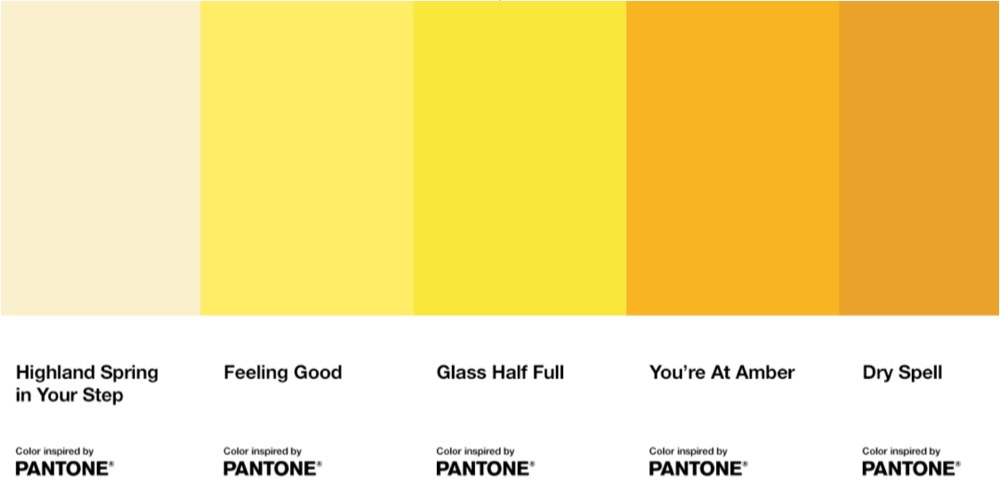
Taxonomy of pee colors

Via Kottke: “Urine color is an indicator of how hydrated you are, and Pantone are the color experts, so of course they’ve teamed up with a Scottish bottled water company to produce a chart with 5 color gradations that help you determine your hydration level.” You’re welcome! (We will resume our second series on self-ownership in our next post.)

Posted in Uncategorized | 1 Comment

Sophistry and self-reference: the Kantian critique of self-ownership

Alternative Title: Against Self-Ownership? Lit Review, Part 2

In my previous self-ownership post, I identified five critiques of self-ownership. Now let’s take a closer look at the first argument against self-ownership: the problem of self-reference. In brief, how can a thing own itself?

Many scholars have commented on this self-reference problem. English literature professor John Frow (1995, p. 155, emphasis added), for example, has noted, at least in passing, on the “curious reflexivity [of Lockean self-ownership] by which the subject form is split between that which owns and that which is owned.” Similarly, feminist legal scholar Nadine Naffine (1998, pp. 200-202) has further explored the idea of a “divided self”, asking (ibid., p. 200): “How can it make sense to describe a single entity or being – the human being – as both the subject and the object of property rights? How can the one entity be two?”

But this self-reference problem goes back to Kant’s “Lectures on Ethics”, delivered during the years 1775-1780 in Konigsberg, where the great deontologist–by now fully awake from his previous “dogmatic slumber”–reasons as follows:

“Man cannot dispose over himself because he is not a thing; he is not his own property; to say that he is would be self-contradictory; for in so far as he is a person he is a Subject in whom the ownership of things can be vested, and if he were his own property, he would be a thing over which he could have ownership. But a person cannot be property and so cannot be a thing which can be owned, for it is impossible to be a person and a thing, the proprietor and the property.”

Or in plain words: men cannot be self-owners because only things can be owned and man is not a thing.

Alas, the Kantian self-reference objection amounts to pure sophistry for two reasons. One is that self-reference is generally no big deal in the absence of a contradiction. By way of analogy, it is one thing (pun intended!) to say “this sentence is false” or “this is not a tobacco pipe” below a picture of such a pipe. Those statements are problematic because they generate an internal contradiction. But it is quite another thing to say “this sentence is true” or “this is a pipe” below a picture of an actual tobacco pipe. This second set of statements, though self-reflexive, are logically coherent.

The other, more serious, problem with Kant’s critique of self-ownership is that it misrepresents the meaning of such key concepts as “property” and “things”. Legally speaking, “property” and “things” are not synonymous. The idea of “property” refers not to the things one owns but rather to one’s ownership rights. These ownership rights, in turn, consist of the set of legally-recognized claim rights the owner has over the things he owns, such as title, possession, income rights, transfer rights, etc.

Yes, Kant is correct that “things” (i.e. things that can be owned) are usually external to their owners in the physical sense, such as land and other forms of real estate as well as livestock, furniture, utensils, and other forms personal property. But this is not always the case. Under our common law tradition, for example, “things” can include such “intangibles” as ideas or the expression of ideas, such as trade secrets, poems, musical compositions, drawings, pictures, just to name a few such intangible things that can be owned. In other words, under certain conditions, which are specified by law, one can assert ownership (claim rights) over the products of one’s mind!

So, as a logical matter, why can’t a person also have claim rights over his own person? After all, if a person can own the rights to a formula under trade secret law or the rights to a creative work under copyright law, why can’t he own as well the rights to his body and to his labor?

That said, we still have to figure out what self-ownership consists of. That is, even if you can own yourself as a logical matter, what exactly do you own? Alas, proponents of self-ownership themselves vehemently disagree about the set of rights that self-owners actually have! We will consider this second objection to self-ownership in my next blog post …

Magritte This Is Not A Pipe print – Art inspired greeting cards and  cartoons (Artoons) from Peter Duggan - Duggoons

Posted in Uncategorized | 1 Comment

Who owns the rights to the Zapruder film?

I am interrupting my second series of blog posts on “self-ownership” to report that I have finished reading “Twenty-Six Seconds: A Personal History of the Zapruder Film”–all 456 pages of it, including the end notes. One of the most surprising things I learned about the infamous Zapruder film is how the U.S. Government decided to take ownership of the original reel of Mr Zapruder’s home movie after the Congress enacted the JFK Records Act on October 26, 1992. The last few chapters of Alexandra Zapruder’s beautiful book explore the legal, moral, and strategic aspects of this “taking” and how the Zapruder family and the government fought over the economic valuation of the film. In brief, a government “taking” of private property requires “just compensation,” but how does one go about figuring out the monetary value of a priceless historical artifact? Suffice it to say that I loved this book so much that I will be blogging in more depth about it next week–after I complete my series on self-ownership …

F. E. Guerra-Pujol's avatarprior probability

During our visit to Dallas last week, my wife and I visited the Sixth Floor Museum at Dealay Plaza, located in the same building and same floor where Lee Harvey Oswald, allegedly acting alone, shot President John F. Kennedy. (I say “allegedly” because, as many exhibits in this museum show, the conclusions of the Warren Commission are contested and full of holes.) At the museum shop, I picked up a copy of “Twenty-Six Seconds: A Personal History of the Zapruder Film” by Alexandra Zapruder, the grand-daughter of Abraham Zapruder, the man who unwittingly filmed the assassination on his home movie camera on that fateful day. Suffice it to say, I am already up page 140! It turns out that Miss Zapruder’s grand-father had sold the exclusive rights to his home movie to Life Magazine for $150,000.00 a few days after the assassination. The full legal history of…

View original post 43 more words

Posted in Uncategorized | 2 Comments

Against Self-Ownership? Lit Review, Part 1

Note: this blog post is the first of a multi-part series.

As I mentioned in a previous post, I recently discovered–much to my amazement and surprise–a remarkable body of “anti-self-ownership” papers. This discovery leads me to formulate a modified form of Rule 34–let’s call it Rule 34a: “If you can imagine it, it exists somewhere in the scholarly literature.”

But back to the main topic at hand: Why are some scholars opposed to the principle of self-ownership? After all, how can anyone be opposed to such an intuitive and morally attractive principle? It turns out, however, that there are many good reasons why one can question the truth-value of self-ownership. For my part, I was able to identify at least five major critiques of self-ownership, which I will summarize for now as follows:

A. The self-reference problem, i.e. logical critiques. Simply put, is self-ownership a logically coherent concept? To the point, how can a thing own itself?

B. The problem of indeterminacy, i.e. operational and definitional critiques. Even if you can own yourself (contra critique A above), what exactly do you own? That is, even if we accept self-ownership as true, what rights do self-owners have? Relatedly, what is the source of self-ownership? Where does this right come from?

C. The problem of minor intrusions or minor risks, i.e. counter-intuitiveness arguments (e.g. second-hand smoke, seat belt laws, noise regulations, overflight rights, etc.). That is, whatever rights self-owners have (i.e. whatever rights are included in self-ownership), how far do these rights extend?

D. The problem of special cases. What about children, non-human animals, and mentally-diminished people? Are they self-owners in any meaningful or real sense?

E. Communitarian critiques or critiques on the merits. This last type of critique rejects “individualism” outright, emphasizing the fact that we are social animals and live in overlapping societies, such as kin groups, voluntary associations, and political communities. Because of these social facts, because we live in well-defined societies, we owe enforceable and mutual duties to each other and these duties severely limit or even override self-ownership.

In my previous series of blog posts on self-ownership, I had treated self-ownership as an axiom, i.e. I had assumed self-ownership to be true by definition. But as we can now see, my axiom or pro-self-ownership “prior” needs to be updated, for even a cursory or bird’s-eye view of the anti-self-ownership literature shows us a wide variety of reasons and arguments that can be made against self-ownership. So, in my next few blog posts, I will further explore, one at a time, each of the five major criticisms of self-ownership set forth above. I will also illustrate these critiques with specific examples and then evaluate their merits.

Petition · Google, Inc: Take Down Rule34 · Change.org
Not just porn, but also scholarly literature…
Posted in Uncategorized | 2 Comments

Monday Map: The Uninhabitated States of America

Hat tip: Steven Sewell
Posted in Uncategorized | 1 Comment

How widespread is cheating in sports?

Beyond the Kentucky Derby, name me a champion or MVP in any sport, whether it be the Tour de France, MLB home-run record-holders, or Olympic gold medalists in track & field, and I will most likely name you a cheater! Also, once we include such bogus tactics as “flopping” in soccer and basketball and point-shaving in all sports (even college games), the problem of cheating looms even larger.

Posted in Uncategorized | Leave a comment

Mask Nazis Strike Again

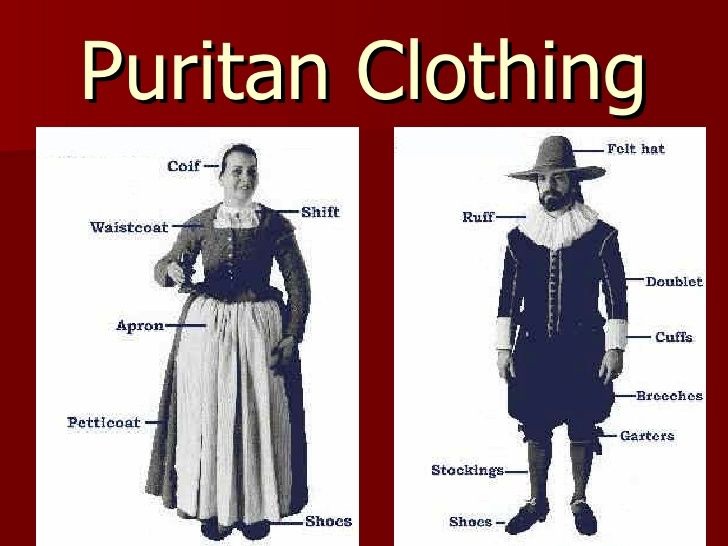
This time at UMass Amherst. The students who were suspended for not wearing their masks were not only outdoors; they were off campus too! I see that the zealotry of the Puritans is still alive and well in New England. Where else does this Puritan spirit reign?

They left out face masks.
Posted in Uncategorized | 1 Comment