Who owns the rights to the Zapruder film?

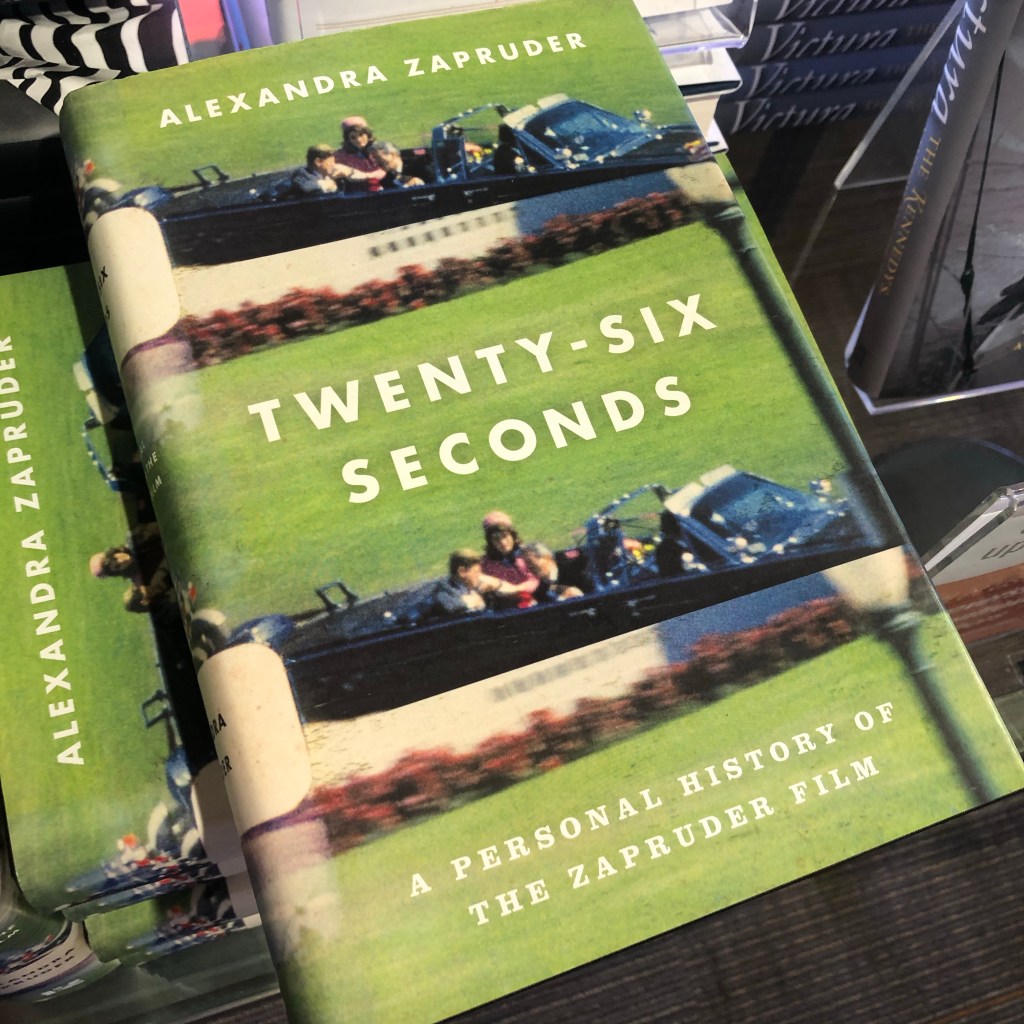
I am interrupting my second series of blog posts on “self-ownership” to report that I have finished reading “Twenty-Six Seconds: A Personal History of the Zapruder Film”–all 456 pages of it, including the end notes. One of the most surprising things I learned about the infamous Zapruder film is how the U.S. Government decided to take ownership of the original reel of Mr Zapruder’s home movie after the Congress enacted the JFK Records Act on October 26, 1992. The last few chapters of Alexandra Zapruder’s beautiful book explore the legal, moral, and strategic aspects of this “taking” and how the Zapruder family and the government fought over the economic valuation of the film. In brief, a government “taking” of private property requires “just compensation,” but how does one go about figuring out the monetary value of a priceless historical artifact? Suffice it to say that I loved this book so much that I will be blogging in more depth about it next week–after I complete my series on self-ownership …

F. E. Guerra-Pujol's avatarprior probability

During our visit to Dallas last week, my wife and I visited the Sixth Floor Museum at Dealay Plaza, located in the same building and same floor where Lee Harvey Oswald, allegedly acting alone, shot President John F. Kennedy. (I say “allegedly” because, as many exhibits in this museum show, the conclusions of the Warren Commission are contested and full of holes.) At the museum shop, I picked up a copy of “Twenty-Six Seconds: A Personal History of the Zapruder Film” by Alexandra Zapruder, the grand-daughter of Abraham Zapruder, the man who unwittingly filmed the assassination on his home movie camera on that fateful day. Suffice it to say, I am already up page 140! It turns out that Miss Zapruder’s grand-father had sold the exclusive rights to his home movie to Life Magazine for $150,000.00 a few days after the assassination. The full legal history of…

View original post 43 more words

Posted in Uncategorized | 2 Comments

Against Self-Ownership? Lit Review, Part 1

Note: this blog post is the first of a multi-part series.

As I mentioned in a previous post, I recently discovered–much to my amazement and surprise–a remarkable body of “anti-self-ownership” papers. This discovery leads me to formulate a modified form of Rule 34–let’s call it Rule 34a: “If you can imagine it, it exists somewhere in the scholarly literature.”

But back to the main topic at hand: Why are some scholars opposed to the principle of self-ownership? After all, how can anyone be opposed to such an intuitive and morally attractive principle? It turns out, however, that there are many good reasons why one can question the truth-value of self-ownership. For my part, I was able to identify at least five major critiques of self-ownership, which I will summarize for now as follows:

A. The self-reference problem, i.e. logical critiques. Simply put, is self-ownership a logically coherent concept? To the point, how can a thing own itself?

B. The problem of indeterminacy, i.e. operational and definitional critiques. Even if you can own yourself (contra critique A above), what exactly do you own? That is, even if we accept self-ownership as true, what rights do self-owners have? Relatedly, what is the source of self-ownership? Where does this right come from?

C. The problem of minor intrusions or minor risks, i.e. counter-intuitiveness arguments (e.g. second-hand smoke, seat belt laws, noise regulations, overflight rights, etc.). That is, whatever rights self-owners have (i.e. whatever rights are included in self-ownership), how far do these rights extend?

D. The problem of special cases. What about children, non-human animals, and mentally-diminished people? Are they self-owners in any meaningful or real sense?

E. Communitarian critiques or critiques on the merits. This last type of critique rejects “individualism” outright, emphasizing the fact that we are social animals and live in overlapping societies, such as kin groups, voluntary associations, and political communities. Because of these social facts, because we live in well-defined societies, we owe enforceable and mutual duties to each other and these duties severely limit or even override self-ownership.

In my previous series of blog posts on self-ownership, I had treated self-ownership as an axiom, i.e. I had assumed self-ownership to be true by definition. But as we can now see, my axiom or pro-self-ownership “prior” needs to be updated, for even a cursory or bird’s-eye view of the anti-self-ownership literature shows us a wide variety of reasons and arguments that can be made against self-ownership. So, in my next few blog posts, I will further explore, one at a time, each of the five major criticisms of self-ownership set forth above. I will also illustrate these critiques with specific examples and then evaluate their merits.

Petition · Google, Inc: Take Down Rule34 · Change.org
Not just porn, but also scholarly literature…
Posted in Uncategorized | 2 Comments

Monday Map: The Uninhabitated States of America

Hat tip: Steven Sewell
Posted in Uncategorized | 1 Comment

How widespread is cheating in sports?

Beyond the Kentucky Derby, name me a champion or MVP in any sport, whether it be the Tour de France, MLB home-run record-holders, or Olympic gold medalists in track & field, and I will most likely name you a cheater! Also, once we include such bogus tactics as “flopping” in soccer and basketball and point-shaving in all sports (even college games), the problem of cheating looms even larger.

Posted in Uncategorized | Leave a comment

Mask Nazis Strike Again

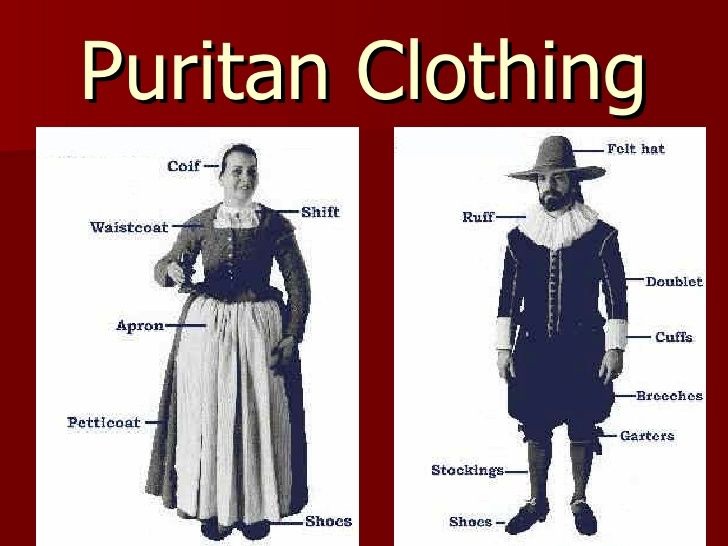
This time at UMass Amherst. The students who were suspended for not wearing their masks were not only outdoors; they were off campus too! I see that the zealotry of the Puritans is still alive and well in New England. Where else does this Puritan spirit reign?

They left out face masks.
Posted in Uncategorized | 1 Comment

Who owns the rights to the Zapruder film?

During our visit to Dallas last week, my wife and I visited the Sixth Floor Museum at Dealay Plaza, located in the same building and same floor where Lee Harvey Oswald, allegedly acting alone, shot President John F. Kennedy. (I say “allegedly” because, as many exhibits in this museum show, the conclusions of the Warren Commission are contested and full of holes.) At the museum shop, I picked up a copy of “Twenty-Six Seconds: A Personal History of the Zapruder Film” by Alexandra Zapruder, the grand-daughter of Abraham Zapruder, the man who unwittingly filmed the assassination on his home movie camera on that fateful day. Suffice it to say, I am already up page 140! It turns out that Miss Zapruder’s grand-father had sold the exclusive rights to his home movie to Life Magazine for $150,000.00 a few days after the assassination. The full legal history of the Zapruder film is even more fascinating, for in 1975 Life sold the rights to the film back to the Zapruder family for $1! (As a further aside, I also recommend Brian Frye’s excellent essay on the Zapruder film, available here via SSRN.)

Posted in Uncategorized | 3 Comments

Postcards from Dallas

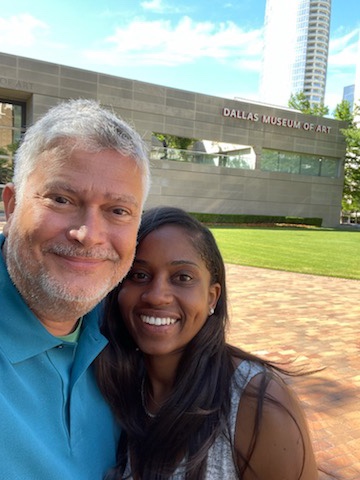
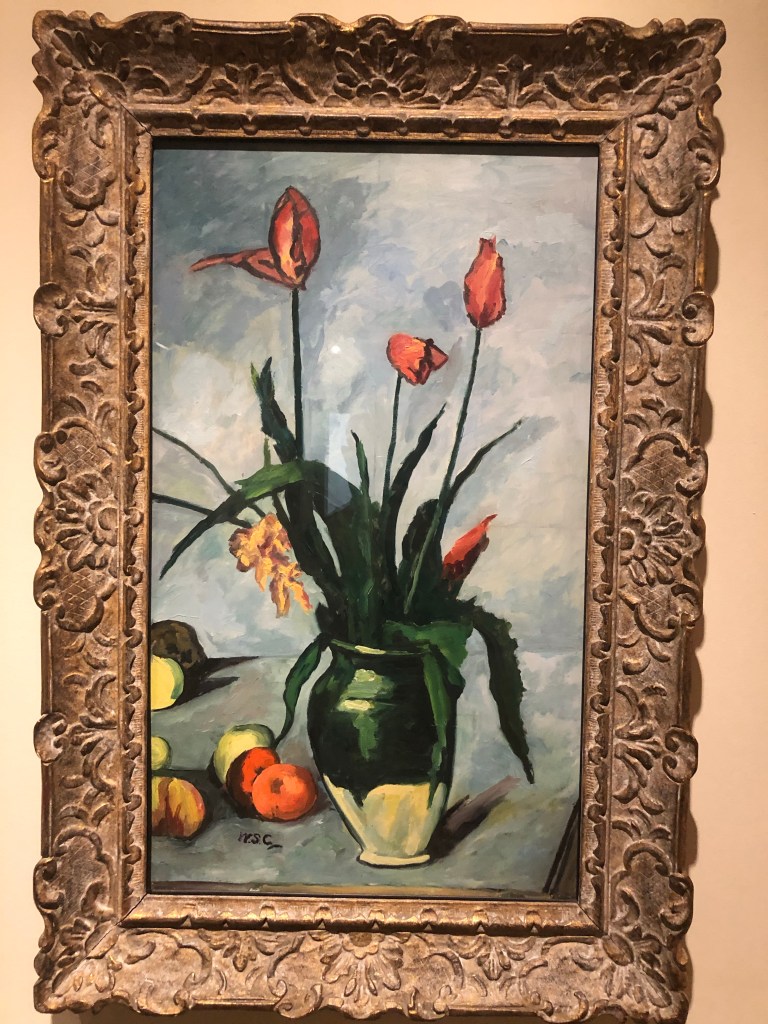
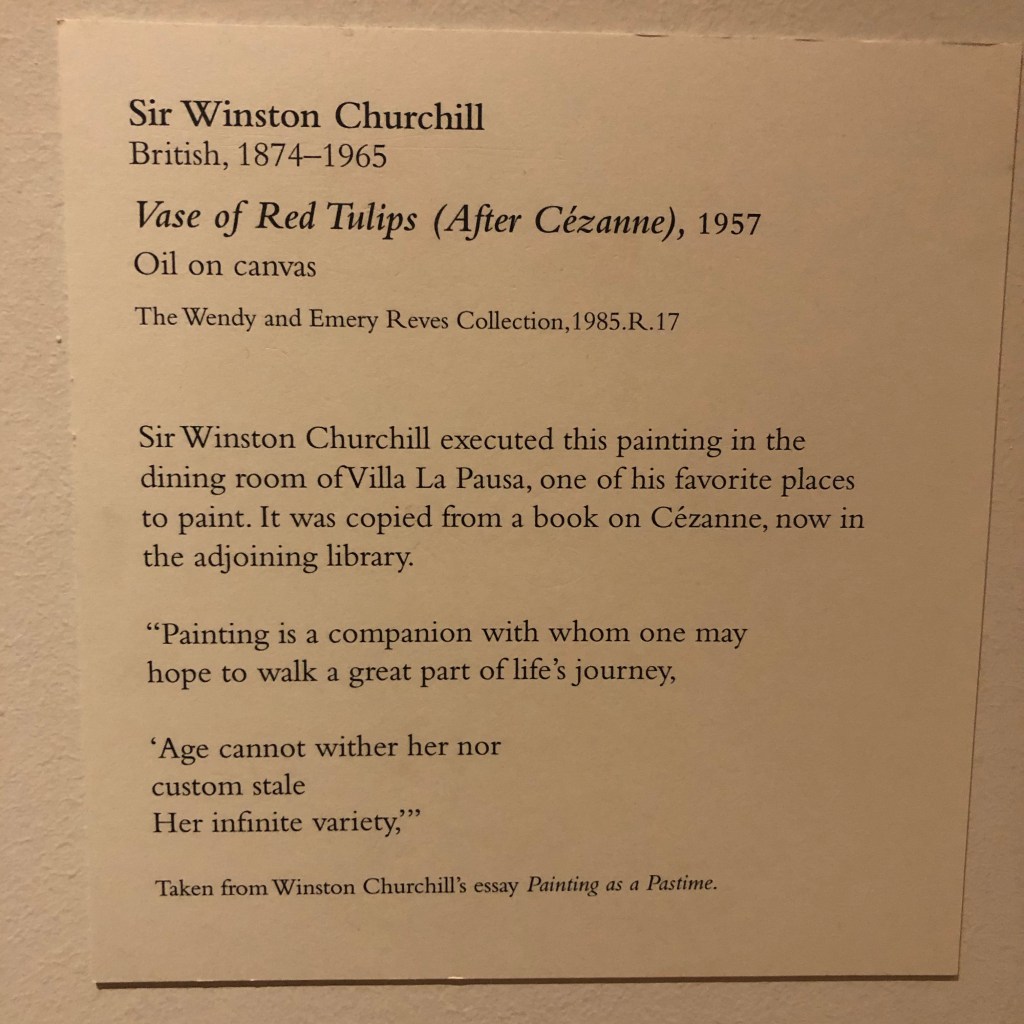
Continuing a family tradition, my wife Sydjia and I visited the Dallas Museum of Art (DMA) on our wedding anniversary this past week. (We have visited art museums in Houston, Havana, and Orlando on previous anniversaries.) One of the things I liked the best about the DMA, however, was its collection of Winston Churchill paintings, one of which is pictured below.

Posted in Uncategorized | Leave a comment

Friday query

If you could have dinner with any person in the world, with whom would you dine? (hat tip: @pickover)

Screen Shot 2021-05-07 at 12.48.50 AM

Posted in Uncategorized | Leave a comment

Game-Theory Thursday (Evolution of Trust)

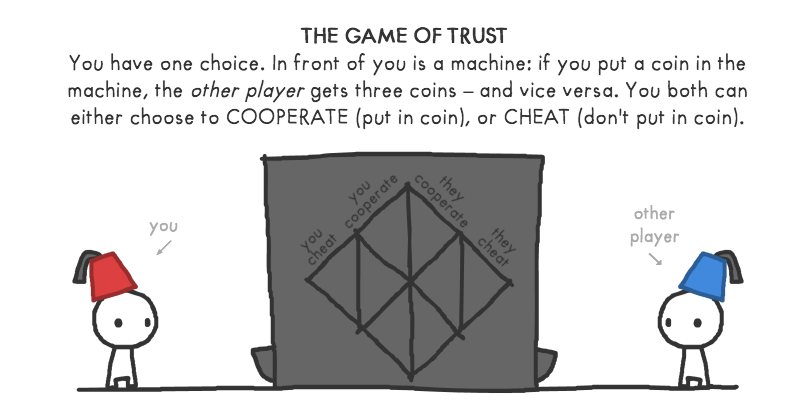
To share my love of game theory, strategic thinking, and mathematics generally, I am adding a new feature to this blog: “Game Theory Thursdays.” (The feature will run at least once or twice a month and will complement some of my other regular features, such as Twitter Tuesdays and What-Could-Go-Wrong?-Wednesdays.) For this installment, I want to highlight this interactive and entertaining website by game designer Nicky Case (@ncasenmare) devoted to “The Evolution of Trust.” I have studied game theory in depth for years and have devoted some of my best work to this field (see here and here, for example), and I cannot speak highly enough of the beautiful games on Case’s website. (See screenshot below.) It will take you around 30 minutes to play these games and complete your game theory journey, but it will the best half-hour you can spend on learning the logic of game theory and the game of trust.

The Evolution of Trust: this adorable game explains the math behind  interpersonal trust
Posted in Uncategorized | 4 Comments

What could go wrong? (Installment #2)

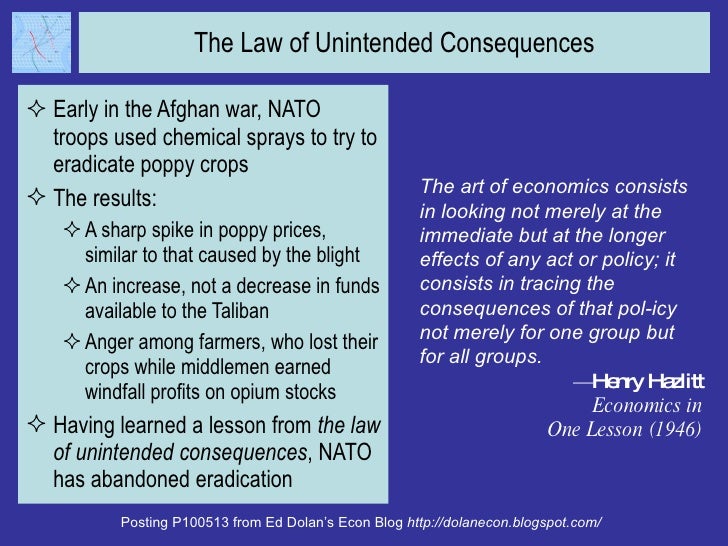
Twice a month, or every other Wednesday, I will be posting a new feature on this blog called “What could go wrong?” in order to illustrate the law of unintended consequences, an iron law that bedevils most, if not all, public policies and reform schemes, no matter how well-intentioned or carefully crafted. (See the NATO example below.) For this installment, I want to highlight President Biden’s proposed tax increases on wealthy taxpayers and on corporations. If history is any guide, however, when we tax the rich to give to the poor we will usually end up with fewer rich and more poor! Specifically, these tax-increase proposals, if enacted, are going to backfire in three possible ways: (i) new investment by the private sector will decline, (ii) fewer new business firms will be started, and (iii) more U.S. companies will just move overseas. Also, a fourth possible result is that fewer taxes will be collected–not more! Don’t say we didn’t warn you!

The Law of Unintended Consequences
Happy Anniversary, Sydjia! (image credit: Ed Dolan)
Posted in Uncategorized | Leave a comment