Note: this blog post is the third in a multi-part series on “the law and ethics of Chegg.”
Is Chegg evil? This is the question I posed to my students in the spring of 2021, when I discovered that many of the quiz questions in my survey business law class had been posted to Chegg, along with the correct answers.
My previous post made a direct analogy between Rick Singer, the alleged mastermind of the College Admissions Bribery Scandal, and Chegg, the contract-cheating online platform. In exchange for a monthly fee, Chegg allows its users to look up the answers to college exam questions, problem sets, and homework assignments. Likewise, in exchange for “donations” to his sham charity, Mr Singer would facilitate various forms of cheating on college entrance exams for the children of his despicable clients.
Today, however, I will explore the ethics of Chegg and explain why Chegg is indeed evil by taking a closer look at one of the wealthy and prominent individuals who paid for Mr Singer’s services: Jane Ruth Buckingham, pictured below. Who is Jane Ruth Buckingham (née Rinzler)? Among other things, she is the author of “The Modern Girl’s Guide to Life” book series; here is her glowing bio on Amazon (see here):
“Jane Buckingham is the president of Trendera, an innovative marketing and media consulting firm with numerous Fortune 500 companies as clients. She is a contributing editor to Cosmopolitan, a regular guest on Good Morning America and The View, and was recently named by Elle as one of the 25 Most Powerful Women in Hollywood. She lives in Los Angeles with her husband, bestselling business author Marcus Buckingham, and their two children, Jack and Lilia.”
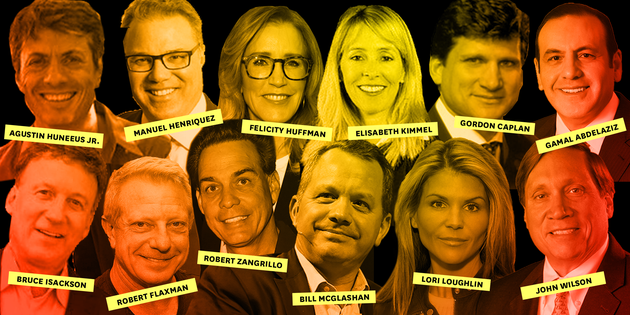
In addition to these impressive accomplishments (wink, wink), Buckingham was charged by the Feds in connection with the College Admissions Bribery Scandal (see Valeriya Safronova, “Jane Buckingham, expert on youth marketing, charged in college fraud scandal,” N.Y. Times, March 14, 2019), and she eventually pled guilty to two criminal charges: conspiracy to commit mail fraud, and honest services mail fraud. (See David Ng & Ryan Faughnder, “Felicity Huffman, other parents agree to plead guilty in college admissions scandal,” L.A. Times, March 13, 2019.) According to federal authorities, Buckingham had paid $50,000 to Rick Singer — to Singer’s sham non-profit college-counseling firm Key Worldwide Foundation, to be more precise — in order to arrange for a proctor to take a college entrance examination on her son’s behalf. (See “Affidavit in Support of Criminal Complaint,” dated March 2019.) The prosecution further alleged that she was more deeply engaged in the mechanics of the fraud than many of the other parents in the college admissions scandal. Buckingham, for example, provided the proctor with a sample of her son’s writing to emulate and had her son take a practice entrance exam in order to have him believe he had actually taken the test.
Although the U.S. Attorney’s Office had sought a stiff six-month prison sentence, Buckingham was sentenced to a mere 21 days in prison, along with one year of supervised release and a $40,000 fine. (U.S. District Court Judge Indira Talwani imposed this incredibly light bullshit sentence on October 23, 2019. See Matthew Ormseth, “Jane Buckingham, parenting book author, gets three weeks in prison in admissions scandal,” L. A. Times., October 23, 2019.) Be that as it may, during her sentencing hearing, prosecutors made an argument that is especially relevant to my moral and legal case against Chegg. They argued that, by paying a proctor to take the exam for her son, Buckingham deprived her son “of even the opportunity to get any of the answers right on his own.” This is precisely what is wrong with Chegg. By providing students (for a fee) the opportunity to look up the answers to their exams and homework problems, Chegg is likewise depriving its users of the opportunity to get any of the answers right on their own.
Simply put: if it’s wrong, either legally or morally, or both, for A to pay C to arrange for someone to fraudulently take a college entrance exam on B’s behalf (i.e. the College Admissions Bribery Scandal), then isn’t it just as wrong for B to pay C in exchange for the answers to exams once you are in college (i.e. Chegg’s business model)? That is the essence of my legal/moral argument against Chegg.
Enough already! It’s time for federal or State prosecutors to go after Chegg in the same way they went after Rick Singer and his wealthy clients, like Jane Buckingham. I am in the process of writing up a model indictment and will post it here for your reference in the next day or two …