Note: this blog post is the sixth in a multi-part series on “the law and ethics of Chegg.”
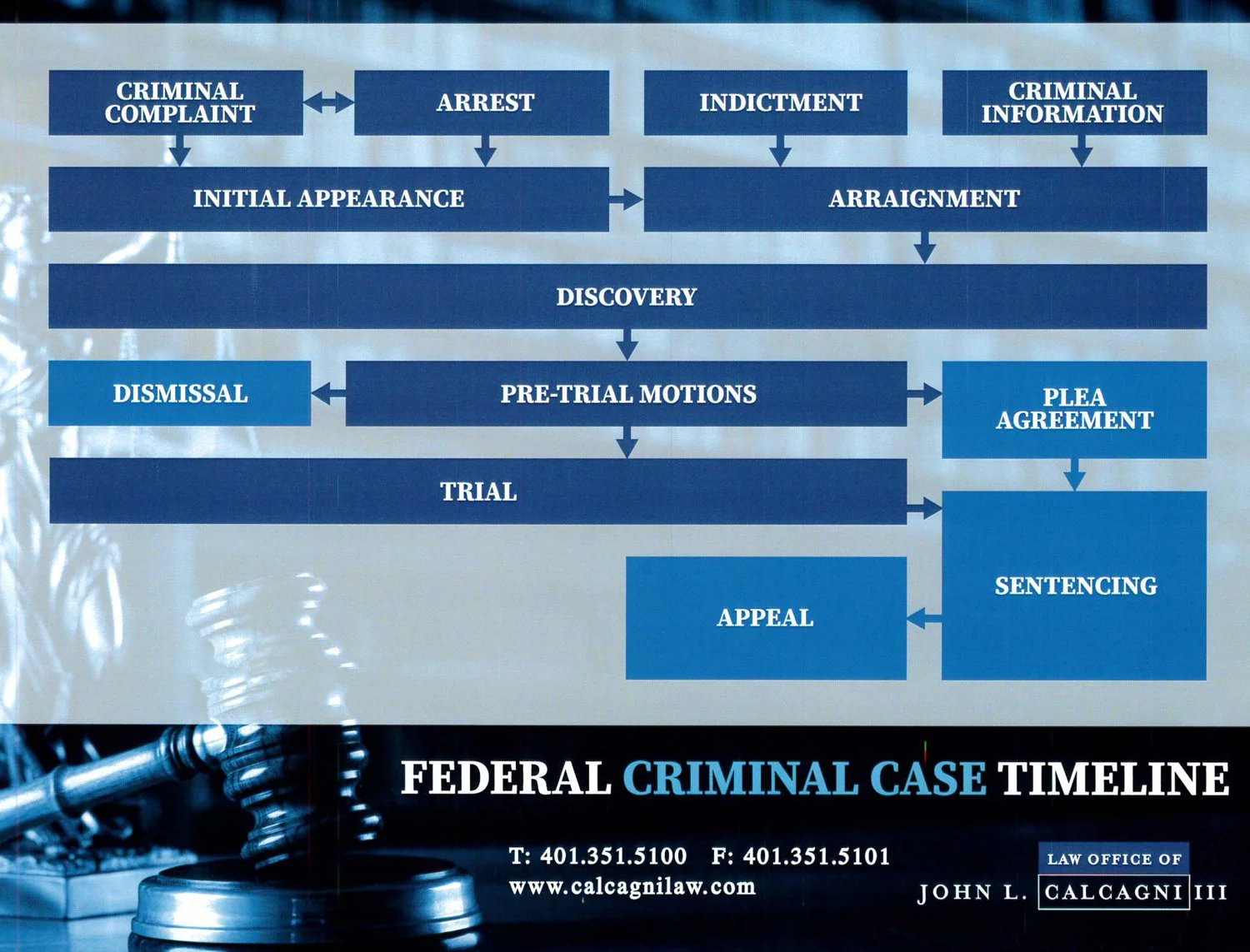
I will be posting my Criminal Complaint against Chegg, Inc. and Chegg CEO Dan Rosensweig in the next day or two, but in the meantime, I want to address two important preliminary matters. One is geographical: which court should hear this case (the forum-shopping question)? The other is procedural: whether to proceed by “indictment” or by “information” (see, for example, the flow chart pictured below).
Since my case against Chegg will be based on federal charges (wire fraud and conspiracy to commit wire fraud–hence the new title of my project: “The Chegg Conspiracy”), let’s talk about how a federal criminal case gets started. In summary, each State contains one or more federal judicial districts, and each district has its own U.S. Attorney’s Office. Chegg’s headquarters, for example, are located in Santa Clara, California, which is part of the Northern District of California (NDC), so the current U.S. Attorney for the NDC, Stephanie Hinds, could be the one to bring charges against Chegg.
But should the Chegg case proceed by indictment or by information? Both are charging documents, and according to Rule 7(c)(1) of the Federal Rules of Criminal Procedure (see here), both must contain “a plain, concise, and definite written statement of the essential facts constituting the offense charged and must be signed by an attorney for the government.”
All felony prosecutions, however, are supposed to begin with an indictment, since the Fifth Amendment to the Constitution states that “No person shall be held to answer for a capital, or otherwise infamous crime, unless on a presentment or indictment of a Grand Jury …,” except for cases under military law (e.g. a court-martial), but Rule 7(b) of the Federal Rules of Criminal Procedure allows a criminal defendant to waive this right, so for all practical purposes the main difference between indictments and informations is that an indictment must be presented to a grand jury for its approval. (Every federal judicial district has its own separate grand jury, and the proceedings of the grand jury are governed by Rule 6 of the Federal Rules of Criminal Procedure. See here.)
An information, by contrast, does not involve the grand jury. Instead, the information is presented to an Article III judge or to a magistrate judge. In either case, however, the grand jury or the judge must decide whether the charges contained in the charging document are supported by probable cause. So, for all practical purposes, it doesn’t really matter too much whether this case is initiated via indictment or information.
For my part, I will label my proposed charging document against Chegg a “Criminal Complaint” for now and let the actual U.S. Attorney for the Northern District of California decide how to proceed. The main thing is that Chegg be prosecuted forthwith. In fact, because Chegg is an online service, it does business across the United States, so any U.S. Attorney in any federal judicial district could bring charges against Chegg.
With this background in mind, I will post my model Criminal Complaint in the next day or two …
My August 23, 2021 issue of The New Yorker (the cover of which is pictured above) arrived in the mail on Friday, and among the essays that caught my attention was this one on mental models and Bayesian reasoning by Joshua Rothman, who is the “ideas editor” for that fabled publication. The reason why I am pointing out Rothman’s excellent piece here is that it contains one of the best explanations of Bayesian reasoning that I have read since my own “conversion” to subjective probability in Amsterdam during the summer of 2011. Since that fateful moment, most of my scholarly work has been devoted to extending Bayesian reasoning into the domains of law and adjudication. Also, Bayesian reasoning is central to what I have been trying to do on this blog since I first began blogging in July of 2013. Below the fold, then, are a few excerpts — seven paragraphs in all — from the online version of Rothman’s beautiful essay (links in the original; emphasis added by me):
Michael D. Johnson, Interim Provost and Vice President for Academic Affairs, University of Central Florida, Millican Hall, Orlando, FL 32816
Dear Dr. Johnson,
To the point, I am absolutely appalled that my colleagues and I in the College of Business are being required to teach five or more “RA” or REAL sections in a crowded classroom (with up to 200 students) without any social distancing or adequate ventilation measures (alas, the windows in our classrooms are shut closed).
In my case, three of my five sections are back to back to back, meaning that I will have to be in the same classroom for almost FIVE CONSECUTIVE HOURS every other week. The other two sections are also back to back, putting me in harm’s way for another THREE CONSECUTIVE HOURS.
This is absolutely wrong on so many levels.
Could we set up an outdoor classroom for these RA (REAL) classes, or in the alternative, re-schedule them to meet in a more spaced out fashion?
Note: this blog post is the fifth in a multi-part series on “the law and ethics of Chegg.”
I will be posting my Model Criminal Complaint against Chegg, Inc. and Chegg CEO Dan Rosensweig next week (most likely on Tuesday or Wednesday). I am still debating whether students who use Chegg should be named as unindicted co-conspirators in this case, which would make “the Chegg Conspiracy” (as I have re-named my research project) one of the largest criminal enterprises in world history(!), but here is a preview of where I am thus far. In brief, the indictment will allege two criminal counts against Chegg: wire fraud and conspiracy to commit wire fraud. My theory of the case is that Chegg commits fraud in two ways: (1) fraud writ large, and (2) individualized fraud against its users. As I see it, Chegg commits fraud writ large because it bills itself as a legitimate business, a seller of honest tutoring services–when, in reality, Chegg is nothing more than a glorified contract-cheating website–and it commits individualized fraud against its users by cheating them out of a real education. (When students use Chegg to look up the answers to their test questions, they are not really learning the material.)
Did you know that more people were fired for the “Bridge Gate” scandal of 2013 — when local government officials ordered the closure of three lanes on the New Jersey side of the George Washington Bridge — than have been fired for our ignoble and disgraceful exit from Afghanistan? In all, three state officials were fired for their direct role in the 2013 Fort Lee, NJ lane closure scandal, and two of them even faced criminal charges. No military general or cabinet secretary — not even a single lower-level official — has yet to be fired for the ongoing Afghanistan disaster. #ImpeachBiden
I am interrupting my moral and legal analysis of Chegg’s evil business model to ask, Where is the accountability? Why has no one in our government or military been fired for our defeat in Afghanistan and the ongoing disaster in Kabul?
I am still in the process of writing up my Model Criminal Indictment against Chegg; in the meantime, here is a link to my 2015 paper “Legal Liability for Research Fraud.” (Also, check out the myriad instances of research fraud chronicled on a daily basis on the popular “Retraction Watch” website.)
Update (8/20): A prominent professor at Duke University, Dan Ariely, has just been accused of using fake data in one of his research papers, a “study” (ironically enough) about dishonesty! (See here and here.)
I am interrupting my moral and legal analysis of Chegg’s evil business model to ask, Where is the accountability? Why has no one in our government or military been fired for our defeat in Afghanistan and the ongoing disaster in Kabul?
Note: this blog post is the fourth in a multi-part series on “the law and ethics of Chegg.”
Thus far, we have seen how students use Chegg to cheat (see my 8.16 post “The Napster of cheating“), and we have compared Chegg’s business model to the illicit market in the College Admissions Bribery Scandal, both from the seller’s perspective (see my 8.17 post “Argument by analogy“) and from the buyer’s (my 8.18 post “Chegg is evil“), and have concluded that Chegg is guilty of committing fraud and conspiracy to commit fraud on a massive scale. But before I lay out the elements of wire fraud and conspiracy in my Model Indictment against Chegg, I want to discuss a more recent precedent that might be relevant to this matter: the case of Professor Edward C. Ennels.
Among other things, Professor Ennels allegedly solicited and received bribes from his students at Baltimore City Community College (BCCC) in exchange for favorable final grades in mathematics courses he taught. (See Brian E. Frosh, Maryland Attorney General, Press Release dated Aug. 5, 2021, available here.) According to the Maryland Attorney General’s Office, Professor Ennels often haggled with students regarding the amount of the bribe, and set different prices based on the course and grade desired. For example, he would charge $150 for a C, $250 for a B, and $500 for an A in a higher-level course. (Ibid.)
Professor Ennels was prosecuted by the Maryland Attorney General’s Office, and he recently pled guilty to charges of bribery and official misconduct before the Circuit Court for Baltimore County. (Ibid. He was charged with bribery instead of fraud because BCCC is a public institution, making Ennels a public employee.) Unlike the wealthy parents like Jane Buckingham, Felicity Huffman, and Lori Loughlin in the College Admissions Bribery Scandal, who all received light sentences (see, for example, my 11.13.19 blog post), Professor Ennels was sentenced to 10 years incarceration, followed by five years of supervised probation upon release, and ordered to pay restitution in the amount of of $60,000.
Would it surprise you to learn that Ennels is black, while Buckingham, et al. are all rich white women? Regardless, the larger point I want to make here is that Chegg’s business model is really no different from Professor Ennels’ illicit bribery scheme. Suppose that Ennels was not selling grades per se; suppose instead that he was selling the answers to his tests. Wouldn’t he (and the students who paid the bribes) still be guilty of a crime? If so, how is this conduct any different from what Chegg does? That’s the thing, my friends, it’s not!