Rules about rules (part 3.1)

Alternative Title: Three Blind Spots with Hart’s Theory of Law

We devoted our previous two blog posts to H.L.A. Hart’s influential theory of positive law. Here, I will identify three blind spots in Hart’s theory of law. The source of all three problems is Hart’s “rule of recognition”–i.e. the secondary rule that tells us what primary rules are part of the legal system or are binding on public officials. Problem #1 is that Hart’s rule of recognition is not really a “rule” in any conventional sense; problem #2 is that, regardless of the ontological status of the rule of recognition, it is a totally circular rule; and problem #3 is that the rule of recognition is self-defeating: there can be as many valid legal systems as there are individual legal officials! Each of these problems or blind spots, individually, is enough to mortally wound Hart’s theory of law. Combined, they utterly obliterate it.

For now, let’s focus on my first objection to H.L.A. Hart’s rule of recognition–that it is not really a legal rule in any conventional sense of the word “rule.” (Alas, I wish I could take credit for this powerful objection, but during my researches for this blog post I stumbled upon this excellent 2007 paper by Julie Dickson, which was published in Volume 27 of the Oxford Journal of Legal Studies.) Why isn’t the rule of recognition really a legal rule or legal norm? Because as we saw in my previous post, the output of this so-called “rule” depends on what Professor Hart himself called “the internal point of view.” In other words, the rule of recognition is not really a rule but rather an internal psychological process.

This objection, by itself, however, is not necessarily fatal to Hart’s theory of law, for as F. A. Hayek (pictured below), Thomas C. Schelling, Elinor Ostrom, and many others have shown (beginning with the great David Hume!), many forms of coordination or spontaneous order or rules of behavior–even complex ones–can arise via an invisible hand or decentralized process. (To learn more about the emergence of informal norms or “conventions” out of an unplanned or decentralized invisible-hand process, David Lewis’s classic work, Convention: A Philosophical Study, is a must-read. See also this helpful entry on “conventions” in the Stanford Encyclopedia of Philosophy.) Also, before proceeding any further, I should also disclose that this is one of the features of Hart’s theory of law that I really admire and appreciate: how Hart’s theory–his rule of recognition, plus the internal point of view–fits into this larger research programme on social conventions and spontaneous orders.

But is Hart’s “union of primary and secondary rules” really the product of a spontaneous order or social convention among public officials? If so, how do we explain such things as “Circuit Splits” (when the courts of two different localities disagree about a particular point of law) or the common practice of “dissenting opinions” (when the judges on a single court disagree about the law)? Stay tuned. We shall explore those particular theoretical puzzles and consider my other two objections–that the rule of recognition is not only circular; it is also self-defeating–in my next blog post …

Hayek on the importance of the spontaneous order of the market ...
Posted in Uncategorized | Leave a comment

Rules about rules (part 2)

I introduced H.L.A. Hart’s influential theory of positive law in my previous post. Specifically, we saw that Hart famously defined “law” as the union of primary and secondary rules: the primary rules are “the rules of the game,” i.e. rules of conduct that impose duties or confer powers on people, while the secondary rules are second-order meta rules about the primary rules, or “rules about rules,” including rules of change, rules of dispute-resolution, and rules of recognition. And we concluded our summary of Hart’s theory of law by asking, what is the source of these secondary rules themselves?

Here is where H.L.A. Hart’s theory gets extremely interesting. According to Hart, the ultimate source of all law is the mental attitude or mental disposition of those public officials whose job it is enforce the law (e.g. policemen), change the law (e.g. legislators), or decide disputes about the law (e.g. judges). This is why Hart’s third (and most important) set of secondary rules is often called, in the singular, the “rule of recognition.” In addition Hart famously referred to his psychological or sociological explanation of law as “the internal point of view” because, on Hart’s view, “law” is whatever public officials recognize as law, i.e. as imposing binding duties on them. (See, e.g., Scott J. Shapiro, “What is the internal point of view?,” Fordham Law Review, Vol. 75 (2006), pp. 1157-1170, available here.)

Notice how, in some respects, H.L.A. Hart’s “rule of recognition” looks a lot like Hans Kelsen’s “basic norm.” To begin with, the rule of recognition determines which primary rules are valid and binding on public officials, so this secondary rule plays a pivotal role in Hart’s theory of law, just as the basic norm plays a key role in Kelsen’s theory of law. But here is where any similarity between them ends. Unlike Kelsen’s basic norm, which was entirely fictional and thus untestable, Hart’s rule of recognition is oh so very, very real: it is a “social fact” with psychological and sociological features that can be observed, measured, and tested.

To sum up, Hart’s theory of law is a major achievement in legal theory. For Hart, “law” is neither based on external commands nor grounded in fictional norms; “law” is not a brooding omnipresence in the sky, to borrow Oliver Wendell Holmes’s haunting phrase. Instead, law is a social fact: law is whatever the public officials of a given legal system think law is. As a result, Hart ended once and for all the idea of law as a separate domain of knowledge, for Hart’s theory of law is psychological to the extent we must explore the mental attitudes or mental dispositions of public officials in order to understand what the law is, and his theory is also sociological to the extent these pubic officials form a class of like-minded of individuals who share similar attitudes and dispositions.

Ok, now that we have built up Hart’s highly original, parsimonious, and fruitful theory of law, we will nevertheless do our level best to tear it down in our next few posts before going on vacation for the rest of July …

Posted in Uncategorized | 1 Comment

Rules about rules

What is law, and how is law different from morality? Last week, we reviewed John Austin’s “command theory of law” (or Legal Positivism 1.0) and Hans Kelsen’s idea of a “basic norm” (Legal Positivism 2.0). This week, we will introduce the main ideas of H.L.A. Hart and discuss his sociological or “Weberian” theory of positive law (Legal Positivism 3.0), which Professor Hart set forth in his influential book “The Concept of Law,” originally published in 1961.

Before proceeding any further, however, I want to state at the outset that Hart made many significant contributions to many aspects of legal theory–his ideas were so original and powerful that he was a giant in the field of jurisprudence, as the “philosophy of law” is called–and it’s also worth noting that Hart lived a fascinating life before he began teaching law at Oxford and writing about legal philosophy; check out this short biography.) Here, I shall focus on Hart’s contributions to legal positivism, i.e. his answer to the questions posed at the start of this blog post.

For Hart, “law” consists of the union of primary rules and secondary rules. Primary rules are the rules of the game, so to speak–i.e. rules that impose duties or confer powers on people. Secondary rules, by contrast, are rules about rules. Specifically, Hart identified three types of secondary rules:

1. Rules of change. This first set of secondary rules determines how the primary rules of a legal system can be changed, modified, or repealed (and who can do these things).

2. Rules of adjudication. This second set of secondary rules determines which public officials have the authority or power to resolve disputes about the meaning or scope of the primary rules.

3. Rules of recognition. This last set of secondary rules specifies which primary rules and secondary rules are actually valid or binding on the people or officials to whom those rules apply. (Put another way, the rules of recognition tell us what counts as “law”: what  rules actually apply to any given situation or dispute and what types of arguments are binding or persuasive.)

But where do these secondary rules, in turn, come from; what is the source of these secondary rules? We shall address these questions in my next blog post. For now, it suffices to say that Hart’s Weberian response to these questions will result in the most powerful and original theory of positive law since Plato’s Republic

Law as the Union of Primary and Secondary Rules | a pakistani notebook

Source: MaryamA (via A Pakistani Notebook)

Posted in Uncategorized | 1 Comment

Film noir forever

Happy Sunday! I put together a home-made photographic collage of some of the leading gents and dames of film noir. (Here is my previous film noir collage.) You’re welcome …

Posted in Uncategorized | Leave a comment

A modest proposal (two-week-holiday-in-honor-of-freedom edition)

Why don’t we make the two weeks between June 19 (Juneteenth) and July 4 (Independence Day), inclusive, a two-week national holiday for all non-essential workers? No schools, no commerce, no work. The French, for example, have the whole of August off, and our nation is certainly wealthy and prosperous enough to afford a mere two-week holiday, right? (If necessary, I would even be totally willing to give up all our other ad hoc holidays–except Christmas–in exchange for this proposed two-week celebration of freedom.) Are you with me? Either way, I will resume my extended review of legal positivism in the next day or two …

June July 2020 Calendar Templates - Time Management Tools June ...
Posted in Uncategorized | 2 Comments

Thomas Jefferson’s Lost Paragraph

Happy Independence Day? My friend, colleague, and fellow intellectual saboteur Alex Tabarrok has brought to my attention this deleted paragraph from an early draft of the original Declaration of Independence. I have also cut-and-pasted Jefferson’s lost paragraph below:

[King George] has waged cruel war against human nature itself, violating its most sacred rights of life and liberty in the persons of a distant people who never offended him, captivating & carrying them into slavery in another hemisphere or to incur miserable death in their transportation thither. This piratical warfare, the opprobrium of infidel powers, is the warfare of the Christian King of Great Britain. Determined to keep open a market where Men should be bought & sold, he has prostituted his negative for suppressing every legislative attempt to prohibit or restrain this execrable commerce. And that this assemblage of horrors might want no fact of distinguished die, he is now exciting those very people to rise in arms among us, and to purchase that liberty of which he has deprived them, by murdering the people on whom he has obtruded them: thus paying off former crimes committed again the Liberties of one people, with crimes which he urges them to commit against the lives of another.

Kevin Kallmes, a law student at Duke, explains here why this paragraph was deleted from the final version of the Declaration of Independence (or “DOI” for short). Regardless of why this remarkable anti-slavery passage was removed from the final draft, what should we make of this strategic deletion–a deletion all the more deplorable and dreadful since it reflects our nation’s “original sin” of slavery? After all, Jefferson’s beautiful preamble refers to “all men” and those words encompass persons of all races, genders, and immigration status, right? But what about children, illegal immigrants, and non-human animals, though? In many ways, we are still fighting over the meaning of this pivotal preamble!

In short, as I never tire of explaining to my students, all legal texts require some level of interpretation, and the DOI is no exception. Should we, for example, read the phrase “all men” in the preamble literally or metaphorically? Either way, one of the things I love the most about the DOI is that it is not just any ol’ legal text, i.e. one that only judges get to interpret. The Declaration of Independence–like the original Constitution and Bill of Rights–is a popular legal text, part of our legal scriptures. That means that all public officials (State and federal)–and even private citizens–get to decide what these words mean to us today. Don’t be fooled. The courts are not the sole guardians of our democracy; the people, acting through their elected officials, are!

We hold these truths to be self-evident; that all men and women ...

Posted in Uncategorized | 6 Comments

Visualization of coronavirus risks

Hat tip: Dr Saskia Popescu (@SaskiaPopescu)

Posted in Uncategorized | Leave a comment

Hamilton meets hip hop

Now available for the masses on Disney+. Aja Romano explains here why Hamilton is “impossible to pin down.” (Maybe this will help.) As an aside, my wife Sydjia and I had the honor of seeing the Hamilton musical on stage last year (2019), and we cannot recommend enough this stirring and unorthodox tribute to our founding fathers and mothers … Two cheers for Lin Manuel Miranda’s hip hop version of Hamilton! 

Posted in Uncategorized | Leave a comment

The umbrella test

Via Quora: “Which two pictures, when compared, best capture the difference between Obama and Trump for you?” Me: How about these two? (Although in fairness to 45, there are plenty of pictures of 44 being selfish with his umbrella too. What can you expect, though, since both men are supreme narcissists!)

Hat tip: Javed Rezayee

Posted in Uncategorized | Leave a comment

Popper’s revenge (Kelsen’s glue, part 2)

Alternative title: Calling bullshit (Hans Kelsen edition)

We have been blogging about legal positivism all week, and we identified Hans Kelsen’s key contributions to legal theory in my previous post. In brief, one of Kelsen’s great insights is his structural or “systematic” approach to positive law. Andrei Marmor, one of the leading contemporary students of Kelsen’s work, summarizes Kelsen’s systems insight with the following two postulates: “1. Every two norms that ultimately derive their validity from one basic norm belong to the same legal system. 2. All legal norms of a given legal system ultimately derive their validity from one basic norm.” (See Marmor, 2016, available here.) In other words, every legal rule or norm belongs to a given legal system, and at the top of every legal system is a basic norm validating all the rules in that particular legal system. The “basic norm” is thus the key ingredient of Kelsen’s theory of law.

Alas, there is only one problem with Kelsen’s elegant theory: it’s total bullshit!

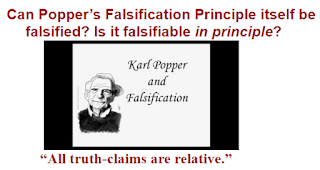
Kelsen’s “basic norm” is bullshit not because it is a fictional or hypothetical entity–the world of science is littered with plenty of unobservable entities like electrons and natural selection. No, the basic norm is bullshit because there is no way of testing or “falsifying” (in the parlance of Karl Popper) its existence. Specifically, I am thinking here of Karl Popper’s influential demarcation principle. What distinguishes science from politics, for example, or science from morality? According to Popper, for a theory to be considered “scientific” it must be able to be tested and refuted. Although Popper’s theory of science raises many questions (see, for example, the image below), at a minimum if we are going to construct a scientific theory of positive law (as Kelsen was purporting to do), we need to find a way of putting that theory to the test. Kelsen’s basic norm idea, however, is untestable. We must presuppose its existence wholesale instead of figuring out how to measure its truth-value. We will thus waste no further time on Kelsen …

We will proceed to H.L.A. Hart next week, starting on Monday, July 6. Unlike Kelsen, this Oxford don will attempt to present a testable theory of positive law, one that would revolutionize the world of legal theory forever …

Source: Paul Austin Murphy (via Blogger)

Posted in Uncategorized | Leave a comment