Eulogy for Carlitos

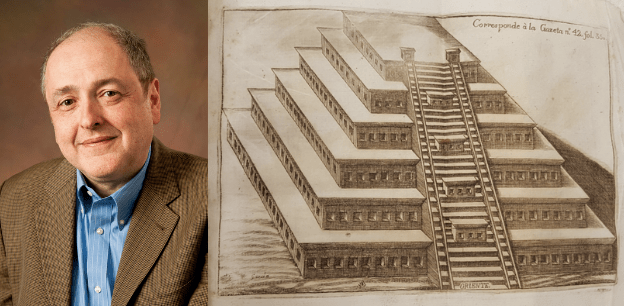
My friend of many years Gustavo Gelpi, the Chief Judge of the United States District Court for the District of Puerto Rico, knew Carlos del Valle for even more time than I did. Judge Gelpi wrote up a short eulogy in honor of Carlitos (once again, pictured below) and has graciously granted me permission to repost his eulogy here:

“Carlitos Del Valle, as all who knew him came to call him, was the quintessential idealist. He never saw ‘The Law’ as a mere profession or way to make a living. Rather, he saw it as an instrument that can bring great social change or reform; as a means to help the otherwise powerless or less fortunate; as a David to challenge the Governmental Goliath. To him ‘The Law’ was his very essence and purpose in life.

“I knew Carlitos for three decades. During that time there were periods when he represented the Commonwealth Government and there were others where he represented plaintiffs with civil rights claims against the Government. While indeed a zealous advocate regardless which side he was on, he always presented broader issues than those most other lawyers would raise.

“Back in 2008 I presided over an important case involving the Commonwealth’s noncompliance with the Medicaid statute. As counsel for the Government, Carlitos prevented his client from being found in contempt and ensured that all pending payments be made. Any other attorney would have settled for said result, but not him. Rather, he proceeded to go beyond that and literally indicted the United States Government for disparately treating United States citizens in Puerto Rico as it pertains to federal health benefits. He thus asked the Court to rule that the Insular Cases no longer applied to the Commonwealth. That was his typical self. He will certainly be missed.”

I will only add this to Judge Gelpi’s eulogy: More than any other man I knew, Carlitos truly embodied the spirit of Don Quijote–both for his idealism and willingness to tilt at powerful windmills.

Screen Shot 2020-07-14 at 8.51.39 AM

Posted in Uncategorized | 2 Comments

Carlitos’ Library

In honor of my fellow bibliophile, dear friend, and scholarly colleague, Carlos del Valle (pictured below), here is a revised excerpt from one of my papers, which was published in 2015 in a special issue of the “Revista del Colegio de Abogados de Puerto Rico.” In this passage, I describe the first time I met Carlitos:

“Like the cluttered mailboxes of most academics, mine was flooded with scores of colloquia invitations and assorted ‘calls for papers.’ In those days, though, I had no travel budget to speak of, so most of these intriguing invitations, the equivalent of intellectual junk mail, would end up in the little black wastebasket tucked away under my old-school 1950s-era desk. But one academic invite stood out from the others.

“The invite described week-long conference devoted to “Blade Runner: Memory, Surveillance, and the Disposable Subject,” to be held the following spring (April 2007) at a small, independent law school … in the town of Mayagüez on the western end of the Island of Puerto Rico…. The organizer of the conference, Daniel Nina, not only accepted my proposal, he offered to provide me housing for the duration of the one-week conference. Daniel served as the indefatigable moderator and social host of the conference. His comments were always original, thoughtful, and politically incorrect when necessary, and his sharp wit as well as his mischievous sense of humor were a refreshing antidote to all those dull and boring academics who tend to take themselves and their work too seriously.

“During the conference, I ended up staying in the home of one of Daniel’s colleagues on the Mayagüez law school faculty, Carlitos de Valle. But who was this Carlitos de Valle? During the first night of my stay, I did not see much of my generous host, as he was holed up in his quarters on the upper level of his home, putting the finishing touches on his paper.

“Nevertheless, I immediately sensed that Carlitos was a kindred spirit, a man of ideas, a fellow intellectual agnostic, the moment I had walked through the door of his humble abode. The walls were lined with plain wood bookshelves, and the bookshelves were filled with books. There were books in the living room, books in the dining room, books in the bedrooms. Like Ernest Hemingway’s tropical Finca Vigía on the outskirts of Havana, Carlitos’s home was overflowing with well-worn books of all shapes and sizes. It was as if his home were one big Borgesian library.

“Amid this spiraling collection of books, I experienced yet another intellectual epiphany, perhaps my most important one. You see, Carlitos had collected and read many of the same books and authors that I had. His home was in many ways a larger version of my own small ramshackle Miramar apartment. But missing from Carlitos’s hallowed shelves were the trilogy of tomes of my own intellectual heroes–Thomas Schelling, Ronald Coase, and Richard Dawkins.

“That’s when it hit me all of a sudden! How many essential books were still missing from the bookshelves of my own meager Miramar library? What unread books were still waiting to be read? The books one has yet to read might just be as important as the books one has actually read.”

To sum up, Carlitos was not only a beloved law professor, he was also a scholar’s scholar, a lover of truth, and a true friend. In the next day or two, I will describe our first professional collaboration together: the time we co-authored a legal brief in support of a petition for certiorari before the United States Supreme Court.

Screen Shot 2020-07-13 at 8.07.07 PM

Posted in Uncategorized | 2 Comments

Rest in peace, Carlitos

Below is a recent photograph of my fellow bibliophile and chess aficcionado Carlos del Valle. Alas, I learned yesterday that my dear friend, colleague, and kindred spirit has suddenly passed away, and I am literally heart-broken over this unexpected news. I will say more about our friendship and Carlitos’s enormous impact on my own intellectual development in the next day or two. In the meantime, however, check out this letter in the form of a law review article, which I addressed to Carlitos many years ago.

Screen Shot 2020-07-13 at 1.11.18 PM.png

Posted in Uncategorized | 4 Comments

Atlas Shrugged: final thoughts

I am reposting my “final thoughts” on Atlas Shrugged. The only thing I would add to my 2018 review is this modest proposal: leftist academics and politicians of all kinds should add Ayn Rand’s magnum opus to their reading lists.

F. E. Guerra-Pujol's avatarprior probability

(a) The Good 🙂: This is by far the most entertaining book we’ve ever read explaining the evils of communism and the hypocrisy of most intellectuals. One can choose to dismiss these “big ideas” as adolescent, simplistic, or naive, but as the histories of various revolutions have shown, radical redistribution schemes make everyone poor–everyone, that is, except for those in power. (As a further aside, if intellectuals truly favored equality, why do so few (if any) of them refuse to accept prizes or literary awards? And why are academic intellectuals responsible for perpetuating the most feudal, archaic, and anti-egalitarian domain of the modern economy? Yes, we are referring to Academia!)

(b) The Bad 😦: Although the story is a compelling one, the bad guys in Atlas are uni-dimensional, mere straw men. As a matter of fact, we would love it if someone were to rewrite Atlas–but from…

View original post 90 more words

Posted in Uncategorized | Leave a comment

Sex and the market (review of Atlas Shrugged, part 3)

As promised, I am re-posting part 3 of my 2018 review of “Atlas Shrugged” here. Also, I will re-post my final thoughts and make a modest proposal soon …

F. E. Guerra-Pujol's avatarprior probability

We have been exploring the most original ideas and insights contained in Ayn Rand’s cult-classic Atlas Shrugged, such as the depiction of Robin Hood as an anti-hero and the comparison between trademarks and coats of arms. But to us, the single-most original and surprising idea by far in this epic story occurs on pp. 453-455 (Part Two, Ch. 4) of Atlas Shrugged, during a conversation between two of the leading protagonists of the story, the incorruptible North American industrialist Henry “Hank” Rearden and the mysterious Argentinian copper heir Francisco d’Anconia, who both are in love with the same woman, the heroine Dagny Taggart. (As an aside, check out the different Dagny Taggart visualizations below.) During this dramatic meeting in Francisco d’Anconia’s suite in the Wayne-Falkland Hotel–their second careo or face-to-face encounter in the story–, d’Anconia explains to Rearden the close connection between sex and ethics:

View original post 276 more words

Posted in Uncategorized | Leave a comment

“The coats of arms of our day …” (review of Atlas Shrugged, part 2)

As promised, I am re-posting part 2 of my 2018 review of “Atlas Shrugged.” (Also, I will post part 3 as well as my final thoughts about Ayn Rand’s masterpiece over the weekend.)

F. E. Guerra-Pujol's avatarprior probability

So much has been written about Ayn Rand’s magnum opus Atlas Shrugged that we have decided to focus on the three most original insights contained in this monumental novel. (Of course, just because an idea is novel or new does not make it true, but when evaluating a work of art, one can value originality for its own sake.) In our previous post, for example, we revisited Ayn Rand’s original, revisionist critique of Robin Hood. Today, we will explore another original idea in Atlas Shrugged, the idea expressed by one of the main characters in the novel (the Argentinian aristocrat and copper heir Francisco d’Anconia) that brands, corporate logos, and trademarks are the modern equivalent of the such bygone heraldic symbols as family crests and coats of arms. The passage in which Francisco d’Anconia makes this novel comparison appears on page 94 of the 35th anniversary edition of Atlas

View original post 448 more words

Posted in Uncategorized | Leave a comment

The logic of Robin Hood (review of Atlas Shrugged, part 1)

While I am “on vacation” working on other projects, I thought I would repost part 1 of my review of “Atlas Shrugged” for my loyal readers. (Coincidentally, I wrote this review exactly two years ago!) Also, I will repost the remainder of my review in the next day or two …

F. E. Guerra-Pujol's avatarprior probability

Is Robin Hood a good guy or a bad guy? Our previous post identified three original ideas in Atlas Shrugged. One of these is Ayn Rand’s revisionist critique of Robin Hood, the legendary outlaw who robbed from the rich and gave to the poor. This counter-intuitive critique appears on pp. 532-533 of this monumental tome (all page references are to the 35th anniversary edition of Atlas Shrugged, the one with an Introduction by Leonard Peikoff), or about halfway into the novel, where one of the secondary characters in the novel (the Norwegian pirate Ragnar Danneskjöld) questions the moral ideal of Robin Hood, describing him as “the most immoral and the most contemptible” anti-hero. (By the way, we begin our review of Atlas Shrugged with the Robin Hood passage because the idea expressed in this passage is central to the main thesis of the novel: government regulators are…

View original post 643 more words

Posted in Uncategorized | 3 Comments

On Vacation

Hello. Because this is a one-man blog, and because I will be taking a vacation for the rest of July and for most of August, I will be blogging much more sporadically, if at all, during the next few weeks. Rest assured, however, that I will present my grand synthesis of Oliver Wendell Holmes’s prediction theory of law and H.L.A. Hart’s internal point of view upon my return in late August or early September. Note: I won’t really be “on vacation” per se; instead, I will be using this time to give talks (via Zoom, of course) at several academic conferences and to complete some other scholarly projects, including a book-length treatment of “Goedel’s Loophole.” (If time permits, I may blog about these other projects in the days ahead.)

Posted in Uncategorized | 1 Comment

Scale map of the largest company in every State

Because I teach business law, I am interrupting my series of blog posts about H.L.A. Hart’s influential theory of law to share this fascinating map (circa 2018) with the world. Hat tip: u/OttoOnTheFlippside (via Reddit). As an aside, compare the map below with this population map of the USA, also to scale.

Post image
Posted in Uncategorized | 1 Comment

Rules about rules (part 3.2)

Alternative Title: Leiter’s Legal Pyramid

We identified three potential problems with H.L.A. Hart’s “rule of recognition” in my previous post. In summary, Problem #1 is that Hart’s rule of recognition is not really a “rule” in any conventional sense; problem #2 is that, regardless of the ontological status of the rule of recognition, it is a totally circular rule; and problem #3 is that the rule of recognition is self-defeating.

We were able to sidestep the first problem by introducing F. A. Hayek’s notion of “spontaneous order” and David Lewis’s work on “social conventions.” In other words, rules or norms can often emerge through a decentralized or invisible-hand process, if the conditions are right. But what about the other two objections to Hart’s theory of positive law? On the one hand, if “law” includes only those rules and norms that judges themselves recognize as law (via Hart’s rule of recognition and internal point of view), then there is something circular in Hart’s definition of law. On the other hand, if “law” is based on the internal acceptance of judges, there could in theory be as many valid legal systems as there are individual legal officials!

Here is where the work of my colleague and friend Brian Leiter (pictured below, bottom left) deserves special mention. According to Leiter, Hart’s rule of recognition really only comes into play when two conditions are met: “internal acceptance” and “massive agreement” among most lawyers and judges. (As an aside, I blogged about these two key conditions last year.) Although disagreements about the law usually receive the lion’s share of our attention (think, by way of example, of all those highly controversial cases that go up to the U.S. Supreme Court), Professor Leiter has often pointed out that such disagreements are, in fact, relatively rare and uncommon. Most of the time, most lawyers and most judges agree on the content of most primary and secondary rules and also on which rules are valid or not.

To prove his point, Professor Leiter has often compared the universe of all legal questions to a large lopsided pyramid, such as the one pictured below (bottom right). (As an aside, Leiter’s legal pyramid is the image that stood out for me the most from when I attended Professor Leiter’s lectures in Paris last summer.) For Leiter, the base of the pyramid includes all those myriad legal consultations and legal disputes that enter a lawyer’s office. Most such cases are simple and straightforward, or in Leiter’s own words (2009, p. 1227), “most cases that are presented to lawyers never go any further than the lawyer’s office; … most cases that lawyers take do not result in formal litigation; … most cases that result in litigation settle by the end of discovery; … most cases that go to trial and verdict do not get appealed; and … most cases that get appealed do not get appealed to the highest court …” (See Brian Leiter, “Explaining Theoretical Disagreement,” published in The University of Chicago Law Review, Vol. 76 (2009), pp. 1215-1250.)

But as Leiter himself concedes, the “law” becomes more fluid and unstable as we approach the pinnacle of the pyramid, especially the 80 or so cases that the U.S. Supreme Court agrees to review each year out of the billions of possible legal questions at the bottom of the pyramid. In other words, it is only as we approach the very top of Leiter’s legal pyramid that the “rule of recognition” collapses into an “every judge for himself” scenario, and even here, such legal doctrines as stare decisis and res judicata help to mitigate or reduce (at least somewhat) this level of legal uncertainty. For my part, one of the things I like the most about Leiter’s pyramidal lens is that it not only leaves some room open for legal uncertainty or what I like to call “probabilistic law”; this approach also makes possible a synthesis between Oliver Wendell Holmes’s famous prediction theory of law and H.L.A. Hart’s subjective lens or “internal point of view.” Stay tuned. I will present such a synthesis in the next day or two …
Screen Shot 2020-07-07 at 10.50.56 AM

Posted in Uncategorized | Leave a comment