Let’s return to my extended review of Annie Duke’s beautiful book “Thinking in Bets,” shall we? Thus far, we have seen how a personal betting syndicate, one committed to a certain set of values, can help improve the quality of your decisions, but what if you are unable or unwilling to join such a betting syndicate? Annie Duke concludes her beautiful book “Thinking in Bets” with several second-best decision-making strategies in Chapter 6. These mental strategies are second-best ones because they do not involve actual bets or betting behavior; yet they are nevertheless worth giving a try, for they help us promote probabilistic thinking. For brevity’s sake, I shall review only two such mental strategies here. Continue reading
Handouts versus property rights
Check out the short video below poking fun at all the wasteful and counterproductive spending in the coronavirus relief bill approved by the Congress last month. For my part, this parody makes a deeper point: instead of enacting another round of bailouts, why don’t we return to our nation’s first principles and take a property-rights approach to the current pandemic? I outline precisely such an approach in my Mercatus Center op-ed, which was published yesterday.
Property rights and the pandemic: my COVID-19 op-ed
My essay, which explains what the proper legal response should be to COVID-19, was published earlier today in The Bridge, a publication of The Mercatus Center at George Mason University. Here is an excerpt:
“If the government is going to order a business to close its doors for the greater good, then the government is also required under the Constitution to pay “just compensation” in exchange for one’s cooperation. This property rights approach to the pandemic not only respects the federal structure of our constitutional system of government, it also represents a fair compromise between our need to make significant sacrifices for the common good (by staying at home for a reasonable period of time) and our bedrock moral right to receive some of form of meaningful or just compensation in exchange for the deprivation of our liberty.”

Good riddance?

Some media outlets (like this one) are reporting that Communist dictator Kim Jung Un is either dead or critically ill. Good riddance, motherfucker! If only the same fate were to befall the corrupt dictators of Cuba, Russia, and Venezuela!
The ethics of betting syndicates
Review of Chapter 5 of “Thinking in Bets” by Annie Duke
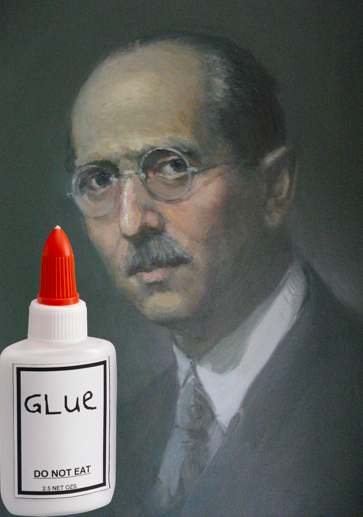
In our previous post, we described Annie Duke’s unorthodox suggestion to her readers in Chapter 4 of her book “Thinking in Bets.” To sum it up, if you want to improve your decisions, create your own personal “betting syndicate”; join a group of trusted intellectual friends who are willing to take each other’s bets. Building on the work of the legendary Robert K. Merton (pictured below), the next chapter (Ch. 5) identifies a set of fundamental betting norms–three normative values that you and the members of your betting syndicate should espouse and adhere to. (Duke discusses four values, but I have pared down this list to three.) Ordinarily, however, whenever we think of bets or betting syndicates, moral duties are rarely the first thing that comes to mind. One of Annie Duke’s contributions to the literature on probabilistic thinking is to identify a set of moral values that good bettors should live by.
First and foremost is the value of nuance (what Annie Duke calls “organized skepticism”), or in Duke’s own words (p. 68), “What if, in addition to expressing what we believe, we also rated our level of confidence about the accuracy of our belief on a scale of zero to ten?” By nuance, then, I mean that the fellow members of your personal betting syndicate should embrace uncertainty: they should not only be willing to take your bets; they should also require you to express your level of confidence in your bets. In other words, whether or not you believe that a particular proposition or given allegation is true, you should always strive to express the level of confidence or degree of belief you have in that proposition or allegation. For example, let’s say someone asks you whether the NBA or Major League Baseball will resume play by July 1. How strong or weak is your belief in this possibility? (Note: In addition to pages 169-171 of Chapter 5, pages 68-72 in Chapter 2 are also worth re-reading in this regard.)
Another essential betting norm is what I shall refer to as “the rule of three” or what Duke labels “disinterestedness” (see pp. 164-169). Ideally, your personal betting syndicate should contain at least three members: two to disagree and one to referee. This value is just a friendly reminder that motivated reasoning is not only a danger for individuals; it can also poison groups as well. The rule of three also makes good practical sense: every bet requires at least two parties: A, a bettor, i.e. the person who is placing the bet, and B, a bookie, the person who is taking the bet. In addition to these two main parties, it is also a good idea to appoint a neutral referee (a person with no stake in the outcome of the bet) to help write up the precise terms of the bet and to mediate any possible dispute about the bet that might occur later in time.
Yet another fundamental betting norm is “show your work.” As an aside, Duke refers to this value as “data communism” (see pp. 155-160), but communism has such an ugly connotation that I prefer to call it “show your work” or the “share and share alike” rule. Simply put, every member of your personal betting syndicate must not only disclose any information or evidence relevant to a possible bet; he must also disclose the source of that information or evidence. Put another way (in Kantian terms), you and the fellow members of your betting syndicate have a moral duty to share all relevant information with the entire group. In fact, it is actually in your self-interest to provide full disclosure. Why? Because whenever you make a bet, the more feedback you receive, the better bets you will make. A good bet, like a good decision, is an informed one, i.e. one based on all the available evidence.
This concludes my review of Chapter 5. We will turn to the last chapter (Ch. 6) and bring our review of “Thinking in Bets” to a conclusion in the next day or two …

In praise of betting syndicates
Review of Chapter 4 of “Thinking in Bets” by Annie Duke
Thus far, we have seen how motivated reasoning impairs our ability to make good decisions (Chapter 2) and how self-serving bias impedes our ability to accurately assess the outcomes of our decisions (Chapter 3). The solution? Just transform your decisions into bets or wagers. Why is this such an ingenious solution? Because a bet doesn’t make motivated reasoning or self-serving bias go away; it makes these mental quirks work to your advantage! After all, when you make a bet, you want to win the bet, or as Annie Duke herself eloquently explains in Chapter 4 of her beautiful book (p. 136), “Evidence that might contradict a belief we hold is no longer viewed as hurtful a frame. Rather, it is view as helpful because it can improve our chances of making a better bet.”
Okay, but recasting a decision into a bet is easier said than done. How are we supposed to go about doing this? Chapter 4 of “Thinking in Bets” shows us how. In brief, in order to convert your day-to-day decisions into bets, you are going to need a bookie or bookmaker, i.e. someone who is willing to take your bets. So why not create your own “betting syndicate”? In other words, why not join a group of trusted intellectual friends who are willing to take each other’s bets?
Wait up! Do you actually know any open-minded and quirky friends who might be willing to take your bets? (And are you yourself willing to lay odds on the personal wagers of your friends?) If not, you may have to make some new intellectual friends! But where could you possibly find such a crazy group of wagering co-conspirators? Building on the work of the venerable Robert Merton, a great 20th-Century scholar whose ideas are still held in high esteem among most intellectual circles, Annie Duke will identify the essential features of a good betting syndicate as well as the essential personal qualities of a potential betting partner. We will turn to the legendary Robert Merton’s guide to intellectual life in my next post …

It’s on!
Who needs the NBA playoffs or Major League Baseball? More details about this new chess tournament are available here (via David Hill). Updated 4/24: see links below.

- Day 1 (4.18): Carlsen vs. Nakamura | Firouzja vs. Ding Liren
- Day 2 (4.19): Caruana vs. Nepomniachtchi | MVL vs. Giri
- Day 3 (4.20): Carlsen vs. Firouzja | Nakamura vs. Giri
- Day 4 (4.21): Nepomniachtchi vs. MVL | Ding Liren vs. Caruana
- Day 5 (4.22): Caruana vs. Carlsen | Firouzja vs. Nakamura
- Day 6 (4.23): MVL vs. Ding Liren | Giri vs. Nepomniachtchi
- Day 7 (4.24): Carlsen vs. MVL | Firouzja vs. Caruana
Sympathy cards for Richard Epstein?
What if Hallmark made fancy sympathy cards that memorialized various types of academic failures? I am interrupting my extended review of “Thinking in Bets” (which will resume on Monday) to share the whimsical academic-failure sympathy cards pictured below. These were drawn by Tom Gauld, a Scottish artist and illustrator. My colleague and friend Richard Epstein, who infamously predicted only 500 coronavirus deaths in the USA, could use one of these!

Hat tip: @pickover
The sin of self-serving bias
Review of Chapter 3 of “Thinking in Bets” by Annie Duke
As we saw in my previous post, Chapter 2 of “Thinking in Bets” is devoted to the problem of motivated reasoning. Next, Chapter 3 explores another form of mental mischief: the sin of “self-serving bias.” To simplify, whenever we place a bet or make any type of decision at time T1, two outcomes are generally possible at time T2: a good outcome or a bad one, depending on whether we win or lose the bet at time T2, i.e. depending on whether the decision goes our way. What “self-serving bias” does is to distort our ability to evaluate whether these possible outcomes were the result of our hard work and skill or the result of factors beyond our control, of just pure luck. Simply put, in the words of Annie Duke (p. 92), “we take credit when good things happen and deflect blame for bad things.” (For a visualization of self-serving bias, see image below.)
In reality, however, the outcomes of our decisions are rarely 100% luck or 100% skill. Instead, most outcomes are the result of both skill and luck, or to be more precise, the result of various degrees of skill and luck. Alas, given how entrenched self-serving bias is, what is to be done? How can we avoid or at least ameliorate this dangerous temptation, the sin of self-serving bias? The solution, once again, is to think in terms of bets, to reframe your decisions prospectively and retrospectively in probabilistic terms. How do bets neutralize self-serving bias? The same way they counteract motivated reasoning: by inviting us to engage in probabilistic and Bayesian reasoning, i.e. to update our beliefs based on the available evidence.
But this Bayesian or betting response to self-serving bias (and to motivated reasoning, for that matter) poses a new question of a practical or logistical nature–namely, how do we actually go about redefining or reframing our decisions into bets and wagers? We will review Chapter 4 of “Thinking in Bets” and address this key question in our next post on Monday, April 20.