Check out the 3D-printed T-Rex shower head pictured below, which is available for download for free from MakerBot’s Thingiverse. Hat tip: @pickover.

Check out the 3D-printed T-Rex shower head pictured below, which is available for download for free from MakerBot’s Thingiverse. Hat tip: @pickover.
I am interrupting my series of blog posts on “legal positivism” to share my most recent work-in-progress, which is titled “Teaching Tiger King“–a rough draft of which is also available here via the Social Science Research Network (SSRN). I have added my teaching assistants Christy Champnella, Ben Mayo, Morgan Travers, and Antonella Vitulli as co-authors, since their work was instrumental to the success of the course. (As a further aside, here is a link to our syllabus.) In brief, our paper can be summed up as follows: when life gives you lemons (e.g. stay-at-home orders and all online college courses), add some water and sugar to make lemonade (e.g. find a way of using the majestic non-human animals as well as the crazy and colorful characters depicted in the hit Netflix show Tiger King to explore law and ethics). Or if you prefer the formal abstract of our paper, see below:
When our home institution moved all instruction online in response to the global pandemic, we began redesigning our business law survey course from scratch. Specifically, we decided to use the popular docuseries Tiger King: Murder, Mayhem, and Madness to explore the legal and ethical environments of business with our undergraduate students. We deliberately chose this surprise-hit TV show in order to make our online course as relevant, timely, and engaging as possible. The remainder of the paper will describe the contents of each module of the course, explore their relation to Tiger King, and explain the logic of our design choices.

What is “law”? And how can we distinguish law from morality? I identified three competing theories of legal positivism in a previous post. Here, I want to focus on the first of these theories, John Austin’s famous “command theory of law.” According to the legal theorist John Austin (the grumpy-looking Englishman pictured below), law consists of the commands of a sovereign–commands that are enforced by force or by the threat of force. Alas, the great H.L.A. Hart utterly demolished the command theory in his classic work “The Concept of Law” (2012, pp. 26-78). In brief, there are two flaws (one of them fatal!) with this particular positivist theory of law.
First off, the command theory is underspecified or incomplete because not all legal rules take the form of “commands” or are backed up by sanctions. Many legal rules generate new relations (like the law of marriage) or clarify existing rules of legal liability (e.g. the qualified immunity doctrine). The other problem with the command theory is this gaping hole: who commands the commander? Although the sovereign is the source of all law under this theory, he is not obligated to obey his own commands! This blind spot is a serious one because it undermines the idea of the rule of law–i.e. the fundamental notion that our rulers must comply with their own rules.
We will consider the other two major theories of positive law–Hans Kelsen’s “basic norm” and H.L.A. Hart’s “rule of recognition”–in the next day or two.
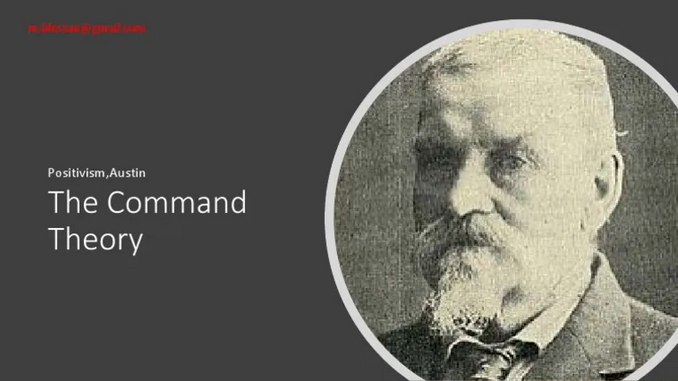
Image credit: blessan (via scribd).
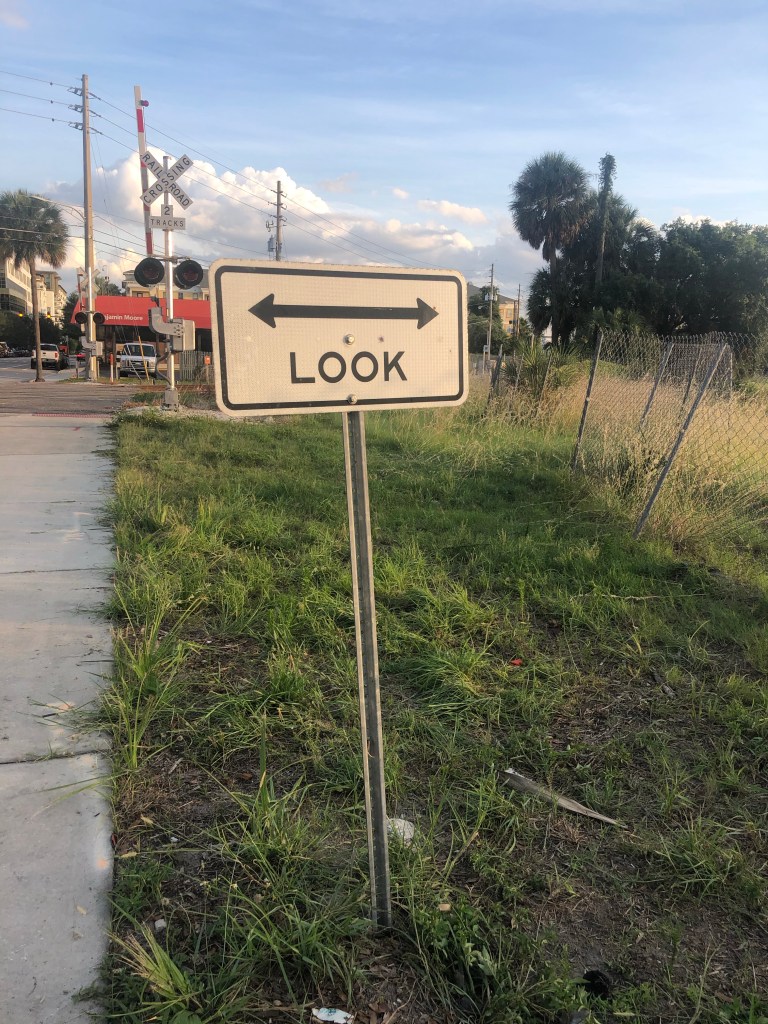
One of my favorite blogs (View from the Back by Sheree) has a “Wordless Wednesday” category for photographs that need no further comment or elaboration. Sheree invited me to follow suit, but what if the object being photographed itself has a word? (I will resume my extended introduction to legal positivism in my next post.)
In their entry for “legal positivism” in the Stanford Encyclopedia of Philosophy (SEP), Leslie Green and Thomas Adams define this theory of law as “the thesis that the existence and content of law depends [sic] on social facts and not on its merits.” But what is a “social fact,” and which social facts are relevant to law? One of the earliest-recorded responses to these difficult theoretical questions–and perhaps the most influential one–was offered by the person of Thrasymachus in Book I of Plato’s Republic, where in response to Socrates, he famously asserts that “justice is in the interest of the stronger.” Although Green & Adams do not mention Thrasymachus or The Republic in their SEP review essay, I would argue that all major strands of modern legal positivism can ultimately be traced back to Thrasymachus’s cynical but realistic conception of justice in Plato’s Republic. With this background in mind, I will now introduce simplified versions of the major theories or types of legal positivism.
First is Theory T1 (or legal positivism 1.0), “the command theory of law” put forth by English legal theorist John Austin (1790–1859). On this view, law is the command of a sovereign backed by force or some other negative sanction. Next is Theory T2 (or legal positivism 2.0), Austrian jurist Hans Kelsen’s (1881–1973) so-called “pure theory of law.” According to Kelsen’s abstract theory, individual legal norms are part of larger systems of law and all such norms or rules in a given system must ultimately be traced to a fictional “basic norm” of that system. Last is Theory T3 (or legal positivism 3.0), H.L.A. Hart’s (1907–1992) “rule of recognition” and “internal point of view” of public officials like judges and legislators. Stated in its most simplified form, law is neither based on force nor on a fictional basic norm; law is whatever guides or shapes the behavior of public officials. Law is whatever public officials think the law is.
We will explore the strengths and weaknesses of all three theories of legal positivism in future blog posts. For now, I just want to identify the influence of Thrasymachus on all three of these theories of law. To begin with, Austin’s command theory and the cynical notion that “justice is nothing but the advantage of the stronger” appear to be almost interchangeable. By definition, the sovereign in Austin’s command theory is “the stronger” in Thrasymachus’s famous formulation of justice. Next, with respect to Kelsen, the fictional “basic norm” in Kelsen’s pure theory of law appears to carry out the role of the sovereign or “the stronger” set forth in previous formulations of legal positivism. Moreover, to the extent actual systems of law benefit the powerful, one could argue that Kelsen’s “basic norm” is just a subterfuge to legitimate “the interest of the stronger.”
Last but not least, what about H.L.A. Hart? Are there any shades of Thrasymachus in Hart’s sociological-psychological theory of law? To the extent Hart’s realist theory of law emphasizes the behavior of public officials, don’t these officials, by definition, form a kind of “class” or elite who, collectively, play the role of “the stronger,” since they get to decide what the law is? We will return to Austin, et al., and further explore the connection between Thrasymachus’s formulation of justice and modern theories of legal positivism in our next few posts …

Artist credit: cluin (via DeviantArt)
Before I begin blogging about legal positivism, I want to go on the record and send the following succinct message to the Florida Board of Bar Examiners: it’s time to pull your heads out of the sand and cancel the in-person July bar exam. Students who graduated from an ABA-accredited law school should be awarded a provisional license to practice law, subject to good behavior. (Full disclosure: Although I am licensed to practice law in the Commonwealth of Puerto Rico 🇵🇷, I am a law professor in the State of Florida.)

My friend and colleague Josh Blackman writes, “Would a constitutional challenge to a mask-mandate be viable? Under Jacobson v. Massachusetts the answer is no. Is Jacobson consistent with a century of Due Process Clause jurisprudence? No. Several judges have already begun to cast doubt on that precedent.” (FYI: here is the Wikipedia entry for the Jacobsen case.) For his part, Professor David Super explains why the First and Ninth Amendments in the original Bill of Rights might protect one’s right to refuse to wear a mask, even in a pandemic. Alas, my dear law professor colleagues are, as usual, “overthinking” this question. The central issue here is, Can the government require you to wear a mask in public? Outside of federal enclaves like Washington, D.C., the federal government simply does not have the power to compel to people to wear masks under any reasonable reading of the Commerce Clause (the source of most of the Congress’s modern-day powers). State governments, however, have a general police power to protect the health, safety, and morals of its residents. End of discussion, right?

(With apologies to Madonna.) While many of you are fast asleep or binging on contemporary Netflix shows, I have been staying up late all week savoring many film noir classics. Last night, for example, the Movies! TV Network broadcasted the 1945 film noir “Detour” at 3:00AM Eastern!


I will resume blogging next week about my European travels (Paris and Venice) as well as about legal positivism. In the meantime, now that I am done with teaching until the fall, I will be turning my full attention to my modest pile of unread or partially-read books pictured below:

Note: In the oval picture frame to the left, yours truly is pictured with Hilary Hemingway, one of the great Ernest Hemingway’s nieces, who. I had the honor of meeting in May of 2003 at the Hotel Ambos Mundos in Havana, Cuba.








Welcome to the online home of the IASS
Hopefully It’s Interesting.
In Conversation with Legal and Moral Philosophers
PhD, Jagiellonian University
Books, papers, and other jurisprudential things
Ramblings of a retiree in France
BY GRACE THROUGH FAITH
Natalia's space
hoping we know we're living the dream
Lover of math. Bad at drawing.
We hike, bike, and discover Central Florida and beyond
Making it big in business after age 40
Reasoning about reasoning, mathematically.
I don't mean to sound critical, but I am; so that's how it comes across
remember the good old days...
"Let me live, love and say it well in good sentences." - Sylvia Plath
a personal view of the theory of computation
Logic at Columbia University
Just like the Thesis Whisperer - but with more money
the sky is no longer the limit
Technology, Culture, and Ethics
Just like the horse whisperer - but with more pages
Poetry, Other Words, and Cats