Ok, Boomers (social distancing hypocrisy edition)

Hello, fellow hobbits! I am once again interrupting my natural rights analysis of the economic shutdown to pose the following irreverent question: Why is it that the same elites (see two flagrant examples pictured below) who are shutting down all those “non-essential” sectors of our economy and advising us to engage in “social distancing” themselves don’t even bother to follow what they preach!

Screen Shot 2020-03-25 at 6.38.12 PM

File under: “Do as I say; not as I do.”

Posted in Uncategorized | 1 Comment

A takings model of the economic shutdown

Subtitle: Just compensation for staying at home, part two (by F. E. Guerra-Pujol; revised 3/26)

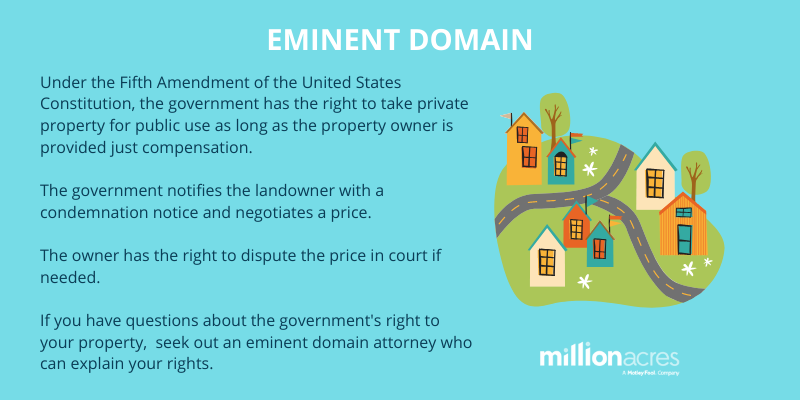
As I mentioned in a previous post, I would apply a “takings” model to the economic shutdown. In other words, any government order requiring non-essential workers to stay at home and non-essential businesses to close down is like a “taking”–a taking of one’s liberty. My argument therefore is that, in exchange for such a drastic restriction of our liberty, the government must provide just compensation to all such “non-essential” persons and firms, including lost wages and lost profits, as the case might be. But this approach to the coronavirus pandemic poses two new practical questions: logistics and how much? That is, how would such a massive payment scheme work in practice, and how much compensation would we actually be entitled to? With regard to the first question (logistics), I shall second an idea by Greg Mankiw (edited by me for clarity):

[The Department of Treasury would] send every [registered taxpayer] a check for X dollars every month [or every week] for the next N months [weeks]. In addition, [the Treasury Dept. would] levy a surtax in 2020 (due in April 2021) equal to N*X*(Y2020/Y2019), where Y2020 is a person’s earnings in 2020 and Y2019 is a person’s earnings in 2019. The surtax would be capped at N*X. Under this plan, a person whose earnings fall to zero this year keeps all of the social insurance payments and does not pay the surtax. A person whose earnings fall by half keeps half of the payments and returns half. A person whose earnings remain the same (or increase) returns everything: They will have just gotten a short-term loan.

Before proceeding, I want to take exception with Professor Mankiw’s “social insurance” terminology. Use of the term “social insurance” makes his proposal sound like just another costly and counterproductive social welfare program. Under my natural rights or “takings” framework, by contrast, these payments are owed to affected persons and firms as a matter of moral right. To repeat–from a moral or natural rights perspective–every worker who is ordered to stay at home, every business firm who is ordered to close its doors, is entitled as a matter of right to just compensation in exchange for the deprivation of their liberty.

Also, notice that my version of Mankiw’s idea would be limited only to registered taxpayers in order to make the system workable as well as fair at the lowest possible administrative cost (#RichardEpstein). After all, the IRS already has a complete database of the names and addresses of every taxpayer, and persons and proprietorships who don’t even bother to file their tax forms when times are good should not be rewarded for their shirking behavior. But in any case, how much compensation should be paid, i.e. what amount should “X” be in Mankiw’s model? I will address this second question in an upcoming blog post.

Image result for just compensation

Posted in Uncategorized | 3 Comments

Still waiting …

On behalf of all “non-essential” workers who have lost their jobs due to the current economic shutdown (as well as all “non-essential” business firms that have had to close their doors), I interrupt my “natural rights” analysis of the coronavirus lockdown to share my reaction to the multi-trillion dollar stimulus package still being debated in the Congress:

Posted in Uncategorized | Leave a comment

My natural rights approach to coronavirus lockdowns

Subtitle: Just compensation for staying at home, part one (by F. E. Guerra-Pujol)

While I agree with consequentialists (like my colleague Romans Pancs) that the costs of a worldwide economic shutdown are probably too high relative to the modest (but non-trivial) risks created by the coronavirus pandemic, I want to offer a more nuanced “natural rights” critique of these severe lockdown policies, i.e. requiring all non-essential workers to stay home and defining “essential” narrowly. Full disclosure: My approach is inspired by Robert Nozick’s approach to risk and natural rights, which I blogged about in greater detail in 2017. (Nozick, not Rawls, is my intellectual lodestar.) So, without further ado, let’s jump in:

A Kantian-Nozickian or natural rights approach begins with the premise that every person has rights, including the right to liberty, i.e. the right to do whatever I want or to go wherever I want or to meet with whomever I want–so long as I do not cross any moral boundaries while I am exercising my rights, i.e. so long as I do not impose unjustified harms or unjustified risks on others. This libertarian approach, however, appears unworkable in the context of a pandemic because my refusal to engage in social distancing by itself creates significant risks for innocent third parties, including the risk of death for persons with underlying medical conditions. Simply put, as this current pandemic shows, every human activity–no matter how benign its motivation or useful its consequences–carries some positive and non-trivial risk of injury to self and to others. Thus the problem for a natural rights theorist like me is that, as Nozick himself points out in his classic work Anarchy, State, and Utopia (1974, p. 75), “It is difficult to imagine a principled way in which the natural rights tradition can draw the line to fix which probabilities impose unacceptably great risks upon others.” Difficult, but not impossible!

Here, then, is my natural rights solution to the current pandemic. If an economic shutdown is, indeed, the most effective method of saving lives during a pandemic (by requiring most people to stay at home and most businesses to shut down), then everyone who is inconvenienced by the shutdown (rich or poor; small business or large) must be compensated for this inconvenience as soon as possible by the governmental entities ordering the shutdown. The beauty of the natural rights approach is that it recognizes the reciprocal nature of the pandemic problem. In other words: not shutting down the economy makes it easier for the pandemic to spread, but at the same time, the decision to order an economic shutdown also imposes significant costs on most of us. In brief, I will sum up my natural rights approach to the pandemic as follows: at some point you have to pay me to stay at home; that is, if you (the government) are going to order me to stay home for the greater good, then you are also morally required to pay me “just compensation” (including lost wages) in exchange for my cooperation.

Stay tuned, as I will describe the details of my just compensation scheme in the next day or two …


Image result for risk of death coronavirus
Posted in Uncategorized | 6 Comments

My critique of the consequentialist critique of the economic shutdown

I featured in my previous post my colleague Romans Pancs’s consequentialist critique of the “lockdown” approach to the current virus. Although I tend to agree with Professor Pancs’s provocative conclusion that the risk a 1% mortality rate does not justify the severe anti-economic measures that many countries are currently taking in response to the coronavirus pandemic, here I shall offer a friendly critique of Prof Pancs’s consequentialist reasoning.

  1. Pancs first points out that it may take a much longer time than most people realize for the world economy to return to its high pre-shutdown levels once the lockdown has been lifted. I agree with Pancs that we should take this risk seriously, but at the same time, the world economy has always rebounded after previous crises (like 9/11), so why won’t the past repeat itself in this case? (This is, by the way, one of the main problems with all consequentialist theories of morality, for how can we identify the future consequences of our actions today; how can we measure the future costs of remote or contingent events?)
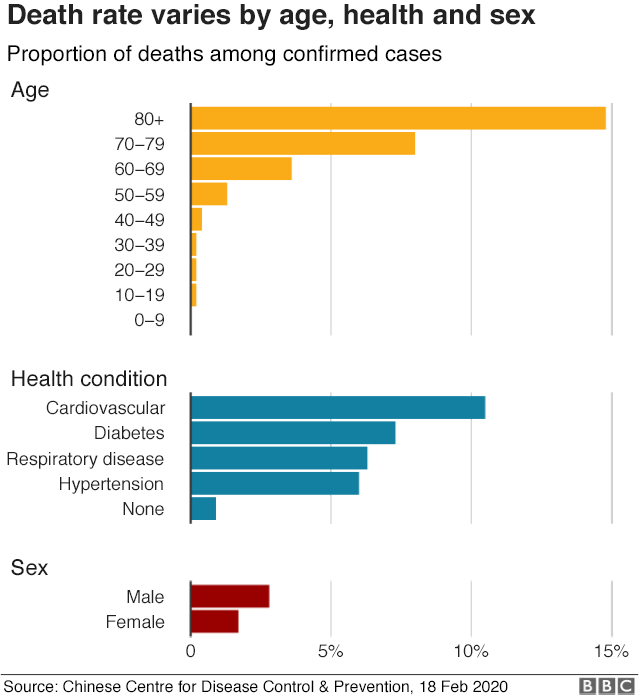
  2. Next, Pancs notes that the coronavirus “disproportionately hits the old, who have fewer and less healthy years left to live.” In other words, the lives of old people are on average not worth as much (in pure monetary or economic terms) as the lives of younger people. This line of consequentialist reasoning is so crass and morally offensive that I could rest my case against consequentialism here..
  3. Pancs’ third point, however, is his strongest one. He argues that shutting down an economy also costs lives–or fractions of lives, to be more precise, depending on how long the shutdown lasts. For example, if we shutdown the economy for 12 months, we are, in essence, robbing every person who survives the virus a year out of the 80 years that he can be expected to live. The problem with this argument, however, is that no one is talking about shutting down the economy for such a long period of time (at least not yet, that is).

Stay tuned, I shall offer my own natural law or rights-based critique of the lockdown approach in my next post.

Image result for value of a human life
Posted in Uncategorized | Leave a comment

A consequentialist critique of the economic shutdown …

… and of Adam Silver’s drastic decision to suspend the rest of the NBA season? Check out this consequentialist critique of the “lockdown” or “shelter in place” approach to the current virus. The author of this critique is Romans Pancs, an assistant professor of economics at the Instituto Tecnológico Autónomo de México (ITAM). Here is an excerpt from Professor Pancs’s critique (edited by yours truly for clarity):

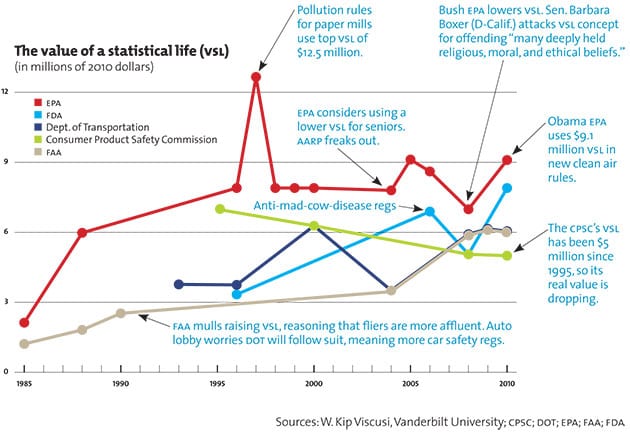
“Suppose 1% of the US population die from the virus. Suppose the value of life is 10 million USD, which is the number used by the US Department of Transportation. The US population is 330 million. The value of the induced 3.3 million deaths then is 33 trillion USD. With the US yearly GDP at 22 trillion, the value of these deaths is about a year and a half of lost income. Seemingly, the country should be willing to accept a 1.5 year-long shutdown in return for saving 1% of its citizens. The above argument, however, has three problems that overstate the attraction of the shutdown:

“1. The argument is based on the implicit and the unrealistic assumption that the economy will reinvent itself in the image of the productive capitalist economy that it was before the complete shutdown, and will do so as soon as the shutdown has been lifted.

“2. The argument neglects the fact that the virus disproportionately hits the old, who have fewer and less healthy years left to live.

“3. The argument neglects the fact that shutting down an economy costs lives. The months of the shutdown are lost months of life. Spending a year in a shutdown robs an American of a year out of the 80 years that he can be expected to live. This is a 1/80=%1.25 mortality rate, which the society pays in exchange for averting the 1% mortality rate from coronavirus.

“It is hard to believe that individuals would be willing to stop the world and get off in order to avert a 1% death rate. Individuals naturally engage in risky activities such as driving, working (and suffering on-the-job accidents), and, more importantly, breathing….”

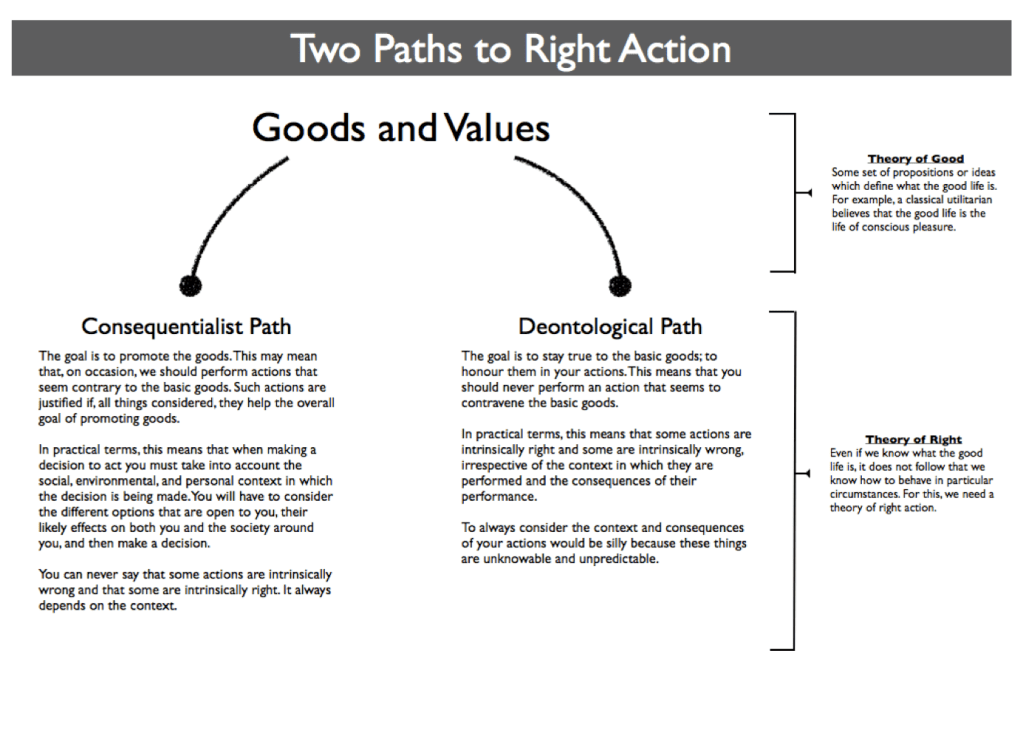
This might be a sound argument if you are a crude moral consequentialist, but what if you are a Kantian?

Source: Philip Pettit
Posted in Uncategorized | 1 Comment

The other Mr Rogers

Growing up, the other Mr Rogers introduced me to Country Western music and thus changed my life forever. (The video above showcases one of my all-time favorite songs.) Rest in peace, Kenny Rogers …

Posted in Uncategorized | 1 Comment

Visualization of pandemics

The History of Pandemics by Death TollAre we overreacting to the current pandemic? If not, what is the “optimal level” of precautions we should be taking to minimize the spread of any given disease? According to Nicholas LePan (via Visual Capitalist): “Scientists use a basic measure to track the infectiousness of a disease called the reproduction number — also known as R0 or ‘R naught’. This number tells us how many susceptible people, on average, each sick person will in turn infect.” Notice that Measles tops the list, being the most contagious with a R0 range of 12-18. This means a single person can infect, on average, 12 to 18 people in an unvaccinated population. Also, below the fold you will find a comprehensive table describing some of the major pandemics that have occurred in world history:

Continue reading

Posted in Uncategorized | Leave a comment

Map of floating garbage patches

Post image

Image credit: u/Homesanto

Posted in Uncategorized | Leave a comment

Review of Misak: final thoughts

My last few blog posts have reviewed Cheryl Misak’s intellectual autobiography of Frank Ramsey. Because of my own scholarly interests in Bayesian methods, my review has been devoted mostly to Ramsey’s contributions to probability theory. I now want to conclude my review with a confession and a conjecture. My confession is as follows: When I first read Misak’s beautiful biography, something in me was sadly disappointed in two aspects of Ramsey’s short life: his six-month sojourn in Vienna, and the open nature of his marriage. Let me explain.

With the benefit of 20/20 hindsight, i.e. knowing that Ramsey would have such a short time to live, I was personally upset by Ramsey’s decision to squander no less than six months (!) of his short life to undergo psychoanalysis in Vienna. (For the record, I hereby disclose my utter contempt for and disdain of psychoanalysis. I agree 100% with the great Karl Popper that psychoanalysis is unfalsifiable bullshit.) Furthermore, I was also literally disheartened by the open nature of Ramsey’s marriage to Lettice Baker because of my own normative or idealized view of romantic love (and my conflation of romantic love with marriage). Like a good Catholic, I believe marriage is a holy sacrament, or put in more secular terms, love should not be a matter of degree; true love requires sacrifice in order to signify what game theorists refer to as “credible commitment”.

But now, having finished reading Misak’s biography, I want to make a conjecture and perhaps even (like a good Bayesian!) update my priors regarding these two aspects of Ramsey’s life. Although true love might be all or nothing, what if love in the real world is a matter of degree? (Or as an economist might put it, What is the “optimal” level of love?) Also, what if far from being a fruitless waste of time, what if it was Ramsey’s extended exposure to psychoanalysis during his six-month sojourn in Vienna that somehow inspired him to develop his subjective approach to probability? After all, beliefs and desires–the raw materials, so to speak, of psychoanalysis–all play a critical role in Ramsey’s subjective theory of probability. If so, his sojourn in Vienna was not a waste of time; it was a necessary precondition of his contributions to the world of probability theory!

Thank you, Cheryl Misak, for sharing your Frank Ramsey with us …

Image result for degrees of love

Image credit: anangelintheimpala

Posted in Uncategorized | Leave a comment