Time out: the significance of Ramsey’s betting paradigm

In my previous post, I presented the core insight of Frank Ramsey’s “betting paradigm”: probabilities are based on beliefs, and beliefs, in turn, are like bets. I now want to take a “time out” from my extended review of Cheryl Misak’s beautiful biography of Ramsey to explain why this betting paradigm, i.e. Ramsey’s subjective or psychological theory of probability, is so “significant” (pun intended, for my frequentist friends).

  1. First and foremost, Ramsey’s betting paradigm fills a huge gap left open by standard probability theory (i.e. frequency theory), for as Misak herself correctly notes (p. 266), frequentist methods can neither “provide an account of partial belief, nor an account of how an individual should make one-off decisions.” This blind spot is so enormous and so well-known by now that I won’t belabor it here. Instead, it suffices to say that Ramsey single-handedly delivered a serious blow to frequency theory when he developed his subjective theory of probability.
  2. In addition, Ramsey’s betting paradigm fills another big blind spot in probability theory. Before Ramsey, the conventional wisdom so to speak was that some probabilities (especially personal probabilities) were not measureable in any rigorous way. After Ramsey, by contrast, we are now fully able to express any person’s partial beliefs, even his subjective ones, using numerical values. How? By converting one’s beliefs into betting odds. (As an added bonus, Ramsey’s intellectual framework even enables us to determine whether our subjective beliefs are rational are or not, via now-standard Dutch book arguments.)
  3. Thirdly, Ramsey’s betting paradigm also provides the intellectual foundations for modern prediction markets, one of the most promising and exciting “mechanism designs” or market innovations of our time! (Check out this introduction to prediction markets here, via BitEdge.) Perhaps we should rename prediction markets “Ramsey markets” in honor of Frank Ramsey. In any case, I have blogged about prediction markets many times before, so I won’t belabor this third point here.
  4. And last but not least, Ramsey’s subjective approach to probability can be used to improve collective decision making (via a simple method my friend and colleague Warren Smith calls “range voting”) and to improve legal adjudication as well (via a similar method I like to call “Bayesian verdicts” and “Bayesian judging”). Again, perhaps we should rename these alternative methods of voting “Ramsian voting” or “Ramsey voting” in honor of Frank Ramsey.

To sum up, I can’t overstate enough how important and exciting Ramsey’s subjective approach is. For now, however, I will conclude my review of Misak’s biography of Ramsey in my next post.
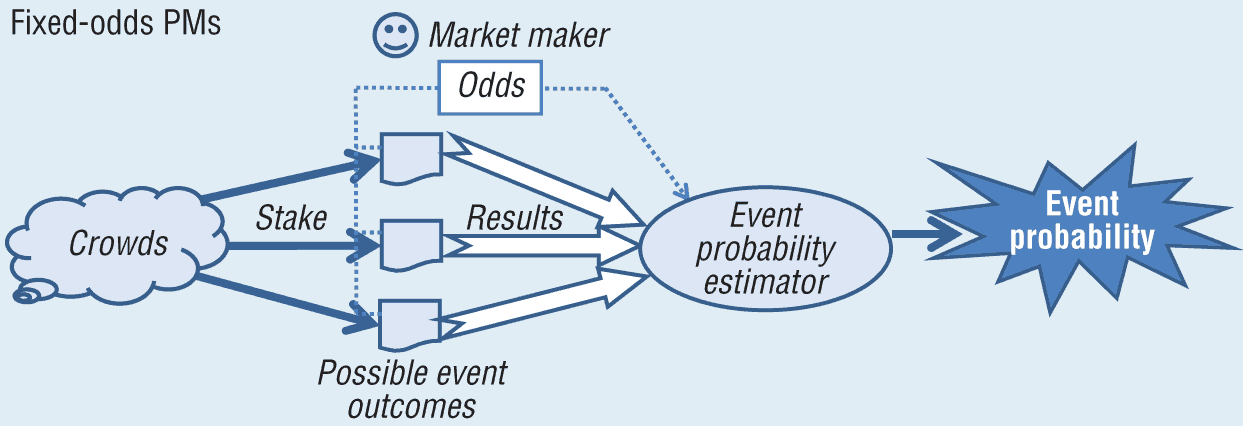
Image result for prediction markets

Source: BitEdge

Posted in Uncategorized | Leave a comment

Review of Misak: beliefs are metaphorical bets

Thus far, I have presented Ramsey’s 1922 critique of Keynes’s objective theory of probability and recounted some memorable episodes from Ramsey’s personal life. I now want to move into the third and last part of Cheryl Misak’s beautiful biography of Frank Ramsey (“An Astonishing Half Decade”). During the last half decade of his short life, Ramsey made major contributions to a wide variety of fields, including economics, mathematics, and philosophy, but I shall focus here on his contributions to probability theory.

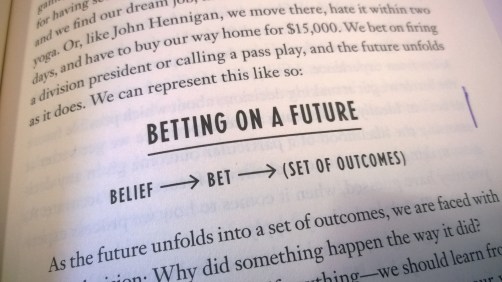
It was during this time that Ramsey developed his own full-fledged theory of “subjective” or psychological probability. He first painted a sketch of his approach to chance in a paper titled “Truth and Probability”, which he first presented at a meeting of the Moral Sciences Club in November of 1926. (See Misak, 2020, p. 263. Ramsey’s influential 1926 paper was eventually published posthumously in 1931.) We can summarize Ramsey’s revolutionary theory of probability in ten words: probabilities are beliefs and beliefs, in turn, are metaphorical bets, or in Ramsey’s words (quoted in Misak, p. 268), “Whenever we go to the station we are betting that a train will really run, and if we had not a sufficient degree of belief in this [outcome] we should decline this bet and stay at home.” (The image pictured below also provides a simple visualization of Ramsey’s approach.)

On this subjective view of probability, we can measure the strength of a person’s personal beliefs in betting terms, or again in Ramsey’s own words (p. 271), a “probability of 1/3 is clearly related to the kind of belief [that] would lead to a bet of 2 to 1.” In addition, Ramsey showed how one’s bets–i.e. one’s subjective or personal probabilities–should obey the formal axioms of probability theory. (As as aside, Misak includes a summary by Nils-Eric Sahlin of the technical details of Ramsey’s subjective or betting approach to probability. See Misak, pp. 272-273. See also this excellent entry in the Stanford Encyclopedia of Stanford.) It is hard to understate the importance of Ramsey’s subjective theory of probability. I will therefore discuss the deeper significance of Ramsey’s betting paradigm in my next post …

Image result for beliefs are bets

Source: Annie Duke, Thinking in Bets (2018)

Posted in Uncategorized | Leave a comment

Review of Misak: Ramsey’s romantic interlude

Previously, I described Frank Ramsey’s powerful critique of John Maynard Keynes’s logical or objective approach to probability. (For the record, Ramsey published his review of Keynes’s Treatise on Probability in the January 1922 issue of Cambridge Magazine, while he was still an undergraduate!) But as I mentioned in my previous post, Ramsey had yet to develop the details of his own subjective theory of probability at this early stage in his life. He would do so within a few years–by the fall of 1926. But before I proceed into Ramsey’s subjective theory, I will take a short detour to recount two important personal episodes in Ramsey’s life: his six-month sojourn in Vienna (see chapter 7 of Misak), and his secret love affair with Lettice Baker (pp. 205-208), who deserves a biography of her own. (As an aside, all chapter and page references refer to Misak’s 2020 biography of Ramsey.)

In brief, upon the completion of his undergraduate studies (but before accepting a teaching job at Cambridge), Ramsey had decided to spend an extended period of time in Vienna in order to undergo psychoanalysis. (It was during this time that Ramsey received the news of his appointment to a lectureship at King’s College. See Misak, pp. 178-181.) According to Misak (p. 161), “taking the cure in Vienna was a common thing for young Cambridge academics.” In addition, Frank Ramsey took full advantage of all that the former imperial capital had to offer, including deep discussions with members of the legendary “Vienna Circle” of anti-metaphysical philosophers, cultured nights at the world-famous Opera, and even some sordid sexual escapades with a Viennese prostitute. More importantly, within a month of his return to England in the fall of 1924, Ramsey met Lettice Baker (pictured below) at a Moral Sciences Club meeting at Trinity College. (Misak, p. 205. It was at this meeting that G. E. Moore read his now famous paper “A defence of common sense.”) Shortly thereafter, Ramsey asked her out to tea, and they quickly fell in love. Among other things, one of the things that struck me the most about the Ramsey-Baker love affair was how they had to keep their amorous relationship a secret (pp. 207-208) until they formally got married in September of 1925. Be that as it may, Ramsey’s greatest contributions to the world of ideas, including his theory of subjective probability, were right around the corner …

Image result for lettice baker

Artist Credit: Frances Baker

Posted in Uncategorized | Leave a comment

Review of Misak: Ramsey against the world

Part II of Cheryl Misak’s beautiful intellectual biography of Frank Ramsey is devoted to the young Ramsey’s undergraduate years at Cambridge University. (I reviewed Part I in my previous post.) If there is a common or overarching theme during these formative years in Ramsey’s intellectual life (1920 to 1924), it is Ramsey’s willingness to challenge the most powerful and original ideas of such great and legendary scholars and philosophers as J.M. Keynes, G.E. Moore, Bertrand Russell, and Ludwig Wittgenstein. In this post, I will limit myself to just one such momentous undergraduate episode–Ramsey’s early critique of Keynes’s objective or logical theory of probability.

To appreciate Ramsey’s first foray into probability theory, I must first provide some relevant background. The great Keynes had published his Treatise on Probability in 1921, and in a review of Keynes’s work, none other than Bertrand Russell had called Keynes’s Treatise “the most important work on probability that has appeared for a very long time,” adding that the “book as a whole is one which it is impossible to praise too highly.” (See Russell, 1948 [1922], p. 152.) Why was Keynes’s work so highly praised? Because Keynes had developed a new way of looking at probability, one which allowed for the possibility of probabilistic truth. For Keynes, probability consisted of an objective or logical relation between evidence and hypothesis, or in the words of Misak (2020, p. 113, emphasis added), a relation “between any set of premises and a conclusion in virtue of which, if we know the first, we will be warranted in in accepting the second with some particular degree of belief.”

Ramsey, however, immediately identified two blind spots in Keynes’s conception of probability. (See Ramsey, 1922; see also Misak, 2020, pp. 114-115.) One was Keynes’s admission that not all probabilities are numerical or measurable, especially when the truth values of our underlying premises are in dispute. In that case, when we have no idea whether our premises are true or not, Keynes’s approach does not allow us to measure the probabilities of our conclusions. For Ramsey, by contrast, all probabilities should be measurable. But the other (more deeper) problem with Keynes’s theory was the “objective” nature of his view of probability–the idea that all statements or propositions stand in logical relation to each other. Ramsey denied the existence of these logical relations altogether. Far from being an “objective relation,” the strength or weakness of the relationship between two propositions also depended on psychological factors: on one’s personal experiences and subjective beliefs. In a word, probability was based on experience, not logic. (Sound familiar? If not, check out the quote by the great Oliver Wendell Holmes below.)

Yet, as the old academic saying goes, it takes a theory to beat a theory, and at this stage in his academic career the young Ramsey had yet to develop his own full-fledged theory of probability. But as we shall see in an upcoming blog post, Ramsey would finally get around to doing so in the last half decade of his short life …

Image result for the life of the law is experience not logic

Posted in Uncategorized | 1 Comment

Review of Misak: Ramsey’s boyhood

I mentioned in my previous post that I would review Cheryl Misak’s intellectual biography of Frank Ramsey in three parts, beginning with Ramsey’s boyhood years. Although there is no direct evidence that Ramsey was exposed to the rigors of probability theory by his parents Arthur and Agnes Ramsey or during his formal education at Winchester College (a demanding English boarding school for boys), two details from Ramsey’s boyhood, as recounted in Part I of Misak’s beautiful book (pictured below), stood out for me the most. One was the young Ramsey’s voracious reading habits, which Misak describes on pp. 48-49 of her book. Even at such an early age, Ramsey was a boy who loved the world of ideas, for in addition to his regular coursework at his boarding school, Ramsey devoured dozens of advanced works from a wide variety of fields. Among the many extracurricular books the young Ramsey is reported to have read are David Hume’s Treatise on Human Nature, Bertrand Russell’s Problems of Philosophy, and G.E. Moore’s Ethics. If one were to create a syllabus with the goal of imparting a well-rounded and liberal arts education, one would be hard-pressed to assemble a better collection of classic works.

The other youthful episode that caught my attention was the young Ramsey’s principled opposition to the brutal system of bullying and hazing at his boarding school. Misak summarizes this savage system on pp. 30-31 of her book. (Here is just one telling excerpt: “Each junior was the personal servant of an older student and had to ‘fag’ or ‘sweat’ for him. That meant cleaning the buttons and boots of his Officers’ Training Corps uniforms as well as his muddy cricket boots so they gleaned white again, as well as countless other tasks. The juniors [also] had to make the prefects’ tea, or afternoon meal, and wash up after ….”) Ramsey detested these regular hazing rituals, and towards the end of his tenure at boarding school, he wrote in his diary that he had “[d]ecided to give up sweating juniors.” According to Misak (p. 49), “He made a bargain with the younger boy assigned to him that he would not be required to do any chores at all for Frank. In return, the boy was to pass on the favour to his own junior when he was a prefect.” In other words, in this episode we see the young Ramsey was a man of principle.

Stay tuned for my next few blog posts. The next chapter in Ramsey’s intellectual life would take place at Cambridge Univiersity, where he would, among other things, study John Maynard Keynes’s Treatise on Probability and challenge Keynes’s approach to probability theory …

Photo credit: Rhodes Trust
Posted in Uncategorized | Leave a comment

Review of Misak (2020), part 1

Among other things, Frank Ramsey (b. 1903, d. 1930) was one of the first scholars, along with Bruno de Finetti, to formalize the “logic of partial belief” or the subjective view of probability. (For this reason alone, I count Ramsey as one of my intellectual heroes.) In brief, the subjective view of probability can be expressed in terms of “degrees of belief”–the idea that the probability of a unique event (e.g., whether Disneyland and Disney World will reopen to the public before the end of this month, or whether SCOTUS will overrule Roe v. Wade) does not have to be an objective value but rather can consist of an individual’s personal or subjective judgment about whether the event is likely to occur.

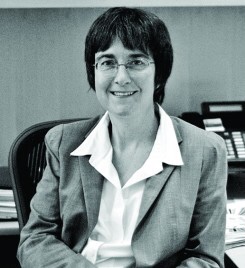
But how did Ramsey discover this revolutionary insight–the idea that probability can consist of a subjective or personal value? Cheryl Misak’s new biography of Frank Ramsey, which is subtitled “A Sheer Excess of Powers,” explores this terrain as well as Ramsey’s many other scholarly contributions. (Dr. Misak is pictured below.) Since Misak’s beautiful book is divided into three broad parts–“Boyhood”, which consists of three chapters devoted to the years 1903 to 1920, i.e. from the year of Ramsey’s birth up to his arrival at Cambridge University; “The Cambridge Man”, which contains seven chapters that describe Ramsey’s undergraduate years at Trinity College as well as his six-month sojourn in Vienna in 1924; and lastly, “An Astonishing Half Decade”, which contains nine chapters and covers the last five years of Ramsey’s short but productive life–I will likewise divide my review into three parts or installments, beginning with my very next blog post, with each post corresponding to one of the parts of Misak’s book. (Note: Although Frank Ramsey made significant contributions to a wide variety of fields, including economics, mathematics, and philosophy, I will focus the rest of my review on Ramsey’s contributions to probability theory.)

Image result for subjective probability
Photo credit: The Varsity
Posted in Uncategorized | 2 Comments

Bayesian history (Ides of March edition)

Posted in Uncategorized | Leave a comment

Visualization of pi

Happy Pi Day! u/Olivesan created this 100 x 100 visualization of the first 10,000 digits of pi using the HTML5 canvas element and JavaScript. Each digit of pi is represented by the following color:

  • 0: White
  • 1: Red
  • 2: Orange
  • 3: Yellow
  • 4: Light Green
  • 5: Green
  • 6: Blue
  • 7: Light Blue
  • 8: Purple
  • 9: Pink
Posted in Uncategorized | Leave a comment

Another day, another illustration of the base rate fallacy (a/k/a probability neglect)?

Update (3/14): Elon Musk agrees with our analysis.

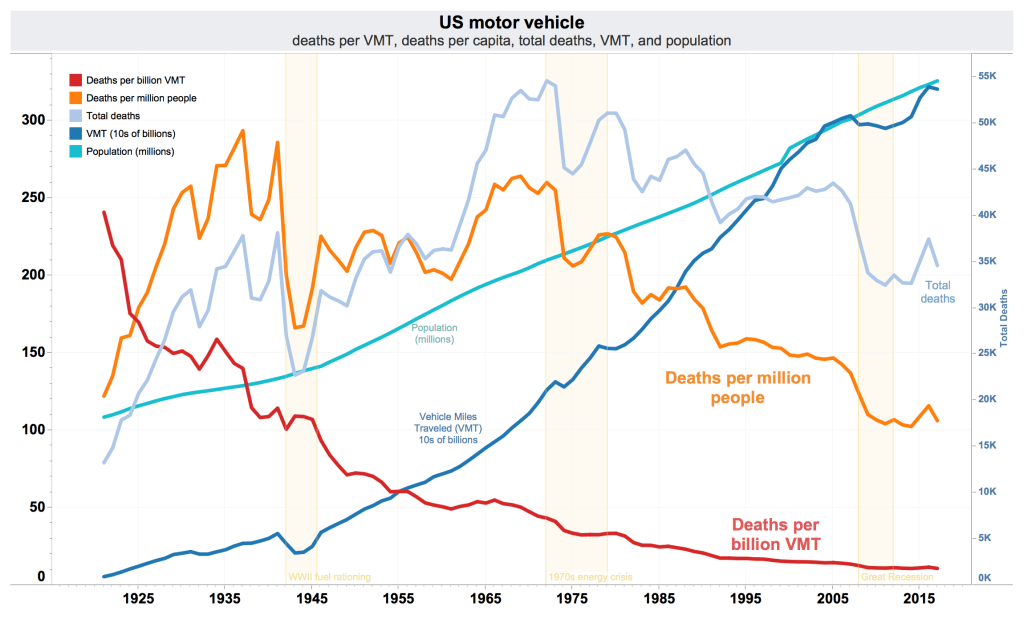
As you may have heard by now, President Donald J. Trump has restricted travel between the United States and most of Europe for 30 days, while Adam Silver, the Commissioner of the NBA, took the even more drastic step of suspending all the remaining games left in the 2019-20 NBA season (after a single player tested positive for the Coronavirus), but by any measure you are more likely to die in a car accident than of dying from the Coronavirus, so why aren’t we treating cars and trucks like a risky and costly pandemic? One possible answer is that our leaders and the public at large have all fallen prey to the base rate fallacy: we are more worried about dying from some mysterious virus than dying from a familiar or routine form of death, even when the probability of the latter is far greater than the former.

Of course (contra Elon Musk), one way to rationally distinguish between virus deaths and car accident deaths is by pointing out that the number of deaths in the latter category is either stable or in decline (depending on how such fatalities are measured), while the number of deaths in the former category (Coronavirus deaths) could increase exponentially if the epidemic continues to spread. But at the same time, why should the rate of death matter, i.e. why should it matter whether the death rate in a particular category is increasing exponentially or is stable or is in gradual decline, especially since this statistic is so easy to manipulate depending on one’s methods of measurement? If we really want to save the greatest number of lives overall, why don’t we urge our lawmakers to close down dangerous highways like the I-4 in Central Florida, impose strict curfews on younger and older drivers, aggressively enforce speed limits and stop signals, etc., etc.?

Posted in Uncategorized | 3 Comments

Spring break readings

It’s my favorite week of the spring semester. I get to stay home, ignore emails, and spend time with my family. I can also devour as many books and scholarly papers as I want. Among many other things, I am reading the following works during my spring break:

  1. La tregua” by Mario Benedetti (a beautiful novella by one of my favorite late Latin American authors).
  2. On inequality” by Harry G. Frankfurt. (Professor Frankfurt is one of my favorite contemporary philosophers. In fact, I have already read three of his short books, including “The reasons of love”, “On truth”, and “On bullshit”, so I am looking forward to reading his latest tome as well.)
  3. Frank Ramsey: a sheer excess of powers” by Cheryl Misak. (I just finished this intellectual biography and will be writing a review shortly.)
  4. Acknowledgements as a window into legal academia” by Price & Tietz (an “empirical study” of acknowledgment footnotes in law review articles).
  5. The ethical algorithm” by Roth & Kearns (waiting for my copy to arrive).
Image result for ignore your email

Posted in Uncategorized | Leave a comment