Merry Christmas, Mariah

Constance Grady (via Vox) explains how Mariah Carey’s “All I Want for Christmas,” which was released 25 years ago, finally reached #1 on Billboard’s official Hot 100 chart. (Here is the official announcement.) In brief, Mariah’s Christmas anthem was originally ineligible for the Hot 100 chart because it was first released as a noncommercial single, but then “a series of rule changes (older songs were ineligible until they weren’t; noncommercial singles were ineligible until they weren’t) pushed ‘All I Want’ on and off the Billboard charts every holiday season … until in 2017, it hit No. 9 on the Hot 100 and entered the top 10 for the first time. In 2018, it hit No. 3. Now, two years later and more acclaimed than ever thanks to its 25th anniversary, it’s finally reached No. 1 on the chart.” Enjoy … and Merry Christmas!

Posted in Uncategorized | 2 Comments

Mary Ann Carroll has passed away

Mary Ann Carroll was one of the remarkable Florida Highwaymen artists–and the sole woman of this iconic group. Here is the official obituary. Below is one of her works:

Image result for mary ann carroll

Artist credit: M. A. Carroll

For your reference, this beautiful book (by Gary Monroe) is devoted to the life and work of Mary Ann Carroll. Here is an extended excerpt from Monroe’s book: Continue reading

Posted in Uncategorized | 1 Comment

Gal Gadot forever

I must confess that I am not a fan of superhero movies (I have yet to see a single Marvel movie, for example, nor do I plan to), but I might make an exception for “Wonder Woman 1984” (based on the trailer below). The release date of this film is scheduled for 5 June 2020 (hat tip: @kottke).

Posted in Uncategorized | Leave a comment

Hohfeld’s taxonomy (claim rights)

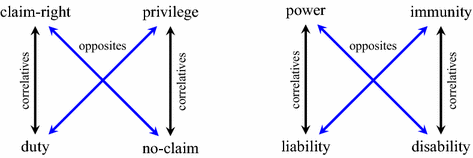
Let’s conclude our analysis of Hohfeldian rights, shall we? Thus far, we have reviewed liberty rights (or legal privileges), legal powers, and immunities from authority. This leaves one last type of Hohfeldian entitlement: claim rights. For Hohfeld, broadly speaking, a legal right always creates a corresponding duty on someone else to act (or refrain from acting) in a certain manner. Again, contracts and property rights provide classic examples of claim rights. A party to a binding contract, for example, has a right to the other party’s performance under the contract or to some payment in lieu of performance, or stated in Hohfeldian terms, the other contracting party has the duty to perform or pay. Ditto property rights. If I have the right to possess a certain piece of property, others a duty to not interfere with my right of possession.

Furthermore, this reciprocal “right/duty” relationship is Hohfeld’s most original and important insight: every right creates a corresponding duty, and vice versa, every duty entails a corresponding right. In fact, every one of Hohfeld’s four types of entitlement creates reciprocal relationships. For example, if I have a liberty right to do X, others have a corresponding duty (Hohfeld would say a “no claim”) to prevent me from doing X. Likewise, if I have a power to create an entitlement, this power imposes a corresponding duty (Hohfeld would say a “liability”) on others to respect my entitlement. And lastly, if I enjoy an immunity from authority, others have a corresponding duty (Hohfeld would say a “disability”) to refrain from interfering with my immunity entitlement.

To sum up, every legal entitlement falls into one of these four categories (claim rights, liberties, powers, and immunities), and every one of these entitlements imposes reciprocal duties on others. Although Hohfeld uses different labels to describe these reciprocal duties, we must not lose sight of Hohfeld’s larger point. Also, we may want to quibble over Hohfeld’s four categories of rights, since some of these categories are often overlapping, but what we cannot dispute is that legal entitlements (however defined) create corresponding duties on others. This Hohfeldian insight also generates really big philosophical implications about the nature of law. Stay tuned, for I will explore these philosophical points next week …

Image result for hohfeldian rights

Dymitruk, et al. (2018)

Posted in Uncategorized | Leave a comment

Visualization of UK general election results

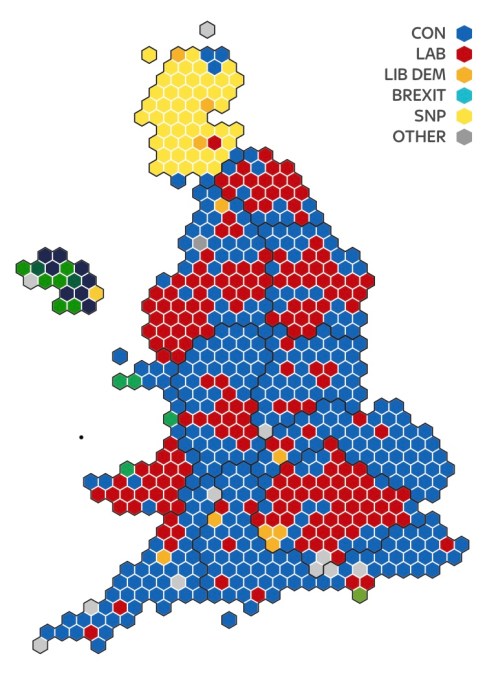
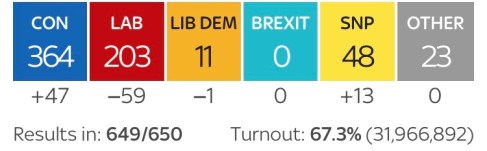
We interrupt our review of Hohfeldian rights to share this beautiful visualization (via Sky News) of the 12 Dec. 2019 United Kingdom general election results:

Posted in Uncategorized | Leave a comment

Hohfeld’s taxonomy (liberties)

We are presenting Wesley Hohfeld’s fourfold classification of legal entitlements this week, and we discussed “powers” and “immunities” in our previous two posts. In this post, we will examine liberty rights (often referred to as “privileges”). Legal scholar Joseph Singer (1982, pp. 1056-1059) formally defines Hohfeldian liberty rights or legal privileges as “permissions to act in a certain manner without being liable for damages to others and without others being able to summon state power to prevent those acts.” Ok, but how is a liberty or privilege, thus defined, any different from a Hohfeldian power or a Hohfeldian immunity from authority? The way I like to distinguish liberty rights from powers and immunities is to focus on harms. When I have a legal power, I have the right to create, transfer, or change an entitlement, and when I enjoy a legal immunity, I have the right to do something without interference or intermeddling from others, but when I have a liberty interest, I have the right to take actions that might impose external harms on others without legal liability.

A classic example of liberty rights is market competition. If I open a new grocery store, hot dog stand, or other lawful business, my decision to enter one of these markets might harm existing business interests in those markets. But that’s okay, or in the immortal words of Oliver Wendell Holmes (pictured below), “the policy of allowing free competition justifies the intentional inflicting of temporal damage, including the damage of interference with a man’s business ….” (I thank my friend and colleague Dan O’Gorman for bringing this case to my attention.) Note that my decision to open a new business or enter a market is an immunity from authority. Broadly speaking, no one can tell me who to work for or what I can do for a living. But once I decide to open a new business, I have a liberty right to enter the market and attract customers from existing business firms free from legal liability. Alas, occupational licensure and zoning laws have imposed significant restrictions on people’s ability to enter markets. We will nevertheless proceed with our review of Hohfeld’s taxonomy of legal rights in our next post …

Image result for oliver wendell holmes stamp

References:

Singer quote: Joseph William Singer, “The Legal Rights Debate in Analytical Jurisprudence from Bentham to Hohfeld,” Wisconsin Law Review (1982).

Holmes quote: Vegelahn v. Guntner, 167 Mass. 92, 44 N.E. 1077 (1896) (Holmes, dissenting).

Posted in Uncategorized | 1 Comment

Hohfeld’s taxonomy (powers)

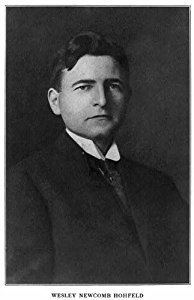
This week, we are revisiting Wesley Hohfeld’s fourfold taxonomy of legal rights (the great Professor Hohfeld is pictured below), and we already examined “immunities from authority” in our previous post. Here, we will explore another type of right or entitlement: the power to create a new entitlement, transfer an entitlement, or change an existing entitlement. Simply put, a person with a power has the ability to create a new entitlement, the ability to transfer an existing entitlement held by oneself, and the ability to alter or modify entitlements held by oneself or by another person. A classic example of a Hohfeldian power is the law of contracts. If A makes an offer to B, then B has the power to accept the offer, and A’s acceptance of the offer changes the legal obligations of A, since B’s acceptance creates a legally-enforceable contract that is binding on both A and B–assuming, of course, their agreement otherwise satisfies all the elements of a contract, such as capacity, bargained-for consideration, and lawful purpose.

Another example of powers are property rights. If you own property, you enjoy a specified set of legal powers over that property. Among other things, the owner has the power to exclude others from entering or using his property without the owner’s consent. Go back to our tattoo example from our previous post. You have a property right in your body, so you have the power to put a tattoo on your body. Of course, the law may place limits on your powers. If the police are engaged in a hot pursuit, they may enter your private property to apprehend a fleeing felon. (Stated in Hohfeldian terms, the police have the power to pursue fleeing felons, even on private property. Likewise, the government has the power of eminent domain, i.e. the power to take your property in certain situations.) Even your exclusive property rights to your body are limited. The National Organ Transplant Act of 1984, for example, outlaws the sale of human organs, so you are not allowed to sell one of your kidneys even though you own them.

Thus far, we have examined Hohfeldian powers and immunities. We will continue our review of the remaining Hohfeldian entitlements (claim rights and liberties) in our next two posts …

Image result for wesley hohfeld
Posted in Uncategorized | 2 Comments

Hohfeld’s taxonomy (immunities)

In my previous post, I introduced (via Larry Solum’s legal theory blog) Wesley Hohfeld’s influential fourfold taxonomy of “entitlements” or legal rights: claim rights, liberty rights, powers, and immunities. Let’s now take a closer look at Hohfeld’s taxonomy, beginning (in reverse order) with “immunities.” For Hohfeld, an immunity refers to an immunity from authority, but what does this (“immunity from authority”) really mean? To understand this type of right (i.e. immunity from authority), we first have to ask ourselves, what are the main functions of law.

One important function of law is to confer benefits or entitlements (such as property rights) on persons. Perhaps the most fundamental such entitlement or right we have is the right to our own bodies. Broadly speaking, each person of age and sound mind has an exclusive entitlement or property right to his own body. (Minors or mental incompetents, by contrast, are owned by their parents or legal guardians, as the case may be.) An immunity from authority, then, simply means that no one else has the legal right or authority to tell what you can do or not do with your own body. You want to get a tattoo, for example? Although I would strongly caution you to not get a tattoo (or if you do get one, to make it as small and inconspicuous as possible), I have no legal authority over you, and thus I can’t legally prohibit from you getting a tattoo. Assuming you are an adult of sound mind, when it comes to tattoos you enjoy a legal immunity from my authority.

Nevertheless, the law imposes a wide variety of restrictions on what we can or cannot do with our bodies, such as suicide, the consumption of certain drugs, “sex work” and certain types of sex acts, etc. In other words, even though we have a general property right in our own bodies, immunities from authority are not the whole story, for this general right or entitlement is protected in various additional ways, and some of these protections may end up limiting some aspects of our bodily entitlements. To understand the full scope of these entitlements, we need to study the remaining three types of Hohfeldian legal rights, which we will continue to do in our next few posts …

Related image

Source: cyprian64, via Imgur

Posted in Uncategorized | 2 Comments

Hohfeld forever

The great Wesley Hohfeld (the Dmitri Mendeleev of law) famously identified four types of legal rights: claim rights, liberty rights, powers, and immunities. Alas, Hohfeld’s own writings explaining his fourfold taxonomy are not very “user friendly.” Via our colleague and friend Larry Solum, here is the best (and most succinct) summary of Hohfeld’s influential taxonomy of rights we have ever read. Below is an excerpt from Solum’s summary of Hohfeld’s fourfold taxonomy (emphasis added by us): Continue reading

Posted in Uncategorized | Leave a comment

A critique of stakeholder theory

A stakeholder without a veto is just window dressing, but if there are too many stakeholders with veto rights, nothing gets done. Mark J. Dunkleman’s excellent history of New York City’s Penn Station provides an instructive case study of this critique:

In the dozens of interviews I conducted with those who have worked on Penn Station during the past three decades, I encountered a parade of complaints that but for one particular obstacle, the project would have been completed expeditiously. If only the postal service hadn’t obstructed Moynihan at the first turn. If only Amtrak hadn’t rejected an early deal. If only the Port Authority had offered more money. If only Washington had appropriated additional funds. If only Jim Dolan had decided to accept a new arena. If only for 9/11. If only Spitzer hadn’t been forced to resign. If only for the financial collapse. Taken together, the conversations come to feel like something akin to the parable of the blind men and the elephant. Everyone describes what was surely an important obstacle. But it’s only after taking them all together that the full picture becomes clear. In a dynamic where so many players can exercise a veto, it’s nearly impossible to move a project forward. No one today has the leverage to do what seems to be best for New York as a whole. And ultimately, government is rendered incompetent.

Of course, for us students of the great Guido Calabresi (my intellectual mentor) or the late Ronald Coase (my intellectual hero), none of this new.

Related image

Source: Manzhynski et al. (2018).

Posted in Uncategorized | Leave a comment