My critique of the consequentialist critique of the economic shutdown

I featured in my previous post my colleague Romans Pancs’s consequentialist critique of the “lockdown” approach to the current virus. Although I tend to agree with Professor Pancs’s provocative conclusion that the risk a 1% mortality rate does not justify the severe anti-economic measures that many countries are currently taking in response to the coronavirus pandemic, here I shall offer a friendly critique of Prof Pancs’s consequentialist reasoning.

  1. Pancs first points out that it may take a much longer time than most people realize for the world economy to return to its high pre-shutdown levels once the lockdown has been lifted. I agree with Pancs that we should take this risk seriously, but at the same time, the world economy has always rebounded after previous crises (like 9/11), so why won’t the past repeat itself in this case? (This is, by the way, one of the main problems with all consequentialist theories of morality, for how can we identify the future consequences of our actions today; how can we measure the future costs of remote or contingent events?)
  2. Next, Pancs notes that the coronavirus “disproportionately hits the old, who have fewer and less healthy years left to live.” In other words, the lives of old people are on average not worth as much (in pure monetary or economic terms) as the lives of younger people. This line of consequentialist reasoning is so crass and morally offensive that I could rest my case against consequentialism here..
  3. Pancs’ third point, however, is his strongest one. He argues that shutting down an economy also costs lives–or fractions of lives, to be more precise, depending on how long the shutdown lasts. For example, if we shutdown the economy for 12 months, we are, in essence, robbing every person who survives the virus a year out of the 80 years that he can be expected to live. The problem with this argument, however, is that no one is talking about shutting down the economy for such a long period of time (at least not yet, that is).

Stay tuned, I shall offer my own natural law or rights-based critique of the lockdown approach in my next post.
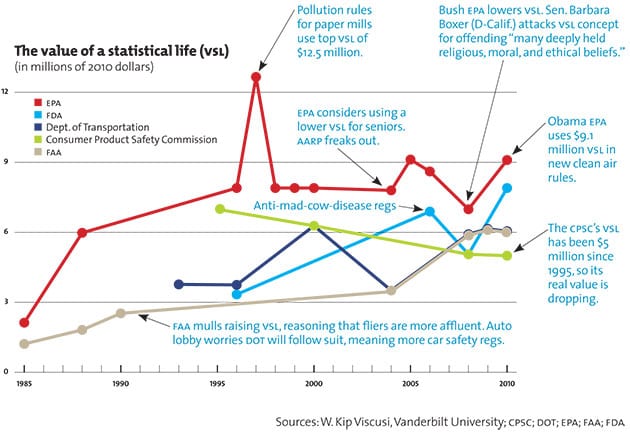
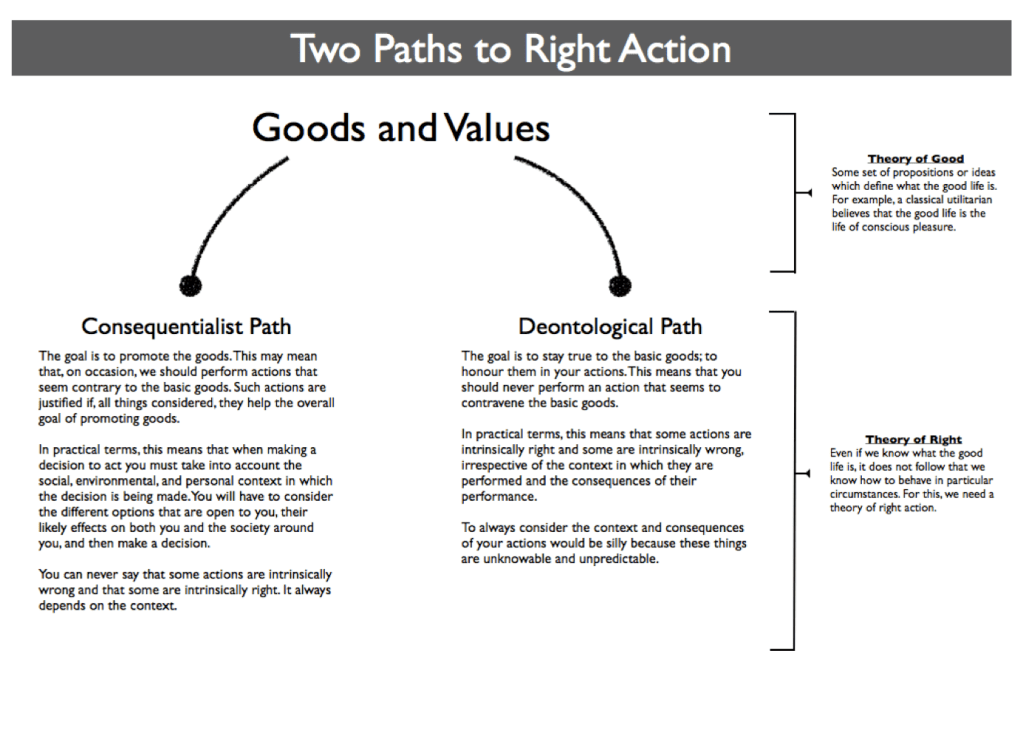
Image result for value of a human life
Posted in Uncategorized | Leave a comment

A consequentialist critique of the economic shutdown …

… and of Adam Silver’s drastic decision to suspend the rest of the NBA season? Check out this consequentialist critique of the “lockdown” or “shelter in place” approach to the current virus. The author of this critique is Romans Pancs, an assistant professor of economics at the Instituto Tecnológico Autónomo de México (ITAM). Here is an excerpt from Professor Pancs’s critique (edited by yours truly for clarity):

“Suppose 1% of the US population die from the virus. Suppose the value of life is 10 million USD, which is the number used by the US Department of Transportation. The US population is 330 million. The value of the induced 3.3 million deaths then is 33 trillion USD. With the US yearly GDP at 22 trillion, the value of these deaths is about a year and a half of lost income. Seemingly, the country should be willing to accept a 1.5 year-long shutdown in return for saving 1% of its citizens. The above argument, however, has three problems that overstate the attraction of the shutdown:

“1. The argument is based on the implicit and the unrealistic assumption that the economy will reinvent itself in the image of the productive capitalist economy that it was before the complete shutdown, and will do so as soon as the shutdown has been lifted.

“2. The argument neglects the fact that the virus disproportionately hits the old, who have fewer and less healthy years left to live.

“3. The argument neglects the fact that shutting down an economy costs lives. The months of the shutdown are lost months of life. Spending a year in a shutdown robs an American of a year out of the 80 years that he can be expected to live. This is a 1/80=%1.25 mortality rate, which the society pays in exchange for averting the 1% mortality rate from coronavirus.

“It is hard to believe that individuals would be willing to stop the world and get off in order to avert a 1% death rate. Individuals naturally engage in risky activities such as driving, working (and suffering on-the-job accidents), and, more importantly, breathing….”

This might be a sound argument if you are a crude moral consequentialist, but what if you are a Kantian?

Source: Philip Pettit
Posted in Uncategorized | 1 Comment

The other Mr Rogers

Growing up, the other Mr Rogers introduced me to Country Western music and thus changed my life forever. (The video above showcases one of my all-time favorite songs.) Rest in peace, Kenny Rogers …

Posted in Uncategorized | 1 Comment

Visualization of pandemics

The History of Pandemics by Death TollAre we overreacting to the current pandemic? If not, what is the “optimal level” of precautions we should be taking to minimize the spread of any given disease? According to Nicholas LePan (via Visual Capitalist): “Scientists use a basic measure to track the infectiousness of a disease called the reproduction number — also known as R0 or ‘R naught’. This number tells us how many susceptible people, on average, each sick person will in turn infect.” Notice that Measles tops the list, being the most contagious with a R0 range of 12-18. This means a single person can infect, on average, 12 to 18 people in an unvaccinated population. Also, below the fold you will find a comprehensive table describing some of the major pandemics that have occurred in world history:

Continue reading →

Posted in Uncategorized | Leave a comment

Map of floating garbage patches

Post image

Image credit: u/Homesanto

Posted in Uncategorized | Leave a comment

Review of Misak: final thoughts

My last few blog posts have reviewed Cheryl Misak’s intellectual autobiography of Frank Ramsey. Because of my own scholarly interests in Bayesian methods, my review has been devoted mostly to Ramsey’s contributions to probability theory. I now want to conclude my review with a confession and a conjecture. My confession is as follows: When I first read Misak’s beautiful biography, something in me was sadly disappointed in two aspects of Ramsey’s short life: his six-month sojourn in Vienna, and the open nature of his marriage. Let me explain.

With the benefit of 20/20 hindsight, i.e. knowing that Ramsey would have such a short time to live, I was personally upset by Ramsey’s decision to squander no less than six months (!) of his short life to undergo psychoanalysis in Vienna. (For the record, I hereby disclose my utter contempt for and disdain of psychoanalysis. I agree 100% with the great Karl Popper that psychoanalysis is unfalsifiable bullshit.) Furthermore, I was also literally disheartened by the open nature of Ramsey’s marriage to Lettice Baker because of my own normative or idealized view of romantic love (and my conflation of romantic love with marriage). Like a good Catholic, I believe marriage is a holy sacrament, or put in more secular terms, love should not be a matter of degree; true love requires sacrifice in order to signify what game theorists refer to as “credible commitment”.

But now, having finished reading Misak’s biography, I want to make a conjecture and perhaps even (like a good Bayesian!) update my priors regarding these two aspects of Ramsey’s life. Although true love might be all or nothing, what if love in the real world is a matter of degree? (Or as an economist might put it, What is the “optimal” level of love?) Also, what if far from being a fruitless waste of time, what if it was Ramsey’s extended exposure to psychoanalysis during his six-month sojourn in Vienna that somehow inspired him to develop his subjective approach to probability? After all, beliefs and desires–the raw materials, so to speak, of psychoanalysis–all play a critical role in Ramsey’s subjective theory of probability. If so, his sojourn in Vienna was not a waste of time; it was a necessary precondition of his contributions to the world of probability theory!

Thank you, Cheryl Misak, for sharing your Frank Ramsey with us …

Image result for degrees of love

Image credit: anangelintheimpala

Posted in Uncategorized | Leave a comment

Time out: the significance of Ramsey’s betting paradigm

In my previous post, I presented the core insight of Frank Ramsey’s “betting paradigm”: probabilities are based on beliefs, and beliefs, in turn, are like bets. I now want to take a “time out” from my extended review of Cheryl Misak’s beautiful biography of Ramsey to explain why this betting paradigm, i.e. Ramsey’s subjective or psychological theory of probability, is so “significant” (pun intended, for my frequentist friends).

  1. First and foremost, Ramsey’s betting paradigm fills a huge gap left open by standard probability theory (i.e. frequency theory), for as Misak herself correctly notes (p. 266), frequentist methods can neither “provide an account of partial belief, nor an account of how an individual should make one-off decisions.” This blind spot is so enormous and so well-known by now that I won’t belabor it here. Instead, it suffices to say that Ramsey single-handedly delivered a serious blow to frequency theory when he developed his subjective theory of probability.
  2. In addition, Ramsey’s betting paradigm fills another big blind spot in probability theory. Before Ramsey, the conventional wisdom so to speak was that some probabilities (especially personal probabilities) were not measureable in any rigorous way. After Ramsey, by contrast, we are now fully able to express any person’s partial beliefs, even his subjective ones, using numerical values. How? By converting one’s beliefs into betting odds. (As an added bonus, Ramsey’s intellectual framework even enables us to determine whether our subjective beliefs are rational are or not, via now-standard Dutch book arguments.)
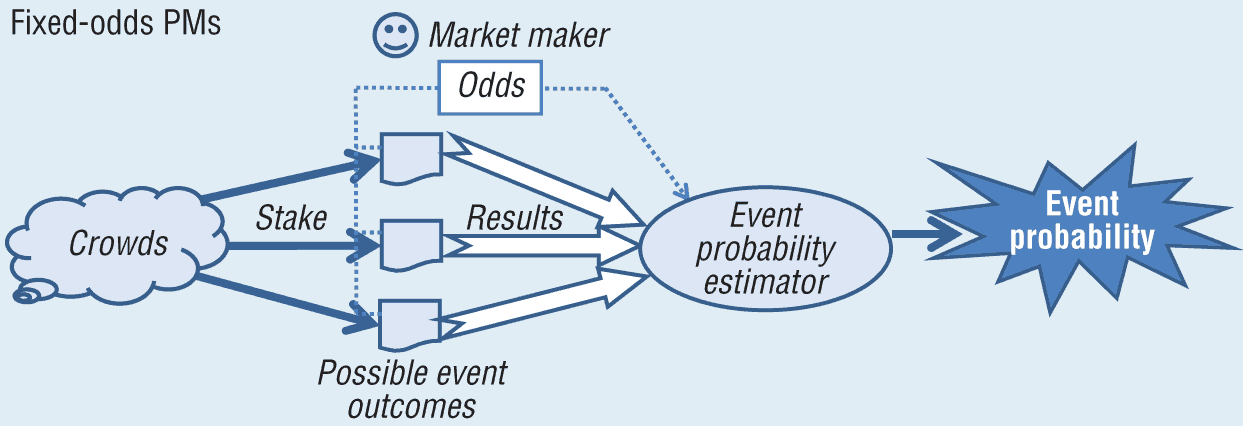
  3. Thirdly, Ramsey’s betting paradigm also provides the intellectual foundations for modern prediction markets, one of the most promising and exciting “mechanism designs” or market innovations of our time! (Check out this introduction to prediction markets here, via BitEdge.) Perhaps we should rename prediction markets “Ramsey markets” in honor of Frank Ramsey. In any case, I have blogged about prediction markets many times before, so I won’t belabor this third point here.
  4. And last but not least, Ramsey’s subjective approach to probability can be used to improve collective decision making (via a simple method my friend and colleague Warren Smith calls “range voting”) and to improve legal adjudication as well (via a similar method I like to call “Bayesian verdicts” and “Bayesian judging”). Again, perhaps we should rename these alternative methods of voting “Ramsian voting” or “Ramsey voting” in honor of Frank Ramsey.

To sum up, I can’t overstate enough how important and exciting Ramsey’s subjective approach is. For now, however, I will conclude my review of Misak’s biography of Ramsey in my next post.

Image result for prediction markets

Source: BitEdge

Posted in Uncategorized | Leave a comment

Review of Misak: beliefs are metaphorical bets

Thus far, I have presented Ramsey’s 1922 critique of Keynes’s objective theory of probability and recounted some memorable episodes from Ramsey’s personal life. I now want to move into the third and last part of Cheryl Misak’s beautiful biography of Frank Ramsey (“An Astonishing Half Decade”). During the last half decade of his short life, Ramsey made major contributions to a wide variety of fields, including economics, mathematics, and philosophy, but I shall focus here on his contributions to probability theory.

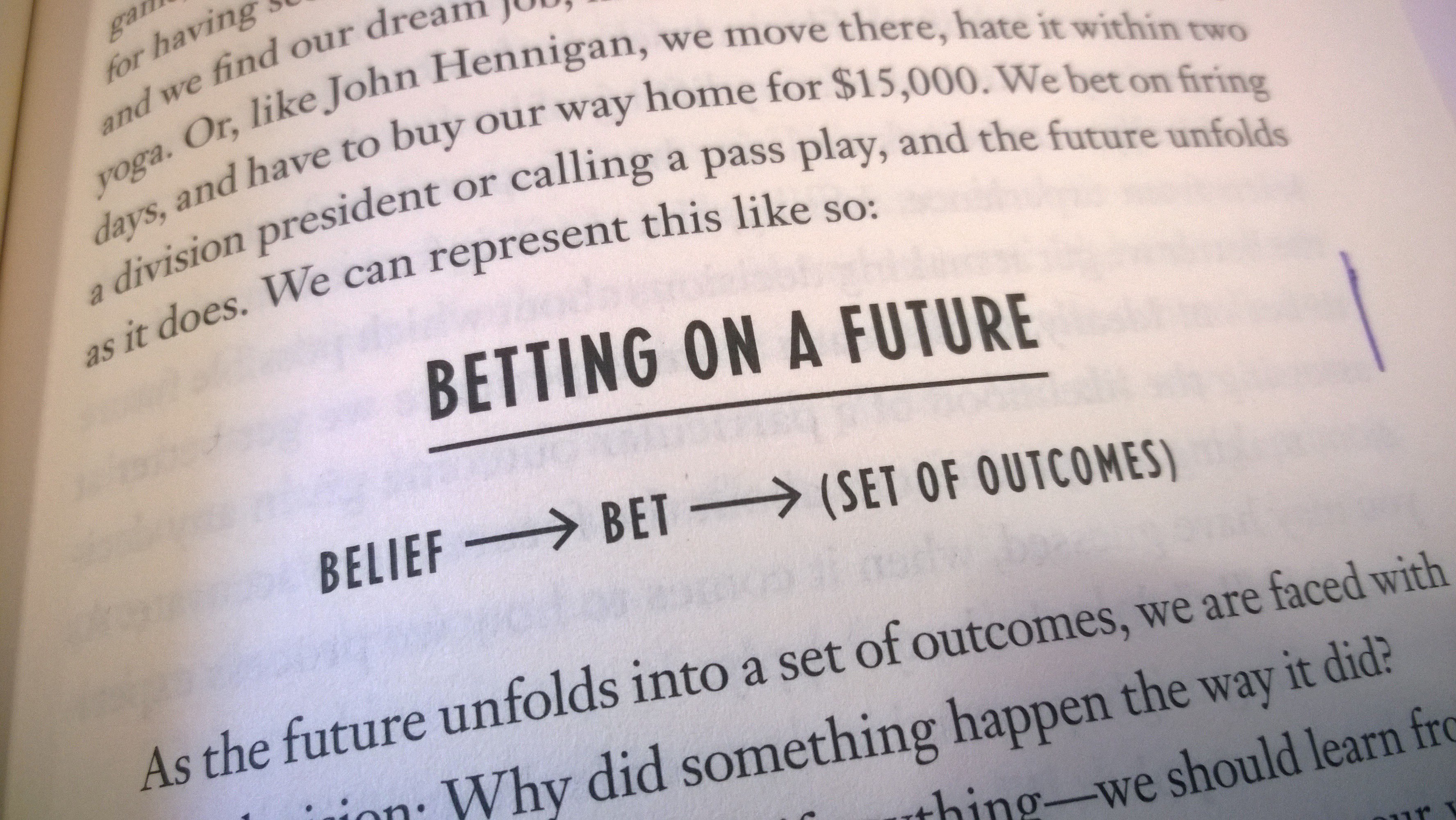
It was during this time that Ramsey developed his own full-fledged theory of “subjective” or psychological probability. He first painted a sketch of his approach to chance in a paper titled “Truth and Probability”, which he first presented at a meeting of the Moral Sciences Club in November of 1926. (See Misak, 2020, p. 263. Ramsey’s influential 1926 paper was eventually published posthumously in 1931.) We can summarize Ramsey’s revolutionary theory of probability in ten words: probabilities are beliefs and beliefs, in turn, are metaphorical bets, or in Ramsey’s words (quoted in Misak, p. 268), “Whenever we go to the station we are betting that a train will really run, and if we had not a sufficient degree of belief in this [outcome] we should decline this bet and stay at home.” (The image pictured below also provides a simple visualization of Ramsey’s approach.)

On this subjective view of probability, we can measure the strength of a person’s personal beliefs in betting terms, or again in Ramsey’s own words (p. 271), a “probability of 1/3 is clearly related to the kind of belief [that] would lead to a bet of 2 to 1.” In addition, Ramsey showed how one’s bets–i.e. one’s subjective or personal probabilities–should obey the formal axioms of probability theory. (As as aside, Misak includes a summary by Nils-Eric Sahlin of the technical details of Ramsey’s subjective or betting approach to probability. See Misak, pp. 272-273. See also this excellent entry in the Stanford Encyclopedia of Stanford.) It is hard to understate the importance of Ramsey’s subjective theory of probability. I will therefore discuss the deeper significance of Ramsey’s betting paradigm in my next post …

Image result for beliefs are bets

Source: Annie Duke, Thinking in Bets (2018)

Posted in Uncategorized | Leave a comment

Review of Misak: Ramsey’s romantic interlude

Previously, I described Frank Ramsey’s powerful critique of John Maynard Keynes’s logical or objective approach to probability. (For the record, Ramsey published his review of Keynes’s Treatise on Probability in the January 1922 issue of Cambridge Magazine, while he was still an undergraduate!) But as I mentioned in my previous post, Ramsey had yet to develop the details of his own subjective theory of probability at this early stage in his life. He would do so within a few years–by the fall of 1926. But before I proceed into Ramsey’s subjective theory, I will take a short detour to recount two important personal episodes in Ramsey’s life: his six-month sojourn in Vienna (see chapter 7 of Misak), and his secret love affair with Lettice Baker (pp. 205-208), who deserves a biography of her own. (As an aside, all chapter and page references refer to Misak’s 2020 biography of Ramsey.)

In brief, upon the completion of his undergraduate studies (but before accepting a teaching job at Cambridge), Ramsey had decided to spend an extended period of time in Vienna in order to undergo psychoanalysis. (It was during this time that Ramsey received the news of his appointment to a lectureship at King’s College. See Misak, pp. 178-181.) According to Misak (p. 161), “taking the cure in Vienna was a common thing for young Cambridge academics.” In addition, Frank Ramsey took full advantage of all that the former imperial capital had to offer, including deep discussions with members of the legendary “Vienna Circle” of anti-metaphysical philosophers, cultured nights at the world-famous Opera, and even some sordid sexual escapades with a Viennese prostitute. More importantly, within a month of his return to England in the fall of 1924, Ramsey met Lettice Baker (pictured below) at a Moral Sciences Club meeting at Trinity College. (Misak, p. 205. It was at this meeting that G. E. Moore read his now famous paper “A defence of common sense.”) Shortly thereafter, Ramsey asked her out to tea, and they quickly fell in love. Among other things, one of the things that struck me the most about the Ramsey-Baker love affair was how they had to keep their amorous relationship a secret (pp. 207-208) until they formally got married in September of 1925. Be that as it may, Ramsey’s greatest contributions to the world of ideas, including his theory of subjective probability, were right around the corner …

Image result for lettice baker

Artist Credit: Frances Baker

Posted in Uncategorized | Leave a comment

Review of Misak: Ramsey against the world

Part II of Cheryl Misak’s beautiful intellectual biography of Frank Ramsey is devoted to the young Ramsey’s undergraduate years at Cambridge University. (I reviewed Part I in my previous post.) If there is a common or overarching theme during these formative years in Ramsey’s intellectual life (1920 to 1924), it is Ramsey’s willingness to challenge the most powerful and original ideas of such great and legendary scholars and philosophers as J.M. Keynes, G.E. Moore, Bertrand Russell, and Ludwig Wittgenstein. In this post, I will limit myself to just one such momentous undergraduate episode–Ramsey’s early critique of Keynes’s objective or logical theory of probability.

To appreciate Ramsey’s first foray into probability theory, I must first provide some relevant background. The great Keynes had published his Treatise on Probability in 1921, and in a review of Keynes’s work, none other than Bertrand Russell had called Keynes’s Treatise “the most important work on probability that has appeared for a very long time,” adding that the “book as a whole is one which it is impossible to praise too highly.” (See Russell, 1948 [1922], p. 152.) Why was Keynes’s work so highly praised? Because Keynes had developed a new way of looking at probability, one which allowed for the possibility of probabilistic truth. For Keynes, probability consisted of an objective or logical relation between evidence and hypothesis, or in the words of Misak (2020, p. 113, emphasis added), a relation “between any set of premises and a conclusion in virtue of which, if we know the first, we will be warranted in in accepting the second with some particular degree of belief.”

Ramsey, however, immediately identified two blind spots in Keynes’s conception of probability. (See Ramsey, 1922; see also Misak, 2020, pp. 114-115.) One was Keynes’s admission that not all probabilities are numerical or measurable, especially when the truth values of our underlying premises are in dispute. In that case, when we have no idea whether our premises are true or not, Keynes’s approach does not allow us to measure the probabilities of our conclusions. For Ramsey, by contrast, all probabilities should be measurable. But the other (more deeper) problem with Keynes’s theory was the “objective” nature of his view of probability–the idea that all statements or propositions stand in logical relation to each other. Ramsey denied the existence of these logical relations altogether. Far from being an “objective relation,” the strength or weakness of the relationship between two propositions also depended on psychological factors: on one’s personal experiences and subjective beliefs. In a word, probability was based on experience, not logic. (Sound familiar? If not, check out the quote by the great Oliver Wendell Holmes below.)

Yet, as the old academic saying goes, it takes a theory to beat a theory, and at this stage in his academic career the young Ramsey had yet to develop his own full-fledged theory of probability. But as we shall see in an upcoming blog post, Ramsey would finally get around to doing so in the last half decade of his short life …

Image result for the life of the law is experience not logic

Posted in Uncategorized | 1 Comment