Somin vs. Guerra-Pujol, round 2

Subtitle: “A rumble in the takings jungle” (by F. E. Guerra-Pujol)

In my previous post, we reviewed Ilya Somin’s contention that the police power is generally exempt from the Takings Clause. I quickly rebutted this argument by citing a recent case in which the Takings Clause was, in fact, held to apply to the police power. Here, I shall present (and respond to) Prof Somin’s additional arguments why the Takings Clause does not require compensation for coronavirus shutdowns.

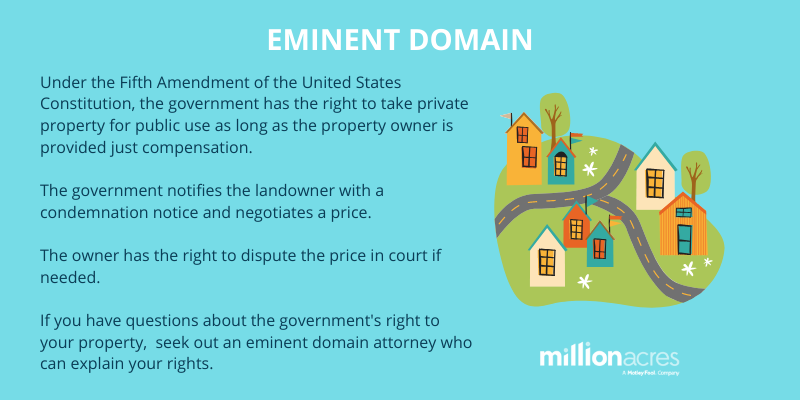
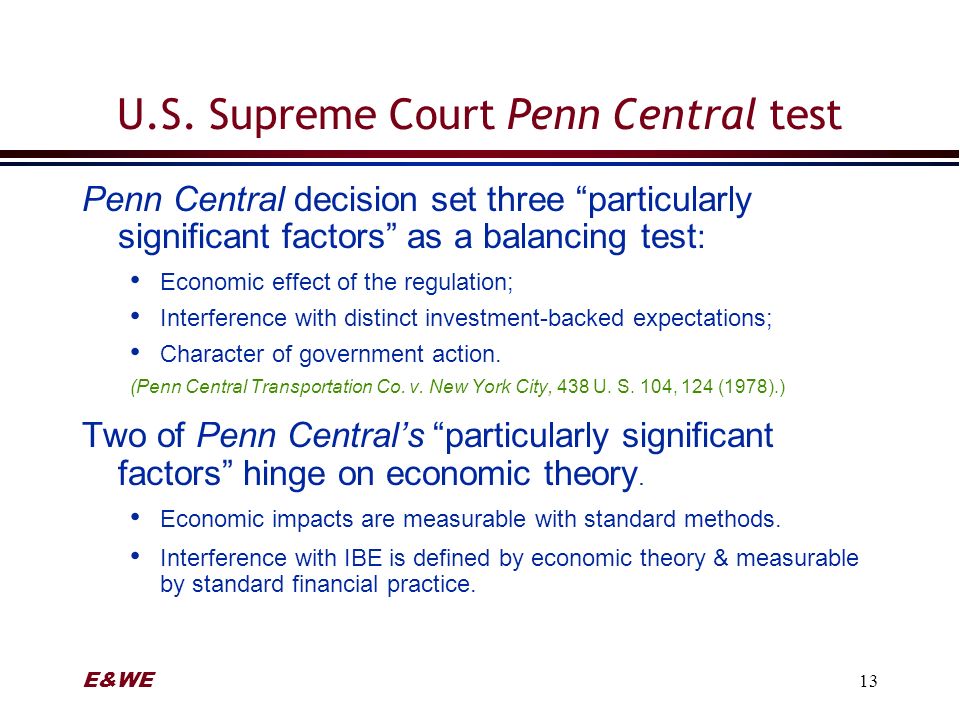
First, according to Somin, even if my rebuttal were correct (i.e. even if coronavirus shutdowns were subject to the Takings Clause in principle), anyone demanding just compensation for being forced to stay at home would lose their case under existing Supreme Court caselaw. Specifically, Prof Somin cites the leading case of Penn Central Transportation Co. vs. New York City. This is a leading takings case because the Supreme Court set forth a three-part test that lower courts must follow to determine whether a government action constitutes a “taking” under the Takings Clause of the Fifth Amendment. Under this three-part test, a government action is a “taking” depending on the following factors: (1) the severity of the economic impact of the action in question; (2) whether and to what extent the owner suffered the loss of “investment-backed expectations” when the government acted; and (3) the “character” of the government action (i.e. did the government physically occupy or damage the property right in question?).

According to Prof Somin, however, coronavirus shutdowns would not pass the Penn Central test as a matter of law, but I respectfully beg to differ. To begin with, the economic impact of a city- or statewide quarantine or “shelter in place” order is, by definition, severe if you lose your job and livelihood as a result of the order. Secondly, such “shelter in place” orders will adversely affect (to the say the least) the expectations of “non-essential” workers and firms subject to the order. Lastly, the third factor is most likely irrelevant, since the interest being deprived is liberty (freedom of movement), not physical property.

To sum up, although I agree with Prof Somin that the Penn Central test (like all balancing tests) “is a mess,” a strong argument can still be made that coronavirus shutdowns are takings under this admittedly messy test. At the same time, however, I have to acknowledge that neither Somin nor myself has yet to score a decisive blow, let alone knock the other down. But Somin still has an “ace” up his proverbial sleeve–a formidable argument inspired by the “legal realist” school of jurisprudence. Stay tuned, I will turn to (and try to refute) Somin’s third and final argument in my next post …
E&WE 1 “Sophistical and Abstruse Formulas” Made Simple, or ...

Credit: William W. Wade

Posted in Uncategorized | 6 Comments

Somin vs. Guerra-Pujol, round 1

Subtitle: “A rumble in the takings jungle” (by F. E. Guerra-Pujol)

As I mentioned in a previous post, my friend and colleague Ilya Somin and I disagree whether the Takings Clause requires the payment of compensation for coronavirus shutdowns. I say “yes”; he says “no.” First and foremost, Professor Somin points out that U.S. Supreme Court has carved out a police power exception to the Takings Clause. According to this line of cases, culminating in Miller vs. Schoene, the exercise of a State’s police power does not qualify as a “taking” under the Fifth Amendment. This is Prof Somin’s best argument by far, so what is my response to Somin’s initial thrust? How about a parry! (See, for example, the image below.)

To begin with, Miller vs. Schoene was decided in 1928–a bygone era in which the police power was more sparingly used. Furthermore, for every case holding x, it does not take much imagination to find a case holding not x. By way of example, in the more recent case of Arkansas Game & Fish Commission vs. U.S. (a 2012 case), a unanimous Supreme Court narrowed this police power exemption. At best, then, the relation between the police power and the Takings Clause is unclear, but my deeper parry stands: “Not all exercises of the police power are exempt from the requirements of the Takings Clause,” as Somin himself concedes in the fourth paragraph of his essay.

Aside from his police power argument, Prof Somin offers two more substantive legal reasons why the Takings Clause of the Fifth Amendment does not require compensation for coronavirus shutdowns under existing law. I will turn to those arguments in my next two blog posts …

Screen Shot 2020-03-28 at 9.15.15 PM

“thrust and parry”

Posted in Uncategorized | 3 Comments

Hope springs eternal

I interrupt my reply to Ilya Somin to share this beautiful film clip (hat tip: @kottke) with my loyal followers.

Posted in Uncategorized | Leave a comment

A friendly reply to Prof Somin

Subtitle: “A rumble in the takings jungle” (by F. E. Guerra-Pujol)

Yo, what’s up? For my part, I recently discovered that my friend and colleague Ilya Somin (pictured below, left), a law professor at George Mason University, wrote up this short essay explaining why, under existing caselaw, the Takings Clause of the Fifth Amendment does not require compensation for coronavirus shutdowns. Given that I have been vigorously arguing that we should apply a takings framework to these state-ordered shutdowns (see here, here, here, and here), some kind of response by yours truly (pictured below, right) is in order. Although Professor Somin is making a descriptive argument (what the law is), while I have been presenting a normative argument (what the law should be), I will nevertheless do my best to reply to Prof Somin’s excellent essay in the next day or two …

Screen Shot 2020-03-27 at 3.34.21 PM

Somin vs. Guerra-Pujol

Posted in Uncategorized | 1 Comment

Who pays?

Subtitle: Just compensation for staying at home, part four (by F. E. Guerra-Pujol)

At the end of my previous post, I mentioned that the power to order “non-essential” workers to stay at home arises out of a State’s general police power to protect the health, safety, and welfare of its residents. (Some States, like Florida, have delegated this power to the municipal level; other States, like California, have ordered statewide shutdowns.) But at the same time, we have also been vigorously arguing that this police power is subject to the Takings Clause of the U.S. Constitution. In brief, any State-sponsored deprivation of one’s liberty triggers the obligation to provide just compensation to those persons and firms who have been deprived of their liberty. We must now consider the bottom-line question, “Who pays?”

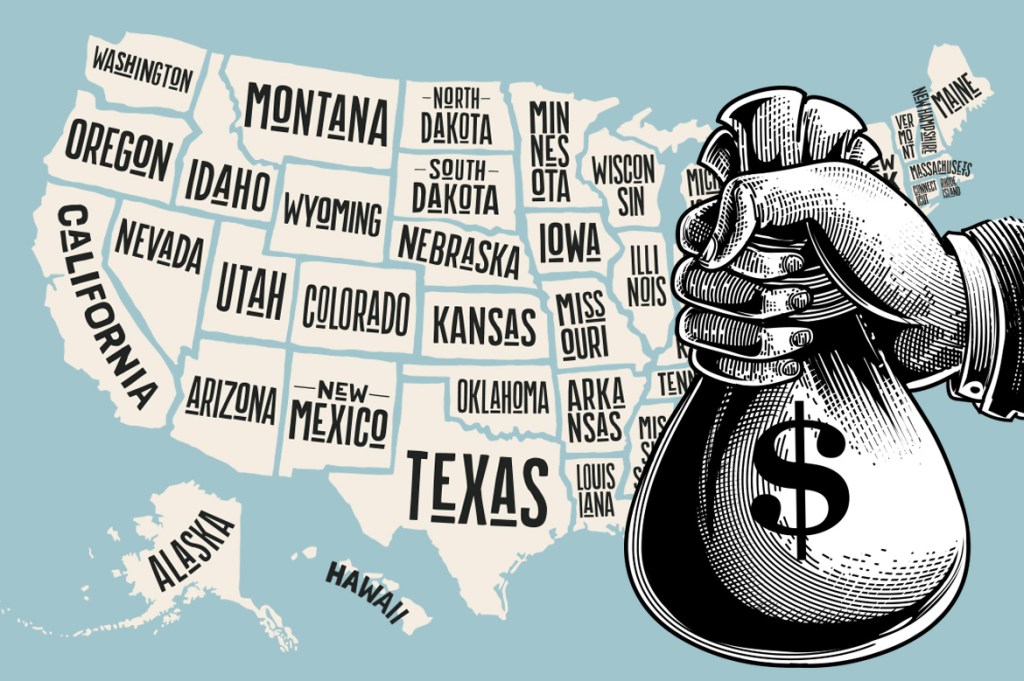
Since the current “crisis” is a pandemic of global (by definition) proportions, the federal nature of our system in the United States creates a paradox. Although the States retain the general police power to order quarantines, it is the federal government that has the resources to compensate affected individuals and firms. So, why not scrap the entire stimulus bill that is currently being considered by the Congress in favor of block grants for those States that have already ordered total or partial lockdowns? That is, let’s convert the entire 500-page, two trillion dollar package into a simple and straightforward block grant program. These block grants would have strings attached, of course. The most important condition would be this: the States would only be authorized to use their block grants to compensate those “non-essential” persons and firms affected by the shutdown. (If the Congress wants to allocate additional funding to the CDC or to purchase masks or for whatever, it should do that in a separate appropriations bill.)

In short, my proposal not only respects the federal structure of our constitutional system of government; my natural rights or “takings” approach to the pandemic also represents a fair compromise between our need to make significant sacrifices for the common good (by staying at home fora reasonable period of time) and our bedrock moral right to receive some of form of meaningful or just compensation in exchange for the deprivation of our liberty. Right?

Image result for block grants

Posted in Uncategorized | 2 Comments

How much?

Subtitle: Just compensation for staying at home, part three (by F. E. Guerra-Pujol; revised 3/28)

I presented in two previous posts an outline of my natural rights or “takings” approach to the current economic lockdown. (See here and here.) In brief, any State or local decree requiring “non-essential” firms to shut down and “non-essential” workers to stay at home constitutes a taking of one’s liberty under the Fifth Amendment to the U.S. Constitution, so those workers are therefore entitled to just compensation for their economic losses resulting from the lockdown. (I also presented Greg Mankiw’s idea of providing monthly–or better yet, weekly–payments to all affected workers and firms.)

But how much? How much monetary compensation should affected persons and firms receive under my takings framework? Isn’t it obvious by now? Once we frame the economic lockdown as a taking, i.e. as a deprivation of liberty, the answer to my previous questions begins to appear in focus: workers are entitled to their lost wages, while business firms are entitled to lost profits. In addition, one of the advantages of using lost wages and lost profits as our just-compensation metric is that we already have well-developed common law definitions of these economic concepts.

Given the massive scale of the lockdown, however (some, like California’s, are statewide!), my takings approach will present some significant administrative challenges, since a person’s losses will depend on his individual circumstances. But at the same time, if you have lost your job because of the lockdown, a one-time paltry payment of $1200 for most individuals or $2400 for most married couples (as under the current stimulus bill being debated by the Congress) most likely doesn’t even come close to adequate or just compensation for the lockdown. Even Professor Mankiw’s proposal of sending everyone X amount of dollars for N number of weeks or months is a very crude method of providing just compensation. Nevertheless, at least Mankiw’s proposal is much better than the paltry sums in the stimulus package. But what if, instead of a one-size-fits-all periodic payment for all individuals, Mankiw’s X were a range (depending on one’s zip code, e.g. urban or rural) between $1500-$2000 per month or between $300-$500 per week, as the case may be? (As an aside, a potential advantage of setting shutdown compensation so high is that governments will be forced to think twice before taking such a drastic measure.) In the event anyone has losses greater than X, we could allow such persons or firms to file their claims online with the U.S. Court of Federal Claims in Washington, D.C.

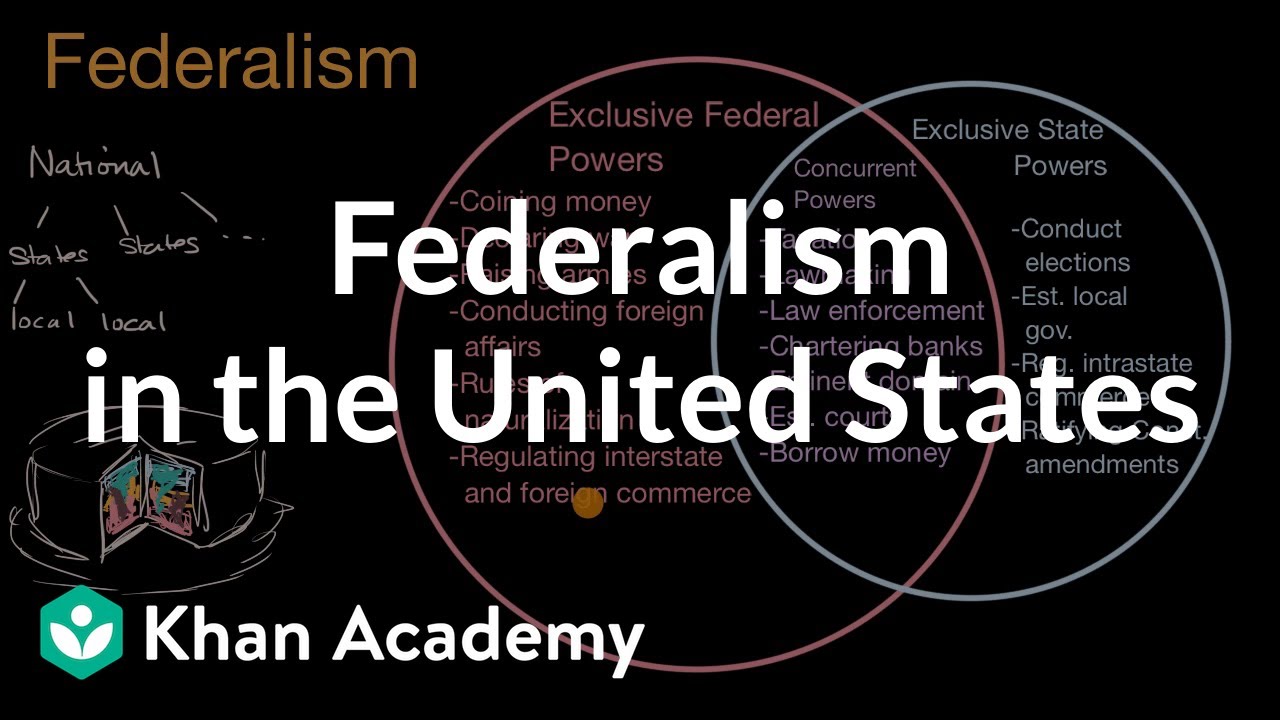
Before concluding, there is a legal problem with my framework that I now need to address. The United States is supposed to be a federal system, one in which public power is divided among the States and the national government, and under our constitutional system of federalism, the States retain a general “police power” to protect the health, safety, and welfare of its residents. (For a more detailed legal analysis, check out this helpful blog post by my colleague and friend Dan Farber. Hat tip: Brian Leiter.) As a result, one could argue that it is the States–not the Feds–who have the sole power to order such severe measures as quarantines and lockdowns. Thus as a constitutional or legal matter, it is those States (like California, Florida, and New York) where local or statewide lockdowns are now in effect that are obligated to provide just compensation to affected persons–not the federal government. This important legal principle (the doctrine of federalism) will thus require us to alter the details of our takings framework as well as how the Congress structures its stimulus bill. I will explain how in my next post …

Image result for federalism

Posted in Uncategorized | 3 Comments

Ok, Boomers (social distancing hypocrisy edition)

Hello, fellow hobbits! I am once again interrupting my natural rights analysis of the economic shutdown to pose the following irreverent question: Why is it that the same elites (see two flagrant examples pictured below) who are shutting down all those “non-essential” sectors of our economy and advising us to engage in “social distancing” themselves don’t even bother to follow what they preach!

Screen Shot 2020-03-25 at 6.38.12 PM

File under: “Do as I say; not as I do.”

Posted in Uncategorized | 1 Comment

A takings model of the economic shutdown

Subtitle: Just compensation for staying at home, part two (by F. E. Guerra-Pujol; revised 3/26)

As I mentioned in a previous post, I would apply a “takings” model to the economic shutdown. In other words, any government order requiring non-essential workers to stay at home and non-essential businesses to close down is like a “taking”–a taking of one’s liberty. My argument therefore is that, in exchange for such a drastic restriction of our liberty, the government must provide just compensation to all such “non-essential” persons and firms, including lost wages and lost profits, as the case might be. But this approach to the coronavirus pandemic poses two new practical questions: logistics and how much? That is, how would such a massive payment scheme work in practice, and how much compensation would we actually be entitled to? With regard to the first question (logistics), I shall second an idea by Greg Mankiw (edited by me for clarity):

[The Department of Treasury would] send every [registered taxpayer] a check for X dollars every month [or every week] for the next N months [weeks]. In addition, [the Treasury Dept. would] levy a surtax in 2020 (due in April 2021) equal to N*X*(Y2020/Y2019), where Y2020 is a person’s earnings in 2020 and Y2019 is a person’s earnings in 2019. The surtax would be capped at N*X. Under this plan, a person whose earnings fall to zero this year keeps all of the social insurance payments and does not pay the surtax. A person whose earnings fall by half keeps half of the payments and returns half. A person whose earnings remain the same (or increase) returns everything: They will have just gotten a short-term loan.

Before proceeding, I want to take exception with Professor Mankiw’s “social insurance” terminology. Use of the term “social insurance” makes his proposal sound like just another costly and counterproductive social welfare program. Under my natural rights or “takings” framework, by contrast, these payments are owed to affected persons and firms as a matter of moral right. To repeat–from a moral or natural rights perspective–every worker who is ordered to stay at home, every business firm who is ordered to close its doors, is entitled as a matter of right to just compensation in exchange for the deprivation of their liberty.

Also, notice that my version of Mankiw’s idea would be limited only to registered taxpayers in order to make the system workable as well as fair at the lowest possible administrative cost (#RichardEpstein). After all, the IRS already has a complete database of the names and addresses of every taxpayer, and persons and proprietorships who don’t even bother to file their tax forms when times are good should not be rewarded for their shirking behavior. But in any case, how much compensation should be paid, i.e. what amount should “X” be in Mankiw’s model? I will address this second question in an upcoming blog post.

Image result for just compensation

Posted in Uncategorized | 3 Comments

Still waiting …

On behalf of all “non-essential” workers who have lost their jobs due to the current economic shutdown (as well as all “non-essential” business firms that have had to close their doors), I interrupt my “natural rights” analysis of the coronavirus lockdown to share my reaction to the multi-trillion dollar stimulus package still being debated in the Congress:

Posted in Uncategorized | Leave a comment

My natural rights approach to coronavirus lockdowns

Subtitle: Just compensation for staying at home, part one (by F. E. Guerra-Pujol)

While I agree with consequentialists (like my colleague Romans Pancs) that the costs of a worldwide economic shutdown are probably too high relative to the modest (but non-trivial) risks created by the coronavirus pandemic, I want to offer a more nuanced “natural rights” critique of these severe lockdown policies, i.e. requiring all non-essential workers to stay home and defining “essential” narrowly. Full disclosure: My approach is inspired by Robert Nozick’s approach to risk and natural rights, which I blogged about in greater detail in 2017. (Nozick, not Rawls, is my intellectual lodestar.) So, without further ado, let’s jump in:

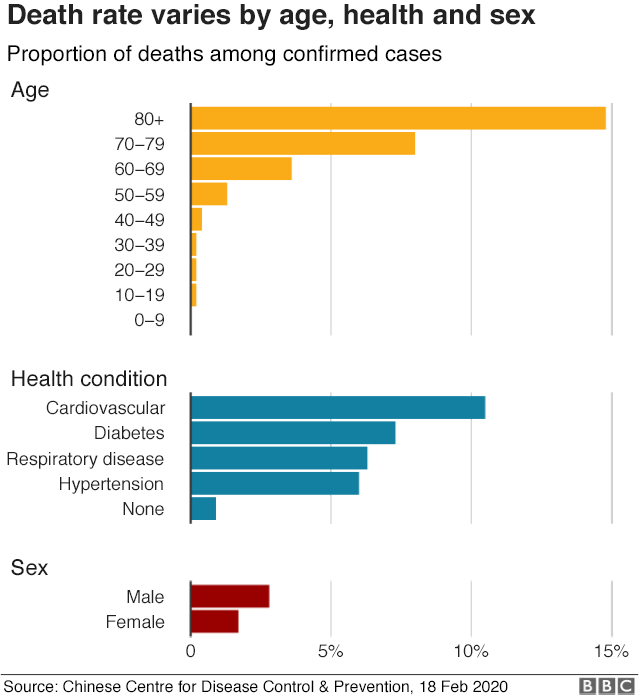
A Kantian-Nozickian or natural rights approach begins with the premise that every person has rights, including the right to liberty, i.e. the right to do whatever I want or to go wherever I want or to meet with whomever I want–so long as I do not cross any moral boundaries while I am exercising my rights, i.e. so long as I do not impose unjustified harms or unjustified risks on others. This libertarian approach, however, appears unworkable in the context of a pandemic because my refusal to engage in social distancing by itself creates significant risks for innocent third parties, including the risk of death for persons with underlying medical conditions. Simply put, as this current pandemic shows, every human activity–no matter how benign its motivation or useful its consequences–carries some positive and non-trivial risk of injury to self and to others. Thus the problem for a natural rights theorist like me is that, as Nozick himself points out in his classic work Anarchy, State, and Utopia (1974, p. 75), “It is difficult to imagine a principled way in which the natural rights tradition can draw the line to fix which probabilities impose unacceptably great risks upon others.” Difficult, but not impossible!

Here, then, is my natural rights solution to the current pandemic. If an economic shutdown is, indeed, the most effective method of saving lives during a pandemic (by requiring most people to stay at home and most businesses to shut down), then everyone who is inconvenienced by the shutdown (rich or poor; small business or large) must be compensated for this inconvenience as soon as possible by the governmental entities ordering the shutdown. The beauty of the natural rights approach is that it recognizes the reciprocal nature of the pandemic problem. In other words: not shutting down the economy makes it easier for the pandemic to spread, but at the same time, the decision to order an economic shutdown also imposes significant costs on most of us. In brief, I will sum up my natural rights approach to the pandemic as follows: at some point you have to pay me to stay at home; that is, if you (the government) are going to order me to stay home for the greater good, then you are also morally required to pay me “just compensation” (including lost wages) in exchange for my cooperation.

Stay tuned, as I will describe the details of my just compensation scheme in the next day or two …

Image result for risk of death coronavirus
Posted in Uncategorized | 6 Comments