Illegal but moral

I presented a fourfold classification of illicit promises in my previous post: (i) promises that are legal and moral, (ii) those that are legal but immoral, (iii) those that are illegal and immoral, and (iv) those that are illegal but moral. Let’s begin by taking a closer look at this last type of illicit promise. Can you think of an example of an illegal agreement whose subject matter is nevertheless justified on moral grounds? How about the Montgomery Bus Boycott of 1955-1956?

I happen to be writing this blog post in the beautiful city of Montgomery, Alabama, where Rosa Parks changed the course of the United States history, and where I had the honor of visiting the Rosa Parks Museum while I was attending the 65th Annual Conference of the Southeastern Academy of Legal Studies in Business. The Montgomery bus boycott was not only a pivotal moment in U.S. history; it also required the cooperation of many individuals over an extended period of time. In summary, after Rosa Parks was arrested for refusing to give up her seat on a bus in violation of a local ordinance, churchmen like the Rev. B. J. Simms and concerned citizens like Jo Ann Robinson called for a grassroots boycott of Montgomery’s public transit system to protest segregation. Since many black people relied on the bus system, these community leaders organized a carpool operation in support of the boycott. The City, however, responded by filing criminal charges against the leaders of the bus boycott, arguing that the unauthorized carpool operation was an illegal conspiracy under a 1921 State law that made conspiring to interfere with a business a crime. Although the boycott was declared illegal by racist State judges, the unlawful boycott was in service of a noble and moral cause.

Related image

Source: @IsabelWilkersonWriter
Posted in Uncategorized | 1 Comment

Taxonomy of illicit promises

I have been making significant revisions to my work in progress “Breaking Bad Promises.” Among other things, I have included many new examples of illicit promises, i.e. promises that are either illegal or immoral, including drug deals as portrayed in some Mexican “drug ballads” or narcocorridos by Los Tigres del Norte (one of my all-time favorite norteño bands; check out their classic song “Contrabando y traición” below) as well as historical examples drawn from the Atlantic slave trade. Here, however, I shall present my fourfold taxonomy of illicit promises.

In summary, there are four possible types of illicit promises:

(i) promises that are both legal and moral,

(ii) promises that are legal but immoral,

(iii) promises that are both illegal and immoral, and

(iv) promises that are illegal but moral.

To bring these abstract categories to life, I will illustrate all four types in my next few blog posts.

Posted in Uncategorized | 1 Comment

Science fashion (Ada Lovelace edition)

Ada Lovelace (1815-1852), an English mathematician and writer, was best known for her work on the “Analytical Engine,” considered to be the first computer. The dress in her honor (pictured above) is available here.

Posted in Uncategorized | Leave a comment

Does anyone really like Facebook’s new all-caps logo?

If you haven’t seen the new logo yet, you may see it for yourself here. Below are what some well-known consumer goods might look like if they adopted FACEBOOK’s new approach to branding. Credit: @kunelgaur.

Posted in Uncategorized | Leave a comment

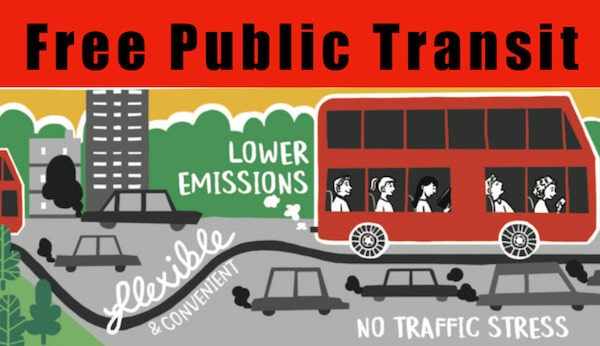
Why isn’t public transit free?

After all, State and federal governments already subsidize driving in myriad ways (see, e.g., this compelling research by law professor Gregory H. Shill), so why can’t we fully subsidize public transit as well? This website (via efficientgov.com) lists the pros and cons of making public transportation free, and frankly, the cons are so weak as to be laughable (e.g. “car sales would drop significantly” and “parking cops would lose their jobs”). Senator Warren, are you listening?

Image result for public transit should be free
Posted in Uncategorized | 1 Comment

A statistical paradox?

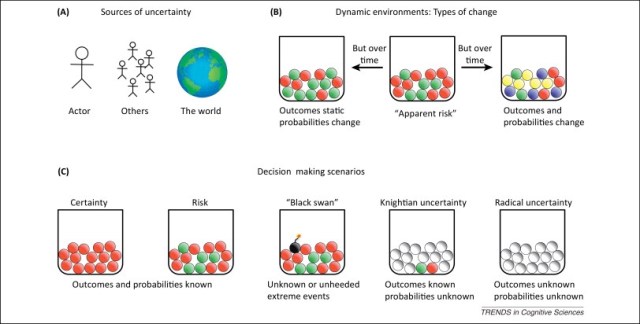
Check out this paper by Xiao-Li Meng on statistical paradoxes in which Meng poses the following question: “Which one should I trust more: a 1% survey with a 60% response rate or a self-reported administrative dataset covering 80% of the population?” Or to borrow Jason N. Doctor’s formulation via Twitter (@jasndoc):

“An urn contains 10K red & blue marbles of unknown proportion. Win $1M if you estimate the correct proportion. You can either: (1) sample 80%, or, (2) stir the marbles & sample 1%. Which do you do?”

Posted in Uncategorized | Leave a comment

Memo to Speaker Pelosi

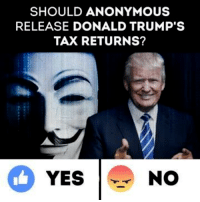
Can we all just get along? If not, why place all of your impeachment eggs in a Ukranian basket (so to speak)? More to the point, why not impeach President Trump for tax evasion instead? Ukraine is a corrupt country anyways, and worse yet, it appears the so-called “hearsay whistleblower” may have been politically motivated (you think?!), but tax fraud is a felony. (See 26 U.S. Code § 7201; look it up!) Moreover, unlike the partial transcript of the disputed July 25 phone call to the President of Ukraine, which the White House has released for all to see, Mr. Trump has refused to release any of his tax returns, thus creating a rebuttable presumption that he has at some point in his life committed tax fraud. Right?

Posted in Uncategorized | Leave a comment

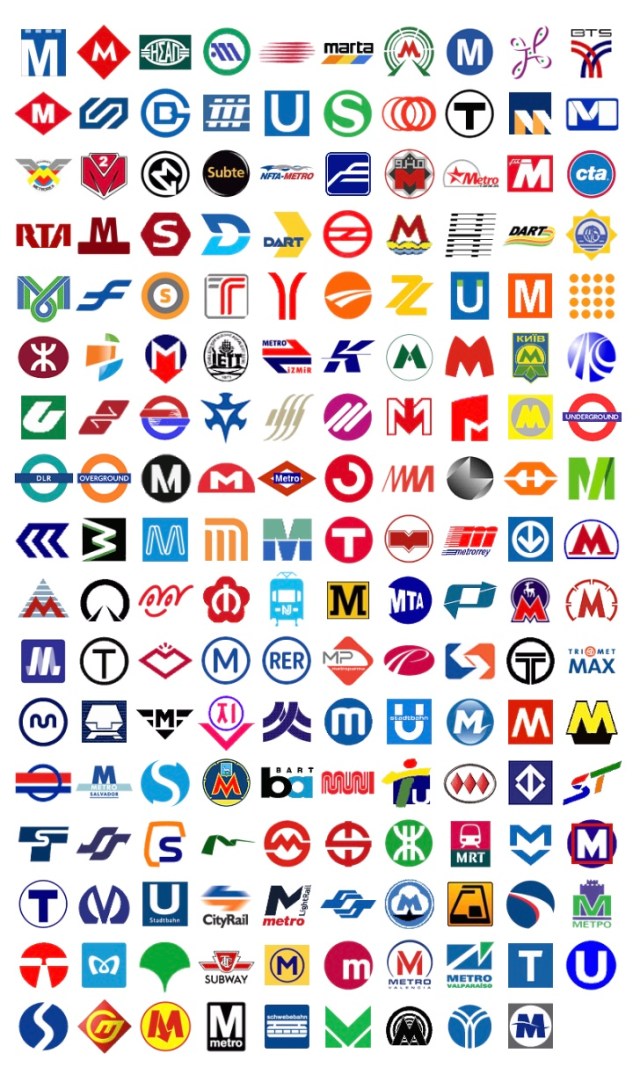
A city without a metro is not a city

Now that we have observed Halloween and All Saints Day, check out this beautiful and interactive collection of metro logos from around the world. (Alas, the logos for Orlando’s budding “SunRail” system or San Juan, Puerto Rico’s “Tren Urbano” are not included in this fairly comprehensive collection of metro logos.) Which one do you like the best? Least? Hat tip: @kottke.

Posted in Uncategorized | 1 Comment

Fake news or fake wall?

According to this report in The Washington Post, smugglers in Mexico have repeatedly sawed through new sections of President Trump’s border wall by using commercially available power tools, opening gaps large enough for people and drug loads to pass through. Here is an excerpt:

“The breaches have been made using a popular cordless household tool known as a reciprocating saw that retails at hardware stores for as little as $100. When fitted with specialized blades, the saws can slice through one of the barrier’s steel-and-concrete bollards in a matter of minutes, according to [Border Patrol] agents, who spoke on the condition of anonymity because they were not authorized to speak publicly about the barrier-defeating techniques. After cutting through the base of a single bollard, smugglers can push the steel out of the way, allowing an adult to fit through the gap. Because the bollards are so tall — and are attached only to a panel at the very top — their length makes them easier to push aside once they have been cut and are left dangling, according to engineers consulted by The Washington Post.”

Posted in Uncategorized | Leave a comment

Have you honored your ancestors today?

Posted in Uncategorized | Leave a comment