The problem with the Greta Thunbergs of the world

By now, you have probably heard of Greta Thunberg, the world-famous Swedish teenage climate-change activist who has urged immediate action to address the risks posed by man-made climate change. That’s putting it mildly; in the words of Ms Thunberg, “People are suffering. People are dying. Entire ecosystems are collapsing. We are in the beginning of a mass extinction. And all you can talk about is money and fairytales of eternal economic growth. How dare you!” Although Ms Thunberg is no doubt a very eloquent speaker, her stern and strident call for action suffers from a fundamental flaw: one must also consider the benefits–not just the costs–of continued economic growth. Climate activists like Ms Thunberg do a great job of pointing out the environment costs of economic growth, but we must not blind ourselves to the benefits of growth nor ignore the costs of economic decline. A further irony is that curtailing the world’s continued economic growth will make it less likely that we will find a solution to climate change! To sum up, fanaticism in defense of the environment is a vice.

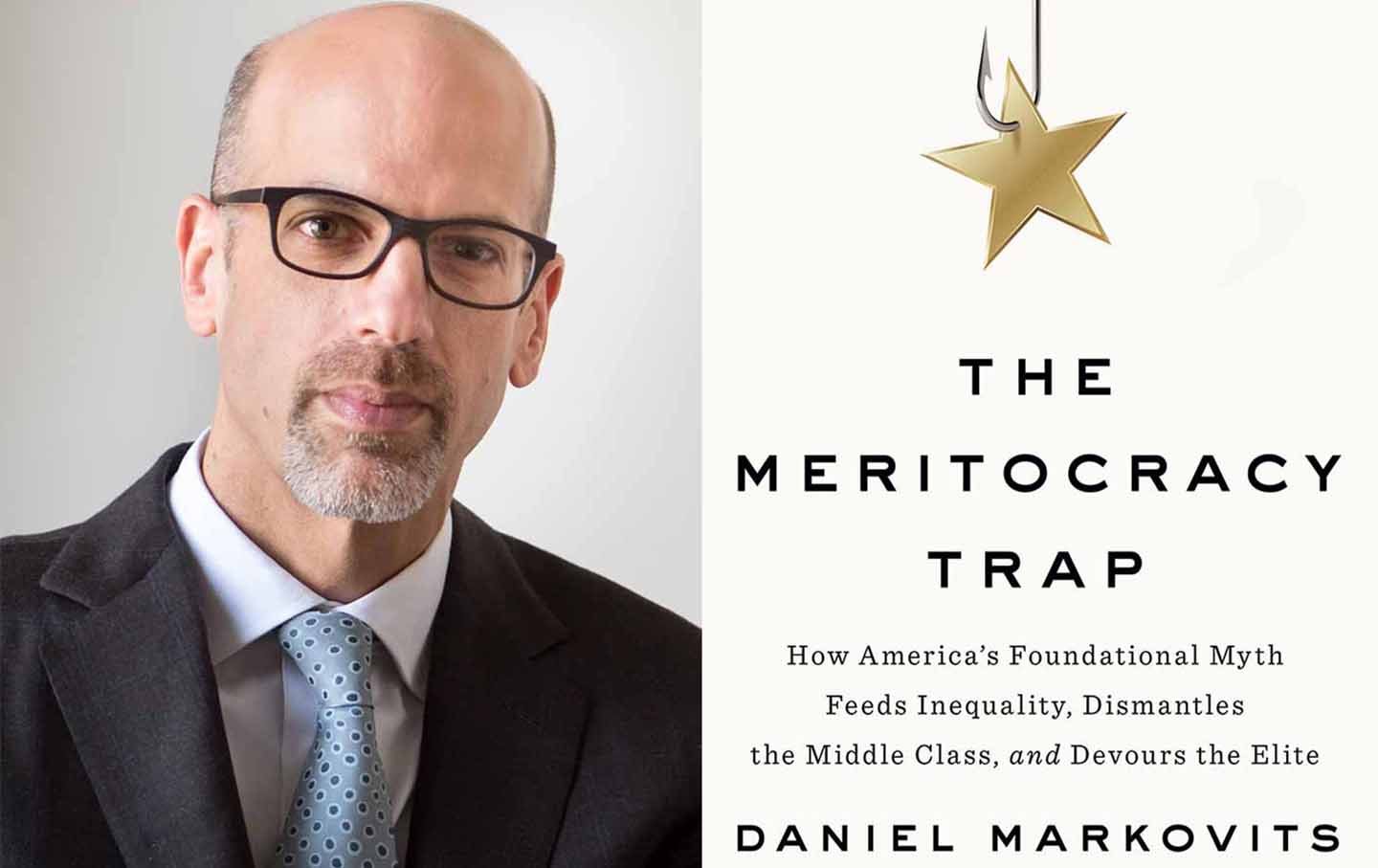
Image result for greta for president
Posted in Uncategorized | Leave a comment

The paradox of Markovits’s critique of meritocracy

Check out Kay Hymowitz’s excellent review of Daniel Markovits’ new book (pictured below), which is titled The Meritocracy Trap (Penguin, 2019). Here is one revealing excerpt from her review of Markovits’s book: “As economist (yes, Harvard-educated) Tyler Cowen has quipped: ‘The best critiques of the meritocracy have come from those with extreme merit.’ I’ll come back to this puzzle later, for it’s one that Markovits’s book, like others in the genre, doesn’t fully explore.”

Image result for markovits meritocracy
Posted in Uncategorized | Leave a comment

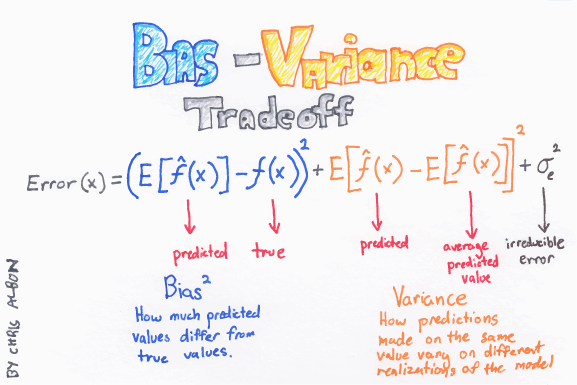
Variance flashcards

Check out the entire set of “machine learning flash cards” here. They were created by data scientist Chris Albon (@chrisalbon).

Image result for chris albon variance

Image result for chris albon variance

Posted in Uncategorized | Leave a comment

Also: Free Havana, Free Hanoi, Free Caracas, and Free Pyongyang! In other words, what if every socialist economy had at least one free city so that the people in that economy could vote with their feet, and vice versa, what if every market economy had a socialist enclave for the Bernies and AOCs of this world …?

Posted in Uncategorized | Leave a comment

Does economics need a Nobel prize?

In anticipation of today’s announcement of “The Sveriges Riksbank Prize in Economic Sciences in Memory of Alfred Nobel,” check out this fascinating survey essay by Allen R. Sanderson and John J. Siegfried titled “The Nobel Prize in Economics Turns 50,” which was published in American Economist, Vol. 64, No. 2 (2019), pp. 167–182, and is available here. In the words of Sanderson and Siegfried, “as a well-known quip has it, economics is the only field in which two people can share a Nobel Prize for saying opposing things,” such as the 1972 econ Nobel awarded to Gunnar Myrdal and F. A. Hayek or the 2013 prize awarded to Eugene Fama and Robert Shiller. Also, check out this critique of the other Nobel prizes. In any case, no person born in Africa, Latin America, or Oceania has ever won a Nobel prize in economics. Hat tip: Timothy Taylor.

Image result for econ nobel prize
Posted in Uncategorized | Leave a comment

Tampa: a hellscape of highways?

Tampa, Florida is a case study of the decline of streetcars and the corresponding rise of massive roadways in North American cities. In 1920, for example, Tampa had an elaborate streetcar system consisting of 13 lines owned and operated by the Tampa Electric Co. Today, Tampa is a veritable “hellscape of highways,” a traffic-congested city bisected by three intrusive interstate expressways (4, 75, and 275) as well as an elevated toll road, while only one streetcar line is left up and running. To visualize this radical difference, compare the top map of modern-day Tampa with the bottom map of Tampa circa 1920. (Hat tip: Jake Berman, u/fiftythreestudio.) In addition, check out Jake Berman’s website titled “The Lost Subways of North America.”

Related image
https://external-preview.redd.it/U-PrfcStkHOaZl2AwFI0smN9Q3O9HPrrpjSXUpyEAdU.png?auto=webp&s=a263b439a5c145853a446582d4bb068598f080e0
Posted in Uncategorized | Leave a comment

Gouldian finches

We interrupt our series of blog posts on Ramos v. Louisiana and the Insular Cases to share this beautiful picture of Australian Gouldian finch birds (hat tip: @pickover). According to Dr Leah Williams and Dr Claudia Mettke-Hofmann, these finches adjust their behavior according to the personality of their partners. Here is a summary of their research; here is their full report.

Image of 3 colourful gouldian birds on a branch
Posted in Uncategorized | Leave a comment

Culture and constitutional law

Balzac v. Porto Rico was not the first time (cf. Dred Scott), nor would it be the last (cf. Roe v. Wade), that a decision repugnant to the Constitution would be made–not by Congress nor by the President–but by the Supreme Court of the United States (SCOTUS). But let’s focus on the Balzac case here: why did SCOTUS decide to deny Jesus Maria Balzac his constitutional right to a jury trial in this historic case? The most charitable reason is legal culture. After all, juries are a “common law” institution originating in medieval England centuries ago, while such newly-acquired U.S. territories like Puerto Rico and the Philippines, former colonies of Spain, followed the Roman or “civil law” tradition of continental Europe. On this view, because Puerto Rico’s legal culture was so different than that of other U.S. territories (where the right to a jury trial did apply), Puerto Rico’s insular government should not be compelled as a matter of constitutional law to adopt a jury system. Or, in the cynical words Chief Justice William Howard Taft, who wrote the Court’s unanimous opinion in this case: Continue reading

Posted in Uncategorized | Leave a comment

The last of the Insular Cases

Balzac v. Porto Rico, decided in 1922, was the last of the Insular Cases. First off, notice how the island is referred to as “Porto Rico” in the name of this case. This is because the United States had changed the island’s official name to Porto Rico for some reason when the U.S. acquired her in 1898 at the conclusion of the Spanish-Cuban-American War. The defendant in this case was Jesús Maria Balzac y Balzac, the editor of a newspaper called El Baluarte. The Government of Puerto Rico had charged Mr Balzac of criminal libel after he had written and published an article criticizing the governor of island. Mr Balzac then demanded a jury trial, arguing that the provisions of the U.S. Constitution, including the Sixth Amendment right to a jury trial, applied to Puerto Rico. After all, Puerto Rico was a U.S. territory, and the Congress had recently granted U.S. citizenship to all persons born in Puerto Rico under the Jones Act of 1917, so how could the insular government deny her U.S. citizens the right to a jury trial or any other constitutional right, for that matter? Mr Balzac’s appealed his case all the way up to the Supreme Court of the United States (SCOTUS), but as we shall see in my next few posts, the justices of that august forum–including such supposed champions of civil liberties as Louis Brandeis and Oliver Wendell Holmes–would find a way of denying Mr Balzac of his most basic constitutional rights.

Image result for "isla de porto rico"
Posted in Uncategorized | Leave a comment

Juries and Puerto Rico

Following up on our previous two posts, how will the case of Ramos v. Louisiana be decided? Although second-guessing SCOTUS is always a perilous business, based on what I heard during the oral arguments in this case, I will venture two guesses: SCOTUS will not only conclude that the Sixth Amendment requires jury verdicts to be unanimous in criminal cases; SCOTUS will also rule that the Sixth Amendment applies to the states.

But how would such a ruling affect Puerto Rico? Specifically, how would the Sixth Amendment apply to Puerto Rico? Like Louisiana, Puerto Rico allows juries to render non-unanimous verdicts in criminal cases. Puerto Rico, however, is not a State; it is still a territory under the jurisdiction of the United States, and SCOTUS has previously ruled in a series of racist decisions known collectively as the “Insular Cases” that the full Constitution does not apply to Puerto Rico, including the right to a jury trial, because Puerto Rico is supposedly an “unincorporated territory” of the United States–a category that was entirely invented out of thin air by SCOTUS in the early 1900s to justify Puerto Rico’s second-class colonial status at the time. (Professor Bartholomew Sparrow has written an entire book about this series of shameful cases; see book cover below.) Personally, I am hoping SCOTUS will use the occasion of Ramos v. Louisiana to overturn these discredited Insular Cases, especially the infamous case of Balzac v. Porto Rico. With the possible exception of Dred Scott v. Sandford or Prigg v. Pennsylvania, the Balzac case has to be one of the worst and ugliest SCOTUS decisions of all time. I will delve into the facts of the Balzac case in my next post.

Image result for the insular cases

Posted in Uncategorized | Leave a comment