Balzac v. Porto Rico was not the first time (cf. Dred Scott), nor would it be the last (cf. Roe v. Wade), that a decision repugnant to the Constitution would be made–not by Congress nor by the President–but by the Supreme Court of the United States (SCOTUS). But let’s focus on the Balzac case here: why did SCOTUS decide to deny Jesus Maria Balzac his constitutional right to a jury trial in this historic case? The most charitable reason is legal culture. After all, juries are a “common law” institution originating in medieval England centuries ago, while such newly-acquired U.S. territories like Puerto Rico and the Philippines, former colonies of Spain, followed the Roman or “civil law” tradition of continental Europe. On this view, because Puerto Rico’s legal culture was so different than that of other U.S. territories (where the right to a jury trial did apply), Puerto Rico’s insular government should not be compelled as a matter of constitutional law to adopt a jury system. Or, in the cynical words Chief Justice William Howard Taft, who wrote the Court’s unanimous opinion in this case: Continue reading
The last of the Insular Cases
Balzac v. Porto Rico, decided in 1922, was the last of the Insular Cases. First off, notice how the island is referred to as “Porto Rico” in the name of this case. This is because the United States had changed the island’s official name to Porto Rico for some reason when the U.S. acquired her in 1898 at the conclusion of the Spanish-Cuban-American War. The defendant in this case was Jesús Maria Balzac y Balzac, the editor of a newspaper called El Baluarte. The Government of Puerto Rico had charged Mr Balzac of criminal libel after he had written and published an article criticizing the governor of island. Mr Balzac then demanded a jury trial, arguing that the provisions of the U.S. Constitution, including the Sixth Amendment right to a jury trial, applied to Puerto Rico. After all, Puerto Rico was a U.S. territory, and the Congress had recently granted U.S. citizenship to all persons born in Puerto Rico under the Jones Act of 1917, so how could the insular government deny her U.S. citizens the right to a jury trial or any other constitutional right, for that matter? Mr Balzac’s appealed his case all the way up to the Supreme Court of the United States (SCOTUS), but as we shall see in my next few posts, the justices of that august forum–including such supposed champions of civil liberties as Louis Brandeis and Oliver Wendell Holmes–would find a way of denying Mr Balzac of his most basic constitutional rights.

Juries and Puerto Rico
Following up on our previous two posts, how will the case of Ramos v. Louisiana be decided? Although second-guessing SCOTUS is always a perilous business, based on what I heard during the oral arguments in this case, I will venture two guesses: SCOTUS will not only conclude that the Sixth Amendment requires jury verdicts to be unanimous in criminal cases; SCOTUS will also rule that the Sixth Amendment applies to the states.
But how would such a ruling affect Puerto Rico? Specifically, how would the Sixth Amendment apply to Puerto Rico? Like Louisiana, Puerto Rico allows juries to render non-unanimous verdicts in criminal cases. Puerto Rico, however, is not a State; it is still a territory under the jurisdiction of the United States, and SCOTUS has previously ruled in a series of racist decisions known collectively as the “Insular Cases” that the full Constitution does not apply to Puerto Rico, including the right to a jury trial, because Puerto Rico is supposedly an “unincorporated territory” of the United States–a category that was entirely invented out of thin air by SCOTUS in the early 1900s to justify Puerto Rico’s second-class colonial status at the time. (Professor Bartholomew Sparrow has written an entire book about this series of shameful cases; see book cover below.) Personally, I am hoping SCOTUS will use the occasion of Ramos v. Louisiana to overturn these discredited Insular Cases, especially the infamous case of Balzac v. Porto Rico. With the possible exception of Dred Scott v. Sandford or Prigg v. Pennsylvania, the Balzac case has to be one of the worst and ugliest SCOTUS decisions of all time. I will delve into the facts of the Balzac case in my next post.
Should jury verdicts be unanimous?
What about the decisions of the Supreme Court of the United States (SCOTUS)? The case of Ramos v. Louisiana, which was argued before the Supreme Court yesterday (7 Oct.), poses these questions and many more, including questions involving stare decisis (when may a court disregard or overrule its own precedents?) and the common law background of the Constitution (what parts of the common law are enshrined in the Constitution?), issues that I will discuss in my next few posts.
In any case, because of my fascination with juries and our common law jury system, with the rule of stare decisis, and with our nation’s constitutional history, I attended the oral arguments in Ramos v. Louisiana. Amy Howe’s analysis of how the arguments in this case played out is very good (see here), but there is one thing she left out. At one point during the petitioner’s oral argument, Chief Justice John Roberts posed a fascinating question. I will rephrase his question as follows: if you were accused of a crime and your case went to trial, which of the following options would you prefer?
(a) a six-man jury with a unanimity requirement to convict,
(b) a 12-man jury with a three-fourths super-majority requirement, or
(c) a 24-man jury with a two-thirds super-majority requirement?
Isn’t the right answer obvious? Under option (a), you will be convicted of the crime only if all six members of the six-man jury find you guilty beyond a reasonable doubt; under option (b), you will be convicted if at least nine members of the 12-man jury find you guilty; and under option (c), you will be convicted if at least 16 members of the 24-man jury find you guilty. However you answer the above question, jury voting also raises some perplexing questions about voting by judges on multi-judge panels like SCOTUS and the federal courts of appeals. Specifically, why do the justices of the Supreme Court as well as appellate judges use simple majority voting when they are deciding their cases? Put another way, why don’t appellate courts consider using super-majority voting rules or consider requiring unanimity when rendering their decisions?
Image credit: W. S. Gilbert
Dispatch from the Supreme Court
Does the Constitution require jury verdicts in federal or state criminal cases to be unanimous? Given my interest in jury voting and voting methods generally, I was able to attend the oral arguments in Ramos v. Louisiana this afternoon and will write up and post a complete report on this case in the next day or two …
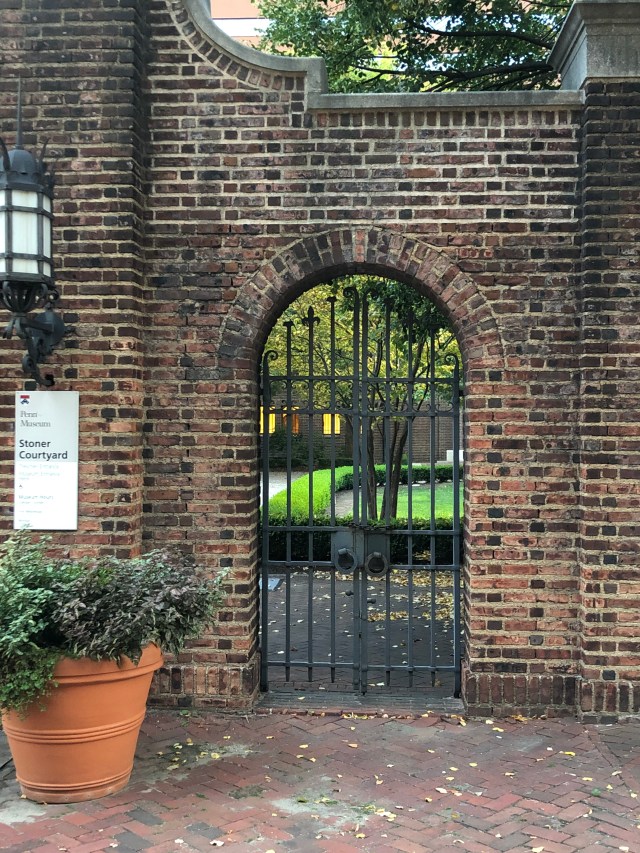
Archways of North America


Top: National Cathedral, Washington, DC
Middle: Rollins College, Orlando, FL
Bottom: University of Pennsylvania, Philadelphia, PA
Photo credits: F. E. Guerra-Pujol
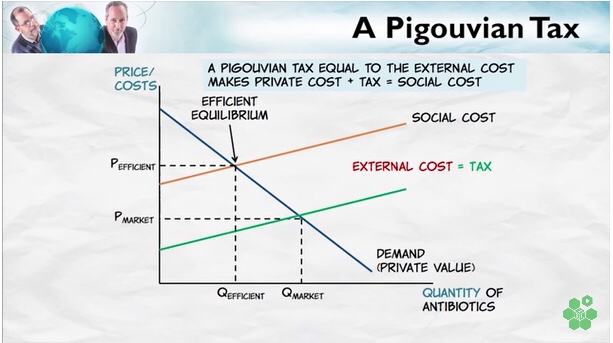
The Problem with Pigou
Our friend and colleague John Nye, who teaches economics at George Mason, has published a powerful critique of so many proposals calling for Pigovian taxes, i.e. taxes designed to reduce harmful externalities such as carbon emissions. You can read Professor Nye’s essay here. Below is an excerpt:
Even if we insisted on a Pigovian tax as a precautionary measure, it would make sense only if it replaced all preexisting subsidies, taxes, and regulations rather than being added on top of existing arrangements. Moreover, a truly scientific proposal would also make clear under what circumstances the Pigou tax should be lowered as well as raised.

The problem of time cost
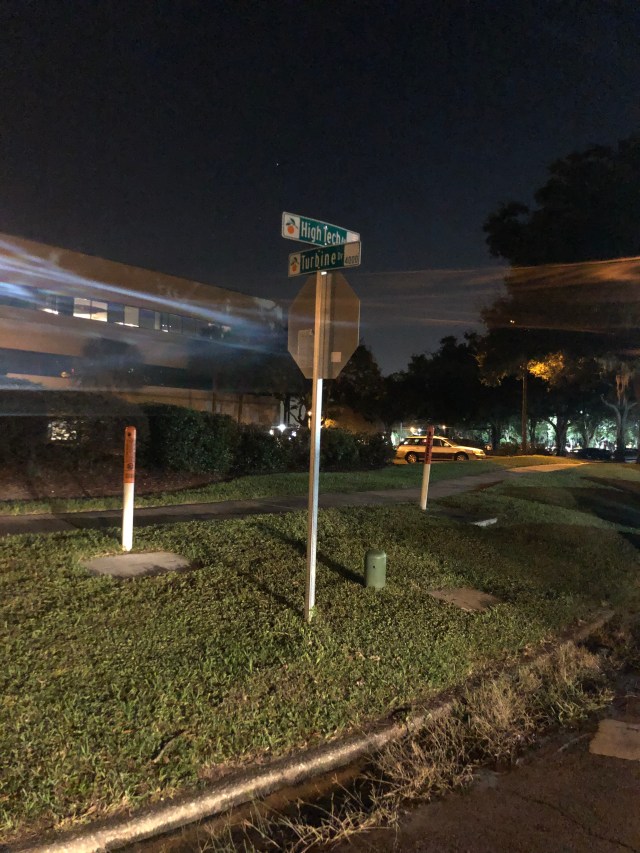
With apologies to the late Ronald Coase. I teach at UCF (Go Knights!) but live across town, too far to bike to campus, so to avoid paying for on-campus parking, here is where I usually park off-campus:

If the weather is nice, I will then walk to campus; otherwise, I will take the #14 shuttle into the university. Either way, this arrangement “wastes” about an hour (roundtrip) of my time!
Solving the breaking bad problem (part 4)
I presented a common law solution to the so-called “breaking bad problem” in my previous post, where I drew a distinction between void and voidable illicit promises, depending on the location of the harm generated by such promises. Here, I shall illustrate my solution by returning to some of my previous examples of illicit promises: a promise to obstruct justice and usurious payday loans.
First, let’s revisit my modified prisoner’s dilemma in which the prisoners have previously promised to each other to obstruct justice in the event they are apprehended by the police or asked to turn State’s evidence. One might be tempted to reason that such a promise constitutes an illegal obstruction of justice and should thus be void ab initio from both a legal and moral perspective. Under my proposed framework, however, this conclusion will not always hold, for whether there is an external harm in this modified prisoner’s dilemma example will depend, at a minimum, on whether the suspects are, in fact, guilty of committing the crimes they are being accused of. For instance, what if the police are corrupt and are trying to frame one or both of the prisoners for a crime he or they did not commit? Accordingly, the moral status of a promise to obstruct justice–i.e. whether such a promise is illicit or “bad” in the moral sense–also depends on the guilt or innocence of the prisoners. If they are innocent, such a promise would be morally binding under my proposed framework. (Instead of creating a harm, the prisoners are trying to avoid harm–i.e., being framed for a crime they did not commit.)
Next, what about the usurious payday loans in Buckeye Check Cashing, Inc. v. Cardegna? Does a borrower have a moral duty to repay loans or cash advances that turn out to be usurious and thus illegal under state law? As I see it, there are two sets of internal harms in the Buckeye case: (i) excessive service fees charged by the lender, which harms the borrower, and (ii) the possibility of default by the borrower, which harms the lender. Moreover, these internal harms appear to “reciprocal in nature”–to borrow the words of one of my intellectual heroes, the late English economist Ronald Coase–for the borrower is harmed to the extent he is being charged usurious interest rates, but at the same time, the lender will be harmed if its borrowers do not repay their advances. But regardless of the reciprocal nature of these harms, the harms are internal, so the borrower’s promise to repay is voidable: the borrower may thus decide whether to repay or rescind the interest or service fee on his loans. On this view, providing a usurious payday loan is like contracting with a minor: the minor may rescind the contract until he or she reaches the age of minority. Also, just as the minor who rescinds a contract is required to return whatever consideration he or she received from the other party, so to would the borrower of a usurious payday loan still be required to repay the principal of the loan, but my larger point is this: when an illicit promise produces an internal harm, the promise is morally voidable–the harmed party may elect whether to keep his promise or not.
To sum up, the main advantage of my common law approach to illicit promises is that we do not need to measure the gravity of the harm or determine whether the harm caused by an illicit promise is malum in se or merely malum prohibitum. What matters is the location of the harm. But we still need to figure out which harms should count as harms. For example, if I order a chicken sandwich at a restaurant, doesn’t my order produce an external harm, i.e. the harm to the chicken that was used to make my sandwich? As such, is my restaurant order an illicit (immoral) one? What about the supply contract between the restaurant chain and the poultry supplier? My tentative reply to the problem of defining harms is this: we must be careful to distinguish between the legality of illicit promises and the morality of such promises. On my theory, a promise that generates an external harm is void from a moral perspective, so even though the poultry supply contract might be legally enforceable as a matter of law, the legal status of such an arrangement does not answer the moral question–whether the killing of animals for food consumption is moral or not. One of the virtues of my approach is that it shows just how ubiquitous illicit promises are. If my approach makes us uncomfortable, if it makes us rethink everyday practices and promises, that is a feature, not a bug.