We will be blogging somewhat sporadically, if at all, this week and next as we will be spending our spring break visiting family and friends in wintry New York City and then in sunny Jamaica. Hasta pronto …
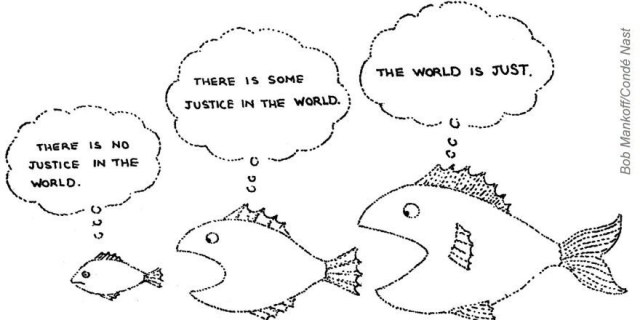
When does cheating pay?
Answer: When the probability of getting caught, let alone punished, is small. Consider violent crime, by way of example. Our friend and colleague Alex Tabarrok does the probabilistic math here: “In 2017 … victims reported 2,000,990 serious violent crimes [e.g. rape, robbery, or aggravated assault]. In the same year there were approximately 446,510 arrests for these crimes (crime definitions may not line up exactly). In other words, the chance of being arrested for a serious violent crime was only 22%. Data on convictions are harder to obtain but convictions are far fewer than arrests. In 2006 (most up-to-date data I could find but surely lower today) there were 175,500 convictions for serious violent crimes. Thus, considerably fewer than 10% of violent crimes result in a conviction (175,500/2,000,990 = 8.7%). Put differently, the expected time served for a serious violent crime is less than 14 months….”

Sentence diagrams of the opening lines of three famous novels


Spring Break Reading
There is only one item on our spring break reading list: David Foster Wallace‘s Infinite Jest. We picked up a paperback copy of this massive tome for $1 two Fridays ago at our university bookstore and finally cracked open DFW’s beautiful magnum opus. We’re already on page 367 and footnote 141 of this colossal monster of a novel, so we still have over 700 pages and 250 footnotes to go …


Spring break blogging hiatus
We will be blogging somewhat sporadically, if at all, this week and next as we will be spending our spring break visiting family and friends in wintry New York City and then in sunny Jamaica. Hasta pronto …
The old man as book sculpture
The last entry in this visual survey of “The Old Man and the Sea” is not a cartoon or a painting; it is a small metal three-dimensional book sculpture manufactured by Fascinations, Inc., a toy company located in Seattle, Washington. This company manufactures do-it-yourself models containing parts cut from 4-inch square steel sheets under the “Metal Earth” trade name. Their “Old Man & the Sea Metal Earth” model, which you can purchase here via Amazon, is a three-dimensional sculpture that simulates the motion of the waves and depicts the struggle between Santiago and the giant marlin. The sculpture also reproduces text from Hemingway’s novella. The front side of the packaging of the OMAS book sculpture is pictured below:

This small metal sculpture is based, in turn, on original “book art” created by the Pennsylvania-based artist Jodi Harvey-Brown, who alters old books and gives them a second life by making beautiful sculptures out of their pages. Below is a picture of Ms. Harvey-Brown’s book art for “The Old Man and the Sea”:

Our last few blog posts have surveyed a wide variety of artistic visualizations of “The Old Man and the Sea,” including Noel Sickle’s two-tone illustrations for the original publication of Hemingway’s novella in Life magazine, Raymond Sheppard and C. F. Tunnicliffe’s beautiful black-and-white drawings and cover art for the first Reprint Society London edition of Hemingway’s masterpiece, Guido Scala’s full color comic book, Corban Wilkin’s graphic novel, and Jodi Harvey-Brown’s original book sculpture (pictured above), among many others. The timeless characters, events, and themes in “The Old Man and the Sea” deserve no less.
The old man as graphic novel
Thus far, we have seen a wide variety of visualizations of Hemingway’s timeless novella “The Old Man and the Sea.” The artist Corban Wilkin, however, retells the story of “The Old Man and the Sea” in graphic form. (You can check out Wilkin’s beautiful graphic novel for yourself here.) By my count, his graphic novel compresses Hemingway’s story into 80 panels and just 385 words, or in Wilkin’s own words, “I compressed 100 pages of text down into 22 pages of comics ….” By way of comparison, Hemingway’s novella contains 26,601 words. See, e.g., Epstein, 2016. Wilkin compares Hemingway’s story to a “fable” and notes that a virtue of his graphic and textual compression of the story is to “allow[] the strength of the plot to shine through in its most distilled form.” Wilkin begins his version of the story with Santiago’s dream sequence. In particular, the first page of his graphic novel (pictured below) consists of a single full-page panel that pictures a large fishing boat at sea along with the words “He no longer dreamed of storms.” Page 2 contains a close-up of the fishing boat along with the words “nor of women” on top and the words “nor of great occurrences” on the bottom. A young fisherman is standing at the bow of the ship. Page 3 (five panels) then concludes this dream sequence with the words “nor of great fish” on the top panel, “nor of great feats of strength” in the middle panel, and the words “nor of his wife” on the bottom left panel. The last two panels on the bottom right side of the page state, “He only dreamed of places now/and of the lions on the beach.”

Page 4 (five panels) of Wilkin’s graphic novel shows the old man urinating outside his shack and going over to wake Manolin, and page 5 (four panels) then pictures them drinking coffee and contains some dialogue between them. Page 6 (seven panels) shows Santiago rowing out to sea. The top panel on page 7 displays a flying fish in the foreground and Santiago and his skiff in the background, while three smaller panels on the bottom of this page contain a sequence showing a close-up of the pull on one of his fishing lines. (In Hemingway’s story, the old man runs four separate fishing lines before combining them into a single line.) Next, pages 8-9, which contain ten panels of various shapes and angles, and pages 10-11, which contain a large central circular panel along with ten additional panels along the outer circumference of the circle, depict the first stages of Santiago’s long ordeal. Page 12, a full-page panel, then pictures the giant marlin flying above water, while page 13, another full-page panel, pictures Santiago in three action poses struggling with the fishing line across his shoulders. Neither page contains a single word. Pages 14-15 (seven panels) shows the giant marlin tied up along the skiff. Here (pp. 14-15), Wilkin breaks up Santiago’s melancholic observation in the novel “I am only better than him [the giant marlin] through trickery and he meant me no harm” into two separate sentences. The bottom right panel on page 14 contains the trenchant words, “I am only better than you through trickery.” The bottom left panel on page 15, the poignant words: “He meant me no harm.”
Pages 16-17 (nine panels) of Wilkin’s graphic novel portray Santiago’s futile battle with the sharks, while pages 18-19 depict Santiago’s return voyage. Although these two pages (pp. 18-19) contain 11 separate panels, just five words appear here: “I went out too far.” Page 20 contains four panels of dialogue between Manolin and Santiago, and page 21 (one full-page panel) contains an aerial view of Santiago and Manolin from afar along with the carcass of the marlin washed up against the tide. The last page (p. 22) zooms in on the carcass along with the hopeful words: “But we will fish together now, for we still have much to learn.” In Hemingway’s story, these words are uttered by Manolin: “we will fish together now, for I still have much to learn.” In Wilkin’s version of the story, Wilkin replaces the singular “I” in the second clause of the sentence with the plural “we,” so the identity of the speaker is ambiguous.
The old man as a ‘Bob the Angry Flower’ webcomic
The old man of Hemingway’s novella also appears in a one-page webcomic titled “Bob’s Classic Literature Sequels: The Old Man and the Sea 2.” This webcomic was illustrated by Stephen Notley (b. 1970), a contemporary Canadian cartoonist and the creator of the “Bob the Angry Flower” comic strip. (As an aside, Notley is currently based in Seattle, Washington, and he usually posts a new “Bob the Angry Flower” cartoon to his website http://www.angryflower.com every Friday. Check out his bio here via the Lambiek Comiclopedia.)
Notley’s “Old Man and the Sea 2” contains eight panels and features two characters: an old, dignified, and silent Santiago and Bob the Angry Flower (pictured below), who does all the talking. The webcomic begins with the two characters standing aboard the bow of an enormous ocean liner in the middle of the ocean. Bob the Angry Flower has his arm around Santiago in the first panel and begins the comic thus: “So when I heard about your story I just HAD to come!” Bob then summarizes Santiago’s ordeal and then retells the story of “The Old Man and the Sea” in the second and third panels: “… you went out on the sea, made a supreme effort of mental and physical will, and somehow caught the biggest marlin EVER! AND THEN THE SHARKS ATE IT!!!” (Notes: The reader may access this webcomic here, and all emphasis are in the original.)
After sharing his reaction to Santiago’s ordeal (“I HATE THOSE SHARKS SO MUCH!!!”), Bob refers to Santiago by name (“Well don’t worry Santiago”) and reassures him in the fourth panel that “Bob’s gonna make it all better!” How? Bob the Angry Flower tells Santiago that “this boat’s got every shark-lasering gadget ever made!” in the fourth panel and adds that “we’ve located a marlin four times bigger than the one you caught” in the fifth panel. (All emphasis above in the original.) All Santiago has to do to catch the massive marlin and fend off any possible sharks is to press a button. Bob then urges Santiago in the penultimate panel to “Go for it, man!!! Win it all back!!!” The last panel contains a close-up of Santiago against a black backdrop. Although Stephen Notley’s sequel to OMAS contains only eight panels, it nevertheless captures the quiet dignity and tenacious spirit of Hemingway’s Santiago. He utters not a single word and refuses to hit the button.
The old man as a Guido Scala comic book
The Walt Disney Company’s parody “Scrooge McDuck and the Old Man and the Sea” is further proof there is only step from the sublime to the ridiculous. This Disney comic book (see cover art below), which initially appeared in 1987, contains 22 pages and over 100 panels of illustrations, is set in a fictional island called Tuba, and features such classic Disney characters as Donald Duck, his nephews, and their wealthy uncle Scrooge McDuck as well as a new character named Acciuga. This comic book was written and illustrated by the great Italian cartoon artist Guido Scala (b. 1936; d. 2001), one of Disney’s most famous cartoon artists. (Scala’s drew and wrote over 460 comics for Disney during a span of 35 years; here is a short bio.) Scala’s cartoon version of “Old Man and the Sea” is only loosely based on Hemingway’s Cuban fisherman story. Nevertheless, although Scala’s story bears little similarity to Hemingway’s novella, both stories share one significant feature in common: tourists.

Tourists play a large role in Guido Scala’s comic book story, which begins with the character Acciuga (pictured below), who is having trouble selling toys to the tourists who visit the island.

After a flash of inspiration, Acciuga comes up with a new idea: he decides to organize a fishing competition on the main pier of Tuba. The tourists flock to his fishing competition, but then flee the island in droves when a large shark crashes into the pier and scares them away. That’s when Acciuga calls Scrooge McDuck to help him capture the shark and bring back the tourists to Tuba. Here is where Scala’s story takes a Hemingwayesque turn. Scrooge McDuck walks to the edge of the pier and captures the shark with a piece of rope but then is dragged far out to sea by the shark. Donald Duck, his nephews, and Acciuga go aboard a small skiff in search of Scrooge McDuck. They find him amid the ruins of an old lighthouse and then set sail for Tuba. On the return voyage the skiff capsizes during a storm but the shark rescues them and returns them to Tuba. The shark is tamed and becomes a major tourist attraction on the Island of Tuba.
By comparison, tourists play a small but significant role at the end of Hemingway’s story. After Santiago has returned to the village with the carcass of his great marlin blue, a tourist couple, patrons at La Terraza, mistake the skeleton of Santiago’s marlin for that of a shark. They thus confuse the noble prey with a treacherous predator. The tourists in Hemingway’s novella, sipping cocktails and enjoying the sea breeze and sunshine of Cuba, thus represent corruption, ignorance, and. They are oblivious to Santiago’s hard life and his heroic three-day ordeal.