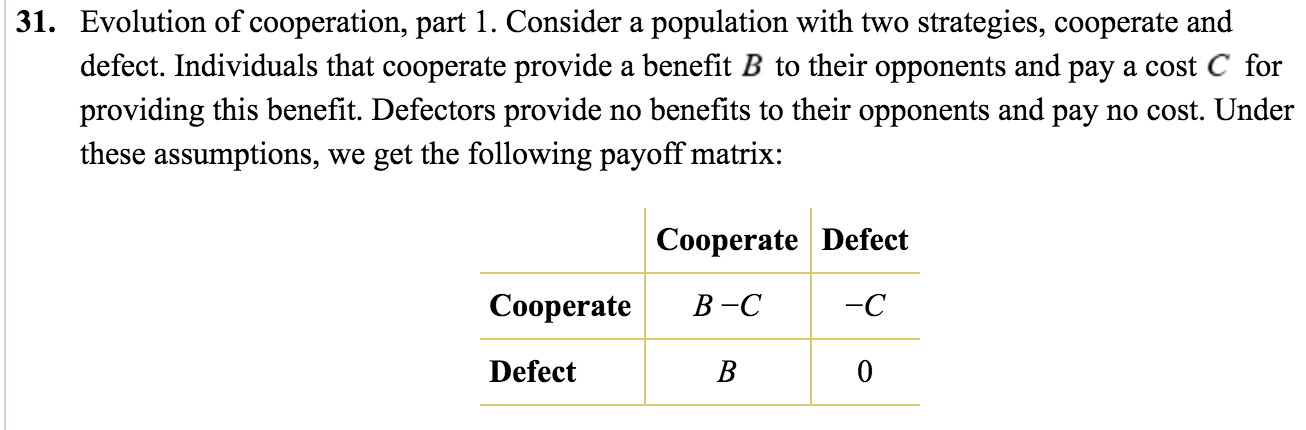
In my previous post I summarized a popular game theory explanation of group cooperation: collective action. Or in the words of one notable game theorist, “the players beforehand set up a contract, or hire a sheriff, or make a kind of institution whose aim it is to punish [free riders and defectors].” In other words, all we need to do is to create some type of enforcement mechanism that rewards cooperators or punishes defectors. But how? Here, I will identify two big problems with this particular theory of group cooperation:
- The regress problem. This first problem is that such an external enforcement mechanism will itself be subject to free rider and defection problems at both the formation and operation stages of the mechanism. Like I mentioned in my previous post, there is a chicken-and-egg problem here: we need an enforcement mechanism to promote cooperation, but at the same time, we need cooperation to have a working enforcement mechanism. So, how does law get started? Take the example of hiring a sheriff. Who pays the sheriff’s salary? The sheriff himself is a public good, so from a purely theoretical perspective, the same free rider problems that bedevil the provision of ordinary public goods should also be present when people are trying ex ante to set up the enforcement mechanism.
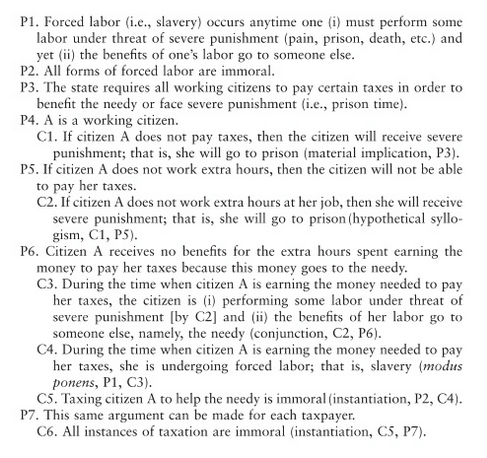
- The forced rider problem. The other problem with game theory models of group cooperation is a moral one: why should anyone be forced or compelled to pay for the sheriff’s salary? Yes, free riders and defectors can cause cooperation to unravel, but morally speaking, don’t people have a natural right to opt-out of collective arrangements that they don’t like or disagree with? Even if you reject natural law, how should we deal with “conscientious objectors” like Quakers and others minority groups who want to follow their own rules or establish their own separate enclaves?
Notice too that the forced rider and regress problems identified above are actually closely related. How? Because the existence of forced riders implies the possibility of conflict among competing groups! When conflicts occur between groups (not just inside them), how do we resolve such inter-group conflicts without recourse to a higher-level or meta-enforcement mechanism, i.e. without avoiding the regress problem identified above? Stated in game theory terms, even when the benefits of cooperation exceed the costs, defection might still be the best strategy so long as there are a sufficient number of suckers who are willing to pay the costs of cooperation. Could the solution reside in an emotive or Humean theory of natural law? I shall sketch such a solution in my next post.