Friedman’s critique of CSR (part 3)

Now that we have brushed off the outlandish first paragraph of Professor Friedman’s classic essay on business ethics (see our previous post), let’s turn to the second paragraph. Unlike the ad hominem nature of the first paragraph, this second paragraph does contain some strong opening salvos against corporate social responsibility or CSR.  Continue reading

Posted in Uncategorized | 4 Comments

Friedman on business ethics (part 2)

Now that we have introduced Milton Friedman’s classic essay on business ethics (see our previous post), let’s jump right in, shall we? Professor Friedman’s first paragraph is by far his weakest one, for it contains some outlandish and sensational claims. In particular, he begins his 1970 essay by claiming that proponents of corporate citizenship or corporate social responsibility (CSR) are “preaching pure and unadulterated socialism” and that such CSR proponents are “unwitting puppets of intellectual forces that have been undermining the basis of a free society these past decades.”

Such claims, however, are irresponsible, if not just plain wrong! After all, a socialist system is one in which business firms are strictly regulated or owned by the government outright, and as I noted in my previous work, the concept of a “free society” is a fuzzy one, since all societies have rules, and since such rules by definition impose limits on our freedom to do as we please. Nevertheless, in fairness to Friedman, we should put his essay into its proper historical context. At the time he published his essay in 1970 (almost fifty years ago!), the world was divided into two great ideological camps – the free world (led by the USA) and the socialist bloc (led by the USSR) – and both sides were engaged in a fierce and worldwide struggle of heroic proportions. The idea of free markets was under siege and in retreat across the globe. In fact, within a year after publishing his essay, President Richard Nixon, a Republican (!), would issue a draconian executive order (Number 11615) on 13 August 1971, imposing a 90-day freeze on wages and prices, the first time the U.S. government had enacted wage and price controls since World War II!

Given this historical context, it’s possible that Milton Friedman made his melodramatic claims about CSR simply to grab the attention of his readers. That said, however, Friedman did himself no favors by equating CSR with socialism and as incompatible with freedom. As a result, we are going to overlook this first paragraph and focus instead on the remainder of his essay in our next few blog posts …

Related image
Posted in Uncategorized | 3 Comments

Review of Milton Friedman (part 1)

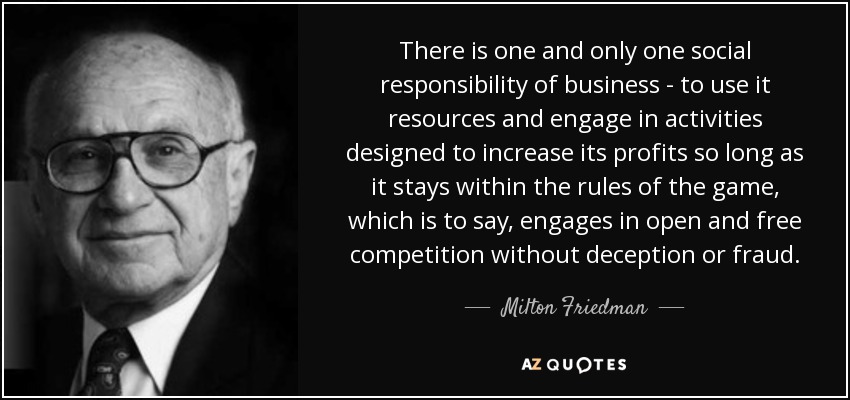
Milton Friedman (1912-2006) made one of the most provocative arguments on the role of business firms in society almost 50 years ago. In a now-famous essay published on 13 September 1970 in The New York Times Magazine, Professor Friedman (pictured below) argued that a firm’s sole purpose is to maximize its profits. His short (3000-word) essay expands on a brief digression he made in his 1962 book Capitalism and Freedom (Friedman, 1962, pp. 133-136), where the late economist wrote: “There is one and only one social responsibility of business: to use its resources and engage in activities designed to increase its profits so long as it stays within the rules of the game, which is to say, engages in open and free competition without deception or fraud.”

Is Professor Friedman’s “Smithian” view of business ethics correct? In light of such recent events as the introduction by Senator Elizabeth Warren of “The Accountable Capitalism Act” (S. 3348) as well as the recent amendment (SB826) to California’s General Corporation Law requiring women to be included on companies’ boards of directors, today is an ideal moment to revisit Friedman’s classic essay and explore anew the strengths and weaknesses of his arguments. Although I have been highly critical of Professor Friedman’s normative and empirical assertions in Capitalism and Freedom in some of my previous work, I will review Friedman’s 1970 essay and defend his profit-maximization theory of business ethics in my upcoming posts.

Image result for There is one and only one social responsibility of business: to use its resources and engage in activities designed to increase its profits so long as it stays within the rules of the game, which is to say, engages in open and free competition without deception or fraud.

Posted in Uncategorized | 5 Comments

Sick day

Although there are no “sick days” on the Internet, we’re going to take the day off as we’re feeling under the weather today …

Posted in Uncategorized | Leave a comment

Oreo Cameo #14

That is the title of the “cookie art” pictured below. Check out Judith G. Klausner’s entire collection of “Oreo Cameos” here. (Hat tip: Cliff Pickover.)

Posted in Uncategorized | Leave a comment

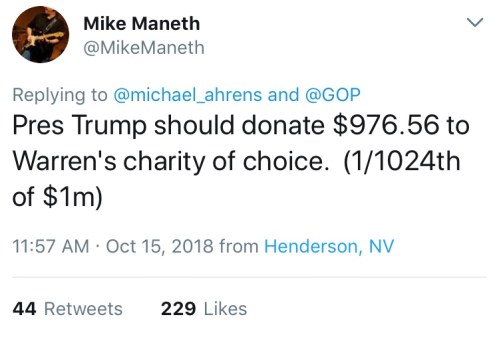
Ok, Trump, pay up!

Just kidding! But we love the ingenious idea proposed by Mike Maneth (see above). Yes, President Donald J. Trump promised at a campaign rally to pay $1 million to a charity of Senator Elizabeth Warren’s choice if she could prove her Native American ancestry, but now, based on a recent DNA test, Senator Warren claims to have a remote Indian ancestor dating back many generations ago. (Six to ten generations ago, to be more precise. The full DNA report, via The Boston Globe, is available here.) To put this immense generational range into perspective, one has over 1000 ancestors if one goes back ten generations, or as The Globe itself notes, the Senator is at most between 1/64th and 1/1,024th Native American!

Posted in Uncategorized | 4 Comments

Hemingway’s home library

Emily Temple, a writer and senior editor at Lit Hub, describes 20 different rooms where many famous books were written. She includes Ernest Hemingway’s library (pictured below) in Finca Vigía, his home outside Havana, Cuba, where “he wrote seven books, including For whom the bell tolls, A moveable feast, and The old man and the sea, among others.” But Ms Temple mistakenly notes that Hemingway “wrote in the library, which Roxana Robinson describes as ‘a long, pleasant, high-ceilinged room, lined with tall bookcases. In front of the windows is The Desk, huge and magisterial, about ten feet long and three feet wide, and curved like a boomerang. It’s made of dark polished wood, with carved supports at each end. Hemingway sat in the center, the ends curving forward.'” In reality, however, Hemingway did not use “The Desk” to practice his craft. Instead, he wrote in an adjacent room, which was also full of books, and he wrote standing up.

Credit: Jana Crowne

Posted in Uncategorized | 1 Comment

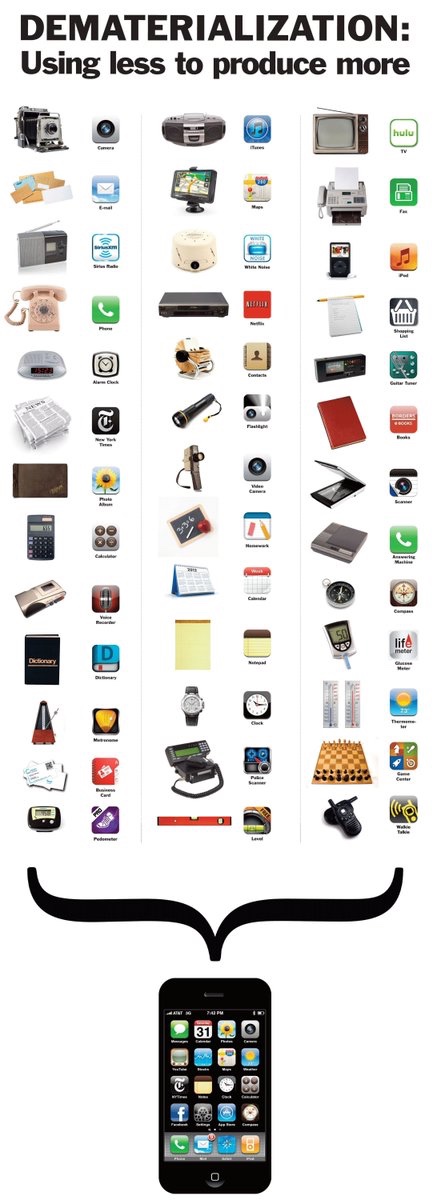
Digital Swiss Army Knife

Source: humanprogress.org

Posted in Uncategorized | 3 Comments

“On nonrecoverable deletion in syntax”

That is the title of the shortest scholarly paper in the annals of academia. The entire paper, which was “published” in 1972, is pictured in the blank space below! (More details here; hat tip: @pickover.)

Say what?

Posted in Uncategorized | Leave a comment

Ipse dixit podcast update

Update (10/11): We have now joined the illustrious group of scholars on Professor Brian Frye’s Ipse Dixit podcast! You can listen to me talk with Prof Frye about “Goedel’s Loopholehere, where we revisit the story about mathematician Kurt Goedel’s discovery of a logical contradiction in the U.S. Constitution.

F. E. Guerra-Pujol's avatarprior probability

The phrase ipse dixit is Latin for “he said it himself” and refers to an assertion without proof or a dogmatic expression of mere opinion. (Here is the Wikipedia entry for ipse dixit.) This phrase now also refers to a new podcast series hosted by one of our favorite legal scholars Brian O. Frye, who teaches at the University of Kentucky. (FYI: the graceful logo of the podcast is pictured below. We have previously blogged about Professor Frye’s fascinating work on the Zapruder film (see here) and his revisionist history of the facts in Erie v. Tompkins (see here); in addition, here is a master link to his scholarship.) In his podcast Professor Frye interviews sundry legal scholars on a wide variety of topics, so check out the podcast at your leisure. By way of example, Professor Frye has already interviewed Eric Segall on “Originalism…

View original post 48 more words

Posted in Uncategorized | Leave a comment