Outer space cake

Source: reddit (hat tip: @pickover)

Posted in Uncategorized | Leave a comment

Notes on Pascal’s Wager

We have long been fascinated by a philosophical problem referred to as “Pascal’s Wager” (see payoff table below). By way of example, we blogged about this problem previously here. Today, as a public service to our fellow devotees of this problem, we have assembled the following set of insightful and original blog posts on Pascal’s famous wager:

1. “The problem at the heart of Pascal’s wager” by our friend and colleague Paul Gowder, via Overcoming Bias. Gowder draws a distinction between belief and action. Here is an excerpt: “This is a problem that’s very difficult, and I don’t purport to offer a solution. But we should think of it as a serious line of objection to the Pascal’s wager type of argument: if consequences are simply inadmissible in belief-formation processes, Pascal’s argument fails on the spot.”

2. “Where does Pascal’s wager fail?” by a person (or bot?) using the pseudonym “Utilitarian“, also via Overcoming Bias. The author of this post, whoever they are, concludes that Pascal’s wager is too computationally difficult to solve: “With vast amounts of data to process and an enormous space of possible religious hypotheses to search, Pascal’s wager (which is just an optimization problem) is computationally infeasible, especially for human minds.”

3. “Pascal’s mugging: tiny probabilities of vast utilities” by Eliezer Yudkowsky (@ESYudkowsky), via Less Wrong. Yudkowsky reformulates the wager as a threat problem: “Now suppose someone comes to [you] and says, ‘Give me five dollars, or I’ll use my magic powers from outside the Matrix to run a Turing machine that simulates and kills 3^^^^3 people.'” So, should you pay the five dollars?

Source: William Lane Craig

Posted in Uncategorized | 5 Comments

Notes on Erie v. Tompkins

Erie Railroad Co. v. Tompkins, decided in 1938, is required reading in every U.S. law school. In Erie, the U.S. Supreme Court concluded that the federal courts do not have the judicial power to create “general federal common law” when adjudicating State law claims. (See historical marker pictured below.) Over the summer, 80 years after Erie was decided, we stumbled upon three scholarly papers (•) exploring different aspects of this landmark case:

  1. Finding Law” by Stephen A. Sachs. Professor Sachs carefully questions two fundamental assumptions the Supreme Court relied on when it decided Erie, one regarding the ultimate source of law; the other regarding judges’ ability to find law when they decide close cases. (Note: we wrote up a three-part review of Sachs’s paper on this blog on 13-15 July.)
  2. Benjamin Cardozo and the Death of the Common Law” by John C. P. Goldberg. Among other things, Professor Goldberg revisits Justice Cardozo’s pivotal role in the early stages of the Erie case (before the Supreme Court agreed to hear the case) and explores some of the unintended consequences of the Erie decision. (Hat tip: Anthony Gaughan, via The Faculty Lounge.)
  3. The Ballad of Harry James Tompkins” by our friend and colleague Brian Frye. Professor Frye’s beautiful paper contains actual trial testimony as well as several photographs of the scene of the accident that were introduced into evidence at the trial. On the basis of this evidence, he not only questions the standard account of the facts in Erie; he also makes a compelling case that we’ve gotten the facts of Erie all wrong. According to Frye, the plaintiff in this case almost certainly was not walking innocently along a footpath when he was injured by an oncoming train. Instead, he was most likely attempting to jump onto the train as a trespasser. (Double hat tip: Anthony Gaughan, again via TFL.)
  • All three drafts were posted on SSRN (Social Science Research Network) earlier this year: Sachs’s in March; Goldberg’s in May; Frye’s in July.
  • Related image

    Source: Frye (2018), p. 32.

    Posted in Uncategorized | 1 Comment

    Geographical distribution of Spanish-speaking populations

    Hat tip: u/AddictedPlanet, via Reddit

    Posted in Uncategorized | Leave a comment

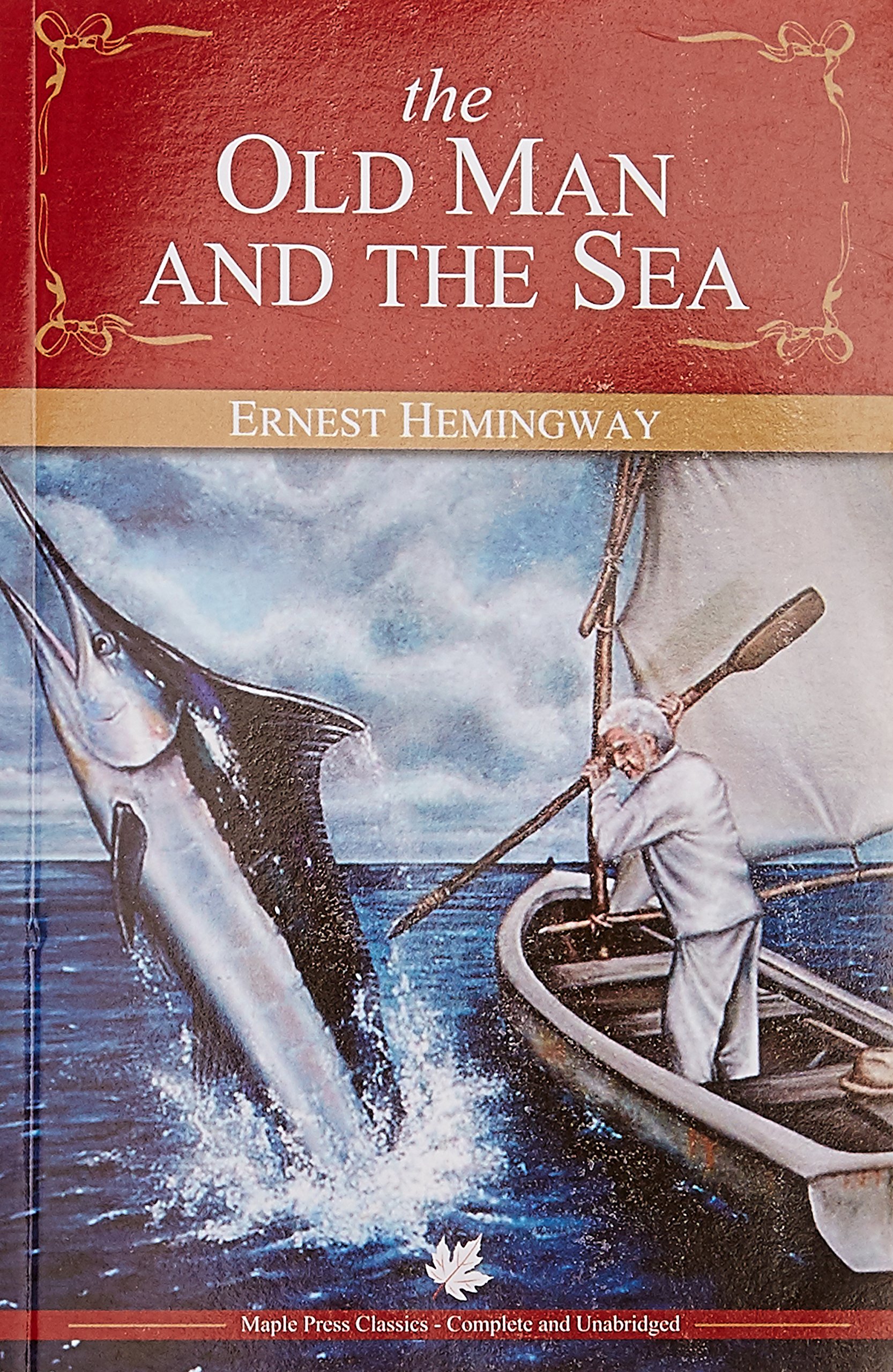
    The old man and the Bayesian sea

    That is the title of our most recent work in progress, available here via SSRN, and here is the abstract: “The Old Man and the Sea is a timeless classic. One of Ernest Hemingway’s most famous works, it tells the story of Santiago–a poor, proud, and aging Cuban fisherman–and his epic solitary battle with a giant marlin in the Gulf Stream. In a previous paper, we showed that the character of Santiago in Ernest Hemingway’s masterpiece was most likely a composite of three different Cuban fishermen. Here, we shall enter the littoral world of the story itself and explore the logic of Santiago’s ‘decision calculus’–i.e. his fateful decision to set sail after going 84 days without catching a single fish–through the lens of subjective probability. For in addition to its aesthetic, literary, and moral qualities, Hemingway’s beautiful novella may also offer a hidden tribute to subjective or Bayesian probability.”

    Image result for old man and the sea
    Posted in Uncategorized | 1 Comment

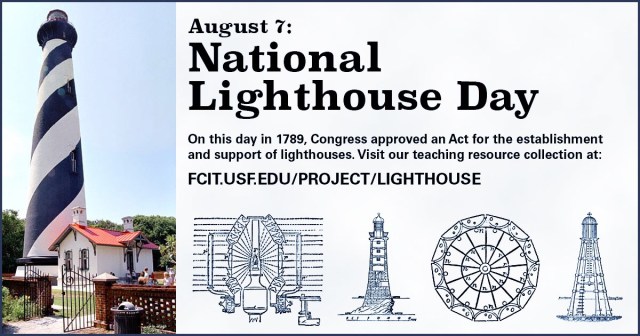
    Happy Lighthouse Day!

    Today should be a holiday in all our coastal States! Click on the image for more details.

    Posted in Uncategorized | Leave a comment

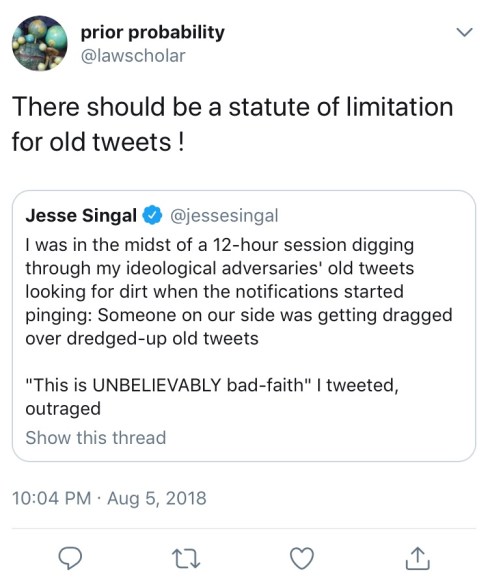
    A modest proposal (Twitter edition)

    Hat tip: Jesse Singal

    Posted in Uncategorized | 2 Comments

    Hiding in plain sight

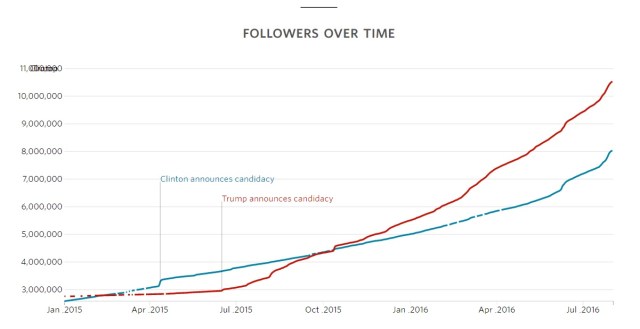
    Could the number of followers a candidate has on Twitter provide a better prediction of the outcome of an election than traditional polls?

    Source: WSJ (hat tip: Leonard Baynes)

    Posted in Uncategorized | 2 Comments

    The answer is NO!

    Happy Birthday, Adys! (hat tip: @KimKrawiec)

    Posted in Uncategorized | 2 Comments

    Conclusion of ASU

    It’s time to conclude our review of Chapter 10, the last chapter of Anarchy, State, and Utopia. Nozick closes this chapter by restating his original vision of the dual nature of his conception of utopia (p. 332): “There is the framework of utopia, and there are the particular communities within the framework.” In addition, Nozick asserts that his vision “totally rejects planning in detail [and] in advance, one community in which everyone is to live …” (ibid.). While we certainly sympathize with Nozick’s libertarian vision, isn’t it somewhat disingenuous–to not say intellectually dishonest–for him to reject some amount of planning, since by his own admission (see our previous post), a “central authority” will still be necessary to police and protect the utopian framework? After all, once we introduce a state (or “central authority,” if for some silly reason you still prefer Nozick’s euphemism), then some level of design and planning will be necessary to ensure that Nozick’s minimal state is strong enough to do its job of resolving disputes and policing exit rights, but not so strong as to subvert the libertarian character of the framework. (In other words: Nozick, get back to us after you have finished reading Federalist Paper #51!)

    But wait, there’s more! Nozick also restates his opening question (p. 333): “Recall now the question with which this chapter began. Is not the minimal state, the framework for utopia, an inspiring vision?” Alas, why not restate his question thus: Is not Rawls’s original position, or Lenin’s system of soviet socialist republics, an inspiring vision, at least on paper? Simply put, I could give two hoots whether Nozick’s vision is an inspiring one or not. What I do care about is whether his utopian framework is logically coherent and whether it will work out in practice. (Or to be more precise, what I care about is the probability whether it will work out or not.) On that score, however, judging by his own libertarian standards, Nozick fails miserably. Why? Because his framework will require a strong state or “central authority” to enforce contract and property rights and keep the peace. So like Maxine Nightingale’s vintage song (see below), 334 pages later we are right back where we started …

    Related image
    Posted in Uncategorized | 2 Comments