Shark pancakes

Image result for shark pancakes

Yes, there’s a blog for pancakes! Visit: saipancakes.com.

Posted in Uncategorized | 2 Comments

May Readings

Updated on 5/10: With summer recess around the corner, here is a partial list of what we will be reading this month (we say “partial” because we’re always reading a mix of new and old things):

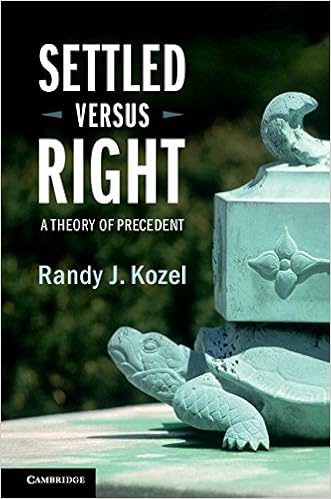
1. Randy Kozel’s new book on the doctrine of stare decisis in constitutional cases: Settled versus Right (pictured below). We will be posting our review of this book on this blog in the days ahead. (Hat tip to Professor Larry Solum for recommending this excellent book to us.)

2. Mark Edelman’s recent law review article “Standing to Kneel” on the right of NFL players to protest the national anthem. Since we (tentatively) agree with President Trump that kneeling during the national anthem is disgraceful, we want to read an opposing viewpoint and then update our priors accordingly. (Disclaimer: Professor Edelman is not only an expert on sports law; he is also a friend and a close colleague, so we can’t wait to read his piece.)

3. Robert Schlaifer’s classic work on “Probability and Statistics for Business Decisions,” published in 1959. We kept seeing references to Dr Schlaifer’s textbook in the works of the late great Jimmie Savage, so we purchased a first edition of Schlaifer’s book and began reading it last summer. Since our mission is to make the law more Bayesian, this tome is a must-read for us.

4. The second edition of Deirdre McCloskey’s classic work on “Economical Writing.” Hat tip to Maria Bach (@mvsbach) for bringing this short reference book to our attention via Twitter. McCloskey is one our favorite three economists (along with Ronald Coase and Tom Schelling), so this is a must-read for us.

5. “The Slow Professor: Challenging the Culture of Speed in the Academy” by Maggie Berg and Barbara K. Seeber. This short book offers a damning critique of the existing “time management” literature, so we could not resist adding this work to our growing list of May readings.

Image result for settled vs right
Posted in Uncategorized | Leave a comment

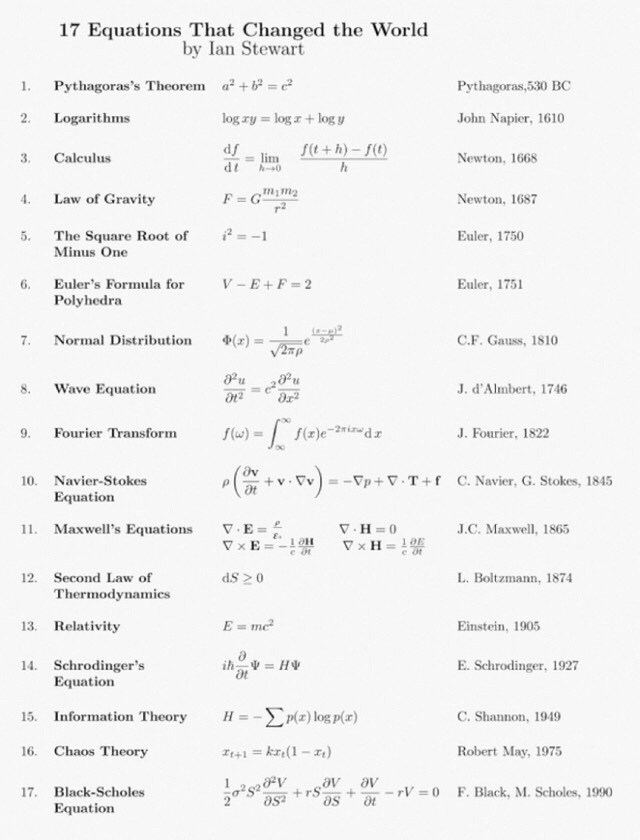
18 equations that changed how we see our world

#18. Bayes Theorem: Continue reading

Posted in Uncategorized | Leave a comment

Peace Dividend (Korean Railway Edition)

Hat tip: u/gothicfancyman (via Reddit)

Posted in Uncategorized | Leave a comment

Revisiting Wood v. Lucy

In this post, we conclude our review of Part I of “Framing Contract Law” with Victor Goldberg’s expert analysis of Wood v. Lucy, one of the most famous “consideration” cases ever decided. The facts of this great case are as follows: Lucy (the principal) was a fashion designer, while Wood (the agent) was a promoter. The parties entered into a one-year exclusive agreement in which the agent had the exclusive right to promote Lucy’s brand and place her fashion lines in retail outlets, subject to Lucy’s approval. In exchange, the principal (Lucy) agreed to pay the agent 50% of the revenue generated from the agent’s efforts. But there’s the legal rub: the agent did not promise to expend any actual effort in promoting Lucy’s brand or placing her fashion lines. So, was this an illusory contract, one lacking in mutuality? This was the argument that Lucy’s lawyers would make when she wanted to back out of the agreement later.

Indeed, it turns out that Lucy was able to promote her brand without any help from Wood. In fact, she was able to negotiate a deal directly with Sears, Roebuck & Co., the largest retailer in the world at that time, and place her fashion line in the Sears catalogue without Wood’s help. When Wood found out that he was cut out of the Sears deal, he sued Lucy to enforce their contract and receive his share of the revenues generated from the Sears catalogue. That’s, of course, when Lucy argued lack of mutuality … This case went up to the highest court in New York, which decided to enforce the Wood-Lucy agreement. Writing for the court, Judge Cardozo rejected Lucy’s argument and concluded that the Wood’s promise to place Lucy’s fashion lines was not illusory. Why not? Because Wood also made an implied promise (i.e., a promise nowhere to be found in the agreement itself) to use his “best efforts” in promoting Lucy’s brand!

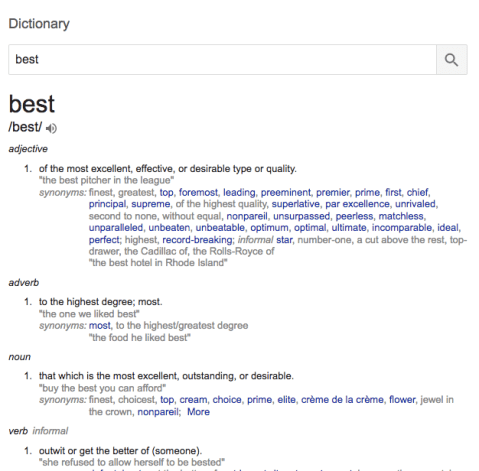
For his part, Professor Goldberg is highly critical of Judge Cardozo’s reasoning for two reasons. One is linguistic, since the meaning of “best efforts” is too vague. Does “best” only mean “reasonable” or does it mean something more? The other reason is economic. Maybe the parties had no need for a best efforts clause in the first place because the economic structure of Wood-Lucy agreement itself provided Wood sufficient incentive to promote Lucy’s brand. After all, Wood would not receive any compensation unless he was able to promote Lucy’s fashion line. In other words, Goldberg would have enforced the contract as is, without resorting to the legal fiction of “best efforts.” (Once again, we find ourselves in complete agreement with Prof Goldberg. If a court really wants to find “consideration” here, then the economic structure of the contract itself should provide sufficient “consideration” to satisfy the mutuality requirement of the common law. Otherwise, if the parties had really wanted a “best efforts” clause, they should have put one into their agreement!)

Screen Shot 2018-04-30 at 10.08.27 AM

The meaning of “best” according to Google.

Posted in Uncategorized | 1 Comment

Lady Duff-Gordon

To prepare for our next blog post on Monday, 30 April, here are some background materials on Lady Duff-Gordon, the defendant in Wood v. Lucy: her obituary and a short video describing the facts of the case:

Posted in Uncategorized | Leave a comment

Revisiting Schlegel v. Cooper’s Glue Factory

In our previous post, we revisited the case of Mattei v. Hopper. Today, let’s talk about dispute between Peter Cooper’s Glue Factory (manufacturer/seller) and the Oscar Schlegel Manufacturing Company (distributor/buyer), a leading case involving the validity of so-called requirements contracts. (In a requirements contract, the seller agrees to meet the buyer’s requirements.) According to the distributor/buyer, the manufacturer/seller promised to sell “Special BB” glue to the buyer at 9 cents per pound. The main piece of evidence in this case consists of the following letter that the manufacturer/seller sent to the distributor/buyer:

GENTLEMEN.— We are instructed by our Mr. Von Schuckmann to enter your contract for your requirements of ‘Special BB’ glue for the year 1916, price to be 9c per lb., terms 2% 20th to 30th of month following purchase. Deliveries, to be made to you as per your orders during the year and quality same as heretofore. Glue to be packed in 500 lb. or 350 lb. barrels and 100 lb. kegs, and your special Label to be carefully pasted on top, bottom and side of each barrel or keg. . . .
signed/ PETER COOPER’S GLUE FACTORY, W. D. DONALDSON, Sales Manager.

The president of the distributor firm received this letter, wrote the words “Accepted, Oscar Schlegel Manufacturing Company” on the bottom, and then returned it back to the seller. Later, towards the end of 1916, there was an unexpected and dramatic change in the price of glue on the market. The price shot up to 24 cents per pound, so the buyer ordered large quantities of the “Special BB” glue from the seller, hoping to make a huge profit by buying glue at the contract price (9 cents/lb.) and reselling it the higher price of (24 cents/lb.).

Soon enough, the seller decided to repudiate the contract and not take any more orders from the buyer, so the buyer sued the seller to enforce their agreement. It’s unclear from the record in this case what motivated the seller’s repudiation–whether it lacked the industrial capacity to fill the buyer’s large orders or whether the seller simply wanted to sell the glue directly to the distributor’s customers. That is, we don’t know the real reason why A wanted to get out of the contract–was it impossibility, or was it greed? (In any case (pun intended), should A’s reason for getting out of the contract matter?) This case went all the way up to New York’s highest court, and that court ruled that the “alleged contract” (in the words of the court) was invalid for lack of mutuality! As a result, not only was the seller not required to fill any new orders from the buyer; the seller did not owe the buyer any monetary damages for repudiating the contract (since the underlying agreement was legally invalid)!

Now, let’s discuss Victor Goldberg’s expert analysis of this case in Chapter 3 of his book “Framing Contract Law.” According to Professor Goldberg, the court got it wrong! The contract was either a valid bilateral agreement or a valid unilateral contract (p. 90). Either way, both parties would still have the freedom to repudiate their agreement at any time in the event of a dramatic change in the market price for glue. But what about damages for breach? Not to worry, argues Goldberg, because the non-breaching party would have the legal duty to mitigate its damages.

Again, we find ourselves in complete agreement with Professor Goldberg. Just imagine what would have happened if the price of glue in this case had fallen below 9 cents per pound and if it were the buyer, not the seller, who had repudiated the agreement to minimize his losses. One of the main purposes of commercial contracts is to hedge risks, and one risk in commercial contracts is “commodity price risk.” If the validity of a contract were to depend on the stability of the price of the goods being sold under the contract, commercial contracts would be worthless! Next, we will revisit Wood v. Lucy and thus conclude our review of Part I of “Framing Contract Law.”

Image result for peter cooper glue factory

Posted in Uncategorized | Leave a comment

Revisiting Mattei v. Hopper

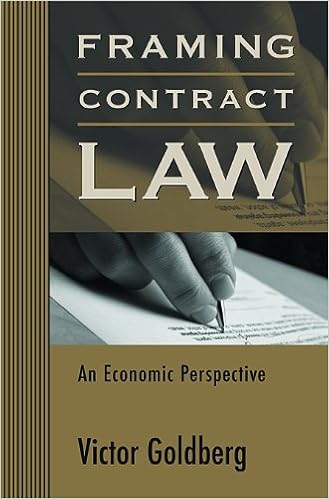
Last week, we posted a list of our mid-April readings. Now it’s time for us to review the first few chapters of “Framing Contract Law” by Victor Goldberg. Part I of Goldberg’s excellent book (pictured below) consists of three chapters of varying lengths and presents three classic cases on the problem of contract formation:

  1. Wood v. Lucy (Chapter 2);
  2. Oscar Schlegel Manufacturing Co. v. Peter Cooper’s Glue Factory (Ch. 3); and
  3. Mattei v. Hopper (Ch. 4).

What is the common thread here? These leading cases ask in one form or another the same fundamental question: what does it take to make a legally-binding and enforceable contract? Let’s discuss the last case first:

Mattei v. Hopper

Let’s begin with Mattei, a California case that was decided in 1958. In this case, Peter Mattei, a real estate developer, wanted to purchase a plot of land from Amelia Hopper to build a shopping center. After negotiating a purchase price of $57,500 for the land, Mr Mattei and Ms Hopper signed an agreement called a “deposit receipt.” Here is how the court described the terms of their deal:

The parties’ written agreement was evidenced on a form supplied by the real estate agent, commonly known as a deposit receipt. Under its terms, [Mr Mattei] was required to deposit $1,000 of the total purchase price of $57,500 with the real estate agent, and was given 120 days to “examine the title and consummate the purchase.” At the expiration of that period, the balance of the price was “due and payable upon tender of a good and sufficient deed of the property sold.” The concluding paragraph of the deposit receipt provided: “Subject to Coldwell Banker & Company obtaining leases satisfactory to the purchaser.”

Mr Mattei paid the deposit, but Ms Hopper got cold feet during the 120-day option period and backed out of the deal, so Mr Mattei sued her to enforce the contract. Ms Hopper’s lawyers, however, came up with a clever legal loophole to try to get out of the deal: lack of “consideration.” In contract law, not all promises are legally binding, only those promises that are backed up by “consideration.” In short, both parties must give up something of value (e.g. time, money, know-how, etc.) to meet the consideration requirement.

In the words of the court: “When the parties attempt, as here, to make a contract where promises are exchanged as the consideration, the promises must be mutual in obligation. In other words, for the contract to bind either party, both must have assumed some legal obligations. Without this mutuality of obligation, the agreement lacks consideration and no enforceable contract has been created.” Another way a contract could be declared defective for lack of consideration is when the parties make “fake promises” under the doctrine of illusory promises. Again, in the words of the court: “… if one of the promises leaves a party free to perform or to withdraw from the agreement at his own unrestricted pleasure, the promise is deemed illusory and it provides no consideration.”

But why did the Hopper-Mattei deal lack consideration? After all, the parties agreed to a definite price, and the buyer paid a deposit. According to Ms Hopper’s lawyers (George R. Gordon, John L. Garaventa, and Dean Ormsby), it was because the contract had a “satisfaction clause”: Mr Mattei was not obligated to pay the full amount for Ms Hopper’s land if he was not satisfied with the commercial leases to be obtained by Coldwell Banker for the future shopping center he was planning to build.

Although Ms Hopper prevailed in the lower courts, Mr Mattei (represented by Jay R. Martin and William F. Sharon) took his case up to the California Supreme Court and won! According to the high court, a satisfaction clause does not destroy mutuality or create an illusory promise because the parties to a contract must act in good faith. As a result, an implicit duty to always act in good faith applied to Mr Mattei’s decision regarding the suitability of the commercial leases under the satisfaction clause.

For his part, Professor Goldberg agrees with the result but not with the court’s reasoning (p. 98): “by making the buyer’s good faith a necessary element of the contract …, the [court’s decision] needlessly raises good faith from a default rule to a nearly mandatory rule; and … good faith does not provide a coherent constraint on the buyer’s discretion.” Instead, the contract should be reframed as an option contract: when Mr Mattei paid the $1000 deposit, he paid for the exclusive right to decide whether he wanted to go through with the deal or not.

For our part, we agree 100% with Professor Goldberg’s reframing of the substance of the Mattei-Hopper deal as an option, and we would add one further critique of the court’s decision in this case. The court upholds the deal because it says Mr Mattei was required to act in good faith at all times, even under the satisfaction clause, but alas, this reasoning is circular! It begs the fundamental question whether the parties had a binding contract in the first place. By reframing the Mattei-Hopper contract as an option, good faith becomes irrelevant, since there is no question that the parties in this case made mutual obligations to each other.

(We will discuss Oscar Schlegel Manufacturing Co. v. Peter Cooper’s Glue Factory and Wood v. Lucy in our next two blog posts.)

Image result for framing contract law
Posted in Uncategorized | 1 Comment

Four color theorem (USA interstate highways edition)

Credit: e8odie, via Reddit; hat tip: @pickover

Posted in Uncategorized | Leave a comment

The Death of Blockbuster Video

Remember Blockbuster Video? At its height, Blockbuster operated more than 9000 video rental stores across the world, but that very success drew new competitors into the video rental market. Brent Lang (@BrentALang) explains Blockbuster’s demise thus in this excellent essay: “In the 1990s and early aughts, the video rental chain loomed over the home entertainment market. Its rows of new releases and thousands of locations made it unrivaled, and its profit margins grew fat thanks to the exorbitant late fees it charged. But Blockbuster became complacent. Redbox and Netflix upended the business by offering cheaper, more convenient alternatives, allowing people to rent films at kiosks or have them delivered to their homes via mail or, eventually, streaming. In the process, consumers grew accustomed to paying only 99 cents a night for a movie (Redbox) or shelling out a flat monthly fee (Netflix). In a few short years, Blockbuster was a bankrupt anachronism.” So, how long will it take before Facebook becomes the next Blockbuster?

Image result for blockbuster video
Posted in Uncategorized | 4 Comments