Extended Review of Kozel (2017)

For the convenience of any of our followers who are as fascinated by the legal doctrine of stare decisis as we are, below are links to our six-part extended review of Randy Kozel’s excellent new book “Settled Versus Right“:

  1. Introduction
  2. The Brandeis Problem
  3. Pros and Cons of Stare Decisis
  4. The Problem with Precedent
  5. Second-Best Stare Decisis
  6. Bayesian Stare Decisis?
Image result for stare decisis

Credit: Martina Green

Posted in Uncategorized | Leave a comment

Concluding Post (Review of Kozel): Bayesian Stare Decisis?

Rather than end our extended review of Randy Kozel’s excellent new book on precedent (“Settled Versus Right”) on a negative note, we shall conclude our review by stating our points of agreement with Kozel and then offering an alternative solution to the Brandeis problem. Let’s start with the following points of agreement:

1. Interpretive pluralism. To begin with, we agree with Kozel that “interpretive pluralism” is unavoidable. Judges and justices have competing views of the Constitution and how the Constitution should be interpreted. [As an aside, in the context of judging and judicial disagreement in close cases, this fact is why we reject the common prior assumption in the “agreeing to disagree” literature initiated by R. J. Aumann, Annals of Statistics, Vol. 4, no. 6 (1976), pp. 1236-1239.]

2. Tail-wags-dog argument. Next, we also agree with Kozel that stare decisis is a feeble constraint at best in constitutional cases. Specifically, when a court is considering its own previous decisions, the judges of that court will measure the strength and scope of those “horizontal precedents” in light of their own individual priors. In other words, each judge’s priors, not precedent, are what decide the case.

3. Second-best theory. Lastly, although we are skeptical about Kozel’s various solutions to the Brandeis problem, we agree with him that this problem is a real one, not a pseudo-problem, and we admire his valiant effort to develop a “second-best theory” of precedent, especially his idea of “supermajority stare decisis.” The main question is, can we develop a better second-best solution to the Brandeis problem?

We will give it a try. For starters, like Kozel we will take interpretive pluralism as a given, but unlike Kozel, we would extend the domain of interpretive pluralism to include the evaluation and interpretation of horizontal precedent as well. That is, we take judicial disagreement over the strength and scope of precedent as a given.

As such, instead of trying to find a way of minimizing or working around such precedential disagreements (as Kozel does), a hopeless task in any case, we would propose the following thought-experiment in place of a supermajority rule: why not ask judges to use some alternative voting procedure, one that requires them to openly disclose their subjective views regarding a previously decided case. Specifically, imagine a world in which judges, when deciding whether a precedent applies (the question of scope) or whether to follow or overturn a precedent (the question of strength), would openly disclose their subjective evaluations of the precedent by ranking its scope and strength on some fixed scale, such as the [0, 1] interval.

We call this alternative judicial world “Bayesian judging,” or in the context of precedent, “Bayesian stare decisis.” Our approach recognizes the inherently subjective nature of constitutional interpretation, and it can be used to test both the scope of a precedent and its strength. A judge could just as well rank a precedent’s strength or its scope, i.e. whether statement x is holding or dicta. Either way, each judge would assign a numerical score reflecting his or her relative degree of belief or “credence” in the precedent under review. To keep things simple, this degree of belief could be expressed in numerical terms anywhere in the range from 0 to 1, 0 to 9 (see image below, for example), or some other uniform scale. The higher the score, the greater the judge’s credence or degree of belief. A score above 0.5, for example, indicates that the precedent is a strong one and should dispose of the case, while a score below 0.5 means that the precedent is weak or should even be overturned. (A score of 0.5 means the judge is undecided about the precedent’s precedential value.)

Under this alternative system of Bayesian stare decisis, a precedent would be affirmed if the sum of the judges’ or justices’ individual scores divided by the number of judges exceeded some threshold value, say .5; by contrast, a precedent would be overturned only if the sum of their individual scores divided by the number of judges went below .5. (In the event the sum of the judges’ individual scores divided by the number of judges were exactly .5, the court could require a rehearing of the case.)

In fairness to Kozel, Bayesian stare decisis is open to the same objections we identified over supermajority voting; namely, why would judges themselves ever agree to implement such an unorthodox reform? That said, my immediate purpose here is not to change the procedures of appellate practice and judging in the short term. My purpose is simply to question the traditional nature of judicial voting (majority rule) and demonstrate the subjective nature of stare decisis in close cases. [We have painted our alternative approach to precedent with a broad brush in this blog post, but we do delve into the details of Bayesian judging and the possibility of Bayesian verdicts in these two papers: The Case for Bayesian Voting (2017), and Why Don’t Juries Try Range Voting (2015).]

Image result for range voting
Posted in Uncategorized | 1 Comment

Steps at the University of Balamand in Lebanon

FYI: We will conclude our review of Randy Kozel’s book “Settled Versus Right” on 15 May. (In other words, we’re taking Monday off.)

https://priorprobability.com/wp-content/uploads/2018/05/0532b-6a00d8341c2e6353ef0224e038ee3d200d-pi.png

H/T: Brian Leiter. Happy Mother’s Day!

Posted in Uncategorized | 1 Comment

Review of Kozel (Chs. 6-8): second-best stare decisis

In our previous post, we saw why the doctrine of stare decisis is such a feeble constraint in constitutional cases, since (as Kozel correctly claims) there is no universal metric for weighing the positive or negative effects of a precedent. In this post, we will examine Kozel’s highly original and novel solution to this conundrum–his second-best theory of precedent. In truth, Kozel’s solution does not consist of a single theory or proposal for reform but rather consists of three separate schemes: (1) a doctrinal solution (presented in Chapter 6), (2) a structural solution (Ch. 7), and (3) a compromise solution (Ch. 8). Let’s summarize each one of these “second-best” reforms:

1. The doctrinal solution (Ch. 6)

In brief, Kozel’s doctrinal solution is simply to streamline the set of factors judges should consider when they are confronted with the Brandeis problem in close constitutional cases. Specifically, Kozel would exclude such subjective factors as a precedent’s coherence with other cases, its level of error, and its perceived harm from judicial consideration. But at the same time, Kozel would retain the other traditional factors in the stare decisis calculus, including a precedent’s procedural and factual accuracy as well as its reliance expectations. We, however, won’t bother going into the specifics of any these factors because all of them are highly subjective and thus influenced to a greater or lesser degree by one’s preferred theory of constitutional interpretation (the main problem that Kozel is, rightly, trying to solve). Consider “factual accuracy,” for example. In law what counts as a relevant fact–far from being based on objective or shared criteria, as in the natural sciences–is often contested, especially in close cases. The same point applies to reliance interests. To begin with, the parties before a court (and factions at large) may have radically different reliance interests, depending on how they view the Constitution. Worse yet, protection of reliance expectations begs the question of which expectations are worth protecting! We could go on, but this is a blog post, so we won’t.

2. The structural solution (Ch. 7)

Next, Kozel offers a structural solution, one that can be summed up in three words: “supermajority stare decisis.” Currently, the Supreme Court employs simple majority rule, so all it takes is five justices to overturn a constitutional precedent like Roe v. Wade (the right to an abortion) or Heller v. D.C. (the right to own a gun). With a supermajority rule in place, by contrast, it would take a higher number of justices to disturb settled law. This structural solution, in our view, shows the most promise–not only in solving the Brandeis problem, but also in strengthening the contraining power of stare decisis against judicial activism and judicial innovation. By requiring a supermajority vote to overrule precedent, the venerable doctrine of stare decisis would be more than just judicial cheap talk; this doctrine would impose a real constraint on the justices.

Nevertheless, there are three problems with this structural solution. One roadblock is the Constitution. Could Congress impose such a supermajority rule on the Supreme Court? If not, how would we ever persuade the justices themselves to self-impose such a rule? Another problem is philosophical. A supermajority requirement would make judicial activism, judicial innovation, and the correction of past legal errors less likely, so whether such a brake is on balance a good thing is far from obvious. But the most serious objection against a supermajority stare decisis rule is a practical one. It doesn’t take much legal or judicial imagination to find a way of distinguishing a previous case. A supermajority rule (even one that required unanimous agreement before a precedent could be overturned!) will only incentivize lawyers (and the justices) to find ever more creative and ingenious ways of distinguishing inconvenient precedents.

3. The compromise solution (Ch. 8)

Lastly, anticipating the practical objection we identified above, Kozel offers a “compromise” or “intermediate” approach regarding the scope of a precedent’s applicability to future cases. Instead of trying to draw a hard line between holdings and dicta (an impossible task, we would add), a justice should only follow dicta if he finds such dicta to be persuasive. Say what? Alas, this second-best solution is the weakest of the three, since the degree of persuasiveness of dicta is highly subjective and is ultimately influenced by one’s preferred theory of constitutional interpretation, which is the very problem that Kozel is trying to solve!

In our next blog post, we will propose an alternative method of solving the Brandeis problem. Rather than trying to minimize each judge or justice’s subjective views of the Constitution and proper constitutional interpretation, my approach will (in counter-intuitive fashion) require judges to openly disclose their subjective views when deciding a constitutional case …

Related image

Source: Wikipedia

Posted in Uncategorized | 1 Comment

Review of Kozel (Chs. 3-5): The Problem with Precedent

Chapters 3, 4, and 5 of “Settled Versus Right” mount a powerful critique of precedent, or to be more precise, these chapters show why precedent is such a feeble constraint in practice, despite the U.S. Supreme Court’s oft-repeated lip service to the Anglo-American doctrine of stare decisis. To the point: why is stare decisis just so much judicial “cheap talk” (as an economist might say) at the end of the day, especially in close constitutional cases? Because there is no uniform or widely-shared metric for resolving the Brandeis problem, i.e. for evaluating the positive and negative effects of retaining (or overturning) a precedent. As a result, the scope and strength of  stare decisis in any given case ultimately depends on each justice’s preferred theory of interpretation!

Although Kozel carefully restates the finer points of the major theories of constitutional interpretation–including popular sovereignty originalism, structural originalism, and (our favorite) common law constitutionalism–we won’t bother going over (yet again) the tiresome details of each interpretive theory here, since there is no way of objectively deciding which of these theories is the best or correct one. Instead, it simply suffices to restate the irrefutable logic of Kozel’s powerful argument regarding the feebleness of stare decisis: there is no uniform metric for evaluating the positive and negative effects of retaining (or overturning) a precedent. That is, in figuring out the scope of a precedent or in deciding whether to affirm or overturn a precedent, a judge will have to compare the costs and benefits of these various courses of action (narrow versus broad scope; stability versus accuracy), but the weights a judge uses to evaluate these multifarious costs and benefits (and in deciding what counts as a “cost” or a “benefit” in the first place) are not uniform. Rather, these weights are determined by the judge’s preferred theory of interpretation! (But don’t take our word for it; read Kozel’s excellent book for yourself, especially Chapter 5.)

For our part, we would make the following clarification regarding the feeble nature of stare decisis as a constraint in constitutional cases: the trouble with precedent is not “interpretative pluralism,” i.e. the fact that different judges espouse different theories of constitutional interpretation. No, the underlying problem with precedent is that the doctrine of stare decisis is itself logically circular, or in the words of Kozel (p. 60): “the first rule of precedent is that prior decisions warrant respect,” but at the same time “a close second is that no decision is untouchable.” In other words, when a judge is confronted with the Brandeis problem (whether to leave the law “as is” or change the law) or whether to interpret a precedent broadly or narrowly, he is always free to choose any course of action (leave alone or change; narrow or broad), for as Kozel himself concedes (p. 69): “There is no universal [or transcendent] explanation for why it is important for the law to be right or why it is problematic for the law to be wrong. A theory of precedent must never lose sight of this fact.” Can Kozel rescue the doctrine of stare decisis? He will certainly try (in Chapters 6-8), so stay tuned. We shall turn to those chapters next …

Image result for circular logic
Posted in Uncategorized | 2 Comments

Review of Kozel (Ch. 2): Pros and Cons of Stare Decisis

Chapter 2 of “Settled Versus Right” weighs the pros and cons of stare decisis. Let’s jump in with the cons. Kozel sums up the main argument against stare decisis as follows (p. 50): “The job of judges is to interpret the law correctly.” On this view, the problem with the doctrine of stare decisis is that it thwarts this fundamental judicial function (accurate legal interpretation) by allowing stability (fidelity to past decisions) to trump accuracy and the reduction of legal error (getting the law right). This accuracy/stability tradeoff is the crux of the Brandeis Problem; in addition, this tradeoff explains why courts always have the inherent power to overrule their own precedents: even in a world in which courts are committed to precedent, judges should be able to undo past mistakes.

But is the pursuit of “accuracy” a chimera in close cases? (Most cases that go all the way up to the Supreme Court are, by definition, close cases: there are good legal arguments on both sides of the issue!) That is, is there really such a thing as a “right answer” in a close case? If not, then stare decisis makes good sense, but even if there were, there are still many reasons why stability might be more important than accuracy. In particular, Kozel claims (p. 36): “There are numerous reasons why it might be wise to defer to precedent. Among them are promoting [1] decisional efficiency, [2] protecting settled expectations, and [3] finding common ground among judges who are inclined to see the world differently.” Alas, none of these reasons are particularly persuasive. To see why, let’s consider each one in turn. For starters, in a legal universe containing a large body of potentially applicable precedents, the level of “decisional efficiency” promoted by stare decisis is marginal at best. Lawyers will still argue over which precedents are relevant and over the scope of those precedents. (Kozel himself concedes on page 40 that “determining whether two cases are alike can be complex and controversial.”)

What about reliance or “protecting settled expectations”? This conservative argument in favor of stare decisis begs the question of which expectations are worth protecting! This argument is also circular, at least to the extent that everyone already knows ahead of time that a court has the power to overrule its own precedents. Since there is a positive probability that any given precedent might be overruled, the non-binding nature of horizontal precedent is a risk of playing the law game. (To his credit, Kozel recognizes this risk on page 48.) Last and least, Kozel’s “common ground” argument is the weakest of the lot. By way of example, despite the U.S. Supreme Court’s lip service regarding precedent, the doctrine of stare decisis is unable to transcend the jurisprudential differences of the individual justices. Why not? Because as Kozel himself will concede in the next two chapters of his book, each justice usually ends up evaluating the strength and scope of the court’s own precedents through their own jurisprudential and interpretive lenses. We shall thus turn to Chapters 3 and 4 next …

Related image
Posted in Uncategorized | 1 Comment

Review of Kozel (Ch. 1): The Brandeis Problem

Chapter 1 of “Settled Versus Right” identifies three main aspects of stare decisis: the source of a given precedent (what court issued the decision in the previous case?); the strength and scope of the precedent (how much weight, if any, should the previous case carry?); and the type of precedent (does the previous case involve a statute, the Constitution, or the common law?). We shall say a few words about each one of these three items. [Note: As an aside, Kozel identifies a fourth aspect involving “the variety of roles that precedents play, which range from gentle persuasion to genuine constraint” (p. 19). But this item is redundant; it is just a variant of item #2 above on the strength of precedent.]

1. Source of precedent

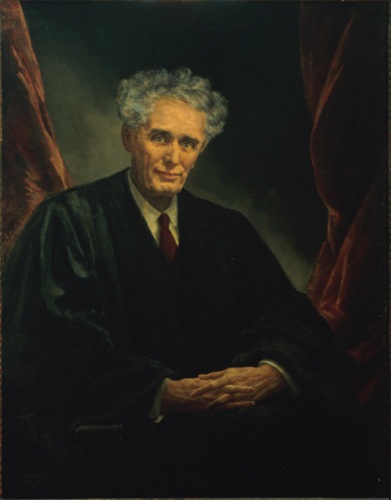
Kozel identifies three scenarios (p. 20): (1) a judge dealing with a precedent issued by a higher court; (2) a judge dealing with a precedent issued by a lower court; and (3) a judge who dealing with a precedent issued by his own court. It is this third scenario–what Kozel refers to as the problem of horizontal precedent (ibid.)–that poses a real puzzle. Since a court has the inherent power to overrule its own precedents, how should a court decide whether to follow its own precedents or overrule them? [Note: We shall refer to this precedential puzzle as the “Brandeis Problem” in honor of the great Louis Brandeis (pictured below) for his eloquent and oft-stated formulation of the puzzle. In short, how does a court determine whether it is more important for the law to be settled (by following precedent) or right (by being willing to overrule precedent)? See Burnet v. Coronado Oil & Gas Co., 285 U.S. 393, 406 (Brandeis, J., dissenting).] This puzzle regarding the strength of (horizontal) precedent takes us to the second aspect of stare decisis: what is the scope of precedent?

2. Scope of precedent

Traditionally, the scope of any given precedent depends on the distinction between a case’s essential holding (i.e. the rule on which the previous case was decided) and its peripheral dicta (i.e. judicial elaboration or explanation of the rule). But as Kozel correctly notes, (p. 22), “defining the scope of precedent can be a complex enterprise,” since the line between holdings and dicta is rarely clear cut or obvious. (That is why potentially applicable precedents can always be distinguished or “argued away” by clever judges and lawyers.) In any case (pun intended), even if we could clearly demarcate this holding-dicta line, supreme court judges must still grapple with the Brandeis Problem, since courts retain the inherent power to overrule their own (horizontal) precedents.

3. Type of precedent

Next, Kozel poses a fascinating conjecture: should the strength of a precedent depend on the type of law involved in the previous case? (Putting aside natural law and morality, there are three major sources of law: common law (judge-made rules), statutes (legislation and regulation), and the Constitution.) One could argue that the strength of a precedent should (or should not) remain constant regardless of whether the previous case deals with constitutional law, statutory law, or the common law. For his part, Kozel will not take a position on this question; instead, he will focus the remainder of his book on the relation between stare decisis and constitutional law. That omission is a serious and potentially hazardous one, for the title of Kozel’s book refers to a general theory of precedent. But we won’t hold this omission against him (for now). If Kozel is able to formulate a workable theory of binding precedent in constitutional cases, we could always test his theory in common law and statutory cases later.

For our part, we suspect the notion of precedent does very little work in constitutional cases for the reasons Kozel himself will give in Chapters 3 and 4 of his own book. Before we review those chapters, let’s take a look at Chapter 2 …

Image result for louis brandeis

Justice Louis Brandeis

Posted in Uncategorized | 3 Comments

Review of Kozel (Intro)

Editor’s note: this is the first of several blog posts reviewing Randy Kozel’s important new book (pictured below) Settled Versus Right: A Theory of Precedent, Cambridge University Press, 2017.

In a previous blog post, (16 June 2016), we conjectured that stare decisis (the legal doctrine that courts are supposed to follow previous precedent) is a “logical sand castle.” We think this conjecture is true for two reasons: (1) lack of credible commitment (precedents are not really binding in any formal sense since high courts can overrule them at will), and (2) abundance of legal ingenuity (precedents are always easy to distinguish). So, along comes Randy Kozel (also pictured below), a law professor at the University of Notre Dame, with a new book offering a theory of precedent. We had to read it!

Professor Kozel makes an insightful observation in the introduction to his new book: Anglo-American judges are supposed to follow precedent, but when they are deciding constitutional cases, the relevant precedents are always up for grabs. Why? Because judges disagree on how the Constitution should be interpreted. (In case you didn’t know, it turns out there are many ways of interpreting the Constitution; in the words of Kozel (p. 13): “Some theories [of interpretation] prize matters of justice and morality, others pragmatic results, still others compatibility with founding-era understandings.”) As Kozel correctly notes, these theoretical disagreements over constitutional interpretation are so deep that they end up distorting the way judges weigh precedent: the strength and scope of any given precedent will depend almost entirely on the interpretative theory being used to decide the case, whether it be public meaning originalism, textualism, pragmatism, or whatever.

As a result, Kozel is going to make a novel proposal. In brief, he is going to propose a “second-best theory of stare decisis,” one that is able to rise above the problem of judicial disagreement. Alas, his proposal is doomed to fail because constitutional cases are inherently political cases, meaning that judges shouldn’t be deciding these types of cases in the first place, but Kozel’s book is still worth reading because our Anglo-American legal system is built on the foundation of the doctrine of stare decisis, and his book provides an in-depth yet readable exploration of how precedent is supposed to work. Accordingly, we will review all nine chapters of Kozel’s book in our next few blog posts, and after we conclude our review of Kozel, we will then present an alternative Bayesian approach to stare decisis

Image result for randy kozel    Image result for randy kozel
Posted in Uncategorized | 1 Comment

“Diverse Originalism” [?]

That is the title of this thought-provoking paper by Christina Mulligan, a professor at Brooklyn Law School. Some background: “orginalism” refers to a common sense method of interpreting the Constitution. Broadly speaking, constitutional originalists believe that the meanings of the provisions in the Constitution are fixed and stable, unless and until those provisions are amended under Article V of the Constitution. Now that we finally got around to reading Mulligan’s excellent paper, we want to say a few things about Mulligan’s important paper before we proceed with our review of Randy Kozel’s new book on stare decisis (“Settled Versus Right”). First, we think Professor Mulligan’s paper should be required reading in any law school course on constitutional interpretation. Here is the abstract:

Originalism has a difficult relationship with race and gender. People of color and white women were largely absent from the process of drafting and ratifying the Constitution. Today, self-described originalists are overwhelmingly white men. In light of these realities, can originalism solve its “race and gender” problems while continuing to be originalist? This Article argues that originalists can take several actions today to address originalism’s race and gender problems, including debiasing present-day interpretation, looking to historical sources authored by people of color and white women, and severing originalism and the Constitution’s text from their historical associations with racism and sexism. Taking these steps will not only make originalism more inclusive, but also help originalists become better at accessing the original meaning of the Constitution.

In her paper, Professor Mulligan provides several examples of what a more diverse originalism might look like, including an anti-federalist pamphlet published in 1788 by Mercy Otis Warren (pictured below) as well as a 1799 petition to Congress by the Reverend Absalom Jones (also pictured below) calling for the repeal of the Fugitive Slave Act. Her point is well taken. If we are going to be intellectually honest originalists, we need to search for and listen to a more diverse and inclusive chorus of constitutional voices. But this approach is risky … (And that’s why we love it!) Why is it risky? Because once we embrace a theory of diverse originalism, we may begin to see that the Constitution meant many things to many people. Different factions may have competing understandings of the meanings of various provisions in the Constitution …

Image result for Mercy Otis Warren    Image result for Absalom Jones
Posted in Uncategorized | Leave a comment

Review of Chopra’s review of Hanson & Simler

Out of intellectual curiosity, we have decided to read and review Paras Chopra’s excellent review of Robin Hanson and Kevin Simler’s new book Elephant in the Brain (pictured below the fold). Mr Chopra’s comprehensive review consists of a series of 65 tweets, with each tweet summarizing a big idea from Hanson and Simler’s book. Below, then, is Mr Chopra’s original thread of tweets (1-65), followed by our comment, question, or observation (in italics):

Continue reading

Posted in Uncategorized | Leave a comment