The evolution of service station pumps

Image Credit: @elonmusk

Posted in Uncategorized | 2 Comments

Natural Law Day

The great medieval scholar Thomas Aquinas, father of modern natural law theory, died on this day in 1274.

Posted in Uncategorized | 2 Comments

Critique of Hardin’s theory of constitutions

Russell Hardin (1999, pp. 88-89) gives three reasons why a constitution is NOT like a contract. First, according to Hardin, a constitution is designed to create a government for a large group of people; a contract, by contrast, is designed to solve a prisoner’s dilemma between two parties. Second, a constitution does not require an explicit agreement among the people to be effective once it is adopted, while an essential element of contracts is mutual agreement between the parties to the contract. Third and last, constitutions are self-enforcing; contracts are enforced by courts. Alas, Hardin is wrong. Let’s examine each one of these arguments in reverse order:

* Constitutions are self-enforcing; contracts are enforced by external sanctions (the courts). What does it mean to say that constitutions are “self-enforcing”? The U.S. Constitution, for example, allocates to the political branches the power to enforce various provisions of the constitution, or as Hamilton wrote in The Federalist, the Congress has the power of the purse, while the President has power of the sword. Frankly, whether these enforcement powers are internal or external is just a play on words. In addition, many contracts are just as self-enforcing as constitutions are, especially long-term agreements or so-called “relational contracts” in which the parties care about their reputations and have more to lose by breaking their promises than keeping them.

* Constitutions don’t require explicit agreement; contracts do. At first glance, there is something to this argument. After all, “mutual agreement” is one of the essential elements of contract formation, yet none of us were around when the U.S. Constitution was drafted and ratified in the late 1780s. Nevertheless, consider the “battle of the forms” in business-to-business commercial transactions or Internet-era contracts such as “Shrink Wrap Agreements” and “Terms of Use” for most Apps. Commercial transactions and Internet contracts are generally enforceable, thus showing that consent is not really required to enforce a contract!

* Constitutions are designed for large groups of people; contracts are designed to solve a prisoner’s dilemma between two parties. No, this claim is not right, for both contracts and constitutions are designed to solve prisoner’s dilemmas. In the case of a constitution, the prisoner’s dilemma involves a larger group of people, to be sure, but the underlying strategic problem in creating a government (via a constitution) is whether to cooperate (obey the laws of the new government) or defect (every man or clan for himself). In a previous paper (Guerra-Pujol, 2008), for example, we used the “stag hunt” model to describe the strategic nature of the process of constitutional ratification. Without getting into all the technical details (this is a blog post, after all), a stag hunt is a special kind of group prisoner’s dilemma (see image below): without a constitution, it is in most factions’ individual interest to defect and go it alone; with a constitution, it is in most factions’ interest to play by the rules (or game the rules) and cooperate.

Is our disagreement with Hardin just another trivial academic squabble? I, for one, actually agree with Hardin’s larger point about the strategic nature of constitutions. My main point here is that commercial transactions and most contracts also share many of the same strategic elements that constitutions do. But again, why does any of this matter? If constitutions are often like contracts (or vice versa, if contracts are often like constitutions), this observation should inform the role of the courts in enforcing these two types of agreements. In a word, judges should be humble …

Image result for stag hunt model

Image credit: tutor2u

Posted in Uncategorized | Leave a comment

Spring break readings

Welcome to our eclectic scholarly jungle! Our Spring Break is still a week away, but here is what we’ve been reading or rereading or will start reading over our break:

  1. Unwritten Rules, an essay by Stephen Sniderman.
  2. Fides et Ratio (pictured below), Pope John Paul II’s encyclical on the relation between faith and reason.
  3. The Art of Game Design, a comprehensive, interdisciplinary guidebook for game designers written by Jesse Schell.
  4. Ten Great Ideas about Chance (pictured below), a history of the main breakthroughs in probability theory written by Brian Skyrms and Persi Diaconis.
  5. Chapters 3 and 4 of Russell Hardin’s book Liberalism, Constitutionalism, and Democracy. (Chapter 3 is titled Contract or Coordination?; Chapter 4 is Agreement or Acquiescence?)
  6. Chapters 1, 3, 5, and 10 of Playing to Learn with Reacting to the Past, a collection of essays about role play games in education (edited by C. Edward Watson and Thomas Chase Hagood).
  7. Framing Contract Law, an interdisciplinary treatise by Columbia University law and economics professor Victor Goldberg. (My friend, colleague, and fellow contract law scholar Dan O’Gorman and I will be meeting on weekends to discuss the main ideas of this book.)
Image result for fides et ratio           Image result for ten great ideas about chance
Image result for the art of game design
Posted in Uncategorized | Leave a comment

Copyleft (Havana remix edition)

As Daddy Yankee raps in the Spanish version of Camila Cabello’s beautiful song Havana: la libertad que bien te sabe! According to Wikipedia, copyleft is the Internet-era practice of allowing people the right to freely distribute copies and modified versions of an original work with the stipulation that the same rights be preserved in derivative works down the line. (As an aside, we’re not the only ones who love the song “Havana” or who can’t wait for the Cuban people to be free.)

Posted in Uncategorized | Leave a comment

Bayesian verdicts

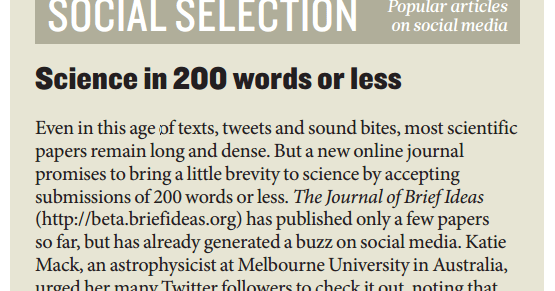
That is the title of our first submission to The Journal of Brief Ideas. In brief (pun intended), The Journal of Brief Ideas is an open access scholarly digest of micro papers that set forth new ideas in 200 words or less. Here, then, is our first micro research paper (consisting of 162 words): “Why do juries emit binary verdicts, i.e. guilty or not guilty? Why not allow each juror to emit a “Bayesian vote” reflecting his/her subjective degree of belief in the probability of the defendant’s guilt? Under this alternative method of Bayesian voting, jurors would “score” the evidence presented by the parties at trial on a scale of 0 to 1 or some other scale. (Whatever scale is used, the higher one’s score, the greater one’s subjective degree of belief in the defendant’s guilt, while a midpoint score, such as 0.5, means the juror is undecided about the question of guilt.) Such a simple system of scoring would then produce a numerical verdict, a Bayesian verdict, consisting of an average value or sum total of the jurors’ individual scores. Under this method of voting, the moving party would prevail only if the average value or sum total, as the case may be, of the jury’s collective score exceeds some critical threshold value.”

Image result for journal of brief ideas
Posted in Uncategorized | 1 Comment

Due process, gender equality, and the shadow of Title IX

In my previous post, we asked an important procedural legal question: what burden of proof should schools and universities use to adjudicate student misconduct cases? Alas, there is a trade off between accuracy and fairness, between truth and error. The classic illustration of this delicate trade off is the “proof beyond a reasonable doubt” standard in criminal cases: the higher the burden of proof is, the more likely a guilty man will go free, but at the same time, the more difficult it will be to convict an innocent person. (Or as the great English jurist William Blackstone once said: “It is better that ten guilty persons escape than that one innocent suffer.”) In civil cases, by contrast, the burden of proof is much lower: the plaintiff wins if they are able to prove their case by a “preponderance of the evidence.” A lower burden of proof like the preponderance standard makes it easier to prove one’s case, but such a low standard also makes it more likely that an innocent person might be found guilty.

In theory, a private business should be free to choose what burden of proof to use when making internal decisions, but as we saw in a previous post, universities that receive federal funding–even private ones like Harvard–must comply with Title IX, a federal law enacted in 1972 that states: “No person in the United States shall, on the basis of sex, be excluded from participation in, be denied the benefits of, or be subjected to discrimination under any education program or activity receiving federal financial assistance.” The U.S. Department of Education has standing to enforce Title IX, and some courts have interpreted this law broadly, imposing an affirmative duty on colleges and universities to respond and remedy hostile educational environments. So, given the spirit of Title IX — the gender equality rationale behind this legal command — how should universities balance the equality rights of women and girls with the due process rights of students accused of sexual harassment? Should accusations of sexual harassment (and sexual assault, for that matter) be left to the courts to decide? Or do schools have an affirmative duty to create a hostile-free environment and protect their students from sex discrimination? In your opinion what is the best way to interpret the sparse language of Title IX? (Notice that this is just as much a moral question as it is a legal one.)

Image result for title ix

Image Credit: Rachelle Keller

Posted in Uncategorized | Leave a comment

Facemash and the burden of proof

Did Mark Zuckerberg intend to harm or offend anyone when he created Facemash back in ’03? The answer to this question might depend on the burden of proof. In general, when someone is accused of wrongdoing like hacking or theft (or sexual harassment or sexual assault), who has the burden of proof (the accuser or the accused?), and what should the burden of proof be? In brief, the process of adjudication must be fair. Persons accused of misconduct have the right to due process. But what is “due process”? At a minimum, due process requires notice and a hearing: the accused must be given adequate notice of the charges against him, he must have an opportunity to defend himself, and his case must be presided over by an impartial judge or decision-maker. In addition, due process requires that the burden of proof be imposed on the accusing party, not on the accused. Simply put, when one accuses someone of breaking the rules, the accused party is generally presumed innocent. It is the accuser who must produce sufficient proof that his allegations are true. But how much evidence is enough to prove one’s case? It turns out there are many different levels of proof in the North American legal system:

Related image

Alas, it’s not clear what burden of proof the Ad Board used in the Facemash case. Beyond the friendly confines of the Ivory Tower, courts use different burdens of proof, depending on the type of case it is hearing. In criminal cases, the prosecution must prove its case beyond a reasonable doubt, but a much lower burden of proof is used in most civil cases (i.e. cases for money damages): the preponderance of the evidence or “more likely than not”. In other words, when one party (the plaintiff) sues another (the defendant) in tort or for breach of contract, the plaintiff wins if his story is more believable than the defendant’s.
Going back to the Facemash incident, considering that Zuckerberg was facing possible expulsion, what burden of proof should the Ad Board have used? Among other things, he was accused of infringing copyrights and invading privacy, actions that could in theory generate both civil and criminal liability! But at the same time, Harvard is a private institution, so shouldn’t it be free to use whatever burden of proof it wants in student misconduct cases? As we shall in my next blog post, it depends … It depends on whether you adopt a broad interpretation of Title IX or a narrow one!

Posted in Uncategorized | 3 Comments

What is sexual harassment?

As I mentioned in my previous post, my students (playing the roles of Harvard law professors circa 2003-04) will be re-enacting a faculty tea and debating a number of contentious questions relating to Harvard’s response to the Facemash incident. Let’s tackle the question of sexual harassment first, a topic that has dominated the headlines lately. In particular, what acts constitute harassment; how broadly or narrowly should sexual harassment be defined? By way of example, here is how the U.S. Equal Opportunity Employment Commission (EEOC) defines sexual harassment:

It is unlawful to harass a person … because of that person’s sex. Harassment can include “sexual harassment” or unwelcome sexual advances, requests for sexual favors, and other verbal or physical harassment of a sexual nature.

Harassment does not have to be of a sexual nature, however, and can include offensive remarks about a person’s sex. For example, it is illegal to harass a woman by making offensive comments about women in general *** Although the law doesn’t prohibit simple teasing, offhand comments, or isolated incidents that are not very serious, harassment is illegal when it is so frequent or severe that it creates a hostile or offensive work environment ***

What about Facemash? Under the EEOC’s broad definition, was the Facemash website a form of sexual harassment? Put another way, was Facemash an “isolated incident” (a harmless prank), or was it severe enough to create a hostile or offensive university environment? Also, does it matter that Zuckerberg was a student — not an employee — when he created Facemash? Maybe not. Title IX, a federal law enacted in 1972, prohibits sex discrimination in educational institutions that receive federal funding. While Title IX is a very short statute, Supreme Court decisions and guidance from the U.S. Department of Education have given it a broad scope covering sexual harassment as well as sexual violence. Under Title IX, colleges like Harvard are legally required to respond and remedy hostile educational environments and failure to do so is a violation that means a school could risk losing its federal funding. This legal requirement, in turn, raises a new question: do Harvard’s “Ad Board” procedures (circa 2003) comply with Title IX? We will address that fundamental question in our next blog post …

Image result for sexual harassers

Credit: Steve Isaacs

Posted in Uncategorized | Leave a comment

Debating Due Process (Game Day 2)

As I mentioned in a previous post, this semester my business law students are playing a role immersion game based on a hacking incident that occurred at Harvard in the fall of 2003, when Harvard sophomore Mark Zuckerberg created a clandestine website called Facemash that allowed users to rank the hotness of co-eds at Harvard. In our first class, students were randomly assigned into roles (e.g., presiding officers, campus and town media outlets, and anti-Facemash, pro-Facemash, and wild card groups), and each group was given a role sheet outlining that group’s objectives, along with some recommend reading. Then in our second class, my students re-enacted an emergency meeting of the Harvard Undergrad Council and debated whether Facemash was a harmless prank or whether Zuckerberg broke any laws (circa 2003) or moral duties when he built Facemash. (In real life, Zuckerberg was “adboarded” by Harvard and either admonished or put on probation, but lucky for him, he was not sued or criminally prosecuted for his role in the Facemash hacking incident.)

In our next class, my students will re-enact a faculty tea at Harvard Law School and will debate some procedural aspects of the disciplinary process at Harvard. Specifically, my students will play Harvard law professors (each student group was already assigned a “faculty advisor” from the law school), and they will debate whether the ad board process (circa 2003) is fair or not, especially in cases involving allegations of sexual harassment or sexual assault. (Because Facemash allowed users to rank women based on their appearance, one could argue that the Facemash prank contributed, even in a small way, to a hostile environment on campus.) Among other things, the law professors will debate the following due process issues:

  1. What types of cases should the Ad Board hear? Should allegations of sexual assault and sexual harassment be left to the courts?
  2. Are the procedures of the Ad Board fair and consistent with due process? If not, what due process rights should students have when they are accused of misconduct? In particular, what burden of proof should the Ad Board use in cases involving student misconduct?
  3. Should Harvard University prepare an anti-sexual harassment policy, and if so, how narrowly or broadly should “sexual harassment” be defined?

Stay tuned. I will say more about each one of these three issues in my next three blog posts. (For a summary of due process rights, see below the fold.) Continue reading

Posted in Uncategorized | 1 Comment