The principle of fairness is not fair

Clarification (June 11, 2020): I wrote and posted this part of my extended review of Nozick’s classic book “Anarchy, State, and Utopia” back in December of 2017. Recently, however, one of my readers brought to my attention that Robert Nozick’s critique of Rawls’s “fairness principle” is based on a misconception (by Nozick himself no less!) of Rawls–namely, that Nozick is wrong to assume that Rawls’ principle of fairness implies “group rights” or “collective rights.” Based on our back and forth in the comments section below, I was persuaded that my reader’s diagnosis is correct, so please keep this in mind (i.e. that Rawls’s principle of fairness need not imply group or collective rights) when you read my original December 2017 blog post below.

* * *

The second subsection of Chapter 5 of ASU (pp. 90-95) marks, to us, a critical turning point in the history of ideas. It is here where Nozick does direct battle against his main nemesis: John Rawls’s famous principle of “justice as fairness.” What is Rawls’ fairness principle? Nozick puts it this way (p. 90): “This principle holds that when a number of persons engage in a just, mutually advantageous, cooperative venture according to rules and thus restrain their liberty in ways necessary [for the venture to succeed], those who have submitted to these restrictions have a right to similar acquiescence on the part of those who have benefited from their submission [as well as the corollary right to enforce this acquiescence].” This fairness principle, however, implies the existence of collective or group rights, since this principle bestows on a group of individuals — assuming, of course, they are engaged in a mutually beneficial enterprise — group rights against selfish free riders who would enjoy the benefits of the collective enterprise without paying their fair share or without abiding by the same rules that everyone else is playing by. There’s the rub: the idea of “collective rights” goes against Nozick’s baseline moral premise “that no new rights ‘emerge’ at the group level, that individuals in combination cannot create new rights which are not the sum of preexisting ones” (p. 90). So, who’s right, Nozick or Rawls?

Although we have questioned Nozick at every turn thus far, it is here that Nozick finally begins to win us over. How? With a simple but memorable thought experiment, one that immediately exposes the moral fallacy in Rawls’s fairness principle (p. 93):

“Suppose some of the people in your neighborhood (there are 364 other adults) have found a public address system and decide to institute a system of public entertainment. They post a list of names, one for each day, yours among them. On his assigned day (one can easily switch days) a person is to run the public address system, play records over it, give news bulletins, tell amusing stories he has heard, and so on. After 138 days on which each person has done his part, your day arrives. Are you obligated to take your turn? You have benefited from it, occasionally opening your window to listen, enjoying some music or chuckling at someone’s funny story. The other people have put themselves out. But must you answer the call when it is your turn to do so?”

There is, of course, no “right answer” to Nozick’s memorable hypothetical, since your answer will no doubt depend on your view of ethics, on whether you are a Humean consequentialist or a Kantian champion of absolute moral duties. As Nozick himself notes (on p. 94), a consequentialist’s answer to Nozick’s hypothetical would be yes only if “the benefits to a person from the actions of the others are greater than the costs to him of doing his share.” A Kantian or duty-based view of right and wrong, by contrast, would look for the individual’s consent or prior agreement, since voluntary consent is the cornerstone of Kantian ethics. Or in Nozick’s eloquent words (p. 95), “One cannot, whatever one’s purposes, just act so as to give people benefits and then demand (or seize) payment. Nor can a group of persons do this.”

For now, then, it’s Nozick 1, Rawls 0 … But this is only the first round! What about Rawls’ influential theory of tacit or hypothetical consent, the notion that everyone would have agreed to play by certain rules had they negotiated these rules in the original position from behind a Rawlsian veil of ignorance? Stay tuned: we will continue our review of Nozick after the New Year holiday …

File:Hornloudspeaker.jpg - Wikimedia Commons
Posted in Uncategorized | 13 Comments

Nozick and the problem of risky independents

Nozick addresses a very intriguing question in the first subsection of Chapter 5 of ASU (pp. 88-90): when does a private protection agency in a (Lockean) state of nature have the moral right to prohibit a non-member from enforcing his natural rights? After all, according to Nozick, not only does every person have rights; every person also has the right to enforce his rights. But enforcement can be a risky business. What if, for example, a non-member uses enforcement procedures that are too risky or dangerous? Or, in the words of Nozick (p. 88): “An independent might be prohibited from privately exacting justice because his [enforcement] procedure is known to be too risky and dangerous–that is, it involves a higher risk (than another procedure) of punishing an innocent person or overpunishing a guilty one …” We call this the problem of risky independents.

Without getting bogged down in the details of Nozick’s intricate chain of reasoning — otherwise, our review of Nozick’s work would be ten times longer than the work itself — Nozick concludes that no protection agency has the right to prohibit a “risky independent” from enforcing his own rights! Nozick does not base this conclusion on the line-drawing problem he has raised before; e.g. when is an enforcement procedure too risky or dangerous? Instead, Nozick’s conclusion is based on the following fundamental logical premise (p. 89, emphasis in original): “the legitimate powers of a protective association are merely the sum of the individual rights that its members or clients transfer to the association.” In other words, if an individual person does not have the moral right to preemptively prohibit another individual from enforcing his rights, then collectives like protection agencies also lack this right.

Fine. But why do individuals lack the moral right to engage in preemptive or defensive strikes in the first place?

Image result for risky business

Happy Birthday Sydjia!

Posted in Uncategorized | 2 Comments

Overview of Chapter 5 of ASU

Before we jump into Chapter 5 of Anarchy, State, and Utopia (ASU), let’s look at the overall structure and organization of this chapter. In brief, Chapter 5 is simply titled “The State” and is divided into eight separate subsections as follows:

  • Prohibiting Private Enforcement of Justice (pp. 88-90)
  • “The Principle of Fairness” (pp. 90-95)
  • Procedural Rights (pp. 96-101)
  • May the Dominant Agency Act? (pp. 101-108)
  • The De Facto Monopoly (pp. 108-110)
  • Protecting Others (pp. 110-113)
  • The State (pp. 113-118)
  • The Invisible Hand Explanation of the State (pp. 118-119)

So, Chapter 5 promises to explain the origins of a state’s monopoly over the use of force. Without further ado, then, we will begin our review of this chapter later today …

Image result for the state nozick
Posted in Uncategorized | Leave a comment

“This video requires payment to watch”

My wife and I were hoping to watch “Marked for Murder” on YouTube about the alleged murder-for-hire of FSU law professor Dan Markel, but our viewing will have to wait. Now YouTube is charging its users for some content.

Posted in Uncategorized | 2 Comments

Feliz Nochebuena

Posted in Uncategorized | 4 Comments

Giving Nozick a taste of his own medicine

Nozick valiantly tries (alas, without success) to solve the stubborn problems of blackmail and criminal threats in the last subsection of Chapter 4 (pp. 84-87) of Anarchy, State, and Utopia. How? By drawing a distinction between positive-sum, value-producing “productive exchanges” (in which both parties are made better off by the exchange) and negative-sum, value-destroying “non-productive exchanges” (in which only one of the parties is made better off by the exchange). Although this familiar game-theoretic distinction is intuitively appealing, it is not of much help in the case of blackmail. After all, just because a victim of blackmail may feel betrayed and exploited by a blackmailer’s threat to reveal the victim’s secrets, the victim does, in fact, receive something of value if he pays the blackmailer: the latter’s silence. Worse yet, Nozick neglects the reciprocal nature of the blackmail problem: if the blackmail victim had not engaged in disgraceful conduct in the first place (i.e. conduct that the victim now wants to keep secret), the blackmailer would have been unable to make a credible blackmail threat!

To show how vacuous Nozick’s analysis of blackmail is, consider this excerpt from page 86 of ASU in which Nozick tries to draw a distinction between productive protection services and non-productive racketeering services: “Protective services are productive and benefit their recipient whereas the ‘protection racket’ is not productive. Being sold the racketeers’ mere abstention from harming you makes your situation no better than if they had nothing to do with you at all.” (As an aside, we need to focus on this racketeer example because, if you have been following our extended review of ASU on this blog, you will have noticed that, unlike Nozick, we have been using the terms “mutual protection association” and “private protection racket” interchangeably!) Once again (to our chagrin), Nozick neglects the reciprocal nature of racketeering. After all, why treat the risk of a shake down by a racketeer any differently than any other risk of harm in Nozick’s Lockean state of nature? If the racketeer victim wants to avoid paying the racketeer, the victim should move to another village, far away from the racketeer, or better yet, should have joined a protection society to reduce this risk from occurring in the first place!

To sum up our review of Chapters 1 through 4 of ASU, we are still waiting for Nozick to tell us what rights individuals actually have in the state of nature (aside from the “right” of joining a protection society or protection racket) and how such rights will be enforced when they collide. We will proceed to Chapter 5 of ASU next week, after Christmas and Boxing Day.

Image result for protection rackets
Posted in Uncategorized | 1 Comment

Nozick on reciprocal risks

In our previous post, we saw Nozick’s “limited compensation rule” for risk-producing activities: in a state of nature, such activities should be allowed, but compensation must be paid if the risk materializes and a third party is injured by the risky activity. But what about the poor man problem? What if the person engaged in the risky activity is so poor that he is unable to pay compensation? Should he be prohibited from engaging in the risky activity in the first place? Nozick will address these questions in the next to last subsection of Chapter 4 (pp. 78-84).

To begin with, Nozick recognizes the reciprocal nature of the poor man problem. Simply put, if we forbid a poor man from engaging in a risk-producing activity because he is unable to pay compensation when someone is injured, this prohibition imposes a harm on the poor man because we are restricting his freedom of action. But at the same time, if we allow poor people to engage in risky activities, this permissive stance imposes a harm on their potential victims, since the victims will receive little or no compensation … So, what is to be done? For his part, Nozick offers an original way out of this reciprocal dilemma: poor people must be forbidden from engaging in risk-producing activities, but they must receive compensation (but from whom?) in exchange for this restriction on their liberty. In Nozick’s words (p. 81), “those who forbid in order to gain increased security for themselves must compensate the person forbidden for the disadvantage they place him under.”

Nozick’s original solution poses two problems–one practical; the other strategic. Let’s present the practical problem first. Since we are in a state of nature, there is no central government imposing and collecting taxes. Without such a public fund, however, how will Nozick’s compensation scheme work? Since no one has been injured yet, and since the identities of a poor man’s potential victims can not be specified ahead of time, who then is going to pay out compensation to poor people when they are prohibited from engaging in risk-producing activities? Perhaps one of the private protection rackets will step in and pay this compensation (recall from Chapter 2 that a dominant but benevolent (?) protection racket will emerge in every village of Nozick’s Lockean state of nature), but now we must deal with a strategic problem, which is even more serious than the practical one. After all, if I can receive compensation for doing nothing, what is to stop me from pretending to be poor and pretending to want to engage in a risk-producing activity in order to extract compensation from my rich neighbors? By way of example (see image below), do I really deserve to receive a payment for not texting while I am driving? To his credit, Nozick addresses this strategic problem in the last subsection of Chapter 4 (pp. 84-87). We will complete our review of the chapter in our next blog post …

Image result for danger of driving
Posted in Uncategorized | 2 Comments

Nozick on risk and natural rights

Nozick identifies a “serious problem” (his words, not ours) for the natural rights tradition in the eighth subsection of Chapter 4 (pp. 73-78): the problem of risk. (Hey, what about “uncertainty” as opposed to risk?) From a moral perspective, how should we classify activities that generate only a small risk of moral boundary crossings? Every human activity, no matter how benign its motivation or useful its consequences, carries some risk of injury to self and to others, and yet, as Nozick correctly states (p. 75): “It is difficult to imagine a principled way in which the natural rights tradition can draw the line to fix which probabilities impose unacceptably great risks upon others.” (By the way, doesn’t this criticism also apply to Nozick’s point about fear earlier in the chapter?) For his part, Nozick presents on pp. 75-76 three possible ways of dealing with such small-risk activities in a (Lockean) state of nature:

  1. Rule A (prohibition): The activity could be prohibited altogether, regardless of the degree of risk imposed by the activity.
  2. Rule B (global compensation rule): The activity could be allowed but only if compensation is paid to anyone who could have been injured by the activity, or in Nozick’s words (p. 76): “the action is permitted provided compensation is paid to all those persons who undergo a risk of a boundary crossing, whether or not it turns out that their boundary actually is crossed.”
  3. Rule C (limited compensation rule): The activity could be allowed but only if compensation is paid when the risk materializes and an injury occurs, or to quote Nozick again (p. 75): “the action is permitted provided compensation is paid to those persons whose boundaries are actually crossed.”

So, which of these three possible meta-rules should we prefer in the state of nature? Do we really need Nozick to tell us that, compared to other two rules, Rule C is just right, just like the third bowl of porridge in the fable of Goldilocks and the Three Bears? After all, Rule A is too harsh, while Rule B is too broad and cumbersome to operationalize. But the limited compensation rule poses a whole new problem: the poor man problem. That is, what if the person engaged in the risky activity is so poor that he is unable to pay compensation to his victims? (There are two additional problems with Rule C as well: (1) how much compensation must be paid when a moral boundary is crossed, and (2) which injuries are compensable? For example, does Rule C apply to injuries inflicted on another when one is acting in self-defense?) Nozick will address “the poor man problem” in the next to last subsection of Chapter 4 (pp. 78-84), which is aptly titled “The Principle of Compensation,” the longest subsection of the chapter and of the book thus far. We will return to the problem of compensation tomorrow morning …

Related image

Credit: Julia Belluz, via Vox

Posted in Uncategorized | 5 Comments

A transaction cost view of moral boundary crossings

Up to now, Nozick has been grappling with the following question: Why not permit all boundary crossings provided compensation is paid? Nozick, however, switches gears and addresses the opposite question in the seventh subsection of this chapter (pp. 71-73): Why not prohibit all boundary crossings to which the victim has not consented to in advance? It is here, in my view, where Nozick provides the most persuasive answer to both questions. In two words: transaction costs! To sum up: when the parties are able to freely negotiate ahead of time the price of a wrongful act or moral border crossing (i.e. a low transaction cost situation), we should allow boundary crossings so long as compensation is paid. By contrast, when ex ante negotiations would be too costly or impractical to take place (i.e. a high transaction cost situation), then moral border crossings should be flat out prohibited and punished as a crime.

Alas, there are several serious problems with the transaction cost approach to moral boundary crossings. To begin with, how do we measure these transaction costs? (As we mentioned in our previous blog post, for example, strategic bargaining and deadlock can occur even in situations with just two parties!) Secondly, even if we could measure transaction costs, where should the line between high and low transaction costs be drawn? Lastly, and most importantly, even if we could establish such a threshold, Nozick has yet to reveal what constitutes a wrongful act or a moral boundary crossing in the first place. In other words: Yes, individuals have rights, but what do these natural rights consist of?

It is my position that this last problem is unsolvable using Nozick’s reciprocal moral framework. If harms or wrongs are the result of activities engaged in both by the wrongdoer and the victim, then concepts such as “harm”, “wrongful act”, “moral boundary crossing”, etc. are incoherent and make no logical sense. Beware: I am not saying that we don’t have an intuitive sense or understanding of harms and wrongs in specific situations; instead, I am only saying that we won’t be able to come up with a coherent, consistent, or principled theory of moral blame for such acts. Furthermore, I take this problem very seriously because I actually agree with Nozick’s reciprocal framework. Consider, by way of example, the ethics of abortion: (1) Does abortion constitute a moral boundary crossing, and if so, (2) should abortions be prohibited and punished as a crime, or should they be treated as private torts — permitted so long as compensation is paid (but to whom?)? In my view, we can’t even begin to answer the second question because there is no coherent, consistent, or principled way of determining whether abortion is right or wrong. Why not? Because of the reciprocal nature of the harm of either allowing or restricting the right to an abortion. On the one hand, allowing women to terminate their pregnancies will harm (some) unborn children, but on the other hand, restricting abortions harm (most) women by restricting their freedom to make their own choices. So, which harm is the greater one? Is there any coherent, consistent, or principled way of answering this harm question?

But wait, there’s more! There is yet another complication with Nozick’s boundary-crossing view of morality. What about activities that don’t produce harms but instead merely create a risk of harm? Nozick will grapple with this delicate problem in the next subsection of Chapter 4 on pp. 73-78 (“Risk”), our favorite part of the chapter by far. We will review the risk subsection tomorrow morning.

Image result for pro choice or pro life
Posted in Uncategorized | 3 Comments

Nozick’s fear argument

For most of Chapter 4, Nozick has been wondering why all wrongful acts are not allowed so long as compensation is paid. Here, in the sixth subsection of this chapter (pp. 65-71), Nozick presents (to his mind) his strongest argument against a permissive or compensation-based view of morality: the argument from fear. In the words of Nozick (p. 66): “Some [types of boundary crossings] we would fear, even knowing that we shall be compensated fully for their happening or being done to us.” This fear argument does not apply to all border crossings; only to those wrongful acts (such as rape, assault, and other forms of physical violence) that generate fear and apprehension. Nozick thus concludes that fear-inducing acts must be prohibited and punished as public crimes. (Presumably, non-fear-producing acts should be allowed so long as compensation is paid.)

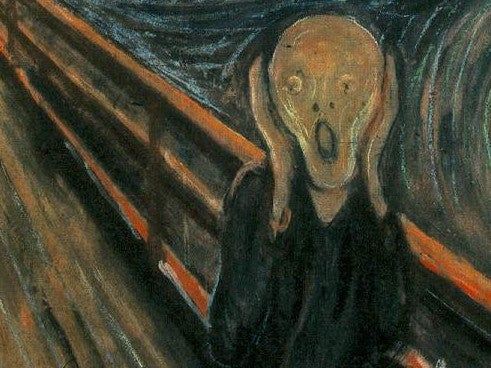
Although the fear argument is plausible, three complications trouble us. One difficulty is definitional. Which fears are truly bad and which are too diffuse or idiosyncratic to take into account? “Fear” — standing alone — is way too broad a concept. A related problem is measurement: how is it possible to measure something as subjective as fear, let alone specify ahead of time what level of fear should trigger the prohibition-enforcement rule versus the compensation-enforcement rule? Simply put, how much fear is too much fear? (To his credit, Nozick will grapple with this line-drawing problem in the “risk” subsection of Chapter 4 on pp. 73-78.) But even if we could measure fear and figure out what the fear threshold should be, there is a bigger problem with the fear argument. Aren’t harms or wrongs reciprocal in nature? That is, aren’t harms the result of actions taken by the wrongdoer as well as by the victim? If so, why should we privilege freedom from fear over freedom of action? For example — as Nozick will ask later in the chapter (on page 76, to be more precise) — what if persons who are engaged in fear-producing activities were able to preempt the fear problem by providing tranquilizer pills to their potential victims?

But we are getting ahead of ourselves, for there is yet another problem with the fear argument. In a word, what’s so special about fear? If persons are to be treated the Kantian way, with dignity and respect, why not prohibit all boundary crossings, not just fear-producing ones? Nozick will address this question in the remaining subsections of Chapter 4, and so will we — in our next blog post …

 
Where does fear actually come from?
Posted in Uncategorized | 2 Comments