
Coming soon! (Below the fold is the abstract of Eric Posner and Adrian Vermuele’s thought-provoking paper “The Votes of Other Judges.” We will write up our review in the next day or two.) Continue reading
Creative Commons
Blogs I Follow









Coming soon! (Below the fold is the abstract of Eric Posner and Adrian Vermuele’s thought-provoking paper “The Votes of Other Judges.” We will write up our review in the next day or two.) Continue reading

Hat tip: Lauren Rad (@laurenclarkrad)

Via Reddit: -ImYourHuckleberry- (h/t Cliff Pickover)
Will Catalonia’s declaration of independence from Spain lead to a second Spanish Civil War? (Here is a link to a previous post regarding Catalan independence.)
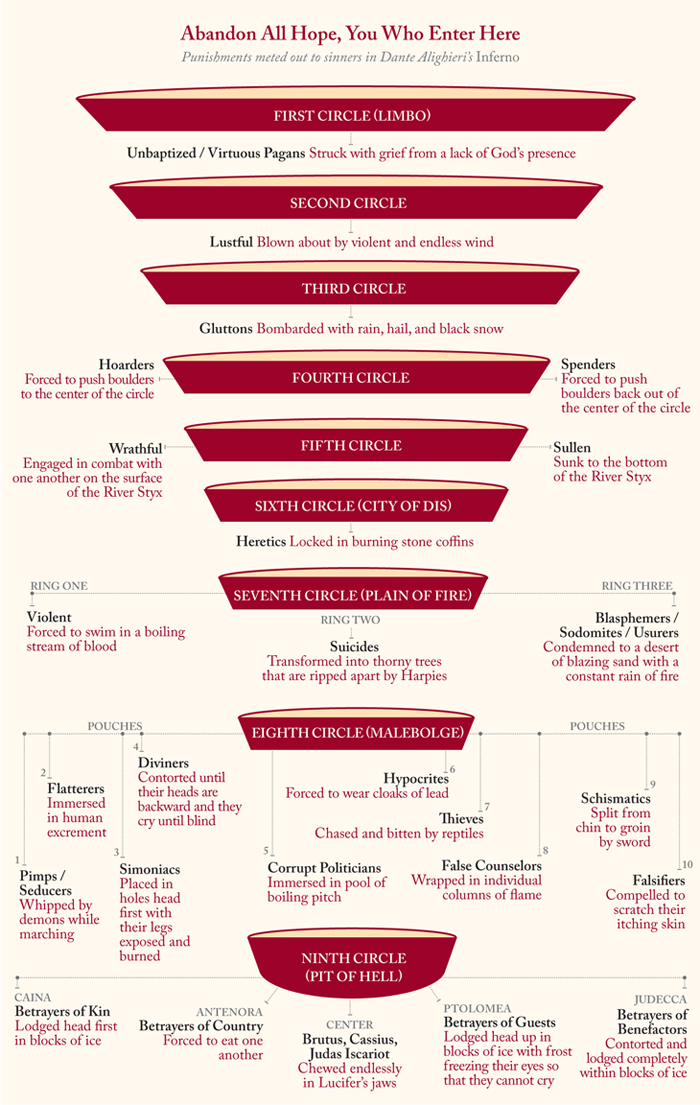
Source: Lapham’s Quarterly (h/t kottke)
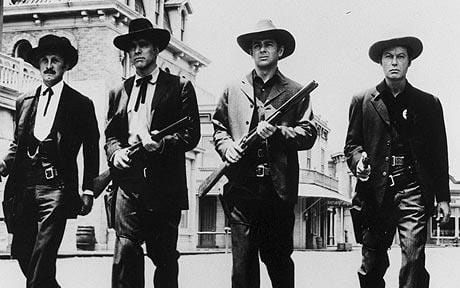
Did you know that today is the 136th anniversary of the historic gun battle between a group of outlaws led by Billy Clanton and the McLaury brothers and a group of lawmen led by Wyatt Earp and Doc Holliday at the O.K. Corral in Tombstone, Arizona Territory? Our friend and colleague Steven Lubet, who brought this fact to our attention, wrote an entire book about this episode and the legal repercussions and miscarriage of justice that occurred after the dust settled. He has also blogged about this historic event here: “Although the shootout is legendary, it is less well known that Wyatt Earp and his brothers, and Doc Holliday, were prosecuted afterward for the murder of Billy Clanton and Tom and Frank McLaury. The Earps were represented by Tom Fitch, one of the most accomplished trial lawyers of the late nineteenth century, who fortuitously happened to be living in Tombstone at the time. The evidence against the Earps and Holliday included eyewitness testimony from the county sheriff, who said that the dead men had been trying to surrender when they were shot down, but Fitch’s brilliant lawyering managed to get the case dismissed at the preliminary hearing.”
In honor of all-around great guy and French basketball power forward Boris Diaw:
Are there any moral truths? On this day in history, the Moral Science Club–a formal discussion group for Cambridge University’s philosophers–held a meeting to explore this very question. British authors John Eidinow and David Edmonds wrote an entire book (their book is one of my favorite non-fiction books of all time) about this particular meeting, because it was the only time in history that Bertrand Russell, Ludwig Wittgenstein, and Karl Popper were in the same room. These three great philosophers, along with several philosophy students and their professors, assembled in King’s College at 8.30pm, in a set of rooms in the Gibbs Building, number three on staircase H. In the words of Eidinow and Edmonds: “H3 was just as neglected as the other rooms in the building, squalid, dusty and dirty. Heating was dependent on open fires and the inhabitants protected their clothes with their gowns when humping sacks of coal. That evening, the guest speaker was Dr Karl Popper, up from London to deliver an innocuous-sounding paper, ‘Are There Philosophical Problems?’ *** Yet, to this day, no one can agree precisely what took place. What is clear is that there were vehement exchanges between Popper and Wittgenstein over the fundamental nature of philosophy. These instantly became the stuff of legend.” Bonus materials: Here is Adam Gopnik’s beautiful essay in honor of Popper. Also, philosopher John Wilkins recounts the H3 poker incident, starting at 5’36” in the video below:
We’ve been reading Wendell Wallach and Colin Allen’s fascinating book “Moral Machines: Teaching Robots Right from Wrong,” a book we discovered last month at a conference on Artificial Intelligence and the Law held at Savannah Law School. (Dr Wallach was the keynote speaker.) Although their book was published in 2010, the recent spat between Elon Musk and Mark Zuckerberg over the future of AI makes “Moral Machines” a timely read, since Wallach and Allen offer a comprehensive overview of many issues relevant to “machine morality.”
Nevertheless, the premise of their book is off base. Why? Because even if we could teach or program machines to be ethical, so what? Ethics does not provide a sufficient safeguard against evil. In fact, I would go as far as to argue that it is a complete waste of time to program ethics into machines. Which theory of ethics would we choose from? There are so many competing theories of right and wrong, that any ingenious person or machine could justify just about any decision on moral grounds. By the same token, I am not sanguine about the prospects of “crowdsourcing” morality, since the crowd could be wrong on moral matters. Instead of machine morality, perhaps we should focus on machine mortality: we could require all advanced machines or strong AI to self-destruct after some period of time.
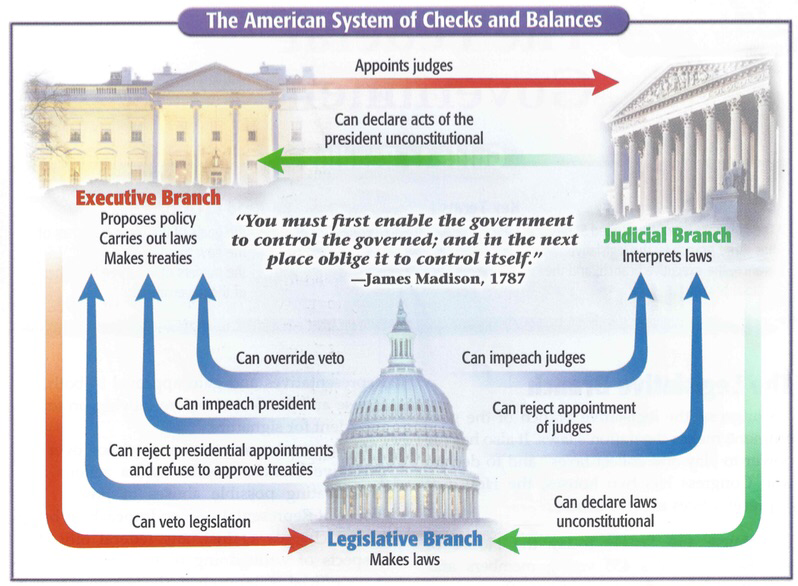
In the alternative, we would spend less time thinking about ethics and more time inventing new systems of effective checks and balances: machines that monitor and counter other machines! That is, instead of trying to teach ethics to future machines (as Wallach & Colin propose), or instead of “crowdsourcing” morality (as others have proposed), why not look at this problem in game theory or strategic terms? Consider the domains of markets or politics. Without competition (i.e. open markets with free exit and entry) or some formal system of checks and balances (such as the constitutional one depicted in the image below), no amount of ethics or morality will save us from ourselves. Why doesn’t this same logic apply to AI?


Welcome to the online home of the IASS
Hopefully It’s Interesting.
In Conversation with Legal and Moral Philosophers
Relitigating Our Favorite Disputes
PhD, Jagiellonian University
Inquiry and opinion
Life is all about being curious, asking questions, and discovering your passion. And it can be fun!
Books, papers, and other jurisprudential things
Ramblings of a retiree in France
BY GRACE THROUGH FAITH
Natalia's space
hoping we know we're living the dream
Lover of math. Bad at drawing.
We hike, bike, and discover Central Florida and beyond
Making it big in business after age 40
Reasoning about reasoning, mathematically.
I don't mean to sound critical, but I am; so that's how it comes across
remember the good old days...
"Let me live, love and say it well in good sentences." - Sylvia Plath
a personal view of the theory of computation
Submitted For Your Perusal is a weblog wherein Matt Thomas shares and writes about things he thinks are interesting.
Logic at Columbia University
Just like the Thesis Whisperer - but with more money
the sky is no longer the limit
Technology, Culture, and Ethics
Just like the horse whisperer - but with more pages
Poetry, Other Words, and Cats

 prior probability