Facemash and the burden of proof

Did Mark Zuckerberg intend to harm or offend anyone when he created Facemash back in ’03? The answer to this question might depend on the burden of proof. In general, when someone is accused of wrongdoing like hacking or theft (or sexual harassment or sexual assault), who has the burden of proof (the accuser or the accused?), and what should the burden of proof be? In brief, the process of adjudication must be fair. Persons accused of misconduct have the right to due process. But what is “due process”? At a minimum, due process requires notice and a hearing: the accused must be given adequate notice of the charges against him, he must have an opportunity to defend himself, and his case must be presided over by an impartial judge or decision-maker. In addition, due process requires that the burden of proof be imposed on the accusing party, not on the accused. Simply put, when one accuses someone of breaking the rules, the accused party is generally presumed innocent. It is the accuser who must produce sufficient proof that his allegations are true. But how much evidence is enough to prove one’s case? It turns out there are many different levels of proof in the North American legal system:

Related image

Alas, it’s not clear what burden of proof the Ad Board used in the Facemash case. Beyond the friendly confines of the Ivory Tower, courts use different burdens of proof, depending on the type of case it is hearing. In criminal cases, the prosecution must prove its case beyond a reasonable doubt, but a much lower burden of proof is used in most civil cases (i.e. cases for money damages): the preponderance of the evidence or “more likely than not”. In other words, when one party (the plaintiff) sues another (the defendant) in tort or for breach of contract, the plaintiff wins if his story is more believable than the defendant’s.
Going back to the Facemash incident, considering that Zuckerberg was facing possible expulsion, what burden of proof should the Ad Board have used? Among other things, he was accused of infringing copyrights and invading privacy, actions that could in theory generate both civil and criminal liability! But at the same time, Harvard is a private institution, so shouldn’t it be free to use whatever burden of proof it wants in student misconduct cases? As we shall in my next blog post, it depends … It depends on whether you adopt a broad interpretation of Title IX or a narrow one!
Posted in Uncategorized | 3 Comments

What is sexual harassment?

As I mentioned in my previous post, my students (playing the roles of Harvard law professors circa 2003-04) will be re-enacting a faculty tea and debating a number of contentious questions relating to Harvard’s response to the Facemash incident. Let’s tackle the question of sexual harassment first, a topic that has dominated the headlines lately. In particular, what acts constitute harassment; how broadly or narrowly should sexual harassment be defined? By way of example, here is how the U.S. Equal Opportunity Employment Commission (EEOC) defines sexual harassment:

It is unlawful to harass a person … because of that person’s sex. Harassment can include “sexual harassment” or unwelcome sexual advances, requests for sexual favors, and other verbal or physical harassment of a sexual nature.

Harassment does not have to be of a sexual nature, however, and can include offensive remarks about a person’s sex. For example, it is illegal to harass a woman by making offensive comments about women in general *** Although the law doesn’t prohibit simple teasing, offhand comments, or isolated incidents that are not very serious, harassment is illegal when it is so frequent or severe that it creates a hostile or offensive work environment ***

What about Facemash? Under the EEOC’s broad definition, was the Facemash website a form of sexual harassment? Put another way, was Facemash an “isolated incident” (a harmless prank), or was it severe enough to create a hostile or offensive university environment? Also, does it matter that Zuckerberg was a student — not an employee — when he created Facemash? Maybe not. Title IX, a federal law enacted in 1972, prohibits sex discrimination in educational institutions that receive federal funding. While Title IX is a very short statute, Supreme Court decisions and guidance from the U.S. Department of Education have given it a broad scope covering sexual harassment as well as sexual violence. Under Title IX, colleges like Harvard are legally required to respond and remedy hostile educational environments and failure to do so is a violation that means a school could risk losing its federal funding. This legal requirement, in turn, raises a new question: do Harvard’s “Ad Board” procedures (circa 2003) comply with Title IX? We will address that fundamental question in our next blog post …

Image result for sexual harassers

Credit: Steve Isaacs

Posted in Uncategorized | Leave a comment

Debating Due Process (Game Day 2)

As I mentioned in a previous post, this semester my business law students are playing a role immersion game based on a hacking incident that occurred at Harvard in the fall of 2003, when Harvard sophomore Mark Zuckerberg created a clandestine website called Facemash that allowed users to rank the hotness of co-eds at Harvard. In our first class, students were randomly assigned into roles (e.g., presiding officers, campus and town media outlets, and anti-Facemash, pro-Facemash, and wild card groups), and each group was given a role sheet outlining that group’s objectives, along with some recommend reading. Then in our second class, my students re-enacted an emergency meeting of the Harvard Undergrad Council and debated whether Facemash was a harmless prank or whether Zuckerberg broke any laws (circa 2003) or moral duties when he built Facemash. (In real life, Zuckerberg was “adboarded” by Harvard and either admonished or put on probation, but lucky for him, he was not sued or criminally prosecuted for his role in the Facemash hacking incident.)

In our next class, my students will re-enact a faculty tea at Harvard Law School and will debate some procedural aspects of the disciplinary process at Harvard. Specifically, my students will play Harvard law professors (each student group was already assigned a “faculty advisor” from the law school), and they will debate whether the ad board process (circa 2003) is fair or not, especially in cases involving allegations of sexual harassment or sexual assault. (Because Facemash allowed users to rank women based on their appearance, one could argue that the Facemash prank contributed, even in a small way, to a hostile environment on campus.) Among other things, the law professors will debate the following due process issues:

  1. What types of cases should the Ad Board hear? Should allegations of sexual assault and sexual harassment be left to the courts?
  2. Are the procedures of the Ad Board fair and consistent with due process? If not, what due process rights should students have when they are accused of misconduct? In particular, what burden of proof should the Ad Board use in cases involving student misconduct?
  3. Should Harvard University prepare an anti-sexual harassment policy, and if so, how narrowly or broadly should “sexual harassment” be defined?

Stay tuned. I will say more about each one of these three issues in my next three blog posts. (For a summary of due process rights, see below the fold.) Continue reading →

Posted in Uncategorized | 1 Comment

Sour Patch Madness

Screen Shot 2018-02-26 at 6.14.38 PM

Credit: Michelle Rial (reallifecharts); hat tip: kottke.

Posted in Uncategorized | 2 Comments

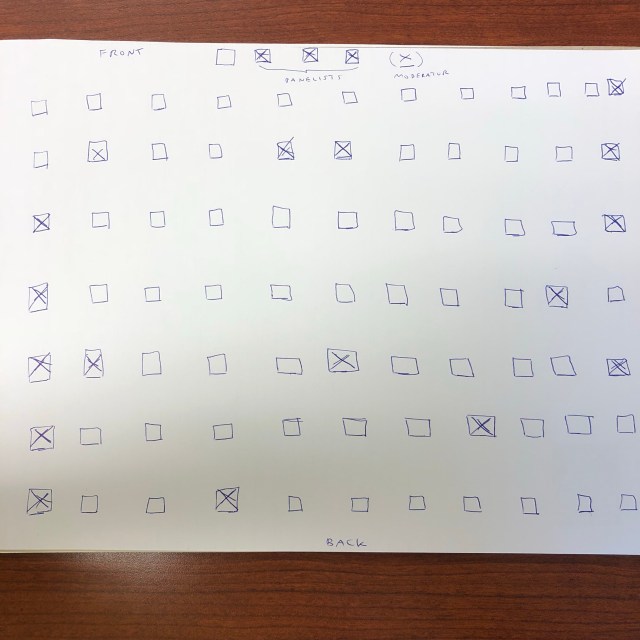
Spatial distribution of an academic audience

See image below. A box with an X indicates an occupied seat, while empty boxes indicate empty seats. When there are more spaces (chairs) than audience members, why do law professors prefer sitting at both ends of a room rather than the middle of the room?

Posted in Uncategorized | 4 Comments

English Indenture (circa 1408)

An indenture is an early form of contract, commonly used during the Middle Ages in England. Below is an original document dated 5 November 1408 (!), from Professor Tina L. Stark’s collection of old English indentures. (Prof. Stark presented her beautiful collection of antique indentures, bonds, deeds, and leases during the 13th annual International Conference on Contracts (KCON XIII) in Orlando, Florida.)

Posted in Uncategorized | Leave a comment

Status update

We will be attending the 13th annual International Conference on Contracts (KCON XIII) in Orlando, Florida this weekend (the conference program is available here), where we will moderate a panel on contract theory and present a Bayesian analysis of the rule in Hadley v. Baxendale, so we will take a short break from blogging until Monday. Hasta pronto!

Posted in Uncategorized | Leave a comment

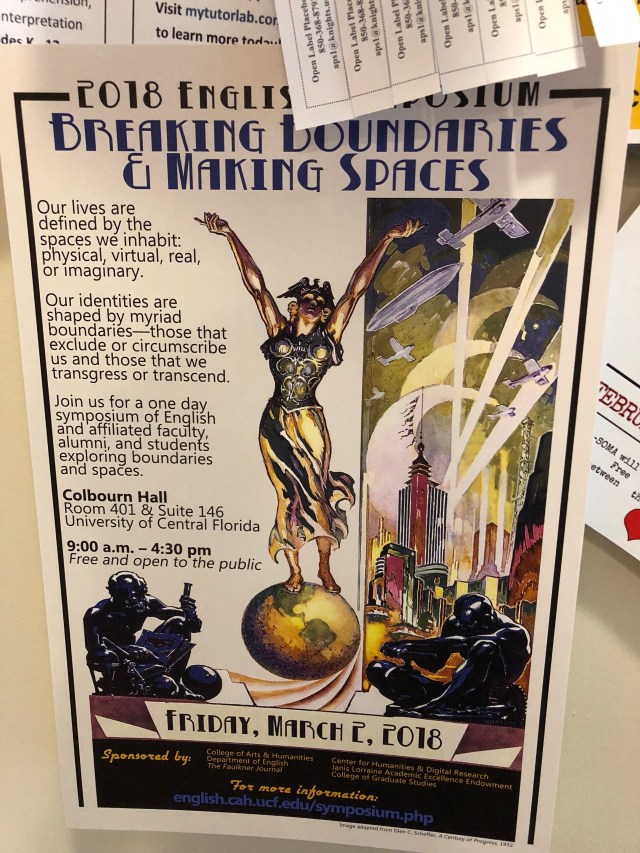
A beautiful conference poster

See you there!

Posted in Uncategorized | Leave a comment

Islamic star patterns

More information here; hat tip: @pickover.

Posted in Uncategorized | 2 Comments

Overview of Prediction Markets

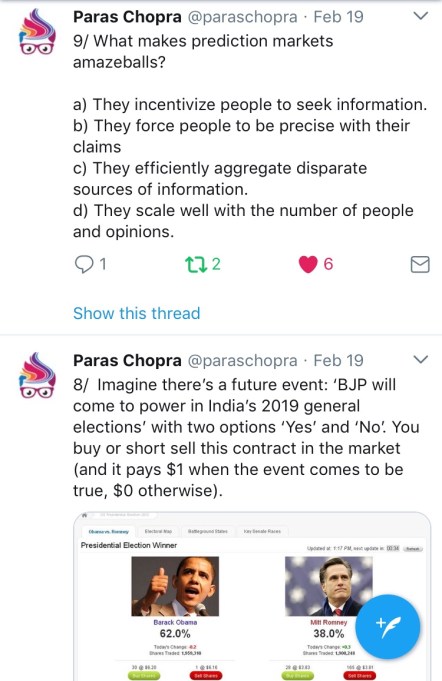
Via Twitter (@paraschopra), check out this excellent explanation of prediction markets (PMs) by our new friend Paras Chopra. This thread consists of 27 tweets in all; for your reference, below is a screenshot of tweets nine and eight:

Credit: Paras Chopra

Posted in Uncategorized | Leave a comment