Crimes against logic?

One of our favorite textbooks is Crimes Against Logic by Jamie Whyte, published in 2004 by McGraw-Hill Education. If Dr Whyte were to ever publish a second edition, perhaps he could include the following tweet in the “felony section” of his book as well as our “reply tweet” below:

Screen Shot 2018-02-19 at 1.51.41 PM

People, cars are more dangerous than guns!

Posted in Uncategorized | 9 Comments

Unwritten Rules

Via the work of Jesse Schell, we recently discovered this fascinating 23-page essay by Stephen Sniderman titled “Unwritten Rules.” Here is an excerpt (edited by us for brevity):

Suppose I challenge you to a game of tic-tac-toe. Could anything be more straightforward? But just to be sure, we review the rules. We’ll play on a 3×3 grid, we’ll alternate turns, we’ll play only in empty squares, I’ll play X‘s, you play O‘s, I’ll play first, and the first player to get three of his/her symbol in a row, column, or diagonal wins the game. Aren’t these all the rules of tic-tac-toe? Well, for one thing, nothing has been said about time. Is there a time limit between moves? ***

Suppose we add the following rule:  Players will make their moves within a reasonable amount of time. Have we solved anything? What is a “reasonable” amount of time? One minute? Five? 30? A million? And who determines what is reasonable—the player whose turn it is or the other player? Such a rule is actually self-defeating because it calls attention to the fact that we cannot spell out what “reasonable” means.

So why not just specify a time limit for each move? Because we would just create even more perplexing problems for ourselves. For one thing, we would have to indicate when a player’s time is running and when it is not. If one player had to answer the phone, for example, would we count that time or wouldn’t we? To state the rule fully, we would have to list every life situation that could possibly interrupt a player’s turn and state whether it should count against that player’s time limit. Obviously, we could never complete such a list.
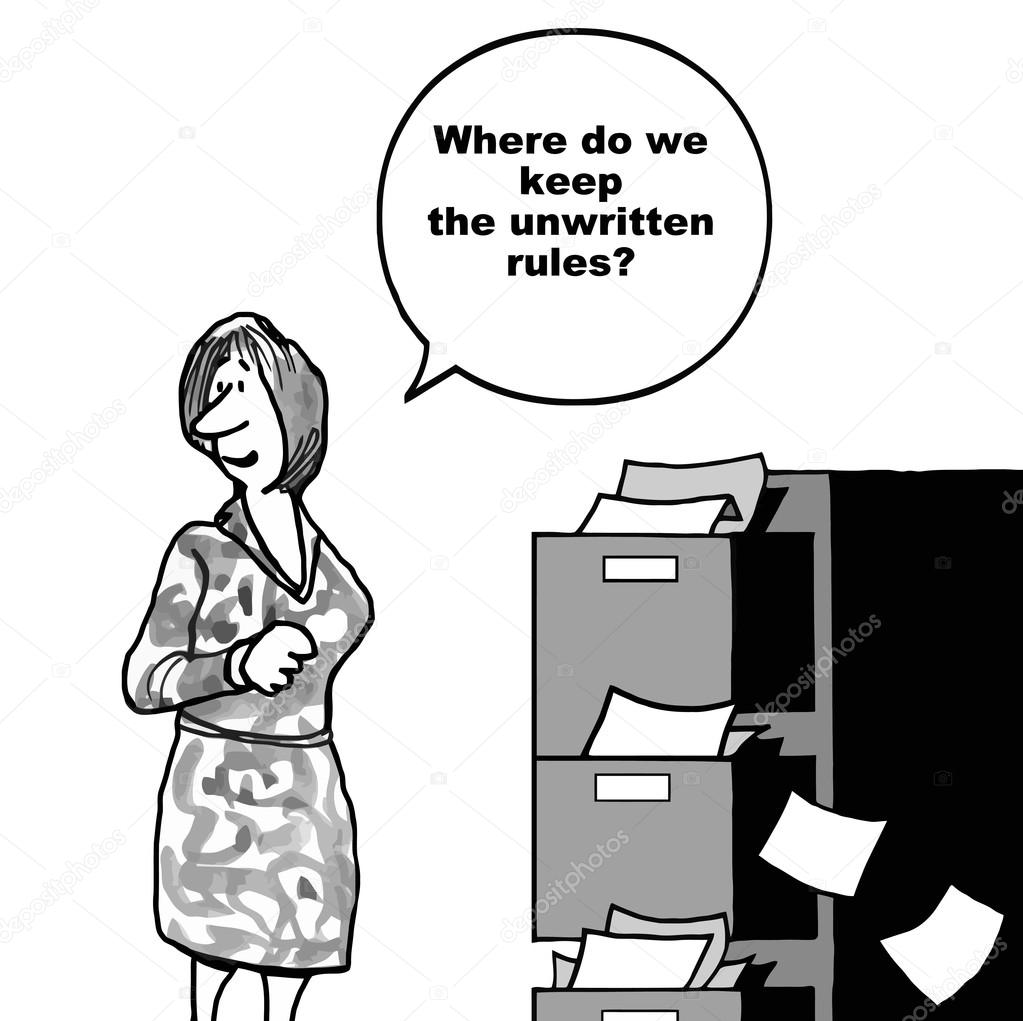
Image result for unwritten rules

Image Credit: Deposit Photos

Posted in Uncategorized | Leave a comment

Quantifying the burden of proof

Is it improper for prosecutors (or for defense attorneys) to quantify the burden of proof in jury trials? Check out the recent case of People v. Van Meter (available here), in which a Colorado court of appeals reasoned as follows:

During voir dire, the prosecutor showed the potential jurors an incomplete puzzle of a space shuttle (with only sixty-six percent of the pieces present), stated that the image was a space shuttle “beyond a reasonable doubt,” and asked the potential jurors whether anyone disagreed, which none did; the prosecutor also showed the image during closing arguments. By using the iconic and easily recognizable space shuttle image, the prosecutor “invite[d] the jury to jump to a conclusion about [the] defendant’s guilt,” especially because the jury was shown an image and told that it was a space shuttle “beyond a reasonable doubt.” See alsoPeople v. Katzenberger, 101 Cal. Rptr. 3d 122, 127 (Cal. Ct. App. 2009) (concluding that a prosecutor improperly quantified the burden of proof by displaying an eight-piece puzzle of the Statue of Liberty missing two pieces and saying “this picture is beyond a reasonable doubt”). The prosecutor’s use of a two-thirds completed puzzle analogy also improperly quantified the burden of proof, even where the prosecutor did not undertake to quantify the number or percentage of missing pieces.

(Hat tip: Volokh Conspiracy.)

Posted in Uncategorized | 6 Comments

FYI

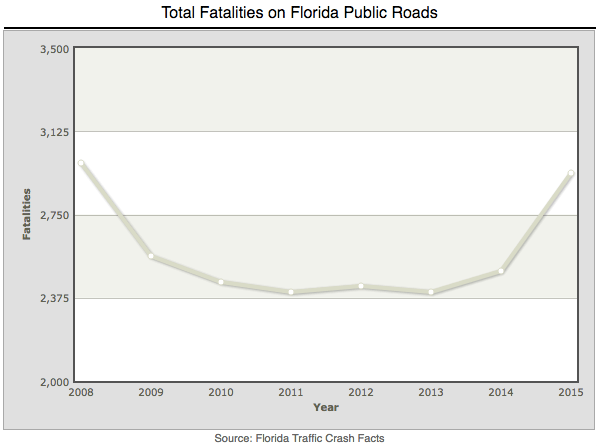
Screen Shot 2018-02-17 at 5.40.37 PM

FYI: Florida roads and highways are far more dangerous than Florida schools.

Posted in Uncategorized | 13 Comments

Give them an A++

(Hat tip: Alfred L. Brophy, via The Faculty Lounge.)

Posted in Uncategorized | Leave a comment

Annals of Futility: Gandhi’s Letter to Hitler

How many divisions do the pacifists have? Still, I guess it was worth a try. Hat tip: @pickover.
Posted in Uncategorized | 4 Comments

Art imitates life

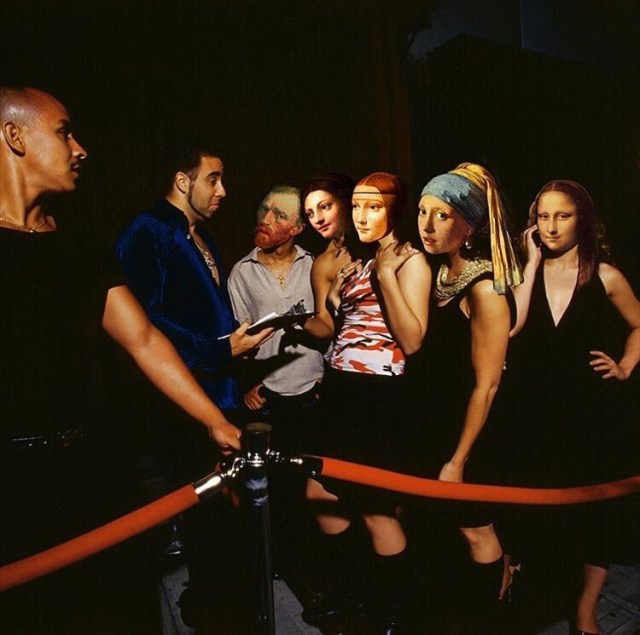
Caption: “We’re on the list!” The creative collage pictured above is by the artist Dan Cretu. We discovered the amazing Mr Cretu via kottke.org; you can check out more of his whimsical works here, via Instagram. (Happy Valentine’s Day, Sydjia.)
Posted in Uncategorized | 1 Comment

Homage to Peak Memory

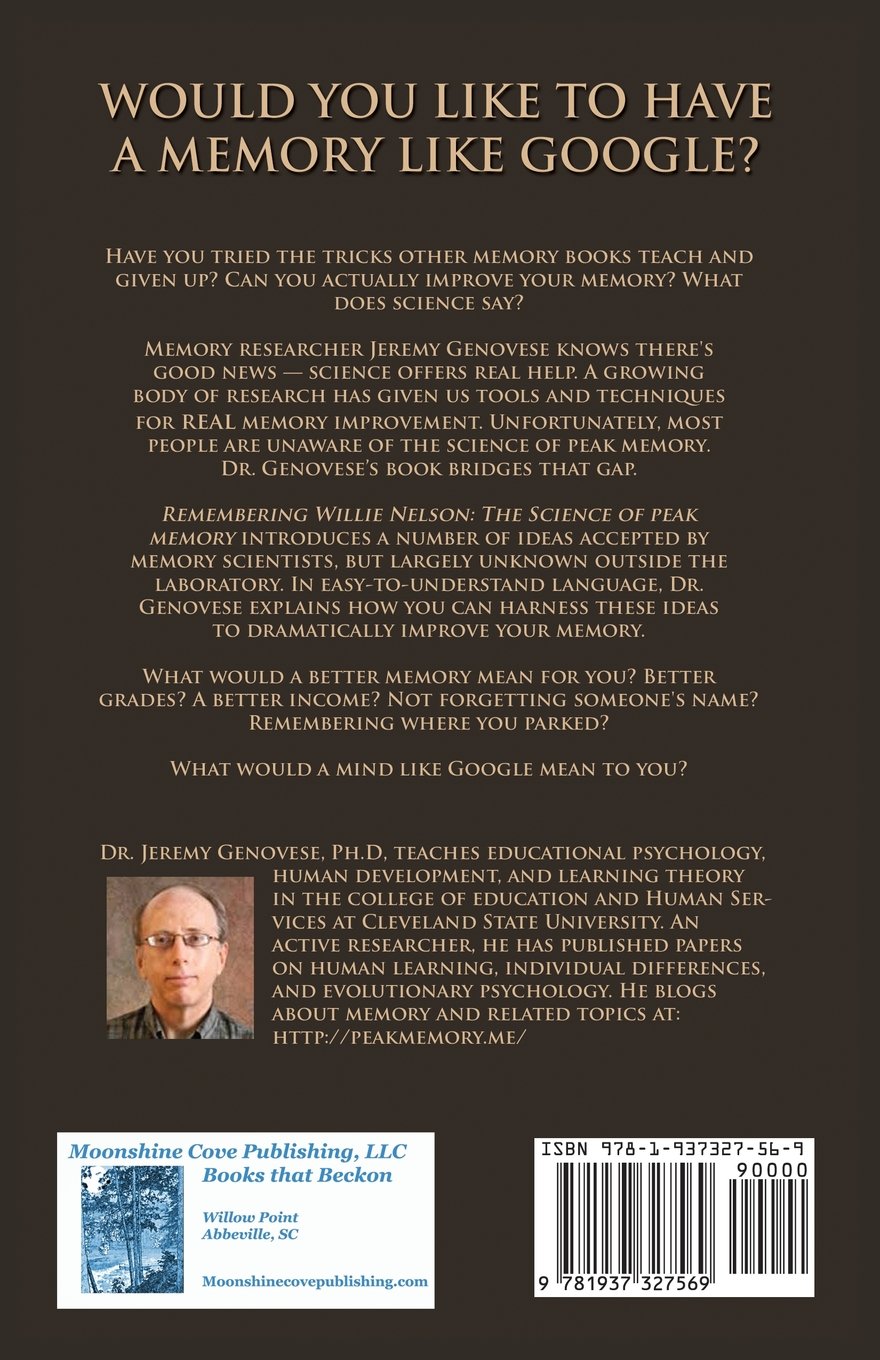
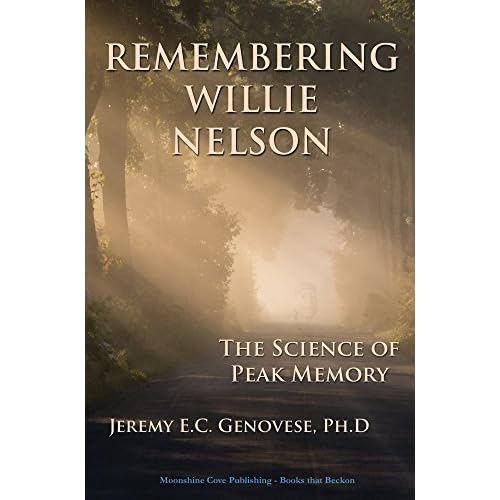
Do people have a finite amount of memory in their brains, or is it actually possible to expand and improve one’s memory through mental exercises and other methods? My friend and colleague Jeremy E.C. Genovese–a professor of human development and educational psychology at Cleveland State University and the author of Remembering Willie Nelson: The Science of Peak Memory (2014), the front and back of which are pictured below–has devoted a large part of his professional career to these fundamental questions and has blogged about many aspects of the science of memory. (Check out his eclectic blog Peak Memory here.) Alas, he recently announced that he will be taking a break from blogging to pursue other scholarly projects. Although we’re going to miss his daily musings on his old blog, we can’t wait to see what he has in store for us next!

Image result for Remembering Willie Nelson: The Science of Peak MemoryImage result for Remembering Willie Nelson: The Science of Peak Memory
Posted in Uncategorized | Leave a comment

Assorted links (Olympic mascot edition)

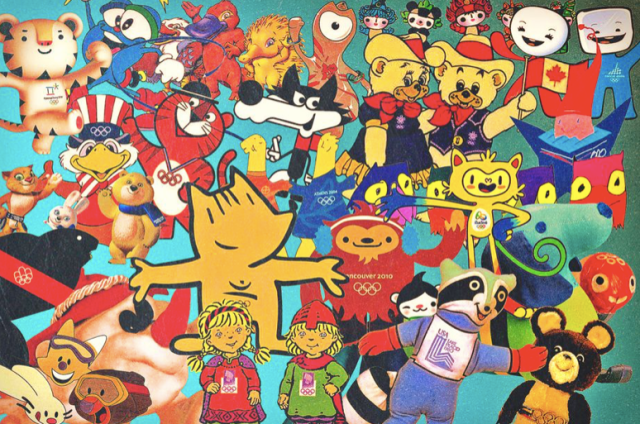
What is your favorite Olympic mascot of all time? Shaker Samman, an intern at The Ringer, offers for our edification this entertaining “definitive ranking” of every Olympic mascot since 1968. (Hat tip: digg.) By the way, Mr Samman is not the first to play this game. Check out some of these additional 178,000 links here (via Google).

Screen Shot 2018-02-11 at 8.32.03 PM

Credit: The Ringer

Posted in Uncategorized | Leave a comment

My first “reacting” class

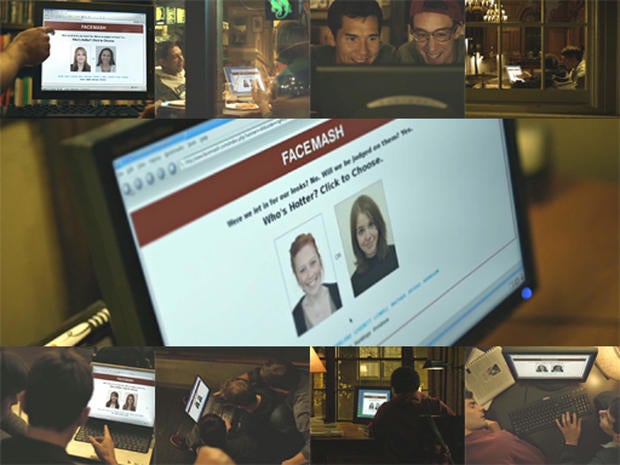
As I mentioned in a previous post, I began teaching law in the summer of 1998 — 20 years ago! — but this is the first time that I am not giving lectures. Instead, I created a business law game called “Hacking Harvard”, assigned well-defined roles to my undergraduate students, and let them debate the law and ethics of a clandestine (and possibly illegal) website called Facemash that went viral at Harvard in the fall of 2003. (Facemash allowed users to rank the “hotness” of Harvard students, and the events leading up to the Facemash fiasco are depicted in the 2010 movie “The Social Network”; a recreation of the website is pictured below.) One group of students was assigned the role of the Harvard Undergraduate Council (UC), and they called to order an emergency meeting to debate the Facemash controversy during yesterday’s class session. In addition, they themselves were the ones who presided over the class! I must confess that I was totally nervous about how this role-play experiment would turn out. In fact, I could not sleep the night before yesterday’s class. But all my fears were unfounded. Not only did the presiding officers do an excellent job of conducting the emergency meeting; the students who were assigned to the anti-hacker and pro-hacker groups made their points very eloquently and effectively. They got into their roles, did their research, and supported their arguments with facts and law. Let’s take Sunday off, but I will be blogging more about my Facemash game in the days ahead …

Image result for facemash the social network

Image credit: Columbia Pictures

Posted in Uncategorized | 1 Comment