Review of Miller’s critique of libertarian theory

In this post, we will review Richard Miller’s defense of social democracy and his critique of libertarian theory in his erudite essay titled “Learning from Libertarianism: Thanks from an Unrepentant Social Democrat,” which was published in the Routledge Handbook of Libertarianism. (Professor Miller is a professor of ethics at Cornell.) Unlike most of the authors in this collection of essays, however, Prof Miller is not a big fan of libertarian political theory. Instead, he believes in “social democracy”–a euphemism for the use of public coercion to redistribute income and promote economic equality. Alas, his critique of libertarian theory is weak and his defense of “social democracy” logically incoherent.

Let’s start with his logically incoherent defense of social democracy. According to Professor Miller, social democracy is superior to libertarian politics because social democracies are committed to “an impartial concern for fellow-citizens’ well-being” (his words, not ours). But this argument is logically untenable. Specifically, why should so-called social democrats or progressives be only concerned for the well being of their “fellow citizens”? Why don’t social democracies have a moral obligation to feed, house, and clothe all persons? (Also, what about the well-being of nonhuman animals?) After all, if we have a fundamental moral duty to show concern for others (Miller’s unstated but unavoidable premise), why does morality limit the expression of this concern to just our fellow-citizens, an example of brute luck or accident of birth if there ever was one!

What about Prof Miller’s critique of libertarian values? He says: “A committed libertarian must condemn as wrong forcibly taking a life-preserver ornamenting another’s flagpole to save someone from drowning and must support the enforcement of contracts to enter into slavery and clauses in home sales forbidding subsequent sales to African-Americans.” This facile critique of libertarianism, however, is silly and easy to rebut. Let’s start with the life-preserver hypothetical. (Let’s put aside the issue of whether an “ornamental” life-preserver would actually work. That is an empirical question outside the realm of ethics and moral philosophy, except for Humean consequentialists.) In this case, a true or “committed” libertarian would not be opposed to taking a life-preserver to save someone from drowning. A libertarian would only require that compensation be paid to the owner of the flagpole for the use of his ornamental life-preserver.

But what about slave contracts and restrictive covenants? After all, libertarians are champions of the principle of liberty of contract, so broadly speaking, libertarians would say that people should be free to enter into whatever agreements they want to, so long as these are voluntary and based on mutual consent. As a result, a slave contract is easy for a libertarian to condemn, since no person would freely consent to slavery. Restrictive covenants are likewise easy for most (but perhaps not all) libertarians to criticize, since such covenants interfere with free markets and the property rights of existing homeowners, artificially limiting to whom they can sell their homes to.

Related image


Posted in Uncategorized | 1 Comment

Review of Freiman’s defense of libertarian theory

In this post, we will begin our review of 11 essays published in The Routledge Handbook of Libertarianism, a collection of new works edited by Jason Brennan, Bas van der Vossen, and David Schmidtz. Without further ado, let’s begin with Christopher Freiman’s excellent essay on “Libertarianism, Selfishness, and Public Goods.” (For your reference, Professor Freiman is a professor of philosophy at the College of William and Mary.) 

In his essay, Prof Freiman repeats a point associated with the great economist Ronald Coase and with “public choice theory” generally: there is an asymmetry in most calls for public regulation of the economy. (Consider, for example, the clamor for some form of government regulation of Internet giants like Google and Facebook.) Specifically, defenders of government intervention in x area of the economy tend to focus on the existing set of problems created by private actors in that area of the economy, but at the same time, they tend to ignore the new set of problems that will be created by public actors if those public actors are indeed allowed to regulate that area of the economy. As Prof Freiman correctly notes, public actors are NOT immune from the same imperfections that plague private actors and private action (e.g. externalities, short-term thinking, free riding, etc.). As a result, instead of positing ideal public actors, we must consider the possibility of selfish, unjust, or ignorant public actors.

What does all this have to do with libertarian theory? Everything. Libertarian or laissez-faire policies may produce suboptimal outcomes, but so what? Government regulation might produce even worse outcomes, or to borrow Prof Freiman’s own eloquent example:

Think of it this way. All-Star and MVP baseball player Bryce Harper only gets a hit on about 1/3 of his at bats. Failing 2/3 of the time is pretty bad in absolute terms. So should the Washington Nationals cut him? Of course not. The reason is simple: the next best alternative to Harper is an even worse hitter. The standard for judging athletes isn’t perfection but rather the other available options. It turns out that Harper is about as good as it gets. The same can be said of the private sector; it’s often the least flawed of our nothing-but-flawed options.

Although we agree with Prof Freiman, we would also note that some forms of government intervention are not only a necessary evil, but also the lesser evil when compared with laissez-faire. By way of example, consider the brawl between between Bryce Harper and Hunter Strickland that occurred earlier this season. (See film clip below.) What would have happened had there been no umpires to stop the fight?

Posted in Uncategorized | 1 Comment

Routledge Handbook of Libertarianism

Routledge has published a new handbook of libertarian theory; see book cover below. Unfortunately, the book is way too expensive, but our friends and colleagues at The Volokh Conspiracy have posted the following summaries of select essays published in the handbook:

  1. Christopher Freiman, “Libertarianism, Selfishness, and Public Goods” (our review of Freiman is here)
  2. Richard W. Miller, “Learning from Libertarianism: Thanks from an Unrepentant Social Democrat” (our review of Miller is here)
  3. John Thrasher, “Libertarianism and Contractarianism” (review of Thasher here)
  4. Ilya Somin, “How Political Ignorance Strengthens the Case for Libertarianism” (review of Somin here)
  5. Javier Hidalgo, “The Libertarian Case for Open Borders” (review of Hidalgo here)
  6. Jessica Flanigan, “Libertarianism and Medicine” (review of Flanigan here)
  7. Thomas Mulligan, “Libertarianism vs. Meritocracy” (review of Mulligan here)
  8. Fabian Wendt, “Libertarian Property Rights and the Lockean Sufficiency Proviso” (review of Wendt here)
  9. Ryan Muldoon, “Reasons to Tolerate” (review of Muldoon here)
  10. Jahel Queralt, “Economic Liberties are also the Liberties of the Poor” (review of Queralt here)
  11. Hillel Steiner, “Free Markets and Exploitation” (review of Steiner here)
Image result for Routledge Handbook of Libertarianism
Posted in Uncategorized | 7 Comments

Assorted links (Puerto Rico post-Hurricane Maria edition)

Updated 29 Sept. 2017:

  1. Photos from Puerto Rico, via The Atlantic
  2. Puerto Rico’s long-term problems, via Bloomberg View (Tyler Cowen)
  3. Facts and observations about the Jones Act, via Marginal Revolution (Tyler Cowen)
  4. The economics of natural disasters, via The Federal Reserve Bank of St Louis (Kevin L. Kliesen)
  5. A reverse Dutch auction of Puerto Rico’s public debts, via prior probability (F. E. Guerra-Pujol)
  6. Rexford Tugwell and the New Deal in Puerto Rico, via PR51st
  7. What if Puerto Rico becomes part of an already existing State?, via MR (Tyler Cowen)
  8. Satellite images of the Island, before and after Maria, via Twitter (@NOAA)
As an aside, doesn’t the natural disaster that devastated our beloved Puerto Rico pose a difficult problem for our libertarian friends? After all, libertarians generally distrust government (and for good reason, we might add), but what happens when there is a national emergency or a natural disaster, like the one affecting the Island now?
Posted in Uncategorized | Leave a comment

AI Consciousness Test

Check out this fascinating blog post by Susan Schneider and Edwin Turner announcing a new method of detecting machine consciousness. Here is one tantalizing excerpt (edited by us for brevity):

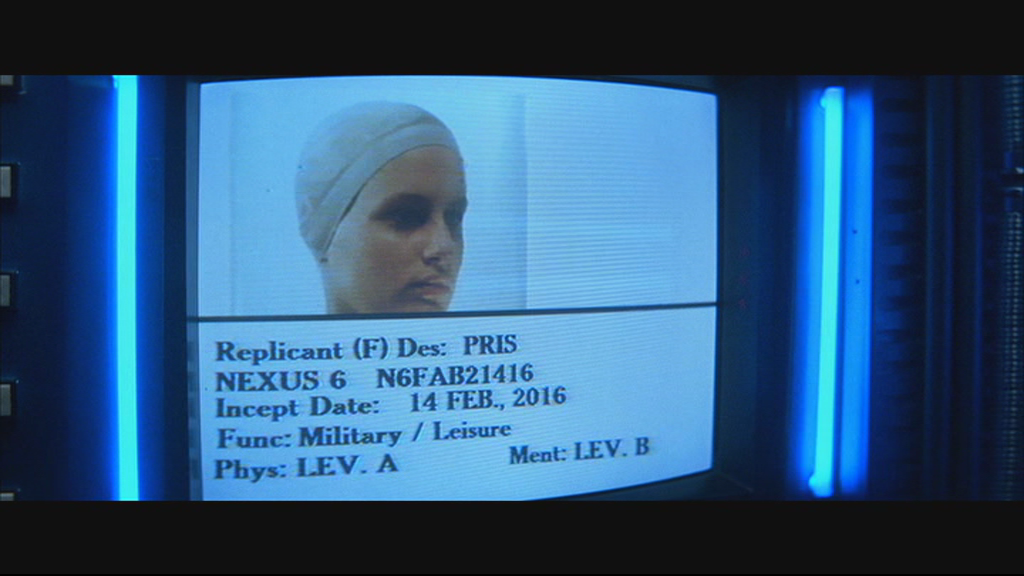
“… could an artificial intelligence (AI) ever have experience, like some of the androids depicted in Westworld or the synthetic beings in Blade Runner? The question is not so far-fetched… As AIs grow more sophisticated, they are projected to take over many human jobs within the next few decades. So we must ponder the question: Could AIs develop conscious experience? *** Based on this essential characteristic of consciousness, we propose a test for machine consciousness, the AI Consciousness Test (ACT), which looks at whether the synthetic minds we create have an experience-based understanding of the way it feels, from the inside, to be conscious.” (Hat tip: John Danaher, via Twitter.)

Posted in Uncategorized | Leave a comment

Visualization of Big Data

Credit: GO-Gulf Web Design Company; hat tip: Cliff Pickover

Posted in Uncategorized | 1 Comment

JFK in Georgetown

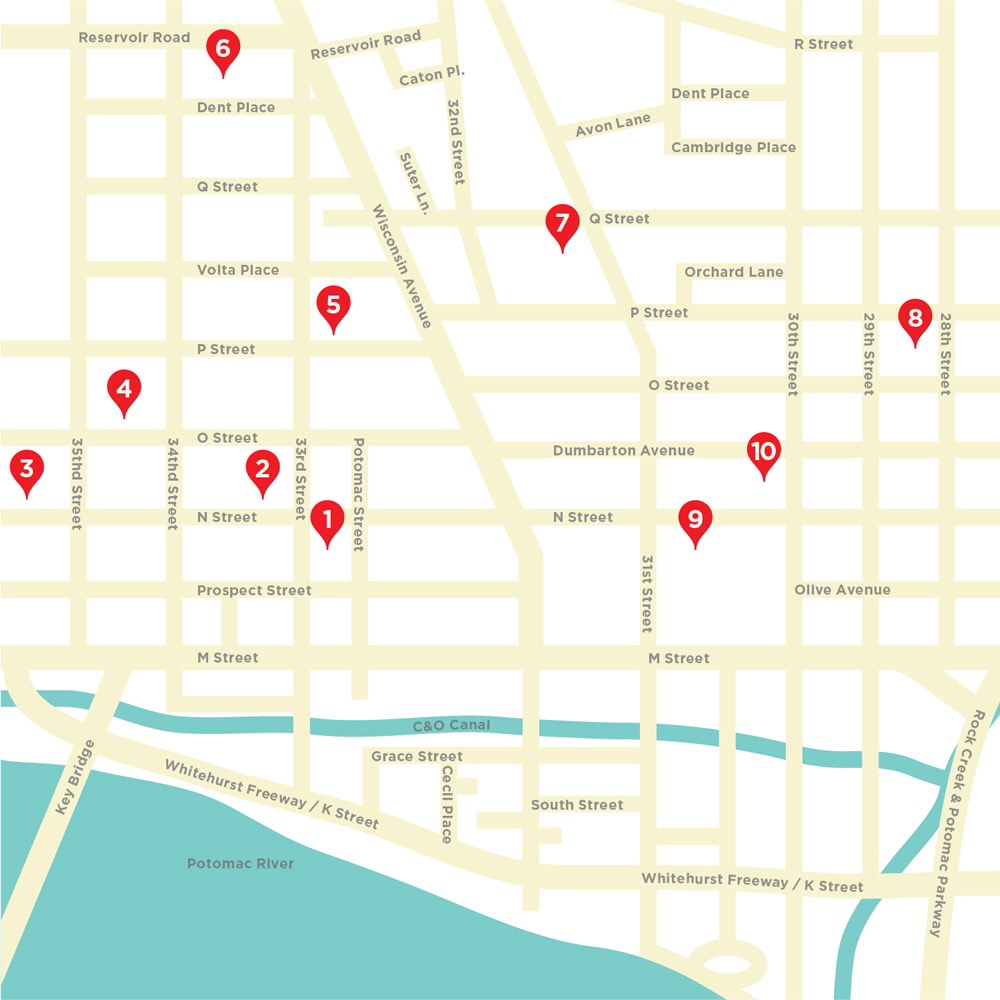
Did you know there are no less than 10 separate addresses (see map below) in the leafy Georgetown neighborhood of Washington, D.C. associated with John F. Kennedy and Jacqueline Onassis? My wife and I spent the day visiting some of these places; you can read about all 10 locations here.

Posted in Uncategorized | Leave a comment

Posner’s new book

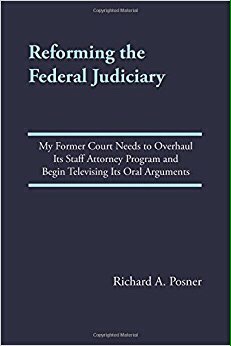
We just ordered our copy of Richard Posner’s new book (pictured below). Along with “Moral Machines” by Wendell Wallace, we will read Posner’s new book and report back soon. (For now, all we will say is this: we think Posner is onto something. Procedural rules can be very complex, so State and federal courts are very inhospitable to pro se litigants, i.e. regular people who aren’t able to afford an attorney. The question is: what, if anything, should we do about this legal failure?)

Posted in Uncategorized | Leave a comment

Why Lessig is wrong

We are attending a symposium on “Internet freedom” at GW Law School in Washington, D.C. today (22 Sept.). My only complaint is that I wish the Federalist Society, which sponsored the conference, had invited Professor Larry Lessig, a champion of Internet regulation and “net neutrality,” to defend the social costs (see below) of Internet regulation. (Note: we will discuss the pros and cons of Internet regulation in future posts.)

Credit: Prof. Michelle P. Connolly

Posted in Uncategorized | 2 Comments

Taxonomy of Numbers

Posted in Uncategorized | 4 Comments