
- BFI: Are you a replicant?
- Urban Dictionary: Voight-Kampff machine
- All the tests: Voight-Kampff test questions
- Google Scholar: Voight Kampf
- YouTube: Ridley Scott’s favorite scene from Blade Runner (see below)
Estamos con la Ciudad de Mexico y la Isla de Puerto Rico.

Check out the fictional floor plans of the Cantina in Star Wars, the offices of Sterling Cooper in Mad Men, and many others here, via bizdaq. (Hat tip: digg.)

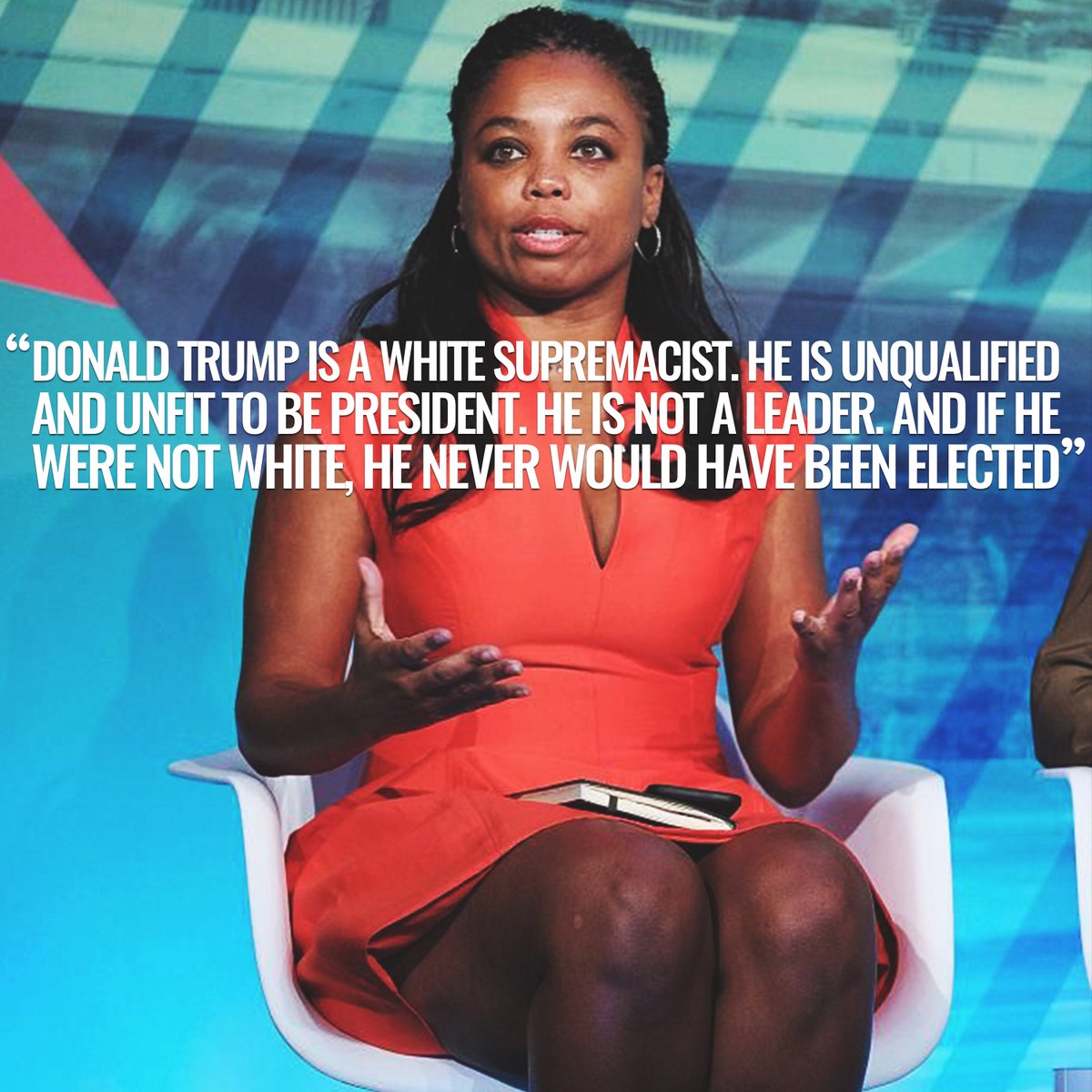
Is Donald Trump surrounded by white supremacists? Is it disrespectful and downright rude to sit down during the national anthem? Although we think Jemele Hill and Colin Kaepernick (pictured below) are wrong, as good libertarians (and good Bayesians!), aren’t we morally obligated to defend their moral right to express themselves? (After all, they might be right!) But that said, by the same logic, don’t NFL team owners and whoever calls the shots at ESPN also have the reciprocal right not to hire (or fire) people they disagree with? If so, whose right to speech should prevail in these cases? More fundamentally, what is the “optimal amount” of free speech?
Read more about the “Lego Mona Lisa” in Duncan Macleod’s post: Lego Masters in Pixel Art.

Hat tip: Cliff Pickover
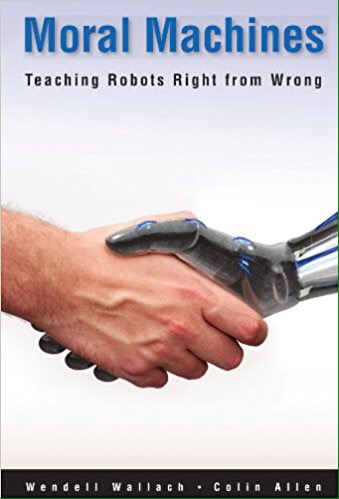
Is it possible to teach machines the difference between right and wrong, and if so, what theory of ethics would we teach them, Kantian or Humean ethics? We finally discovered the work of Wendell Wallach, who addresses these esoteric questions in his book “Moral Machines” (available here, via Amazon), another must-read for us. (Dr Wallach gave the keynote lecture at the A.I.-and-the-law colloquium at the Savannah Law School this weekend.) We will read Dr Wallach’s work and report back in a future post.
Now that Richard Posner has announced his retirement from the bench, who will replace this legal legend on the Seventh Circuit? We propose IBM’s Watson computer! If Watson can be programmed to win game shows and diagnose patients, why couldn’t it be deployed to decide cases? Of course, even if President Trump followed our suggestion and appointed Watson to replace Posner, it would still have to be confirmed by the Republican do-nothing Senate, but really, who else could fill Posner’s shoes? (Caveat: if confirmed, would Watson have to recuse itself in any case in which IBM was a party or in any case involving artificial intelligence?)
For what it’s worth, this unorthodox idea occurred to me during a colloquium on A.I. and the law held at the Savannah Law School. In particular, shout out to Professor Kellyn McGee (@TheEthicsProf). It was a question she posed to me after my talk on “machine judges” that sparked this modest proposal.

That is the title of my work in progress, which I will be presenting at a colloquium to be held this weekend at the Savannah Law School on 516 Drayton Street (here is a link to the program), where lawyers, students, and scholars will meet to discuss and predict the impact automation and artificial intelligence (A.I.) will have on the law. In my case, I will raise the possibility of “machine judges”, or soft A.I. systems like IBM’s Watson that are capable of applying law to facts and resolving legal disputes.

No post mortem of any natural disaster would be complete without a discussion of the law, ethics, and economics of “price gouging.” We understand the economics of price gouging (alas, it is the most efficient and fair method of allocating scarce resources after a disaster), and we also understand the ethics of price gouging (it is morally wrong to take economic advantage of someone else’s misfortunes), but here I am interested in the existence of laws against price gouging. Specifically, when, if ever, should laws trump the fundamental common law principle of liberty of contract? Here are some relevant links:
Pro (in defense of price gouging):
Con (against price gouging):
A larger question is this: whether you are for or against price-gouging laws, what should you make of this bitter disagreement over the ethics of price gouging? Philosophers have coined a fancy term for this problem: “peer disagreement“. For our part, we are more fascinated by this larger problem (or meta-problem) of epistemic disagreement than by the underlying problem of price gouging itself.










Welcome to the online home of the IASS
Hopefully It’s Interesting.
In Conversation with Legal and Moral Philosophers
Relitigating Our Favorite Disputes
PhD, Jagiellonian University
Inquiry and opinion
Life is all about being curious, asking questions, and discovering your passion. And it can be fun!
Books, papers, and other jurisprudential things
Ramblings of a retiree in France
BY GRACE THROUGH FAITH
Natalia's space
hoping we know we're living the dream
Lover of math. Bad at drawing.
We hike, bike, and discover Central Florida and beyond
Making it big in business after age 40
Reasoning about reasoning, mathematically.
I don't mean to sound critical, but I am; so that's how it comes across
remember the good old days...
"Let me live, love and say it well in good sentences." - Sylvia Plath
a personal view of the theory of computation
Submitted For Your Perusal is a weblog wherein Matt Thomas shares and writes about things he thinks are interesting.
Logic at Columbia University
Just like the Thesis Whisperer - but with more money
the sky is no longer the limit
Technology, Culture, and Ethics
Just like the horse whisperer - but with more pages
Poetry, Other Words, and Cats



 prior probability