The Wilt Chamberlain Argument

Nozick introduces his “Wilt Chamberlain Argument” on pp. 160-164 to show why most pattern-based or end-state distributions are unstable. The argument is not only simple and intuitive; it also shows why massive amounts of inequality can be consistent with justice. In summary, the argument goes like this:
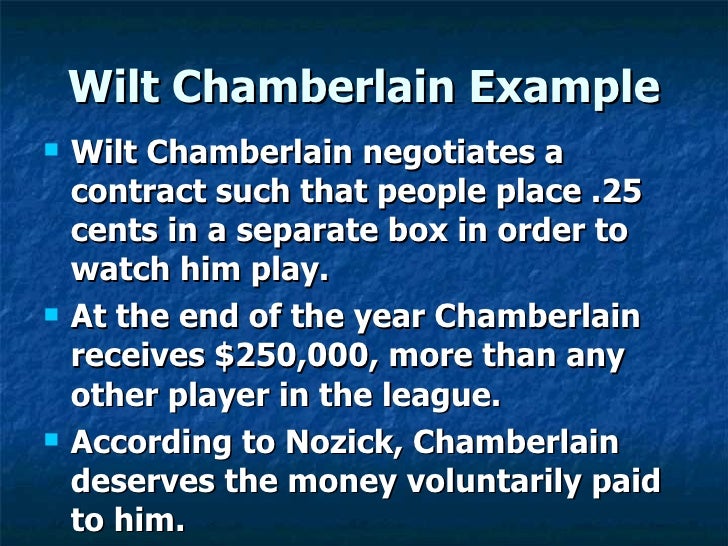
Image result for nozick Wilt Chamberlain example

I must confess that I was flabbergasted when I first saw this famous example so many years ago. For starters, I liked Nozick’s willingness to use an example from popular culture. (Here was a Harvard philosopher who knew a thing or two about sports!) But even more importantly, I thought that Nozick’s Wilt Chamberlain Argument was (is) irrefutable. After all, if enough people freely want to pay an extra amount of their money to see their favorite player, shouldn’t the player be able to keep that money? Nevertheless, there is a possible flaw with Nozick’s argument. What if the team decides to breach its contract with Wilt Chamberlain? In that case, Chamberlain could resort to self-help (not play the following season unless he is paid), or he could sue his team in a court of law to enforce his contract (unless the contract has an arbitration clause!). Yet courts are expensive to operate, and the set of rules under the rubric of contract law (whether based on model legislation like the UCC or common law principles) doesn’t just arise out of thin air. Isn’t it just, then, that Wilt Chamberlain be required to pay for this legal infrastructure out of his earnings? Moreover, doesn’t Wilt Chamberlain have a moral duty to share some fraction of his earnings (via charity, not taxes) with some less fortunate souls, say poor kids who would like to play basketball?

Posted in Uncategorized | 1 Comment

Nozick: distribution versus production

Nozick considers other historical or “patterned” approaches to justice on pp. 155-160 of ASU, such as “distribute according to moral merit” and “distribute according to usefulness to society” and other formulations. Putting aside definitional problems — i.e. the awkward fact that there are many different conceptions of “morality” and “utility” — Nozick points out how all these alternative approaches to justice all suffer from the same major flaw. They focus exclusively on questions of distribution (who gets what?) and neglect questions of production (who makes what?). Nozick’s entitlement theory of justice, by contrast, emphasizes the problem of production (p. 160, emphasis in original): “The situation is not one of something’s getting made, and there being an open question of who is to get it. Things come into the world already attached to people have entitlements over them.” In other words, most theories of distributive justice erroneously assume that there is already a large enough pie to give away, but in reality, the pie has got to be made before it can be distributed!

Related image
Posted in Uncategorized | Leave a comment

Nozick’s critique of welfare economics and theories of distributive justice

On pp. 153-155 of ASU, Nozick launches a powerful and stinging critique against “welfare economics” and equality-based theories of distributive justice. (Welfare economics is a branch of economics that purports to measure a society’s overall well-being or welfare at the aggregate level.) How does Nozick accomplish this heroic task? By drawing a distinction between two approaches to justice: historical or sequential versus time-slice or end-states. In the words of Nozick (p. 153, emphasis in original): “The entitlement theory of justice is historical; whether a distribution is just depends upon how it came about.” According to a time-slice approach, by contrast (p. 154), “all that needs to be looked at, in judging the justice of a distribution, is who ends up with what.” The problem with such time-slice or end-state theories of justice, however, is that they neglect just deserts. According to Nozick (p. 154), “Most persons do not accept current time-slice principles as constituting the whole story about distributive shares. They think it relevant in assessing the justice of a situation to consider not only the distribution it embodies, but also how that distribution came about.” In other words, a given distribution of goods will be just so long as the initial acquisition of goods and their subsequent transfer are themselves just, even if people end up with shares of different or unequal sizes. (But by Nozick’s own logic, couldn’t one argue that transfer and acquisition are not the whole story either?) We are fighting a cold, but we will try to continue our review of Ch. 7 tomorrow …

Image result for critique of equal outcomes
Posted in Uncategorized | Leave a comment

Nozick’s theory of justice (part 1)

Nozick begins Chapter 7 with a point of terminological order. He explains why he prefers the phrase “justice in holdings” over the term “distributive justice” (pp. 149-150, emphasis in original): “There is no central distribution, no person or group entitled to control all the resources [of a society], jointly deciding how they are to be doled out…. In a free society, diverse persons control different resources, and new holdings arise out of the voluntary exchanges and actions of persons…. The total result is the product of many individual decisions.” Next, Nozick presents an outline of his entitlement theory of justice in holdings on pp. 150-153. Here, he notes that a theory of justice in holdings must address three issues:

  1. The initial acquisition of holdings (the appropriation or ownership over unheld things or “justice in acquisition”);
  2. The transfer of holdings from one person to another (or “justice in transfer”); and
  3. The rectification of injustices in the acquisition or transfer of holdings (or “rectification of injustice”).

So far, so good! Yet, ironically, Nozick then concedes on p. 153 that he is not going to attempt the task of specifying the details of each of these three major areas of justice. Really? If he’s not going to delve into these details, then what in God’s name is Nozick going to do in the remainder of Chapter 7? We will press on tomorrow …

Image result for nozick entitlement theory

Credit: shama.paro (Agra University)

Posted in Uncategorized | 5 Comments

Overview of Section 1 of Chapter 7 of ASU

Let’s resume our extended review of Anarchy, State, and Utopia (ASU), shall we? Since we’re now ready to jump into Chapter 7, let’s begin by taking a look at the overall structure and organization of this chapter. This chapter is titled “Distributive Justice” and is divided into two sections. Section One contains eight separate subsections as follows:

  • The Entitlement Theory (pp. 150-153)
  • Historical Principles and End-Result Principles (pp. 153-155)
  • Patterning (pp. 155-160)
  • How Liberty Upsets Patterns (pp. 160-164)
  • Sen’s Argument (pp. 164-166)
  • Redistribution and Property Rights (pp. 167-174)
  • Locke’s Theory of Acquisition (pp. 174-178)
  • The Proviso (pp. 178-182)

Here, Nozick is going to present his “entitlement theory” of justice. Because of meetings and other commitments we have today, we will jump into Nozick’s entitlement theory tomorrow …

Image result for the state nozick
Posted in Uncategorized | Leave a comment

Propaganda as art

More North Korean prop-art here. Image credit: Democratic People’s Republic of Korea.

Posted in Uncategorized | Leave a comment

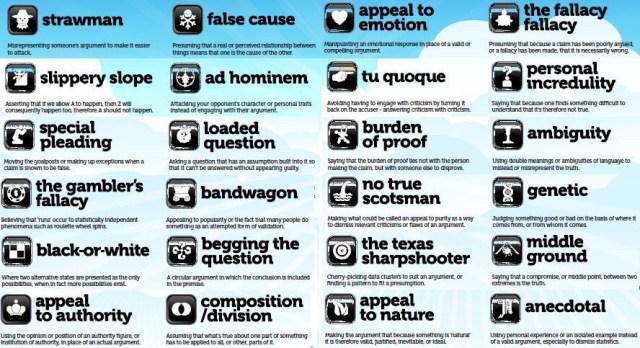
Logical fallacy scorecard

Hat tip: @jayvanbavel

Posted in Uncategorized | 1 Comment

Reverse bookcase

More details here. (Hat tip: Tyler Cowen.)

Posted in Uncategorized | 7 Comments

The Colors of the Library of Congress Collection

We’re hitting the “pause button” on our extended review of Anarchy, State, and Utopia this weekend, as we’re attending a conference at The University of Georgia. In the meantime, check out this screenshot from our Twitter feed:

Posted in Uncategorized | Leave a comment

Nozick on punishment and anti-punishment

The last two subsections of Chapter 6 (pp. 137-146) contain an extended digression on the problem of punishment and the possibility of “anti-punishment” (my term) via preventive detention in “resort detention centers”, one of my favorite Nozickian thought experiments thus far. More to the point, Nozick identifies some serious problems with Locke’s state-of-nature theory:

  • Don’t all persons (not just the victim) have the right to punish wrongdoers in the state of nature?
  • What happens when people disagree about the content or scope of their rights?
  • How much compensation must be paid to persons who are prevented from exercising their rights?

Nozick’s answer to the first two questions is the dominant protection association. Once a protection agency becomes the dominant one in a territory, it (the agency) will monopolize the right to punish and will settle disputes about the scope of one’s rights. Nozick, however, glosses over the possibility of conflict among protection associations in adjoining territories. With respect to the compensation question, although Nozick considers the two extremes of “no compensation” and “full compensation”, he falls back onto his principle of compensation: it is morally required that compensation be made for any disadvantages imposed on others. (See, for example, the paragraph on the bottom page 143.) Alas, Nozick does not specify how such “disadvantages” are to be measured or monetized.

We are now done with Part I of Anarchy, State, and Utopia. We are attending a conference in Athens, Georgia this weekend, so we will jump into Part II of ASU next week.

Soccer Red Cards
Posted in Uncategorized | 1 Comment