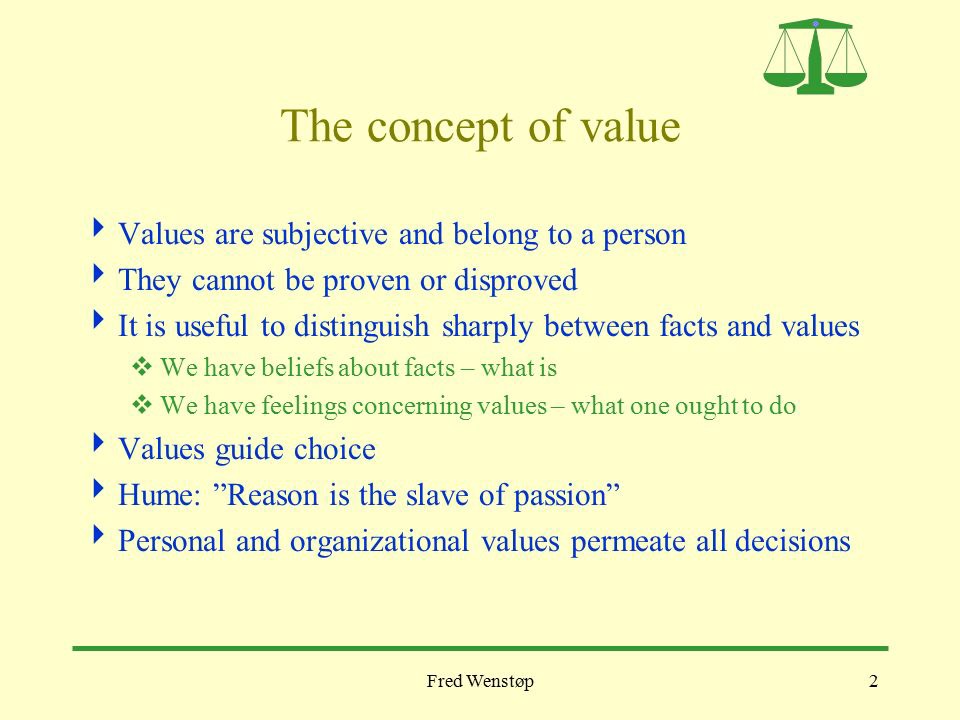
Bayesian voting is subjective; so what?

We continue our discussion of “bayesian voting” in this blog post. Previously, we conceded that bayesian voting is more complicated than simple majority voting (one-judge, one-vote), but we went on to argue that bayesian voting would be easy to operationalize or put into practice. Here, we consider another objection against bayesian voting. Simply put, the objection is that we cannot aggregate a group of bayesian votes together because each judge’s bayesian vote (his degree of belief in the proper outcome of a case) is subjective. Put another way, each judge’s criteria for scoring a case would vary, depending on the judge. We will make three points in reply:

1. First and foremost, so what? After all, even with simple majority voting, each judge’s vote is already subjective. In many cases (especially contested cases involving issues of constitutional law), judges can have different judicial philosophies and often employ different criteria when deciding such cases.

2. In any case (pun intended), subjectivity won’t be such a big deal to the extent judges are using the same sliding scale (0 to 1) to score their credences and to the extent most judges share similar backgrounds and similar professional training.

3. Bayesian voting has the additional virtue of allowing judges to effectively abstain from voting (without having to recuse themselves) by assigning a score of 0.5 to their credences (again, assuming we are using a standard 0 to 1 point scale). If a case is close (i.e. if the arguments on both sides are equally persuasive), judges should have the ability to openly admit such closeness.

Credit: Fred Wenstøp

Posted in Uncategorized | 1 Comment

Review of Oman, The Dignity of Commerce (2017)

We are taking a break from bayesian voting (see our last few blog posts) to share with our loyal followers our review of Nathan Oman’s book The Dignity of Commerce: Markets and the Moral Foundations of Contract Law (University of Chicago Press, 2017). Our book review was published on 17 July 2017 in The New Rambler; below is an excerpt of our review (footnote omitted): Continue reading

Posted in Uncategorized | Leave a comment

Digression: Netflix’s binary voting system

We have been blogging a lot about “bayesian voting” lately. In our previous post, however, we mentioned as an aside Netflix’s decision to replace its five-star cardinal voting system with a more simple binary system: thumbs up or thumbs down. Here, I want to call a time out to identify a problem with the binary system: what happens when two people are “Netflixing and chilling” and one person likes the movie and the other does not? Under the previous system, the viewers (husband & wife; boyfriend & girlfriend; friends; etc.) could compromise by assigning an average score–three stars out of five, say. Under Netflix’s binary system, by contrast, there is no fair way of aggregating the preferences of two people who diasagree about the quality of a movie. To the extent most people don’t watch movies alone, our objection should worry Netflix. Furthermore, even when one is watching a movie on Netflix alone, the binary system results in a loss of information, since it does not allow one to express the intensity of one’s like or dislike of a particular movie.

Note: Although YouTube and Rotten Tomatoes also employ simple binary votings systems, those websites at least disclose the ratio of likes to dislikes as well as (in the case of YouTube) the total number of views, which allows us to deduce the number of abstentions. In this respect, Facebook’s system of unitary voting (you can’t vote to dislike something) provides even less useful information than Netflix’s binary voting system.

Posted in Uncategorized | Leave a comment

Bayesian voting is easy

In this blog post, I will address the practicality objection to bayesian voting by judges. First, I concede that, in the judicial context, cardinal or utilitarian methods of voting–like my method of bayesian voting–are marginally more costly and cumbersome than the traditional, i.e. binary, method of voting that appellate judges already use (e.g. affirm or reverse). Nevertheless, I will make two replies to this objection. My first reply is that all ordinal methods of voting have serious flaws and drawbacks, i.e. any ordinal system of voting can be manipulated in one way or another. (See, e.g., Frank H. Easterbrook, “Ways of criticizing the court,” Harvard Law Review, Vol. 95, No. 4 (1982), pp. 802-832; Saul Levmore, “Parliamentary law, majority decisionmaking, and the voting paradox,” Virginia Law Review, Vol. 75, No. 5 (1989), pp. 971-1044; William H. Riker, Liberalism against populism: a confrontation between the theory of democracy and the theory of social choice, chapter 4, 1988.) As a result, it’s not enough to point out that bayesian voting is costly or cumbersome. Instead, one must compare the costs of bayesian voting (the switching costs of implementing a new method of voting for appellate courts) with the potential benefits of bayesian voting (accuracy, coherence, and fairness). So, to the extent bayesian methods of voting are harder to manipulate than ordinal or traditional (binary) methods of voting are, the costs might be worth trading off.

In any case, my next point regarding the practicality of bayesian voting is that such a method is, in fact, not all that hard to understand or complicated to use. We engage in a form of bayesian voting whenever we rank or review products on Amazon, rate movies on Netflix or Rotten Tomatoes (see image below), or decide how much money to place on a bet. All of these mundane activities are everyday examples of bayesian voting: subjective expressions of a voter’s personal preferences. The more you like a product or movie, the higher score the product or movie should receive, and conversely, the less you like the product or movie, the lower the score you will assign it. (The same bayesian logic applies to bets: the more confident you are in the outcome of a bet, the more money you should be willing place on the bet.) A cardinal ranking thus conveys more information than a simple binary choice does. (As an aside, many Netflix users have criticized Netflix’s recent decision to replace its five-star rating system with a binary “thumbs up” and “thumbs down” system. One user referred to the new binary system as “quite literally the most useless rating system I have ever seen across any form of media.” See Paul Tassi, “Netflix’s thumb-based rankings system is the epitome of uselessness,” Forbes (26 Jun 2017). For a defense of Netflix’s new binary method of ranking movies, see David Sims, “Netflix believes in the power of thumbs,” The Atlantic (21 Mar 2017).)

To sum up, given the accuracy, simplicity, and usefulness of bayesian voting, there is no reason why the logic of bayesian voting cannot be applied to appellate judicial procedure as well. Instead of voting up or down (e.g. affirm or reverse), under bayesian voting each judge would simply assign a number reflecting the strength of his belief (i.e. his credence or degree of belief) in a given legal proposition or a legal outcome. But this opens up a new objection: the problem of incommensurability. Since the credences of each judge are entirely subjective, should we be allowed to aggregate such subjective values? I will address this objection in my next blog post.

Image result for amazon netflix rotten tomatoes rating

Posted in Uncategorized | 3 Comments

Three objections to bayesian voting

Thus far, we have identified a voting paradox in law and proposed a system of “bayesian voting” by judges in multi-member panels. There are, however, at least three major objections to my proposed system of bayesian voting:

1. Practicality (operational objection): Bayesian voting is much more cumbersome and complicated than traditional forms of binary voting. (Our initial reply to this objection is here.)

2. Incommensurability (logical objection): Since each voter’s credence is subjective, it is meaningless to combine or aggregate such subjective and incommensurable values. (You can find our initial reply to the incommensurability objection here.)

3. Anti-majoritarianism (ethical objection): Bayesian voting can produce anti-majoritarian outcomes. (We address this third objection here. We will also explore the morality of bayesian voting vis-a-vis traditional majoritarian voting in future blog posts.)

Posted in Uncategorized | Leave a comment

Bayesian Voting (Part 3)

In our 7/17 blog post, we described a voting paradox in law and presented a simple model of bayesian voting, and in our 7/18 blog post, we showed how bayesian voting might work in practice. In that post, however, we assumed judges’ votes were sincere. In this post, by contrast, we will assume that all three judges are strategic actors (see image below); that is, all three judges are going to choose extreme values, i.e. inflate or deflate their degrees of belief as the case may be, in order to achieve their preferred outcome. I am making this assumption because I want to test whether my system of bayesian voting can be successfully manipulated or gamed. Continue reading

Posted in Uncategorized | Leave a comment

The first 200 days …

July 19 is the 200th day of the year, so we interrupt our series of blog posts on Bayesian voting to wish our loyal followers good tidings. What will the next 100 days bring? In the meantime, enjoy …

Posted in Uncategorized | Leave a comment

Bayesian Voting (Part 2)

In my previous blog post, I showed how the outcome of an appeal can depend on the type of voting rule appellate courts use to decide cases, and I mentioned a possible solution to this paradox: bayesian voting. In brief, bayesian voting would not change the way the parties make their arguments. The party with the burden of persuasion on a given legal issue would continue to write legal memoranda, submit legal briefs, and present arguments to the court, and the opposing party would also have the opportunity to do the same things, but bayesian voting would change the way appellate judges decide cases.

Specifically, instead of voting up or down on the outcome of an issue, judges using bayesian voting would have to disclose how strongly or weakly they believed in each side’s arguments. For this method to work, however, judges would have to vote sincerely (a big if, as we shall see in our next blog post), and they would have to use the same numerical scale. By way of example, see the image below, depicting a sliding scale starting at 0 (meaning complete disbelief in the arguments made by a party) and going up to 1 (meaning complete belief in a party’s arguments). So long as the judges use the same scale, it’s okay if each judge uses his own criteria to evaluate the strength of each party’s arguments. After all, the assignment of probabilities is a subjective activity; bayesian voting just makes this fact explicit.

Related image

Continue reading

Posted in Uncategorized | 1 Comment

Bayesian Voting (Part I)

Imagine a case or controversy C presenting two separate legal issues: standing and sovereign immunity. Specifically, (1) does plaintiff P have standing to sue, and (2) is defendant D (a governmental entity) entitled to assert the defense of sovereign immunity, either under the Eleventh Amendment or under the act of state doctrine? Further assume the case is being decided by a panel of three impartial judges: J-1, J-2, and J-3. After deliberations, a set of individual judgments emerges as follows: Continue reading

Posted in Uncategorized | 3 Comments

Homemade circular rainbow

Instructions, via Dexter See: “Form a circle with Skittles on a plate (colours should be in repeated order, preferably according to colours of the rainbow e.g. purple, green, yellow, orange, red), then pour hot water over them.” (Hat tip: The Amazing Cliff Pickover.)

Posted in Uncategorized | Leave a comment