
We love to walk around different neighborhoods whenever we visit a magnificent city like Washington or Havana. During one such walk, we could not help but notice the relative level of complexity of D.C.’s parking laws.
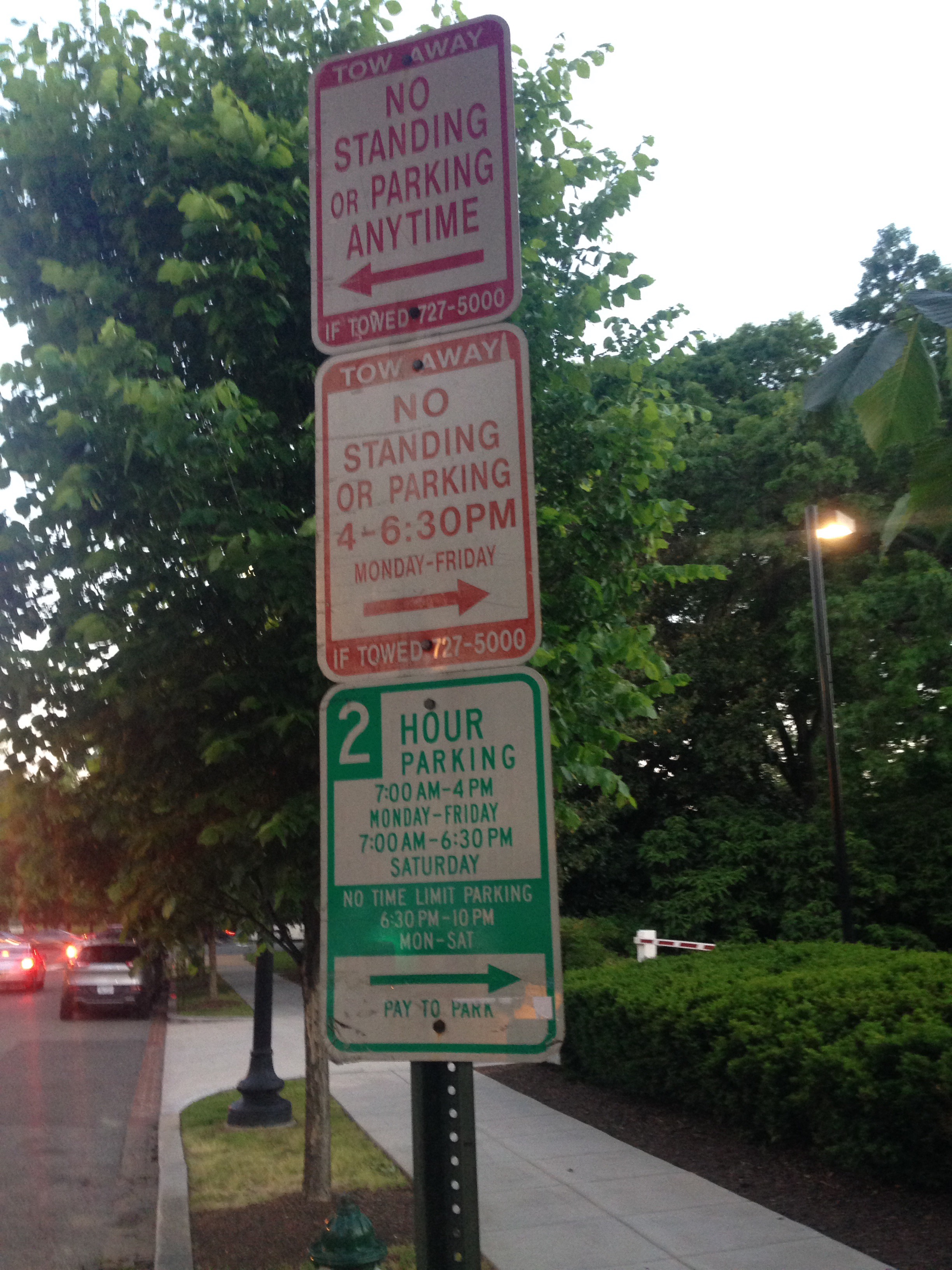
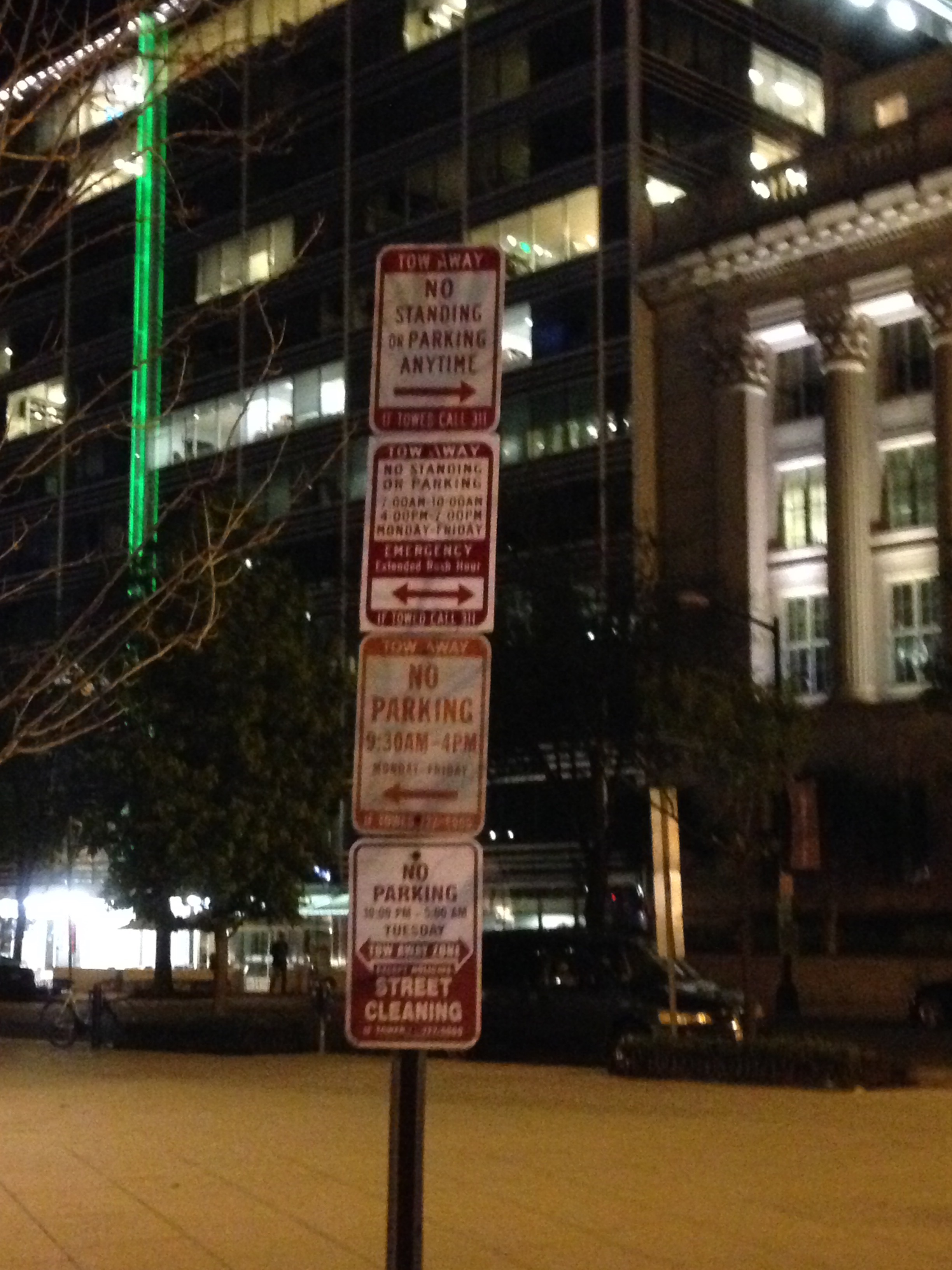
We love to walk around different neighborhoods whenever we visit a magnificent city like Washington or Havana. During one such walk, we could not help but notice the relative level of complexity of D.C.’s parking laws.
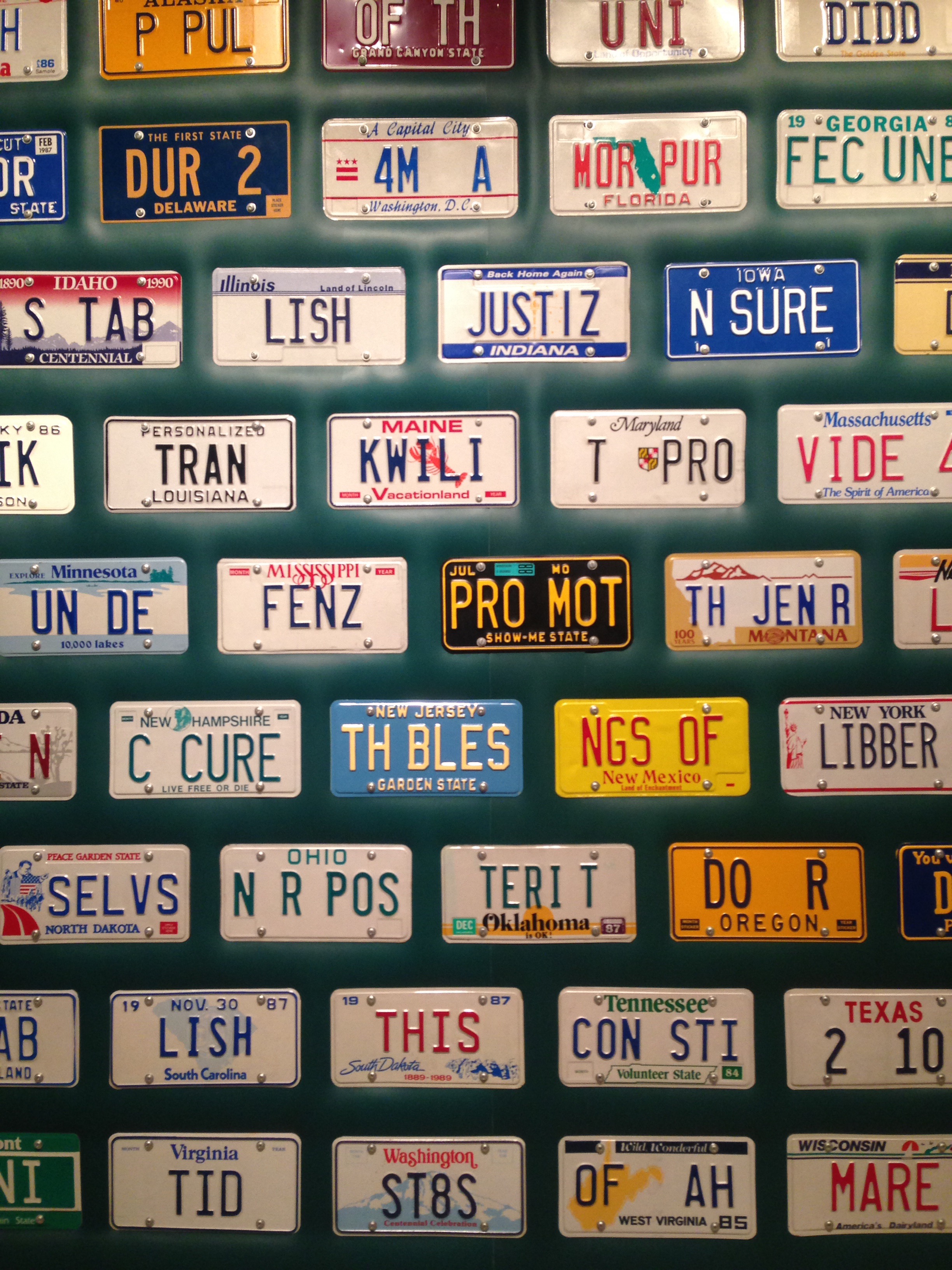
We discovered the work pictured below, created by artist Mike Wilkins in 1987, at the National Portrait Gallery in Washington, D.C. (Now that we are back in the States, we will blog about our impressions of Havana in the next day or two.)
1. Is it unethical for Americans to visit Cuba? (via Market Watch)
2. Luxury mall in Havana (via Slate)
3. Meet Cuba’s first internet entrepreneurs (via TechCrunch)
4. Cuba after communism (via Council on Foreign Relations)
5. Jacob Forever (via YouTube)

Keep moving and go visit some other website, since we won’t be blogging during the next two weeks. (We will be visiting the University of Havana and going on a family vacation in Cuba until the middle of May.) Hasta pronto!

Happy anniversary, Sydjia!
Although all the countries in the world are represented in the bubble chart below, only the labels of those countries with the largest populations are shown (via datashown.com):

Hat tip: Cliff Pickover
Do you know what “stimulated annealing” is? If not, then check out this cool project by Justin Matejka and George Fitzmaurice. The full title of their excellent work is “Same Stats, Different Graphs: Generating Datasets with Varied Appearance and Identical Statistics through Stimulated Annealing,” and here is an excerpt: Continue reading
Does reading make you a better person. Probably not! But reading is a great way to expand your horizons. So, now that the spring semester is almost over, this is what we will be reading during the month of May:
Beyond Legal Reasoning by Jeffrey Lipshaw (Routledge, 2017). We need to thank Paul Caron (via TaxProfBlog) for bringing Lipshaw’s ambitious new book to our attention. It’s a book about legal theory, one that explains what “thinking like a lawyer” means. This book is an intellectually ambitious one because Lipshaw attempts to demarcate the outer limits of legal reasoning and tries to bridge the gap between legal reasoning and legal judgement. We will write up an extended review of this book in the days ahead.
Never Caught by Erica Armstong Dunbar (Atria, 2016). This tome tells the story of Ona Judge, a runaway slave belonging to George and Martha Washington, and the Washingtons’ attempts to recover their slave. (We discovered this work via “Book TV” on C-Span.)
Freedom National by James Oakes (Norton, 2013). This book chronicles the destruction of slavery in the United States. (Randy Barnett, via Volokh Conspiracy, brought this historical opus to our attention.)
Better Presentations by Jonathan Schwabish (Columbia University Press, 2016). Or: how to avoid “death by power point.” (Jason Kottke, via kottke, brought this useful book to our attention.) Continue reading

Why are most contemporary minivans and SUVs so damn ugly and uncool? (The new Jeep Compass is especially hideous.) Via Popular Mechanics, check out this essay by Ben Stewart on the original VW bus.







Welcome to the online home of the IASS
Hopefully It’s Interesting.
In Conversation with Legal and Moral Philosophers
Relitigating Our Favorite Disputes
PhD, Jagiellonian University
Inquiry and opinion
Life is all about being curious, asking questions, and discovering your passion. And it can be fun!
Books, papers, and other jurisprudential things
Ramblings of a retiree in France
BY GRACE THROUGH FAITH
Natalia's space
hoping we know we're living the dream
Lover of math. Bad at drawing.
We hike, bike, and discover Central Florida and beyond
Making it big in business after age 40
Reasoning about reasoning, mathematically.
I don't mean to sound critical, but I am; so that's how it comes across
remember the good old days...
"Let me live, love and say it well in good sentences." - Sylvia Plath
a personal view of the theory of computation
Submitted For Your Perusal is a weblog wherein Matt Thomas shares and writes about things he thinks are interesting.
Logic at Columbia University
Just like the Thesis Whisperer - but with more money
the sky is no longer the limit
Technology, Culture, and Ethics
Just like the horse whisperer - but with more pages
Poetry, Other Words, and Cats




 prior probability