

NM & WV = 5 votes each; AK, MT, NS, SD, VT, & WY = 3 votes each (h/t: digg)
NM & WV = 5 votes each; AK, MT, NS, SD, VT, & WY = 3 votes each (h/t: digg)
Happy Monday! We stumbled upon the following pointless game via the Facebook page of our friend and colleague Dennis Wye Keen Khong:
It’s National Book Week: The rules: grab the nearest book to you, go to page 56, and copy the 5th sentence as your status. Do not mention the book. Post the rules as part of your status.
(This recursive game also appears in this Reddit thread.) Despite the utter pointlessness of this silly literary game, we find it completely contagious and irresistible! Here is our entry:
“This is where purely fundamental approaches can run into problems.”

Credit: Rob Thomson (w/ apologies to Bill Watterson)
Earlier this year, Major League Baseball cancelled a two-game series to be played in San Juan, Puerto Rico between the Marlins of Miami and the Pirates of Pittsburgh because some super-spoiled baseball players from the Miami Marlins were concerned about the Zika virus. (Many cases of Zika have been diagnosed in Puerto Rico.) Now that the Centers for Disease Control and Prevention (CDC) has issued a Zika warning for travel to Miami, we are patiently awaiting MLB’s decision to cancel the rest of the Marlins’ games in Miami. (Shout out, again, to our good friend and fellow baseball afficionado Oscar Ruiz for bringing this state of affairs to our attention.)

Major League Brats
How small are The Donald’s hands? It turns out that Mr Trump’s hands are smaller than average. Now, via the Hollywood Reporter, you can find out how you measure up to Mr Trump. (For your ready reference, here is a printable, life-size look at one of Trump’s hands.)

So, Marco Rubio was right, after all.
Is this the same reason why so many college textbooks in a given field are so similar? On balance, is this convergence trend a good thing or a bad thing?
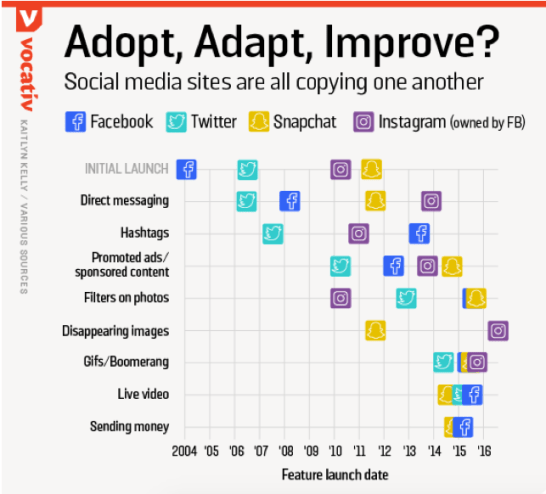
Check out the full report by Allee Manning and Kaitlyn Kelly here.
While we brace ourselves for NBC’s excessive coverage of the venerable sport of beach volleyball at the 2016 Olympics, we want to second the snobbish sentiments of Paul Lewis, who wrote the following wisecracks during the 2008 Olympics: “The cynic in me says that beach volleyball is simply there for the TV and for grown men to slobber over the sight of scantily clad women throwing themselves about in the sand. I mean, why don’t they just go the whole kahuna and make the beach volleyballers play naked–because that’s what this is about, really. I’m assuming no one watches the blokes. Women generally have more sense. *** What next? Beach cricket? Speed sandcastle building? Beach tennis?”
Clarification (8/8/16): As starchildluke notes in the comments section below, a game like beach tennis might actually be of interest to many people. We agree. So, after further reflection, we would like to restate our position: we do not object in principle to beach volleyball as an Olympic sport (or to the inclusion of other new sports into the Olympic pantheon), what we object to is NBC’s obsessive fixation with beach volleyball. Our post should thus be retitled “Why does NBC devote so much air time to beach volleyball?”

image credit: picturescafe.com (image 3898)

image credit: mrmbuceta (hat tip: digg)
As faculty editor of the UCF Undergraduate Journal, we are constantly on “passive voice search & destroy missions” when we edit manuscripts: hunting for awkward sentences written in the passive voice and converting them into simple and straightforward active voice sentences. We thus found this short essay (hat tip: Eugene Volokh) on when to use the passive voice quite helpful. It was written by Geoffrey Pullman, a professor of general linguistics at the University of Edinburgh. [By the way, did you like how we snuck in the passive voice in the previous sentence?] In brief, Prof. Pullman identifies two situations in which it’s not only perfectly acceptable but also desirable to use the passive voice: (i) the trouble-saving passive and (ii) the pussyfooting passive. In the first case, the writer doesn’t want to get bogged down in minor details, while in the second, the writer needs to purposely avoid having to point the finger at someone or something. Here is an extended excerpt from Pullman’s essay explaining this taxonomy (edited by us for clarity):
And when is the passive more compact and direct? One class of such cases comprises [the] “trouble-saving passive.” If you were to take a sentence like Smith was arrested, indicted, and found guilty, but the money was never recovered and try to wrestle it into the active voice, as so many writing guides insist you should, you would have to find subjects for all the active verb phrases. You’d need subjects for arrested Smith (the police department? the county sheriff?), and indicted him (a grand jury, as in the U.S.? the Crown Prosecution Service, as in Britain?), and for found him guilty (a judge? a trial jury?), and for recovered the money (the detectives? some bank or post office? the people whose cash had been stolen?). Implementing this pointless and clumsy elaboration would make the sentence nearly twice as long. [By contrast, there is] “the pussyfooting passive,” which … “is essential in journalism” because “often the writer does not know who did something or is not free to say who did it, but he wants to say it was done.”

Image Credit: Maria Baez







Hopefully It’s Interesting.
In Conversation with Legal and Moral Philosophers
PhD, Jagiellonian University
Books, papers, and other jurisprudential things
Ramblings of a retiree in France
BY GRACE THROUGH FAITH
Natalia's space
hoping we know we're living the dream
Lover of math. Bad at drawing.
We hike, bike, and discover Central Florida and beyond
Making it big in business after age 40
Reasoning about reasoning, mathematically.
I don't mean to sound critical, but I am; so that's how it comes across
remember the good old days...
"Let me live, love and say it well in good sentences." - Sylvia Plath
a personal view of the theory of computation
Submitted For Your Perusal is a weblog wherein Matt Thomas shares and writes about things he thinks are interesting.
Logic at Columbia University
Just like the Thesis Whisperer - but with more money
the sky is no longer the limit
Technology, Culture, and Ethics
Just like the horse whisperer - but with more pages
Poetry, Other Words, and Cats

 prior probability