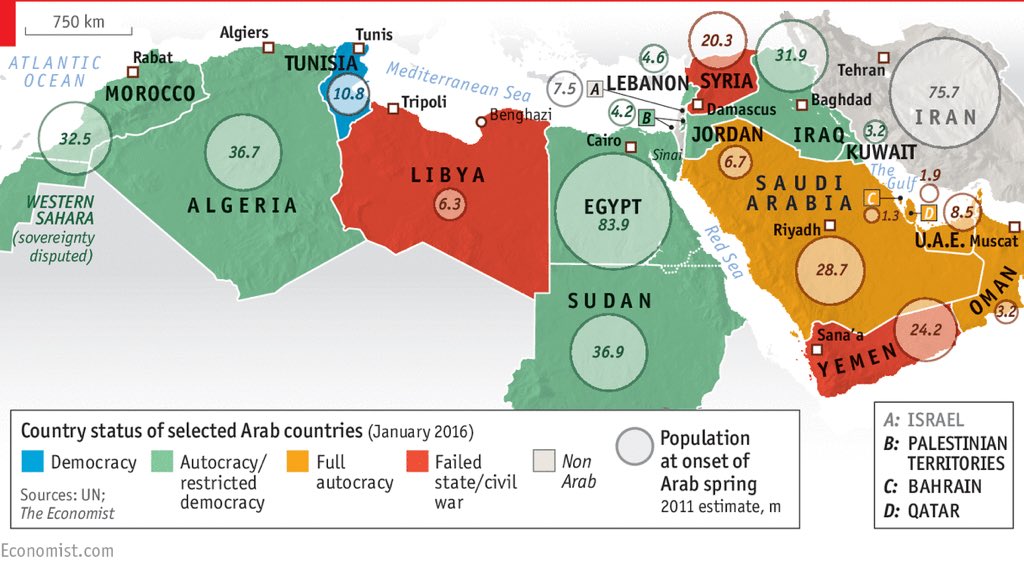
We’ve just finished reading Robert Trivers’s strange memoir “Wild Life: Adventures of an Evolutionary Biologist.” But before proceeding with our short review, we must disclose up front that Dr Trivers is one of our intellectual heroes–along with Thomas Schelling, Gordon Tullock, and Ronald Coase. By way of example, Trivers’s collection of path-breaking papers in “Natural Selection and Social Theory” as well as our used copy of his beautiful textbook on “Social Evolution” are two of our most prized possessions on our bookshelf. (As an aside, we admire Trivers in large part for his elegant classification of human (and non-human animal) behavior–altruism, spite, cooperation, etc.–based on the distribution of the costs and benefits of an actor’s behavior.) His ramshackle memoir, however, will not form a trifecta. Alas, although we loved the early chapters of his memoir, especially his fond memories of his mentors Bill Drury and Ernst Mayr, his memoir–or “mixture of recollections” (p. xi) is an incomplete and inconsequential one. Incomplete, for example, because Trivers alludes to yet offers no explanation of his fateful decision to leave Harvard in 1978 (we understand that he was forced out when he was denied tenure in spite of his enormous academic accomplishments in his field), and inconsequential because so much of the book recounts Trivers’ various encounters with the criminal justice system, “just so” legal war stories that, in the scheme of things, are insignificant in comparison to Trivers’s great intellectual achievements. In short, we were expecting more of an intellectual autobiography and less of a rap sheet.
Lesson 0 (law & ethics)
This semester, we are teaching a large undergraduate course (as well as an honors section) on “the legal and ethical environment of business.” Specifically, we are using the founding of Facebook–as depicted in the book “The Accidental Billionaires” and in the film “The Social Network”–to explore various areas of business law, including such areas as the law of contracts (think of Facebook’s “terms of use”), choice of business entity (think of Facebook’s evolution from a simple two-person partnership into a Florida limited liability company (LLC) before incorporating in the State of Delaware), and the ethics of Facebook’s privacy policies. Although we personally dislike and distrust social media generally (especially Facebook’s approach to privacy), we think that our focus on the founding of Facebook makes good sense for several reasons. After all, our target audience consists of undergraduates, most of whom use some form of social media to connect with the wider world, and moreover, it was a motley crew of college students who ended up creating one of the most successful Internet platforms in the world today (see below). Mark Zuckerberg literally changed the world, so why not learn from his success–and from his mistakes?
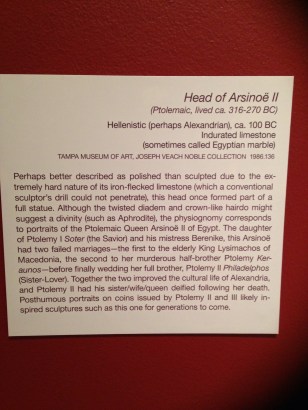
What is art? (Ptolemaic edition)

We recently visited the Tampa Museum of Art with our eldest (Adela) and youngest (Adys) daughters. This Ptolemaic piece was our favorite work of art from the museum’s modest collection, but what makes any given object a “work of art” as opposed to just an ordinary one? (Click on either image above to see a larger version.)
Do you prefer people or solitude?

Powerball is a scam
Applied game theory (A9 chip edition)
Successful firms tend to employ a wide variety of creative strategies for maintaining their “competitive advantage,” i.e. their dominance in a given market without running afoul of antitrust or unfair competition laws. Apple’s A9 chip for the iPhone 6 is a case in point. According to this insightful essay by Tom Whitwell (para. 51, emphasis in original), for example, we learned that “Apple’s new A9 processor for iPhones devices is … manufactured by two different companies, using two entirely different chip designs.” As Mr Whitwell notes, this dual-sourcing strategy “allows Apple to negotiate incredibly hard on price in future, as each company has invested billions in their plants.” (You can read more about Apple’s dual-sourcing strategy here.) So, if you were one of these suppliers to Apple, what counter-strategy would you employ in order to neutralize or offset Apple’s manufacturing strategy?
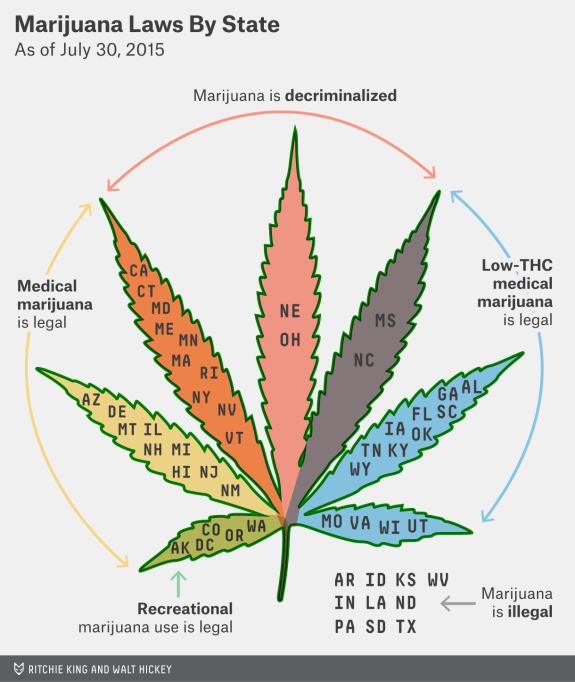
The evolution of public law (cannabis edition)
Critical thinking question: Are the drug-policy preferences of the “median voter” in Texas different from those of the median voter in Colorado, or are these legal/policy differences the result of some failure of the political process in those States where marijuana is still illegal?
Happy Three Kings Day

- Fray Nicolás Borrás, The Adoration of the Magi