
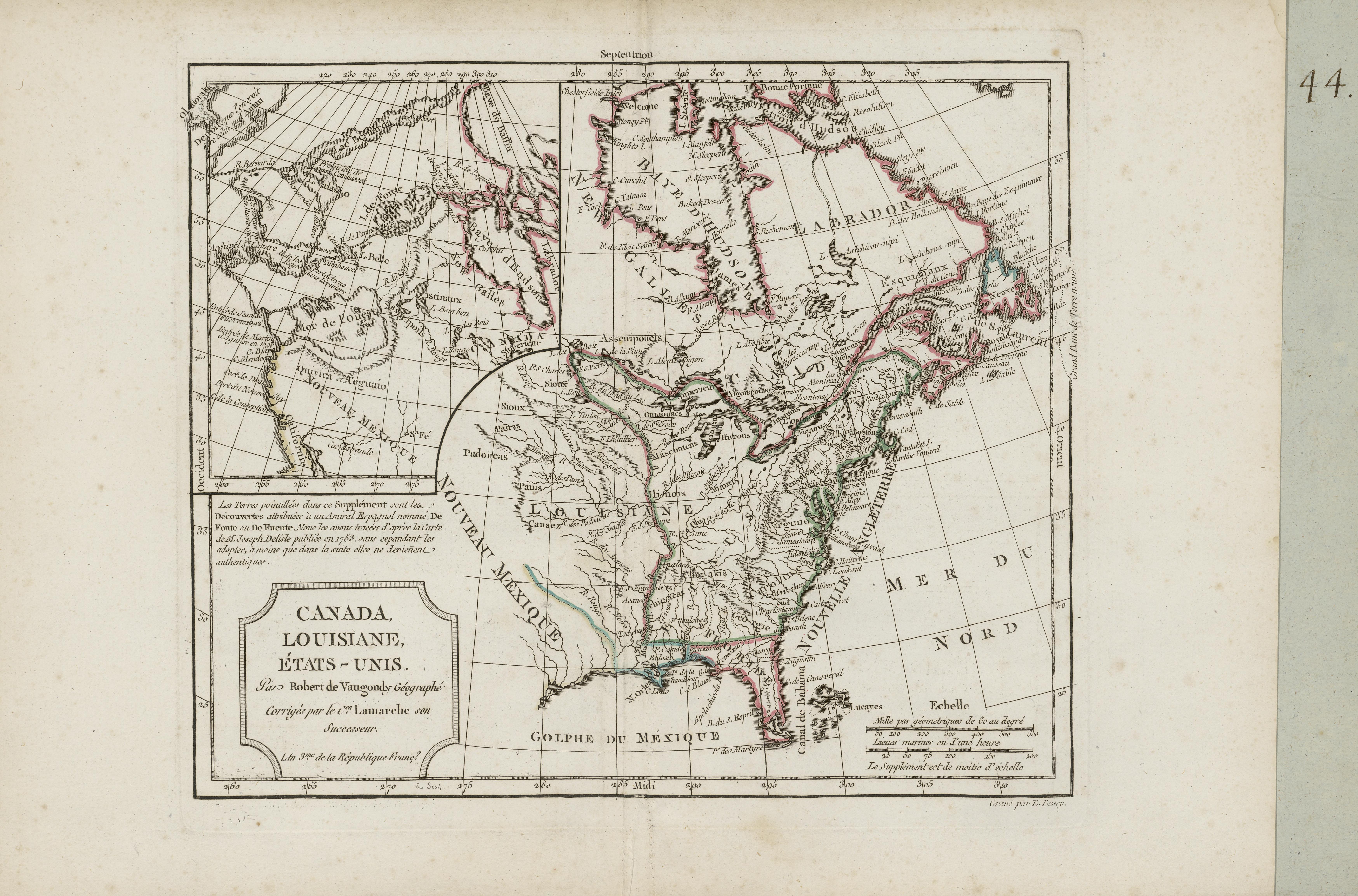
What if Napoleon had sold Louisiana to Britain or Spain instead of the USA?
What if Napoleon had sold Louisiana to Britain or Spain instead of the USA?
In Chapter 12 (“Buy or Bite?”) of Economics of the Undead (see above), we explain why vampires are not necessarily bad or unethical creatures. In summary, without a legal market for the purchase and sale of blood, vampires have no other choice but to steal their supplies of blood through fraud and force. We thus proposed the creation of legalized “blood markets” to allow consensual transfers of blood between humans and vampires. Our essay was featured last month in this Freakonomics podcast. Some of the comments to the podcast, however, have really been bugging us for some time. Fowler, for example, notes that “Vampires ‘procreate’ via their bite,” while Davo writes: “[Enrique Guerra-Pujol] makes a critical error: in most vampire lore, they are a different (more advanced) species. Asking vampires to buy human blood is like asking humans to buy a ham hock off of a pig.” After giving these comments careful thought, we conclude they do not rebut or refute our original argument in favor of markets. Here’s why:
Let’s start with Davo’s point about vampire psychology first, since this anti-market argument is easy to dismiss. Since markets are generally win-win, the social status or innate biology of buyers and sellers really doesn’t matter. People (including ultra-advanced and snooty vampires) will engage in trade when it is mutually beneficial to do so. Fowler’s comment, by contrast, implies that all vampires are rapists. After all, if vampires “procreate via their bite”, and if such bites are non-consensual, then what Fowler is really saying is that a vampire bite is analogous to rape. This can’t be right based on the various fictional portrayals of vampires we have seen. But even if Fowler’s analysis is correct, then our argument in favor of human-vampire markets is all the more stronger. In fact, assuming that some humans would like to become vampires (recall the first part of the Freakonomics podcast with Steven Levitt), perhaps vampires could actually charge us for the privilege of being bitten, for turning us into vampires!
Check out this fun Freakonomics podcast featuring economists Steve Horwitz and Glen Whitman as well as yours truly, and while you’re at it, why not check out the Economics of the Undead blog too?
What do fork-tailed drongos, tufted capuchin monkeys, Mexican free-tailed bats, Tiger moths, and humans have in common? Check out this beautiful essay by Lesley Evans Ogden describing various forms of deception in nature. Props to Tyler Cowen for the pointer. Here is another example of “natural deception” below:

*The sign should read “Welcome to Nevada … Except Uber.” Why? Read this report: The only State that allows prostitution just banned Uber. By the way, isn’t Nevada’s decision to ban Uber an unlawful restriction of interstate commerce under the Dormant Commerce Clause doctrine? (Hat tip to the amazing Tyler Cower for the pointer.)
Check out these competing visualizations of the periodic table of elements. Which version do you prefer? A or B? Also, what criteria inform your choice (e.g., information content, parsimony, beauty, etc.), and how do you weight them?
A

B
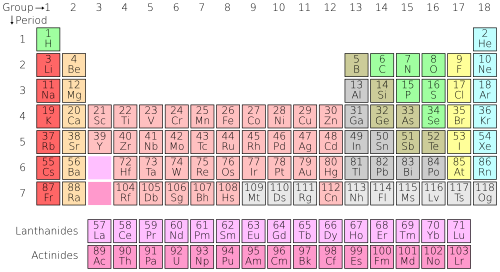
Hat tip to Jim Davenport for the pointer; check out his excellent website If We Assume when you have the chance.

My wife and I are hoping our daughter Adys Ann (left) will love to play with a creative, science-inspired toy like Lego’s particle accelerator (see film clip above) when she is a little older. In any case, here’s another reason why we love Lego toys! Hat tip to kottke for these pointers. Happy Thanksgiving.
![Canada seen from the Southeast, made in 1941 by Richard Harrisson [2070x1353]](https://i0.wp.com/i.imgur.com/K3HMNkr.jpg) Notice how small the “Great Lakes” are in comparison to Hudson Bay. Click on this beautiful map of our northern neighbors to see a larger version (via imgur).
Notice how small the “Great Lakes” are in comparison to Hudson Bay. Click on this beautiful map of our northern neighbors to see a larger version (via imgur).

This creative “subway” map of the Amtrak railway schedule was created by Cameron Booth, an Australian graphics designer who has also made a similar “subway” map for the U.S. highway system. (As usual, click on the map above to see a larger version. Also, props to Ana Swanson for the pointer.)
“No one passes this test.” Here is more, from Wikipedia:
The Kobayashi Maru is a test in the fictional Star Trek universe. It is a Starfleet training exercise designed to test the character of cadets in the command track at Starfleet Academy … The notional primary goal of the exercise is to rescue the civilian vessel Kobayashi Maru in a simulated battle with the Klingons. The disabled ship is located in the Klingon Neutral Zone, and any Starfleet ship entering the zone would cause an interstellar incident. The approaching cadet crew must decide whether to attempt rescue of the Kobayashi Maru crew – endangering their own ship and lives – or leave the Kobayashi Maru to certain destruction. If the cadet chooses to attempt rescue, the simulation is designed to guarantee that the ship is destroyed with the loss of all crew members.
Aren’t the members of the Ferguson grand jury finding themselves in this type of no-win situation? By the way, should we create a “legal prediction market” for placing bets on the outcome of civil and criminal cases?

Click on the map above of the Old Oregon Trail to see a larger version.








Hopefully It’s Interesting.
In Conversation with Legal and Moral Philosophers
PhD, Jagiellonian University
Books, papers, and other jurisprudential things
Ramblings of a retiree in France
BY GRACE THROUGH FAITH
Natalia's space
hoping we know we're living the dream
Lover of math. Bad at drawing.
We hike, bike, and discover Central Florida and beyond
Making it big in business after age 40
Reasoning about reasoning, mathematically.
I don't mean to sound critical, but I am; so that's how it comes across
remember the good old days...
"Let me live, love and say it well in good sentences." - Sylvia Plath
a personal view of the theory of computation
Submitted For Your Perusal is a weblog wherein Matt Thomas shares and writes about things he thinks are interesting.
Logic at Columbia University
Just like the Thesis Whisperer - but with more money
the sky is no longer the limit
Technology, Culture, and Ethics
Just like the horse whisperer - but with more pages
Poetry, Other Words, and Cats


 prior probability