A public interest group based in Las Vegas — the Coalition for the Protection of Marriage — recently filed a petition alleging the non-random assignment of judges in a subset of same-sex marriage cases decided by the Ninth Circuit Court of Appeals in San Francisco. (In federal cases, appeals on the merits are decided by three-judge panels and judges are supposed to be assigned randomly to these panels.) When we first heard of these allegations, we were intrigued by the possibility of “panel packing” or non-randomness in the assignment of judges, since we suspect that the assignment of judges to high-profile cases is anything but random. But, a few days ago, when we finally read the statistical study on which these allegations are based, we detected a possible reference class problem. (For the record, the report was prepared by Dr James H. Matis, a retired statistics professor.)
Vampire Freakonomics
Check out this fun Freakonomics podcast featuring economists Steve Horwitz and Glen Whitman as well as yours truly, and while you’re at it, why not check out the Economics of the Undead blog too?
War of Attrition (World Chess Championship, Round 7)
This epic game between Magnus Carlsen and Viswanathan Anand lasted 122 moves!
Happy Birthday Google Scholar
How great is Google Scholar? Special thanks to Anurag Acharya for his pivotal role in creating the specialized Google Scholar search engine. His creation is ten years old today. (By the way, Gmail also turned ten years old in April of this year.) Also, thanks for liberating caselaw from the tyranny of Lexis and Westlaw.
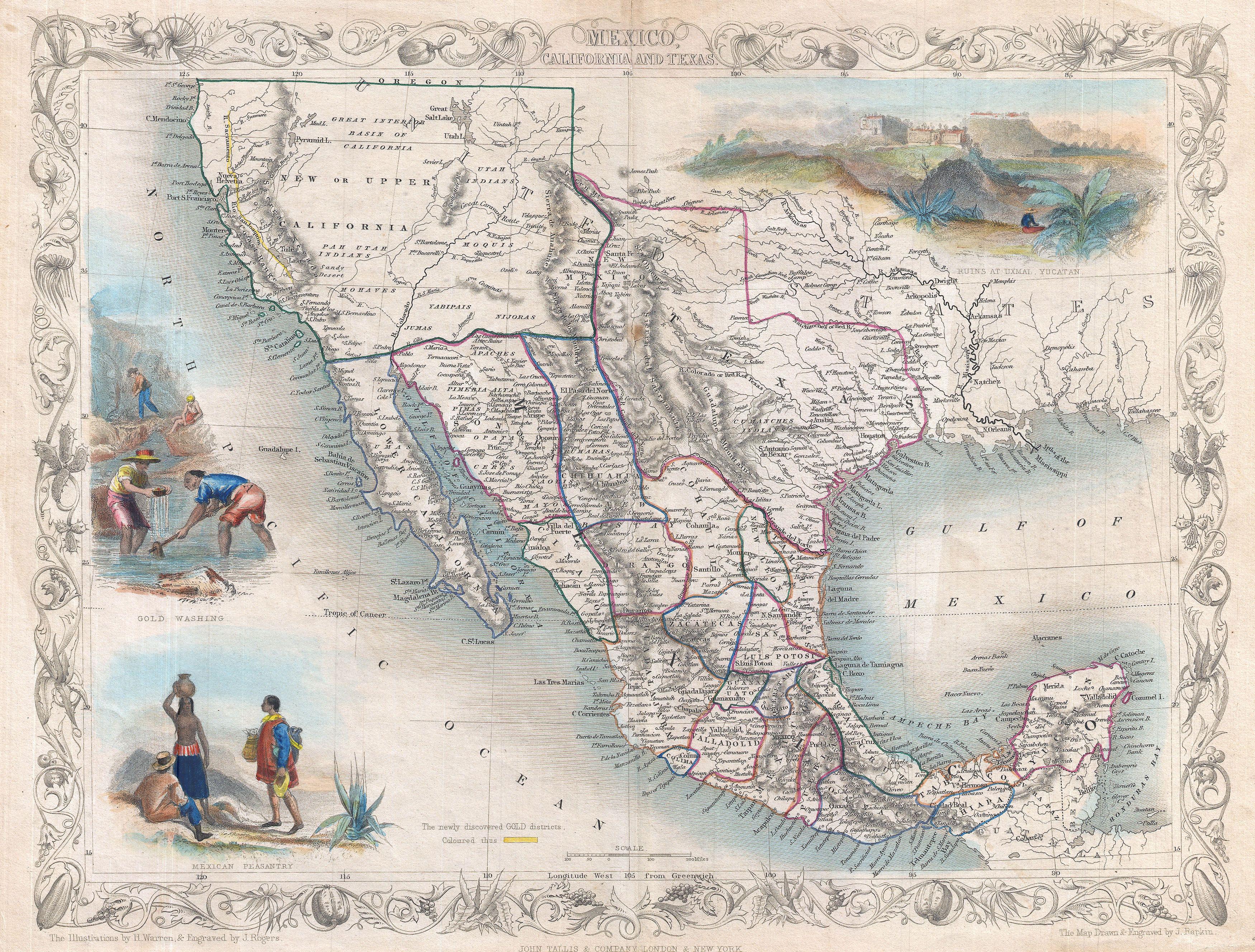
Greater Mexico (circa 1851)
Hat tip to marianovsky for the sharing this old map with us.
Antipodes
Ana Swanson asks, “Do you know what continent or ocean is directly under your feet?” Thanks to her for sharing this map of the antipodes of the Earth.
Kanyé West and the Law of Bailments
A bailment is a legal relationship that arises when a person (the bailor) gives personal property to someone else (the bailee) for safekeeping. So, can a bailee use a disclaimer to eliminate or limit his or her legal responsibility to the bailor for theft or other form of property damage to the bailor’s property? Attorney Van O’Steen explains here why parking lot disclaimers are not always effective.
Gödel’s loophole (Twitter edition)
Kurt Gödel found a bug in the Constitution that would allow a rise of fascism. It almost cost him his citizenship: http://t.co/D09fQiSAH8—
Parker Higgins (@xor) November 01, 2014
What happens when the world’s greatest logician since Aristotle decides to study the Constitution? You can read more about this fascinating legend here.
North American Holocaust
The territorial expansion of the United States (“Manifest Destiny”) came mostly at the expense of Native Americans (as well as Mexico). Think about that next time you think about “immigration reform” or the global “war on terror.” (Click on the map above for a larger version.)
Was Holmes a Bayesian?
Not that Holmes. This one. In our previous blog post (11/14/14), we promised to explain why our defense of Bayesian methods is relevant to law. After all, how is probability theory generally or any of the foregoing specifically — i.e. Hájek’s analysis of the reference class problem, his critique of radical subjectivism, and our critique of Hájek’s critique — relevant to law? In short, probability theory, Hájek’s paper, and our critique of Hájek are relevant to law in many ways.
Consider, for example, the close relation between the reference class problem and legal reasoning, especially the doctrine of binding precedent and the legal principle that “like cases should be treated alike.” A general principle in common law legal systems is that similar cases should be decided the same way so as to give similar and predictable outcomes, and the doctrine of precedent is the mechanism by which this goal is attained. A precedent is thus a principle or rule established in a previous legal case that is binding on a court or other tribunal when deciding subsequent cases with similar issues or facts.
But in order to determine whether the facts of one case are substantially similar to those in a previous case, we must engage in reasoning by analogy, and the reference class problem infects legal reasoning or reasoning by analogy because no two cases or sets of cases will be identical in all their particulars. In other words, if we are asked to determine whether case A is similar to case B, we must first determine whether case A and case B are in the same reference class. The problem, however, is that any given case may be incorporated in many possible reference classes. Continue reading