This nifty volcano map is based on a dataset of 10,734 known volcanic eruptions from 1,562 individual volcanoes, going back in time 12,000 years, and was prepared by James R. A. Davenport, a PhD candidate in Astronomy at the University of Washington. Check out his excellent website “If we assume.”
A solution to Newcomb’s problem
Although “it’s not entirely clear that [Newcomb’s paradox] is well-posed” (see video at 8:11), Professor NJ Wildberger presents an elegant mathematical solution to this probabilistic problem in the video above.
Piano-shelf
Is this art or a wasteful prank? Hat tip to Weikardzaena (via reddit) for the pic.
Broken y-axis controversy
Stunning chart, but…
The @BW chart, & my e.g., w/o the broken axis. businessweek.com/articles/2014-… cc @junkcharts #charts http://t.co/Fr51K9Ky8c—
Abhinav Agarwal (@AbhinavWork) December 12, 2014
Read more about this little statistical dust-up here (via Justin Fox). Addendum (31 Dec. 2014): Here is another take on this controversy.
Agricultural map of Cuba (circa 1949)
Click on the map for a larger version. Hat tip to BrotherSeamus!
“Visualizing Probabilistic Proof”
Our latest theoretical paper (“Visualizing Probabilistic Proof” — click on the image above to see our abstract) has just been published in volume 7 of the Wash U Jurisprudence Review, along with an interesting Note by Krista C. McCormack titled “Ethos, Pathos, and Logos: The Benefits of Aristotelian Rhetoric in the Courtroom.” Ms McCormack, who helped us edit our proof paper, is a 3L at Wash U Law School. We wish her well!
Los Angeles Bay (circa 3014 A.D.)?
Major props to Jeffrey Linn for creating this series of future sea rise maps. Also, check out his whimsical website spatialities.com.
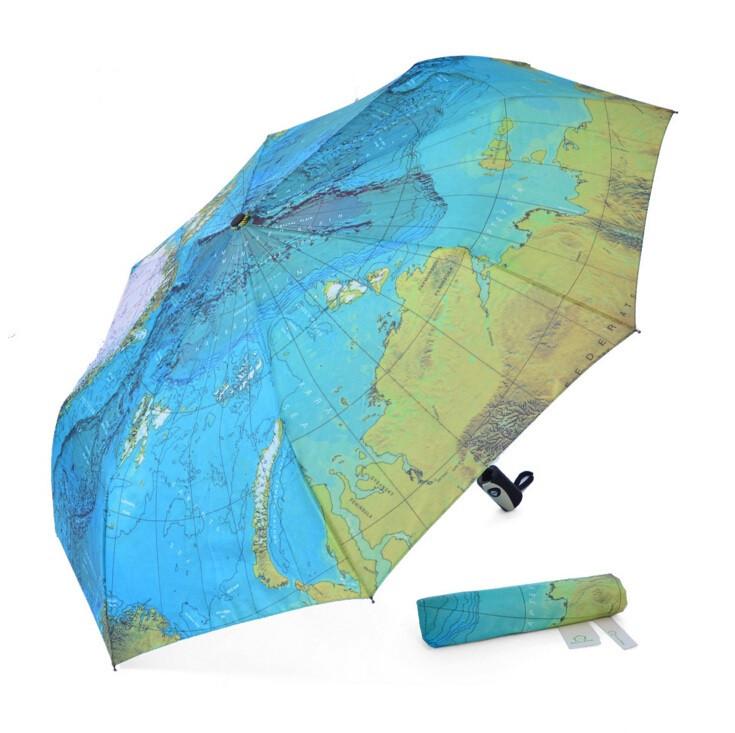
Arctic Ocean Umbrella

Geminid meteor shower update
Hey, do you love meteor showers as much as we do? Via nasa.gov: “The 2014 Geminid meteor shower is forecast to be a lively meteor shower with great views in the skies over Earth. The week of Dec. 8 is a good window for Geminid-watching, but the night of Dec. 13-14 is the anticipated peak. Best viewing will be in dark sky locations, away from city lights.“