“The market as a creative process”

That is the title of this excellent essay by Viktor Vanberg and the late James Buchanan, which was recently reprinted in Daniel Hausman, editor, The Philosophy of Economics, Cambridge U Press (2008), pp. 378-398. Here is a picture of the book in which the essay appears:

In brief, Vanberg and Buchanan argue against equilibrium analysis and highlight the role of choice and creativity in markets. Here, for example, is one of our favorites sentences from their paper:

“The market economy, as an aggregation, neither maximizes nor minimizes anything. It simply allows participants to pursue that which they value … within the constraints of general ‘rules of the game’ that allow, and provide incentives for, individuals to try out new ways of doing things. There simply is no ‘external,’ independently defined objective against which the results of market processes can be evaluated.”

In other words, standard econ concepts such as “general equilibrium” and “perfect competition” are not only nonsense — non-existent and imaginary entities like the luminiferous aether in Newtonian physics — such notions also neglect the critical role of creativity and human choice in our lives. In addition, we appreciate Vanberg and Buchanan’s emphasis on the role of the ‘rules of the game’ in their creative conception of markets. Rules are a necessary condition for the process of exchange; simply put, without rules there are no markets. Ideally, then, such rules should be designed to encourage positive-sum exchanges and entrepreneurial risk-taking, while penalizing theft and other forms of banditry.

Posted in Economics, Law | Tagged , | Leave a comment

Reverse legal lotteries

The increasing problem of overcriminalization (of private citizens and businesses, that is — policemen and regulators almost always get a free pass) has been noted before. In summary, overcriminalization threatens our economic liberties and undermines the rule of law. Matt Kaiser, moreover, describes overcriminalization as a reverse or negative lottery. He writes (emphasis by us):

It’s been said before, but probably bears repeating: we have more than 4,000 statutes in the United States Code that provide for criminal punishment — 215 of these relate to false statements alone. There are more than 300,000 regulations that allow for criminal enforcement, according to former Attorney General Richard Thornburgh. As … Judge [Alex] Kozinski has said, in light of this ballooning of federal criminal law, “most Americans are criminals and don’t even know it.” The … federal criminal justice system is basically a lottery that all of us are entered in that no one wants to win.

Posted in Law, Lotteries, Probability | Tagged , | 1 Comment

The decline and fall of Roman Britain

Posted in History, Maps | Tagged | Leave a comment

Here come the lawyers!

You can read the well-drafted, five-page complaint filed by Judy Huth against Bill Cosby for yourself. Ms Huth’s complaint alleges three causes of actions or legal claims: (1) sexual battery, (2) intentional infliction of emotional distress, and (3) negligent infliction of emotional distress. Here are some technical and procedural questions for my law students: Are these tort claims (dating from the 1970s) now “stale“? If so, could the District Attorney still bring criminal charges against Cosby after so many years? Also, could Cosby’s lawyers remove this complaint to federal court?

Happy Lawsuits!

Posted in Current Affairs, Law | Tagged , | 1 Comment

Borgesian infinite regress

“On some shelf in some hexagon [within the Library of Babel], it was argued, there must exist a book that is the cipher and perfect compendium of all other books *** How was one to locate the idolized secret hexagon that sheltered [this perfect book]? Someone proposed searching by regression. To locate book A, first consult book B, which tells where book A can be found; to locate book B, first consult book C, and so on, to infinity …  It is in ventures such as these that I have squandered and spent my years.” (English translation by Andrew Hurley; emphasis added by us; image below courtesy of Kristofer Porter.)

“En algún anaquel de algún hexágono (razonaron los hombres) debe existir un libro que sea la cifra y el compendio perfecto de todos los demás [libros en la Biblioteca de Babel] *** ¿Cómo localizer el venerado hexágono secreto que lo hospedaba? Alguien propuso un método regresivo: Para localizar el libro A, consultar previamente un libro B que indique el sitio de A; para localizar el libro B, consultar previamente un libro C, y así hasta lo infinito … En aventuras de ésas, he prodigado y consumido mis años.”

Jorge Luis Borges, “La biblioteca de Babel” (1941).

Posted in Literature, Logical Fallacies, Paradoxes | Tagged , | 2 Comments

Map of the Earth’s oceans

Via Wikimedia Commons.

Posted in Maps | Tagged | 1 Comment

“The location of academic knowledge”

That is the title of this data visualization courtesy of the Oxford Internet Institute. (By the way, you may click on the diagram for a larger version.) Question: If we were to map the number of retractions or fake peer reviews (see blog post below) per country, what would such a map look like?

Posted in Academia, Questions Rarely Asked | Leave a comment

Gaming the peer review system

Check out this exposé of peer review scams. Among other things, Cat Ferguson, Adam Marcus, and Ivan Oransky write:

In the past 2 years, journals have been forced to retract more than 110 papers in at least 6 instances of peer-review rigging. What all these cases had in common was that researchers exploited vulnerabilities in the publishers’ computerized systems to dupe editors into accepting manuscripts, often by doing their own reviews.  * * * “As you make the system more technical and more automated, there are more ways to game it,” says Bruce Schneier, a computer-security expert at Harvard Law School’s Berkman Center for Internet and Society in Cambridge, Massachusetts. “There are almost never technical solutions to social problems.”

How corrupt is peer review in science? Even if the overall level of corruption is low, is the current cumbersome system of peer review worth its costs? Why not do away with peer review altogether … or publish papers on an anonymous basis?

Posted in Deception, Ethics, Science | Tagged | 2 Comments

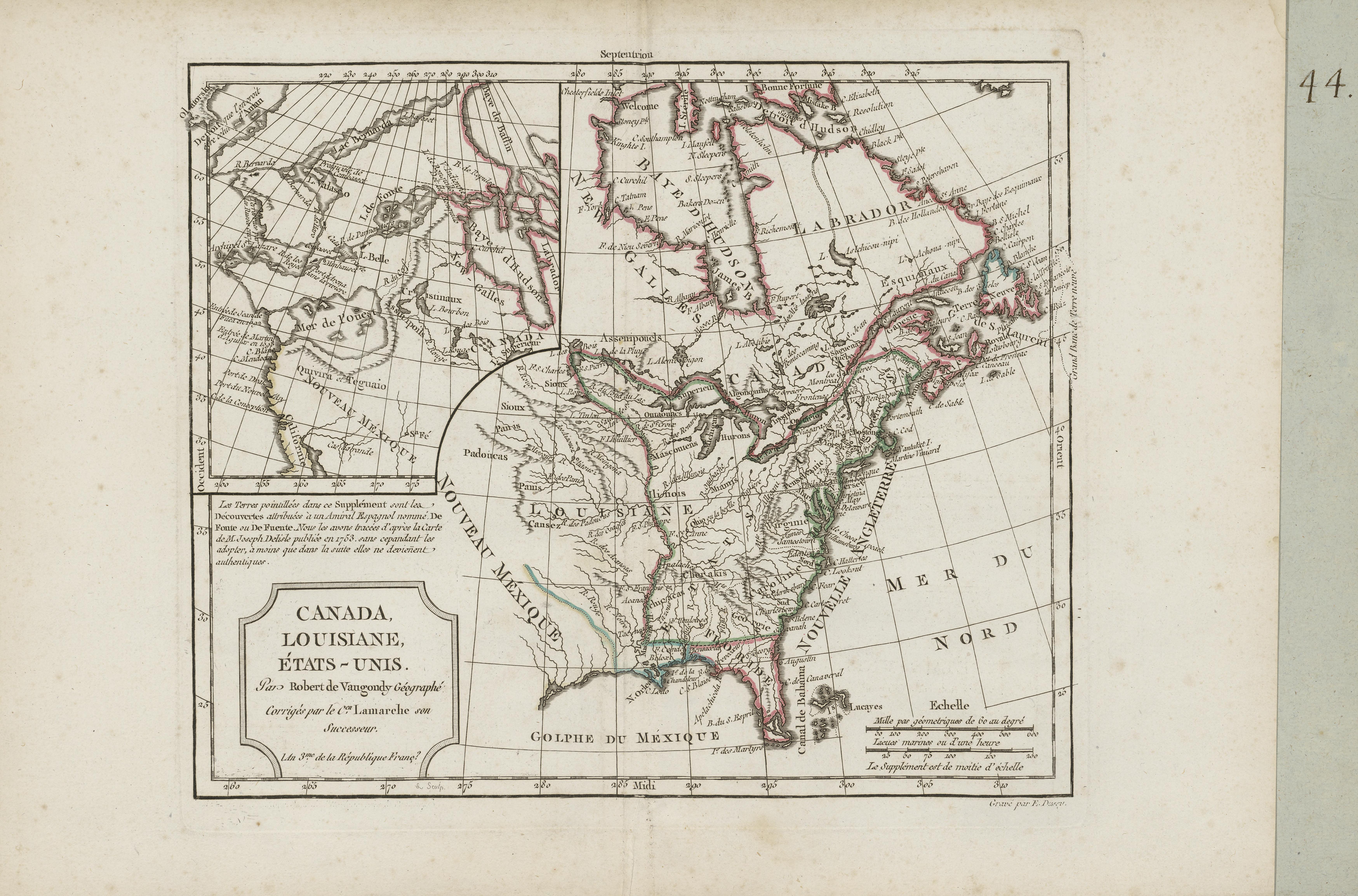
Historical contingency (Louisiana edition)

What if Napoleon had sold Louisiana to Britain or Spain instead of the USA?

Posted in History, Maps, Questions Rarely Asked | Tagged | Leave a comment

Vampire Freakonomics Redux

In Chapter 12 (“Buy or Bite?”) of Economics of the Undead (see above), we explain why vampires are not necessarily bad or unethical creatures. In summary, without a legal market for the purchase and sale of blood, vampires have no other choice but to steal their supplies of blood through fraud and force. We thus proposed the creation of legalized “blood markets” to allow consensual transfers of blood between humans and vampires. Our essay was featured last month in this Freakonomics podcast. Some of the comments to the podcast, however, have really been bugging us for some time. Fowler, for example, notes that “Vampires ‘procreate’ via their bite,” while Davo writes: “[Enrique Guerra-Pujol] makes a critical error: in most vampire lore, they are a different (more advanced) species. Asking vampires to buy human blood is like asking humans to buy a ham hock off of a pig.” After giving these comments careful thought, we conclude they do not rebut or refute our original argument in favor of markets. Here’s why:

Let’s start with Davo’s point about vampire psychology first, since this anti-market argument is easy to dismiss. Since markets are generally win-win, the social status or innate biology of buyers and sellers really doesn’t matter. People (including ultra-advanced and snooty vampires) will engage in trade when it is mutually beneficial to do so. Fowler’s comment, by contrast, implies that all vampires are rapists. After all, if vampires “procreate via their bite”, and if such bites are non-consensual, then what Fowler is really saying is that a vampire bite is analogous to rape. This can’t be right based on the various fictional portrayals of vampires we have seen. But even if Fowler’s analysis is correct, then our argument in favor of human-vampire markets is all the more stronger. In fact, assuming that some humans would like to become vampires (recall the first part of the Freakonomics podcast with Steven Levitt), perhaps vampires could actually charge us for the privilege of being bitten, for turning us into vampires!

F. E. Guerra-Pujol's avatarprior probability

Check out this fun Freakonomics podcast featuring economists Steve Horwitz and Glen Whitman as well as yours truly, and while you’re at it, why not check out the Economics of the Undead blog too?

View original post

Posted in Economics, Zombies | Tagged , , | 124 Comments