
This epic game between Magnus Carlsen and Viswanathan Anand lasted 122 moves!
This epic game between Magnus Carlsen and Viswanathan Anand lasted 122 moves!
How great is Google Scholar? Special thanks to Anurag Acharya for his pivotal role in creating the specialized Google Scholar search engine. His creation is ten years old today. (By the way, Gmail also turned ten years old in April of this year.) Also, thanks for liberating caselaw from the tyranny of Lexis and Westlaw.

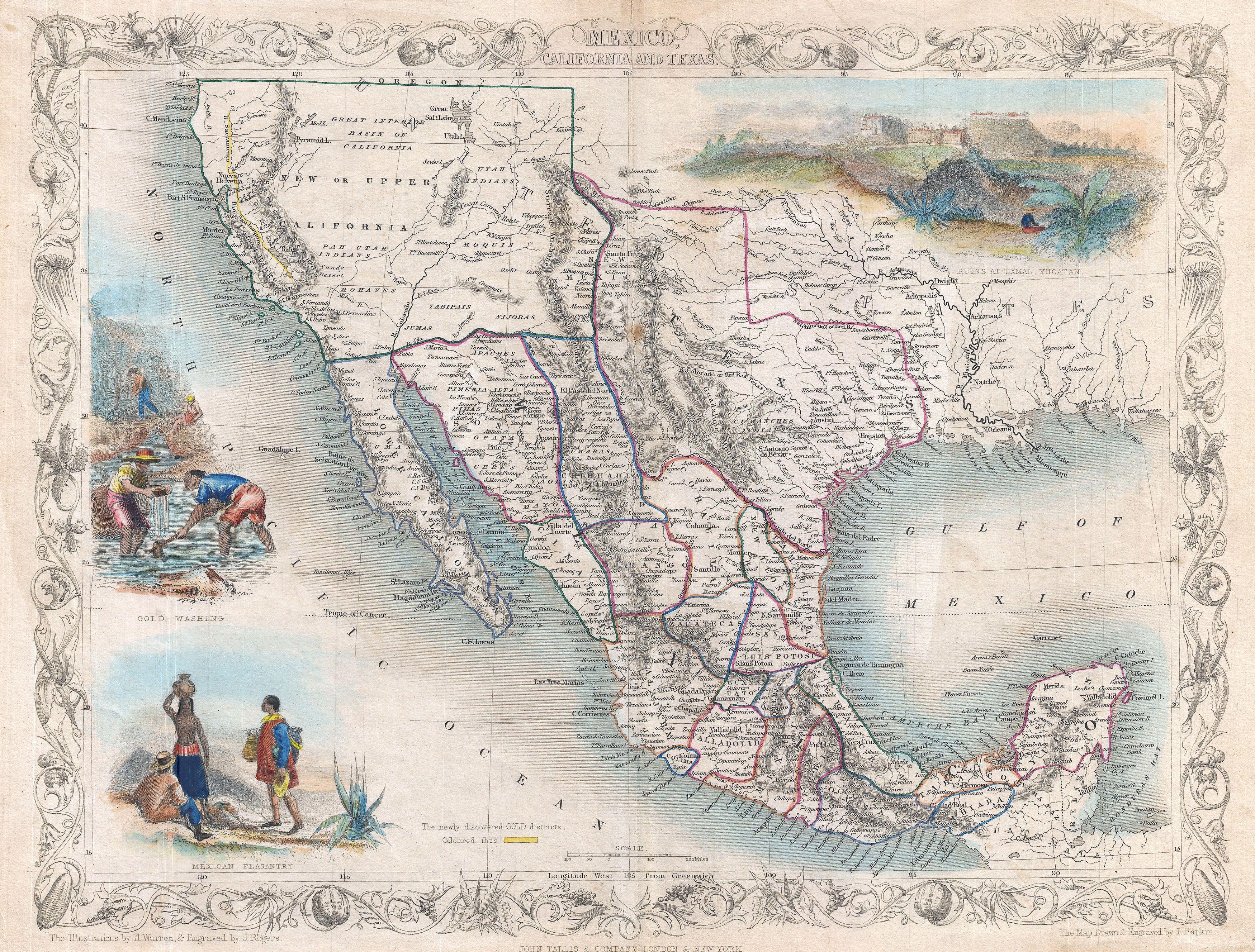
Hat tip to marianovsky for the sharing this old map with us.

Ana Swanson asks, “Do you know what continent or ocean is directly under your feet?” Thanks to her for sharing this map of the antipodes of the Earth.
A bailment is a legal relationship that arises when a person (the bailor) gives personal property to someone else (the bailee) for safekeeping. So, can a bailee use a disclaimer to eliminate or limit his or her legal responsibility to the bailor for theft or other form of property damage to the bailor’s property? Attorney Van O’Steen explains here why parking lot disclaimers are not always effective.
Kurt Gödel found a bug in the Constitution that would allow a rise of fascism. It almost cost him his citizenship: http://t.co/D09fQiSAH8—
Parker Higgins (@xor) November 01, 2014
What happens when the world’s greatest logician since Aristotle decides to study the Constitution? You can read more about this fascinating legend here.

The territorial expansion of the United States (“Manifest Destiny”) came mostly at the expense of Native Americans (as well as Mexico). Think about that next time you think about “immigration reform” or the global “war on terror.” (Click on the map above for a larger version.)
Not that Holmes. This one. In our previous blog post (11/14/14), we promised to explain why our defense of Bayesian methods is relevant to law. After all, how is probability theory generally or any of the foregoing specifically — i.e. Hájek’s analysis of the reference class problem, his critique of radical subjectivism, and our critique of Hájek’s critique — relevant to law? In short, probability theory, Hájek’s paper, and our critique of Hájek are relevant to law in many ways.
Consider, for example, the close relation between the reference class problem and legal reasoning, especially the doctrine of binding precedent and the legal principle that “like cases should be treated alike.” A general principle in common law legal systems is that similar cases should be decided the same way so as to give similar and predictable outcomes, and the doctrine of precedent is the mechanism by which this goal is attained. A precedent is thus a principle or rule established in a previous legal case that is binding on a court or other tribunal when deciding subsequent cases with similar issues or facts.
But in order to determine whether the facts of one case are substantially similar to those in a previous case, we must engage in reasoning by analogy, and the reference class problem infects legal reasoning or reasoning by analogy because no two cases or sets of cases will be identical in all their particulars. In other words, if we are asked to determine whether case A is similar to case B, we must first determine whether case A and case B are in the same reference class. The problem, however, is that any given case may be incorporated in many possible reference classes. Continue reading
Alan Hájek delivers a devastating blow against frequentism and other theories of probability in his influential 2007 paper “The reference class problem is your problem too.” In brief, when a hypothesis H or proposition P can be classified in various ways, and when the probability of H or P varies depending on how it is classified, the reference class problem has reared its ugly head. For his part, Hájek defines the reference class problem formally as follows:
“[A hypothesis H or proposition P] may be classified as belonging to set S1, or to set S2, and so on. Qua member of S1, its probability is p1; qua member of S2, its probability is p2, where p1 ≠ p2; and so on. And perhaps qua member of some other set, its probability does not exist at all” (Hájek, 2007, p. 565).
In his reference-class paper, Hájek carefully and lucidly explains why frequentism and other leading interpretations of probability — all theories of probability, that is, except for “radical subjectivism” or pure Bayesian probability — are contaminated by the reference class problem (ibid., pp. 566-580). Nevertheless, although subjectivism is immune from the reference class problem, Hájek attempts to discredit Bayesian methods. His critique of subjectivism, in summary, is that it is atheoretical — it is a “no-theory theory of probability” (ibid., p. 577). According to Hájek, “no-theory theories of probability” are apparently bad because they “leave quite obscure why probability should function as a guide to life, a suitable basis for rational inference and action” (ibid., p. 564). But why is radical subjectivism a “no-theory theory of probability” in Hájek view? Because, according to Hájek, radical subjectivists are, well, too subjective! Continue reading
.@ESA_Rosetta See for yourself! ROLIS imaged #67P when we were just 3km away! Glad I can share. #CometLanding http://t.co/b6mcid2fsn—
Philae Lander (@Philae2014) November 12, 2014
The European Space Agency has soft-landed its Philae spacecraft on the surface of Comet 67P/Churyumov–Gerasimenko. The signal from outer space confirming the successful touchdown arrived on Earth at 16:03 GMT (17:03 CET). (By the way, where were you when this historic event happened?)









Welcome to the online home of the IASS
Hopefully It’s Interesting.
In Conversation with Legal and Moral Philosophers
dr hab. prof. UJ, Jagiellonian University
Books, papers, and other jurisprudential things
Ramblings of a retiree in France
BY GRACE THROUGH FAITH
Natalia's space
hoping we know we're living the dream
Lover of math. Bad at drawing.
We hike, bike, and discover Central Florida and beyond
Making it big in business after age 40
Reasoning about reasoning, mathematically.
I don't mean to sound critical, but I am; so that's how it comes across
remember the good old days...
"Let me live, love and say it well in good sentences." - Sylvia Plath
a personal view of the theory of computation
Logic at Columbia University
Just like the Thesis Whisperer - but with more money
the sky is no longer the limit
Technology, Culture, and Ethics
Just like the horse whisperer - but with more pages
Poetry, Other Words, and Cats


